



Differences between 327s

Pro

Joined: Jun 2002
Posts: 705
Likes: 0
From: Dearborn mi.
 Re: Differences between 327s (C2Vert)
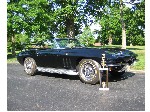
Only "JohnZ" mentioned that the 1962`s were the first Vette to use the 327`s. Similar to the 62 Vette pictured below, but most of the rest of the information on all posts is accurate. :cheers:

Race Director

Joined: May 2000
Posts: 12,712
Likes: 2,270
Re: Differences between 327s (mrg)
On the topic of weaker small block rods in the earlier production 327's, that's exactly what happened in my case to my '64 engine, though the rod failure was in a slightly different location than the area Duke describes. The rod had snapped in half across the beam section whereupon the "nub" portion still attached to the crank smacked the side of the block rendering it INSTANT JUNK .. .. The truth was revealed upon oil pan removal. There was this BIG crack .. ! .. Sure hated to lose that original block.
After teardown the remaining rods were magnafluxed. There were two other rods that were found to be cracked, also.
After teardown the remaining rods were magnafluxed. There were two other rods that were found to be cracked, also.
Okay now for the answer. You guys have calculators with minds of their own. ;) I think you might have mixed up radius and diameter. You can either work with bearing diameter and stroke or bearing radius and crank throw radius, which is half the stroke.
For a small bearing 327 journal overlap is:
(2.30 +2.00 - 3.25)/2 = 0.525"
For a large journal 350:
(2.45 + 2.1 - 3.48)/2 = 0.535"
Now if they had built a 350 with small journals the overlap would be:
(2.30 + 2.10 - 3.48)/2 = .410"
The loss of journal overlap would have significantly reduced cranshaft stiffness, which would increase deflection and reduce durability. Thus the increase in bearing size to restore journal overlap. Excess crank flex can also beat up bearings. Back in the mid-seventies I was racing an EP TR-3 with SCCA. The engine was a 2.2 liter TR-4 - basically a souped up Massey Ferguson tractor engine - with a long stroke and a three main bearing crank. Revving to 6500 the crankshaft flexed so much and beat up the Clevite 77 bearings so bad I had to change the rod bearings every six hours of run time, which was about three race weekends.
To get a better intuitive feel sketch a couple of near equal size circles that overlap about half their radii to get a feel for journal overlap. This is what you would see if you sectioned a crank at the center of the cheek and looked at it end on.
Sorry, I can't award any junior engineer certificates tonight. :D
Duke
[Modified by SWCDuke, 11:18 PM 7/10/2003]
Safety Car


Joined: May 2003
Posts: 4,797
Likes: 239
From: Ocean Township NJ
Re: Differences between 327s (SWCDuke)
Duke:
I thought I might have been using a broken calculator, but I kept getting your answers. Maybe some of the students were confused by the term "throw radius", which is redundant. "Throw", in itself IS a radius.; "stroke" is a diameter.
Great lesson Duke--very interesting!
Joe
I thought I might have been using a broken calculator, but I kept getting your answers. Maybe some of the students were confused by the term "throw radius", which is redundant. "Throw", in itself IS a radius.; "stroke" is a diameter.
Great lesson Duke--very interesting!
Joe

Supporting Vendor
Joined: Dec 2002
Posts: 548
Likes: 1
From: Woodstock GA
Re: Differences between 327s (SWCDuke)
okay duke. i plead ignorance on the calculation part. your description helped me understand the mechanics involved.
so, what is an acceptable range for bearing overlap for a stout street engine? i'm sure it's like the rod length/crank stroke ratio. i assume reciprocating mass and piston speed determine the necessary value you need.
also, why are the journals for the crank and the rods not the same diameter? if you increased one, you could decrease the other, but only to a point. what are the trade offs.
we have so much to learn professor swcduke....
:flag
so, what is an acceptable range for bearing overlap for a stout street engine? i'm sure it's like the rod length/crank stroke ratio. i assume reciprocating mass and piston speed determine the necessary value you need.
also, why are the journals for the crank and the rods not the same diameter? if you increased one, you could decrease the other, but only to a point. what are the trade offs.
we have so much to learn professor swcduke....
:flag
Race Director
Joined: May 2000
Posts: 12,712
Likes: 2,270
Re: Differences between 327s (bearvette)
Agree that "throw radius" is redundant, but I said that because I wasn't sure if everyone understood that "crank throw" is the radius of the rod journal, which is one half the stroke.
A crankshaft is a very complex piece of geometry. Back when the SB was designed actual crankshaft loading could be analyticaly determined, but it was difficult to analyse crankshaft stress, bending and torsional stiffness. Of course, nowadays an engineer can probably design and completely analyse a crankshaft in a few days with CAE software.
Back when the SB was designed, crankshaft dimensions were usually based on engineering intuition and "good design practice." Prototypes would be built and sent to the lab for testing. Even back in those days GM had very sophisticated labs that could test and characterize structural parts like frames, connecting rods, and crankshafts. By setting a crankshaft in a hydraulic press and loading it and measuring defections, the engineers could determine experimentally the approximate value of crankshaft bending and torsional stiffness, and again, use good design practice numbers that were developed empirically to determine what was a sufficient level of stiffness. If first articles were not sufficiently stiff, dimensions would be adjusted using experience and engineering intuition and a new prototype built and tested. This process was repeated until the specifications were met. As you can imagine, this was a long and costly process. Nowadays, with CAE software, first designs usually test out very close to specification and require little or no rework.
So there are no magic forumulas to determine journal overlap, and it's a function of other crankshaft dimensions and crankshaft material. For example, a steel crankshaft will be slightly stiffer than a cast iron crankshaft, because steel has a slightly higher modulus of elasticity than cast iron.
Bottom line is that OEM Chevrolet crankshafts are well designed and essentially indestructible in a street engine as long as they don't get oil starved. The rods through '66 are weak, so the latest rods should be used when rebuilding a small bearing engine, or aftermarket rods used if you want an absolutely bulletproof street high performance engine.
As far as bearing diameters are concerned, rod bearings are typically less in diameter than the mains. In some engines, rod bearings tend to not last as long as mains, which would indicate that rod bearings should be larger, but slightly smaller rod bearings than mains seems to be common design practice. If anything, on a give design, the rod bearing sizes should be increased rather than reducing the main bearing size, however, a modern engine given OEM oil changes will rarely wear out the bearings. The first wear item is usually the valve guides, followed by cylinder wall wear at the top of the bores.
Duke
A crankshaft is a very complex piece of geometry. Back when the SB was designed actual crankshaft loading could be analyticaly determined, but it was difficult to analyse crankshaft stress, bending and torsional stiffness. Of course, nowadays an engineer can probably design and completely analyse a crankshaft in a few days with CAE software.
Back when the SB was designed, crankshaft dimensions were usually based on engineering intuition and "good design practice." Prototypes would be built and sent to the lab for testing. Even back in those days GM had very sophisticated labs that could test and characterize structural parts like frames, connecting rods, and crankshafts. By setting a crankshaft in a hydraulic press and loading it and measuring defections, the engineers could determine experimentally the approximate value of crankshaft bending and torsional stiffness, and again, use good design practice numbers that were developed empirically to determine what was a sufficient level of stiffness. If first articles were not sufficiently stiff, dimensions would be adjusted using experience and engineering intuition and a new prototype built and tested. This process was repeated until the specifications were met. As you can imagine, this was a long and costly process. Nowadays, with CAE software, first designs usually test out very close to specification and require little or no rework.
So there are no magic forumulas to determine journal overlap, and it's a function of other crankshaft dimensions and crankshaft material. For example, a steel crankshaft will be slightly stiffer than a cast iron crankshaft, because steel has a slightly higher modulus of elasticity than cast iron.
Bottom line is that OEM Chevrolet crankshafts are well designed and essentially indestructible in a street engine as long as they don't get oil starved. The rods through '66 are weak, so the latest rods should be used when rebuilding a small bearing engine, or aftermarket rods used if you want an absolutely bulletproof street high performance engine.
As far as bearing diameters are concerned, rod bearings are typically less in diameter than the mains. In some engines, rod bearings tend to not last as long as mains, which would indicate that rod bearings should be larger, but slightly smaller rod bearings than mains seems to be common design practice. If anything, on a give design, the rod bearing sizes should be increased rather than reducing the main bearing size, however, a modern engine given OEM oil changes will rarely wear out the bearings. The first wear item is usually the valve guides, followed by cylinder wall wear at the top of the bores.
Duke
Safety Car
Joined: May 2003
Posts: 4,797
Likes: 239
From: Ocean Township NJ
Re: Differences between 327s (SWCDuke)
Duke:
Crank throw is actually the distance that the C/L of any rod journal is offset from the C/L of the main journals. This distance is the radius of the "orbits" that the rod journals make around the main journals.
Can you shed some light on whether critical values for journal overlap would change based on whether the crank is flat or cruciform?
Joe
Crank throw is actually the distance that the C/L of any rod journal is offset from the C/L of the main journals. This distance is the radius of the "orbits" that the rod journals make around the main journals.
Can you shed some light on whether critical values for journal overlap would change based on whether the crank is flat or cruciform?
Joe
Race Director
Joined: May 2000
Posts: 12,712
Likes: 2,270
Re: Differences between 327s (65tripleblack)
Yes, I should have said that crank throw is the radial distance between the center of the rod jounal and center of the main journal, which is one-half the stroke.
The SB, inline six, and Chevy II four of the sixties all shared the same 2.30"/2.00" journals, but overlap varied according to stroke. The 140 Vega probably had the least overlap due to its 3.625" stroke, but since the crank was loaded with only four cylinders, instead of eight, the less jounal overlap gave adequate stiffness.
I can't say whether crankshaft configuration - flat, cruciform, or a six throw inline six crankshaft requires more or less overlap than the other, but you can assume that as the number of cylinders increases and/or cylinder size increases, the greater loading requires increase crankshaft stiffness, which is why the big block has larger journals, and that probably explains why the Vega crank was designed with the small journals eventhough it had a longer stroke than the 350 SB.
Duke
The SB, inline six, and Chevy II four of the sixties all shared the same 2.30"/2.00" journals, but overlap varied according to stroke. The 140 Vega probably had the least overlap due to its 3.625" stroke, but since the crank was loaded with only four cylinders, instead of eight, the less jounal overlap gave adequate stiffness.
I can't say whether crankshaft configuration - flat, cruciform, or a six throw inline six crankshaft requires more or less overlap than the other, but you can assume that as the number of cylinders increases and/or cylinder size increases, the greater loading requires increase crankshaft stiffness, which is why the big block has larger journals, and that probably explains why the Vega crank was designed with the small journals eventhough it had a longer stroke than the 350 SB.
Duke

Le Mans Master


Joined: Jan 2000
Posts: 5,403
Likes: 3
From: Agoura CA
Re: Differences between 327s (SWCDuke)
im surprised the topic of rod ratio hasnt been mentioned in this one, particualarly since the 327 has such a good ratio, much better then the 350 and 427s. as i understand, a high rod ratio, maybe 1.7+, while not essential to a high revving performance engine, greatly enhances the capabilities while relieving the stresses. thoughts and comments?
Corvette Stories
The Best of Corvette for Corvette Enthusiasts

Top 10 Most Explosive Corvettes Ever Made: Power-to-Weight Ratio Ranked!
Joe Kucinski
150 hp to 1,250 hp: Every Corvette Generation Compared by the Specs That Matter
Joe Kucinski
8 Coolest Corvette Pace Cars (and Replicas) of All Time
Verdad Gallardo
Top 10 Corvette Engines RANKED by Peak Torque (70+ Years of Muscle!)
Joe Kucinski
Corvette ZR1X Will Be Pacing the Indy 500, And Could Probably Race, Too!
Verdad Gallardo
Top 10 Corvettes Coming to Mecum Indy 2026!
Brett Foote
Top 10 C9 Corvette MUST-HAVES to Fix These C8 Generation Flaws!
Michael S. Palmer
10 Revolutionary 'Corvette Firsts' Most People Don't Know
Joe Kucinski
5 Reasons to Upgrade to an LS6-Powered Corvette; 5 Reasons to Stay LT2
Michael S. Palmer
Safety Car
Joined: May 2003
Posts: 4,797
Likes: 239
From: Ocean Township NJ
Re: Differences between 327s (SWCDuke)
With all other things being equal, it seems like the crank for an inline four, with 5 mains, and only 2 impulses per revolution, and that of an inline six, with 7 mains, and 3 impulses per revolution, would require less stiffness than that of a V8, and therefore require less journal overlap.
A V8, with 5 mains and 4 impulses per rev, probably needs more overlap. I'm just speculating that the flat crank, with its evenly spaced impulses , or one every 90* of crank rotation, MIGHT need less overlap than the cruciform, which has unevenly spaced impulses.
Joe
A V8, with 5 mains and 4 impulses per rev, probably needs more overlap. I'm just speculating that the flat crank, with its evenly spaced impulses , or one every 90* of crank rotation, MIGHT need less overlap than the cruciform, which has unevenly spaced impulses.
Joe
Race Director
Joined: May 2000
Posts: 12,712
Likes: 2,270
Re: Differences between 327s (65tripleblack)
Both a cruciform and flat crank have equally spaced cylinder impulses every 90 degrees. It's just the bank firing interval that is uneven with a cruciform crank. Flat cranks are lighter because they don't require end mass to balance the first order rocking couple. This and the better exhaust tuning potential from even firing intervals on each bank is why they are preferred for racing engines, but since a flat crank creates a second order horizontal shaking force that can only be balanced by twin counter-rotating balance shafts, they are not well suited to large V-8s used in street driven vehicles.
Compare the Vega crank to the 350 SB crank. The Vega crank has a longer throw and less journal overlap, but its only being loaded by four 30 HP cylinders rather than eight 40 HP cylinders, so a less stiff crank is okay.
Duke
Compare the Vega crank to the 350 SB crank. The Vega crank has a longer throw and less journal overlap, but its only being loaded by four 30 HP cylinders rather than eight 40 HP cylinders, so a less stiff crank is okay.
Duke
Race Director
Joined: May 2000
Posts: 12,712
Likes: 2,270
Re: Differences between 327s (VetteLT4)
Within reason rod ratio is not that big a deal, and WAAAAY too much is made out of it in hot rod magazines. Engine designers refer to this as "r over l" ratio where r is crank throw and l is rod length. Most automotive engine's r/l is in the range of 0.25 to 0.30. A lower ratio (longer rod for a given throw) reduces piston side load and comes closer to attaining the ideal of combustion at constant volume, but within this range, arguing over the actual ratio is splitting hairs.
With a 5.7" rod the 302 r/l is 0.265, and a 350 is 0.305. With a 6.0" rod a 350's r/l is 0.29. Though some claim more power with a six inch rod the evidence is not conclusive and any power difference is probably within the range of average run to run variation, so it's a real stretch to draw a definitive conclusion.
Duke
With a 5.7" rod the 302 r/l is 0.265, and a 350 is 0.305. With a 6.0" rod a 350's r/l is 0.29. Though some claim more power with a six inch rod the evidence is not conclusive and any power difference is probably within the range of average run to run variation, so it's a real stretch to draw a definitive conclusion.
Duke
Supporting Vendor
Joined: Dec 2002
Posts: 548
Likes: 1
From: Woodstock GA
Re: Differences between 327s (SWCDuke)
i've read that smokey unick (sp) used to prefer a longer rod in his engine. his reasoning was it kept the piston at the top of the stroke for more time, giving the combustion event time to build more MEP. maybe duke can correct any mistakes i've made in my interpretation.
however, i've also read that a shorter rod increases piston speed, which serves to increase the cylinders air pumping capability. but ultimately, the side loading of the piston on the power stroke would decrease durabilty.
i wish i were an engine builder (with lots of money).
however, i've also read that a shorter rod increases piston speed, which serves to increase the cylinders air pumping capability. but ultimately, the side loading of the piston on the power stroke would decrease durabilty.
i wish i were an engine builder (with lots of money).
Race Director
Joined: May 2000
Posts: 12,712
Likes: 2,270
Re: Differences between 327s (bearvette)
From a pure thermodynamic standpoint, combustion at constant volume yields the best thermal efficiency, which will yield the most power for a given fuel flow. In a typical engine operating WOT at the torque peak, combustion begins about 30-35 degrees BTDC and is complete about 30-35 degrees ATDC.
In discussions of rod ratio, proponents of long rods usually say the the pistons "dwells" near TDC longer than with short ratios. This is correct, and why I said that longer rods come closer to the ideal of combustion at constant volume, but, again, within the range of typical r/l ratio, the differences in fuel efficiency or torque/power are within the range of random test error, and the whole argument about rod ratio is academic hair splitting.
I have a lot of respect for the late Smokey Yunick. He was a true self taught engineer and probably read more IC engine text books and technical papers than I ever have, but in the case of rod ratios I think he was stretching a theoretical argument to extreme.
The ideal r/l ratio is zero, which can be obtained with an infinitely long rod. Of course the engine will also be infinitely tall and infinitely heavy. ;)
Duke
In discussions of rod ratio, proponents of long rods usually say the the pistons "dwells" near TDC longer than with short ratios. This is correct, and why I said that longer rods come closer to the ideal of combustion at constant volume, but, again, within the range of typical r/l ratio, the differences in fuel efficiency or torque/power are within the range of random test error, and the whole argument about rod ratio is academic hair splitting.
I have a lot of respect for the late Smokey Yunick. He was a true self taught engineer and probably read more IC engine text books and technical papers than I ever have, but in the case of rod ratios I think he was stretching a theoretical argument to extreme.
The ideal r/l ratio is zero, which can be obtained with an infinitely long rod. Of course the engine will also be infinitely tall and infinitely heavy. ;)
Duke

Safety Car


Joined: Nov 2001
Posts: 4,424
Likes: 619
From: northern CA
Re: Differences between 327s (SWCDuke)
Duke ..
From what I can remember I believe the machinist who did the magnafluxing found those other two rods to be cracked in the bolt head area, as you described earlier in this thread. The crankshaft was in good condition too. I didn't notice any discoloration or other signs of damage to suggest an imminent bearing failure. I had planned on reusing that crankshaft, after having it checked out by the machinist, but it didn't come to that. In the interim while getting parts together for the rebuild a buddy gave me the forged crank out of his 365 hp engine, which checked out perfect. That crank and 5 of the old rods, along with 3 new ones, were reinstalled in the replacement engine block. The machinist felt there would be no problem going this route so that's what was done.
I'm thinking of pulling the engine soon and refreshing the internals because I'm pretty sure the cam and lifters are toast. I think I'll change out those connecting rods too, just for "insurance" ..
The only seemingly reason I can think of as to why the original rod failure occurred was because the guy who owned my car before me just simply beat the HOLY BEJESUS out of that engine .. ! .. :smash:
1963, 265, 327s, 3864881, and283, corvette327340hp, crankshafts, difference, gm, high, idler, michigan, pulleys, rev, rod, tufftriding
