




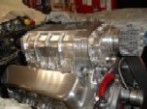
anyone running this pump?

Thread Starter
Race Director


Joined: Dec 1999
Posts: 16,945
Likes: 9
 anyone running this pump?
Team Owner


Joined: Apr 2002
Posts: 62,198
Likes: 1
From: All humans are vermin in the eyes of Guru VA
Cruise-In IV Veteran
Cruise-In V Veteran
They were talking about that pump on the turbomustangs forum
http://www.turbomustangs.com/forums/...threadid=38678
http://www.turbomustangs.com/forums/...threadid=38678
Last edited by Guru_4_hire; May 4, 2005 at 04:49 PM.
Race Director

Joined: Nov 2000
Posts: 11,872
Likes: 12
From: Waterloo ontario Canada
Originally Posted by CGGorman
I'll bet the o-ring failure rate is amazingly high...
 I wouldn't like the principle of a coil being energized, pulling the plunger, compressing a spring and then the spring forcing the plunger back. I have no complaints with our old holley pump design. NO problems with leaks

Le Mans Master


Joined: Jun 2002
Posts: 8,339
Likes: 24
From: I can walk to MA
I'm not going to guess about it's lifetime, since I know nothing about it's construction.
However, IF the Orings that seal the plunger let go, the
pump doesn't drip onto the driveway - it fills the crankcase.
It DOES look pretty slick, though.
They could incorporate their plunger technique with a lever
to make it safer - but then it would look like a normal fuel pump.
PS - I am not running that pump.

However, IF the Orings that seal the plunger let go, the
pump doesn't drip onto the driveway - it fills the crankcase.
It DOES look pretty slick, though.
They could incorporate their plunger technique with a lever
to make it safer - but then it would look like a normal fuel pump.
PS - I am not running that pump.
Thread Starter
Race Director
Joined: Dec 1999
Posts: 16,945
Likes: 9
It doesn't have to fill the crank case if you use a seals-it gasket that is also a pump rod seal, the stock type pumps can quickly fill the crank case also when they rupture.
I don't see a problem w/ the o rings, o rings can take a lot more abuse than you would think. It's pretty reasonably priced, compared to my SX pump, filter & aeromotive a2000 regulator this pump is 1/10th the cost..maybe even less.
I don't see a problem w/ the o rings, o rings can take a lot more abuse than you would think. It's pretty reasonably priced, compared to my SX pump, filter & aeromotive a2000 regulator this pump is 1/10th the cost..maybe even less.
Le Mans Master
Joined: Jun 2002
Posts: 8,339
Likes: 24
From: I can walk to MA
Originally Posted by Twin_Turbo
It doesn't have to fill the crank case if you use a seals-it gasket that is also a pump rod seal, the stock type pumps can quickly fill the crank case also when they rupture.
I don't see a problem w/ the o rings, o rings can take a lot more abuse than you would think. It's pretty reasonably priced, compared to my SX pump, filter & aeromotive a2000 regulator this pump is 1/10th the cost..maybe even less.
I don't see a problem w/ the o rings, o rings can take a lot more abuse than you would think. It's pretty reasonably priced, compared to my SX pump, filter & aeromotive a2000 regulator this pump is 1/10th the cost..maybe even less.
Every SBC pump that I've had the diaphram crack on - just dripped out
the bottom of the can ... never in the crankcase.
I agree - the Orings should be fine -- continuously lubricated and cooled by the gas.
However - the devil is in the details, which are unknown to me.
Good luck
Corvette Stories
The Best of Corvette for Corvette Enthusiasts

Top 10 Most Explosive Corvettes Ever Made: Power-to-Weight Ratio Ranked!
Joe Kucinski
150 hp to 1,250 hp: Every Corvette Generation Compared by the Specs That Matter
Joe Kucinski
8 Coolest Corvette Pace Cars (and Replicas) of All Time
Verdad Gallardo
Top 10 Corvette Engines RANKED by Peak Torque (70+ Years of Muscle!)
Joe Kucinski
Corvette ZR1X Will Be Pacing the Indy 500, And Could Probably Race, Too!
Verdad Gallardo
Top 10 Corvettes Coming to Mecum Indy 2026!
Brett Foote
Top 10 C9 Corvette MUST-HAVES to Fix These C8 Generation Flaws!
Michael S. Palmer
10 Revolutionary 'Corvette Firsts' Most People Don't Know
Joe Kucinski