


Gravity Brake Bleeding question.


Thread Starter
Melting Slicks


Joined: Mar 2000
Posts: 3,206
Likes: 0
From: WANTED: '68 rear valance with b/u light assemblies IM, e-mail, or PM me here. Thanks!
 Re: Gravity Brake Bleeding question. (JRChurch)
I wouldn’t bother until the new master is installed. I’d opt for a vacuum bleeding system or the old “pump the brakes with a hose in a jar of fluid trick” over the gravity method. To answer your question, it will be a slow process waiting for the fluid to flow out on it’s own.
I’m going to add a thought to this… the point of bleeding the lines before the master cylinder is on is to rid the lines of old fluid. Whether you do this before or after the master cylinder is on doesn’t matter when it comes to ridding the system of residue that clings to the line walls. New fluid is needed to clean the walls throughout. Because of this I have been known to use A LOT of brake fluid when servicing the system. Make sense?
[Modified by 63Banshee, 9:37 PM 12/20/2001]
I’m going to add a thought to this… the point of bleeding the lines before the master cylinder is on is to rid the lines of old fluid. Whether you do this before or after the master cylinder is on doesn’t matter when it comes to ridding the system of residue that clings to the line walls. New fluid is needed to clean the walls throughout. Because of this I have been known to use A LOT of brake fluid when servicing the system. Make sense?
[Modified by 63Banshee, 9:37 PM 12/20/2001]
Drifting


Joined: Feb 2000
Posts: 1,607
Likes: 0
From: Clarksville,Tn,USA TN
Re: Gravity Brake Bleeding question. (JRChurch)
Rick,
You need to check how you typed your pic address. Come by the house sometime. I posted your pic for others to see.
Neil in Tenn

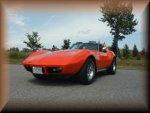
The bottom frame is my 78
[Modified by Nomad78SA, 9:54 PM 12/20/2001]
You need to check how you typed your pic address. Come by the house sometime. I posted your pic for others to see.
Neil in Tenn
The bottom frame is my 78
[Modified by Nomad78SA, 9:54 PM 12/20/2001]

Le Mans Master

Joined: Apr 1999
Posts: 6,134
Likes: 46
From: Raleigh North Carolina
Re: Gravity Brake Bleeding question. (Sleper)
Regardless of how you bleed your system, the "sludge" in the calipers will not come out. The only way to clean a brake system is to dis-assemble it and manually remove the sludge. Air pressure will not remove the sludge either. Sludge tends to accumulate at the pistons and in the master cylinder because that is where the "rubber" parts are that produce the majority of the sludge. There will not be anything more than a slight film in the lines and/or in the hoses, and this cannot be flushed out. Running d. alcohol through the system will help, but there is nothing short of a manual cleaning (or component replacement) that will remove everything. A regular brake system flush is good preventative maintenance (especially with DOT 3/4), but the only way to extract the sludge is to take the system apart and manually remove it. This is why it takes a lot of fluid to "flush" a dirty system. The sludge at the calipers and M/C dissolves slowly as fresh fluid passes by... but you will never get it all out with a flush. This is based on my experience as a "profesional" mechanic over the past 30 years. After having flushed systems until clear fluid came out, I have had to then rebuild master cylinders (disturbed by the flushing & piston travel past the rust ridge) and then re- bleed the system. The master cylinder would always still have a ton of sludge in it, even after a thorough flushing. Ditto for the calipers.
As posted, the fluid will gravity bleed slowly.
I use gravity bleeding and/or a one-man "two man" bleeding method. By cracking each bleeder separately, and having it attached to a hose which is already partially submerged in fluid, you can pump the master cylinder to bleed the brakes without any fear of air re-entering the lines. The trick here is to crack the bleeder just enough to let the fluid flow, but not so loose that air will come back in past the bleeder threads on the pedal up-stroke. The looser the bleeder, the more chance there is that air will get sucked back into the caliper on the pedal up-stroke. I used a clear juice glass and vacuum line until they came out with that inexpensive plastic cup with the hose nipples attached. In a "real" two-man operation, the second guy opens & closes the bleeder at the correct time to avoid the air issue.
Vacuum pumps tend to draw air in past the piston seals, which causes problems rather than fixing them. It can also suck air at the bleeder threads, but this does not affect the system. If you take it easy with the pump, you can draw the fluid without sucking air past the seals, but this slows you down and sort of defeats the purpose of the pump. Generating a lot of vacuum real fast is what causes the air to be drawn in past the seals, and you can end up with worse brakes than when you started.
Blowing the lines out is a good suggestion. There is no reason to gravity bleed in this case...you are just gravity "draining", not bleeding. Just make sure you have an air/water separator (trap) in your air supply or you may introduce additional moisture into the system. Fresh DOT3/4 fluid will absorb this moisture and the self destructive cycle begins all over again. I use this method for clearing brake lines, but I have 3 traps in my air supply lines. And, yes... the fluid goes everywhere. Wrap a shop rag around the end fittings (not a paper towel).
[Modified by Tom454, 10:38 AM 12/21/2001]
As posted, the fluid will gravity bleed slowly.
I use gravity bleeding and/or a one-man "two man" bleeding method. By cracking each bleeder separately, and having it attached to a hose which is already partially submerged in fluid, you can pump the master cylinder to bleed the brakes without any fear of air re-entering the lines. The trick here is to crack the bleeder just enough to let the fluid flow, but not so loose that air will come back in past the bleeder threads on the pedal up-stroke. The looser the bleeder, the more chance there is that air will get sucked back into the caliper on the pedal up-stroke. I used a clear juice glass and vacuum line until they came out with that inexpensive plastic cup with the hose nipples attached. In a "real" two-man operation, the second guy opens & closes the bleeder at the correct time to avoid the air issue.
Vacuum pumps tend to draw air in past the piston seals, which causes problems rather than fixing them. It can also suck air at the bleeder threads, but this does not affect the system. If you take it easy with the pump, you can draw the fluid without sucking air past the seals, but this slows you down and sort of defeats the purpose of the pump. Generating a lot of vacuum real fast is what causes the air to be drawn in past the seals, and you can end up with worse brakes than when you started.
Blowing the lines out is a good suggestion. There is no reason to gravity bleed in this case...you are just gravity "draining", not bleeding. Just make sure you have an air/water separator (trap) in your air supply or you may introduce additional moisture into the system. Fresh DOT3/4 fluid will absorb this moisture and the self destructive cycle begins all over again. I use this method for clearing brake lines, but I have 3 traps in my air supply lines. And, yes... the fluid goes everywhere. Wrap a shop rag around the end fittings (not a paper towel).
[Modified by Tom454, 10:38 AM 12/21/2001]

Racer

Joined: Apr 2000
Posts: 499
Likes: 0
From: Kristiansand
Re: Gravity Brake Bleeding question. (JRChurch)
I got some experience with this last year, bleeding weekly due to air caused by runout....
At my car only gravity bleeding worked. Any pedal pumping, even with an open system (hose from caliper submerged in can with brakefluid) caused air to enter unless the pedal was released very slowly.
(Last winter I got rid of the runout, no airsucking anymore.)
Now I'm going to replace all the seals which brings up another question:
Are the piston springs really necessary?
Ask because I assume removing them might improve milage slightly.
At my car only gravity bleeding worked. Any pedal pumping, even with an open system (hose from caliper submerged in can with brakefluid) caused air to enter unless the pedal was released very slowly.
(Last winter I got rid of the runout, no airsucking anymore.)
Now I'm going to replace all the seals which brings up another question:
Are the piston springs really necessary?
Ask because I assume removing them might improve milage slightly.
Le Mans Master
Joined: Apr 1999
Posts: 6,134
Likes: 46
From: Raleigh North Carolina
Re: Gravity Brake Bleeding question. (Ingar, Norway)
My parents named me "Thomas" and I have lived up to the name... re... "doubting Thomas".
When I first heard about removing the springs, I had a severe case of "doubt", but several forum members have done this and claim there are absolutely no ill effects. The purpose of the springs is to keep the pads close to the rotors for immediate contact/response when the brake is applied. I guess (according to them) any increase in air gap caused by spring removal is not discernible. I wonder... if you autocross... would there be a problem? Anyhow.... I am willing to try it at least. If I don't like it, I can just pop them back in. Tearing calipers apart is not a big deal, just time consuming to re-bleed the system.
Anyone who has done Vette brakes knows that it is difficult to push the pistons back in the calipers when inserting the pads, so it is obvious that they won't just "float" back into the calipers by themselves. They'll neeed a little help from rotor runout. I feel my doubt easing up a little. By the way, I also use gravity bleeding as my "primary" method, with excellent results. Every now & then, I'll do the hose & cup trick just to get things moving along a little quicker.
When I first heard about removing the springs, I had a severe case of "doubt", but several forum members have done this and claim there are absolutely no ill effects. The purpose of the springs is to keep the pads close to the rotors for immediate contact/response when the brake is applied. I guess (according to them) any increase in air gap caused by spring removal is not discernible. I wonder... if you autocross... would there be a problem? Anyhow.... I am willing to try it at least. If I don't like it, I can just pop them back in. Tearing calipers apart is not a big deal, just time consuming to re-bleed the system.
Anyone who has done Vette brakes knows that it is difficult to push the pistons back in the calipers when inserting the pads, so it is obvious that they won't just "float" back into the calipers by themselves. They'll neeed a little help from rotor runout. I feel my doubt easing up a little. By the way, I also use gravity bleeding as my "primary" method, with excellent results. Every now & then, I'll do the hose & cup trick just to get things moving along a little quicker.










