When you click on links to various merchants on this site and make a purchase, this can result in this site earning a commission. Affiliate programs and affiliations include, but are not limited to, the eBay Partner Network.
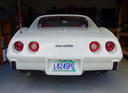
'77, power brakes. Rebuilt the master cylinder with a kit from Zip. Bench bled the MC and bled the brakes with the Motive, didn't touch the brake pedal at all. Started the car for a test drive and the brake light was on bright. Stabbed the brake a few times and the light seemed to go out. Started out for a short ride and noted that the brake light was still lit but dimly. Pedal was hard and the brakes seemed to be working well. Heading home suddenly the brakes were on pretty hard with no input from me. Barely coaxed it home, parked in the driveway and now the brakes are locked solid, can't budge the car. Front wheels seem to be hot, compared to the rear. Any ideas as to what the issue might be or where I could start to troubleshoot would be appreciated. Meanwhile I'm hoping that as the brakes cool I might be able to coax it into the garage.
Same master and booster, just put in a MC rebuild kit. Is piston depth an issue in that scenario? The rear MC piston sits back against the retaining clip same as the old one.
edit: After sitting for 1/2 hour the brakes released enough to move it into the garage. Brake light is lit bright. Master is full.
This is the old piston as installed in the MC. There's a conical shaped recess in the back end of the piston. Is that where the problem would be if piston depth was the issue? That recess would be a different depth? I'm also at a loss as to why that would cause the brake light to be on.
This is the old piston as installed in the MC. There's a conical shaped recess in the back end of the piston. Is that where the problem would be if piston depth was the issue? That recess would be a different depth? I'm also at a loss as to why that would cause the brake light to be on.
That would be the recess. If the depth is less then it would be pushing the master cylinder in and applying the brakes when not desired.
I measure .018" difference in depth between the new piston (.267") and original (.285"). Would that be considered a significant difference? That is to the very bottom of the cone, the booster rod doesn't ride in the bottom as you can see from the witness mark. What's the remedy? The booster rod doesn't seem to be adjustable.
Did you know that you can get a OEM NEW AC/Delco Master Cylinder with correct casting number for around $40.......
I'm sure I could. Would it have my correct date code?
Seriously, that's an option. Actually, I like working on the car, rebuilding the original MC is the kind of challenge I like. Call me crazy.
will the new seals swap to the old piston ? If so try that
Started to try that this AM. Seals are very difficult to remove, I didn't feel I could get them off the new pistons without damaging them. I really don't feel it's the piston. The recess is the same and the booster rod marks it at about the same spot.
Yes, the '77s have non adjustable booster rod. Was there a gasket between the MC and booster? I recall just a chunk of foam there, not noteworthy.
I do not believe the 0.018 difference in length of the two pistons is the issue. However, I do believe that where the rod seats itself in the chamfered hole is the issue.
If the new pistons hole is slightly smaller, the booster rod is now technically too long. Not allowing the brakes to fully release.
Somewhere I read that a gap of 0.060 is needed between rod & piston. You may not have that.
Started to try that this AM. Seals are very difficult to remove, I didn't feel I could get them off the new pistons without damaging them. I really don't feel it's the piston. The recess is the same and the booster rod marks it at about the same spot.
Maybe it's time to check the rubber lines in the system ?
Maybe it's time to check the rubber lines in the system ?
Changed them all 9 months ago.
I like keeping fresh fluid in the system but seems like I'm flushing it way too often lately. Did it again a couple months ago for brake pads.
Maybe the proportioning valve is stuck or has a air pocket in the valve. Happens sometimes when you use a power bleeder. Your old MC piston indicates that the MC you have on the car was a rebuilt unit. Also did you get the correct rebuild kit? Zip has two different kits. Your car should most likely use a kit for a 76 model year as the car was built in 76. In 77 production and up the MC kits are different.
Last edited by Gunfighter13; Mar 21, 2020 at 02:02 AM.
Maybe the proportioning valve is stuck or has a air pocket in the valve. Happens sometimes when you use a power bleeder. Your old MC piston indicates that the MC you have on the car was a rebuilt unit. Also did you get the correct rebuild kit? Zip has two different kits. Your car should most likely use a kit for a 76 model year as the car was built in 76. In 77 production and up the MC kits are different.
Thanks, some stuff for me to think about there.
I suppose it's possible the MC was rebuilt 25 years ago before I got the car but the casting is the correct date code, very late '76. Very likely it's the original.
I've scrutinized the on-line photos of '76 vs '77 rebuild kits and I'm unsure what the difference is. I suppose I could call Zip and see what they say about which kit I should be using. I know the piston diameters on this '77 rebuild kit match the pistons I'm removing as does piston and spring lengths and the distance between piston lands and seals. The most significant difference is the old rearward piston has a o-ring in one position vs the new which has a lip seal. Not a big deal I think.
I hope you are right about the proportioning valve. The brake light did come on so maybe. When I bleed again I would think I'd see some indication of that. Or fix that.
I think I'm going to reassemble, re-bleed, and go from there.
A few more photos, old vs new. In case anyone sees something I'm missing.
Last edited by revitup; Mar 21, 2020 at 09:48 AM.
Reason: Added photos.
I believe Rev has the correct kit. The 68-76 primary piston is different as it excepts the adjustable rod assembly.
If you do a search, you can see the differences between the 68-76 & 77-82 primary pistons.
Kits:
68-76 GM# 18001018
77-82 GM# 18002379
Looking at the last photo / bottom photo, there is quite a difference in the design overall. Noting that at the top of the unit, just under the two different types of seals, there is a considerable gap there. The "O" Ring and the Lip Seal appear to be identical in size / thickness. But under the new piston is that gap.
IDK if that would keep the caliper pistons from receding or not.
Back in the 60s I would rebuild single reservoir MCs. But with todays speeds, traffic, people walking out in front of you, I would never do that. Especially with the low grade quality parts today. I would be terrified of a brake failure, hurt or kill somebody or wreck a Vette. But I see what your intensions are.
Looking at the last photo / bottom photo, there is quite a difference in the design overall. Noting that at the top of the unit, just under the two different types of seals, there is a considerable gap there. The "O" Ring and the Lip Seal appear to be identical in size / thickness. But under the new piston is that gap.
IDK if that would keep the caliper pistons from receding or not.
Back in the 60s I would rebuild single reservoir MCs. But with todays speeds, traffic, people walking out in front of you, I would never do that. Especially with the low grade quality parts today. I would be terrified of a brake failure, hurt or kill somebody or wreck a Vette. But I see what your intensions are.
I'm thinking that gap is necessary with the lip seal design to allow fluid to get behind the lip.
I do wonder if it's possible that one of those lip seals could 'flip' as the piston is being pushed into the bore on assembly. Doesn't seem likely though.
Designer Imagines A Corvette That Looks More Like a Corvette Than the Corvette
Slideshow: A Jaguar designer's personal project imagines what a modern front-engined Corvette might look like if Chevrolet revisited the golden age of the Stingray.






 Rebuilt MC, Now Big Problem