When you click on links to various merchants on this site and make a purchase, this can result in this site earning a commission. Affiliate programs and affiliations include, but are not limited to, the eBay Partner Network.
I have been debating doing this and in some sense tracking the build of my 1990 Coupe. I bought it 8 years ago and man has it gone through changes. Some better some worse. I guess I'll start with an overall Mod list and timeline. Mods if this is not the right place for a build thread I'll happily move it elsewhere.
With that out of the way here goes. At the time of writing this I have done the following mods to the car:
1. Engine rebuild - Bored to 4.030, KB Claimer pistons, new bearings, gaskets and hand balanced the rotating assembly.
2.TPIS MiniRam II- Sized for 1205 Gasket, Includes FIC 40# injectors
3.AFR 195 Enforcer heads - 2.02/1.6 valves, 64cc chamber, Proform Super-Street 1.6 Roller rockers, ARP Head Stud kit 134-4001, Mr Gasket MLS Head Gaskets 4.035 x 0.040.
4. Comp Xtreme Energy 8-503-08
5.Headman 1 5/8" headers, pup cat delete, Flowmaster 4" high flow main cat, Dual mode axle back exhaust.
6. Megasquirt- MS3, V3.0 main board with 3x expansion and Knock detection.
7. Vortec ignition system - Digital crab style distributor and composite Vortec timing cover with sensor and reluctor ring from a 1997 roadmaster.
8. Custom engine harness - Trimmed out the fat of the old harness, rewired with new wire and terminals, replaced broken connectors, updated the dual fans to work in series.
Before the current setup, this engine underwent an experiment with the LT1 top end I had asked about many years ago. It worked well for a few years, until one of the welded-in plugs cracked, leaking coolant into the block. This also cued me into the damage to cylinder #8 from ingesting something steel that I could not identify. In the next few posts, I'll go into more detail of the individual mods and history of each change this car underwent. I won't drone about the obvious, like when I first bought it; the car hadn't run in over 5 years, meaning the fuel system was trashed. The WHOLE system: tank, pump, filter, and injectors. I also had a fun time cleaning out the engine from oil that sat for God knows how long and turned to sludge. A mix of gas, diesel, Marvel Mystery Oil, and trans fluid pumped through to clear the passages, and after an idle for 15 minutes on cheap Walmart-brand conventional to flush that out, it was spotless. I'll do my best to include as many pictures as I can find from this 8 year journey that has lead to what I currently have.
Last edited by Space387; Mar 26, 2026 at 10:30 AM.
As mentioned above, this car was purchased from a friend's family as a "dead on arrival" project. The previous owner said it was parked because of a coolant leak they couldn't find. This caused it to sit for a bit over five years in the Florida heat. I believe it spent a decent amount of that time outside, judging by the damage to the interior, paint, and acrylic roof.
The car had a few redeeming qualities that pushed me to jump at it. First off, it would be my first Corvette. My first time driving one was a buddy's 1990 coupe with the 700R4. It had the base-level suspension and was likely a dealer-ordered stock unit, as it was white with a red interior and an automatic. This put the C4 dear to my heart, with the C5 being a close second because the C5-R was my hero car when I got into watching endurance racing as a teen. The other two factors that pushed me to say "yes" to this car were the RPO codes: Z51 and MN6. This meant sport suspension, bigger brakes, and a coveted ZF6-40. For a very reasonable four-figure price, I was able to take this car home two weeks later.
As noted, the fuel system was shot and the tires were garbage. The weatherstripping was cracked and falling apart, but none of this should surprise anyone. It took about six months to gather the parts and find the time to get it running regularly. I spent the next few years chasing that coolant leak with no luck. The lines were good in the engine bay, the engine was dry, and the oil was free of coolant—and then the floor of the passenger compartment started getting wet. I thought I found it: the heater core had, in fact, sprung a leak. I was able to pilferage a replacement from my 94 V6 firebird
Instead of trying to fix it with the dash in, I went "all in" and pulled the dash, the seats, and the carpet. I did this to add sound deadening to the car to cut down on noise. It helped a little, but this car is old enough that everything rattles and squeaks anyway, so the gains were marginal. With the heater core replaced and repairs done to the dash frame with a 3D printer and fiberglass mesh, I hoped the coolant issue was a thing of the past. Sadly, it was not.
I decided to go all in and pull the heads to check for a crack. Finally, with certainty, I found my leak. Be it a casting flaw or a gasket failure, there was a channel dug between cylinder #7 and the rear coolant passage in the aluminum head. As a band-aid, I threw a new set of gaskets in and started my quest for a head swap. Because I hated how my LT1 Firebird Formula was faster in everything but its 60-foot time than my Corvette, I set out to fix that.
Enter my LT1 top-end conversion. I'll have to dig out the pictures and find the dates, but I believe I spent 2–3 years searching for a set of LT1 heads and an intake so I could start the modification process. The obvious changes needed were to plug the coolant passages for the reverse-flow cooling and to add a distributor location on the intake. Using a 3D printer and some aluminum stock from Lowe's, I did my best to hand-craft the shim for the distributor and make the coolant plugs. In order to avoid swapping to a small-cap distributor, I elected to remove the entire EGR passage and block from the back of the intake. When you include the material removed from the side, it brought the total weight down to 22 lbs—down from nearly 30 lbs in stock configuration and the 50 lbs of a TPI intake.
The next problem to face was the coolant flow. Most people only use the intake so they can tap the crossover ports in the front or back and remove the coolant that way. Since I was using the heads too, I had to find a different way. The solution came with AN-12 fittings I had the machine shop weld directly to the front face of the heads. Of course, before doing this, I had to ensure they didn't conflict with the accessory brackets. This was plumbed to an external thermostat housing that I mounted to the water pump. For fuel I elected to keep the stock hard lines going to the front of the engine and use a pair of AN6-M16x1.0 adapters. The rubber fuel lines weren't the most beautiful option but they worked. I priced out AN fittings and hard lines for the same section and the cost was going to be unreasonable so I elected not to go that route.
Why LT1 heads? In my case, they were "561" heads from a '97 Formula. They flow about the same as the aluminum "113" heads, but mine were damaged and I wanted to try something unconventional. I ported the heads myself, upping the intake runners to 180cc across the board and the exhaust to 73cc. The other benefit was the drop to a 54cc combustion chamber. When coupled with the COMP 08-503-8 cam, this car came alive and ran beautifully for a few years. I dove into tuning the stock 7277 ECU with a fair bit of success, thanks to a few years of using MegaSquirt on my Firebirds in the past. I had to make some radical changes to the fuel and spark tables over 4500 RPM, though, as the car had a lot more to give.
At the same time, I ventured into chasing down the notorious drone of the C4. My first stabs at it found the mufflers rotting away internally, so I went with Walker replacements. That was a mistake. They are worse about drone and only flow out of the outboard pipe, choking the engine. I also found the main catalytic converter was failing, so that was replaced with a shorter high-flow cat. After dealing with the drone for too long, I researched resonator pipes that imports use to kill drone. This got me thinking. We have a rear Y-pipe, and from the split to the outboard tip, it is about the right distance for a quarter-wave at the 1400–1600 RPM drone range. I tried adding a valve just past the Y-pipe on the muffler input pipe and gutting that muffler. The result was that if it was closed, the car had almost no drone. If open, it had a rather pleasant sound under power. Using a sealed metal-gear servo and an Arduino, I controlled it from a switch just below the cigarette lighter plug. I wanted it to be ECU-controlled but was unable to get the stock ECU to talk to the Arduino.
Another issue I spent years chasing was a vibration that came on hard at 3000 RPM regardless of power and held steady to redline. This completely defeated the gains of the LT1 top end and drove me nuts. I tried a new clutch disk, checked the accessory system, checked for misfires, and checked for anything related to the engine, but I came up empty. I did find that the last owner had worked on this car, though. The dual-mass flywheel was gone and in its place was an aluminum flywheel. Also, to my chagrin, the transmission had a "blue tag" on it, not a "black tag." Sadly I was unable to fix that issue before the LT1 top end was removed for the current build.
Last edited by Space387; Mar 25, 2026 at 01:31 AM.
In August of 2024, I found that I was losing coolant again. At first, it was only when I would spin the engine out to near redline, but that quickly became all the time. I was also getting oil and combustion gases in the coolant, so I knew something internal was going wrong. When I pulled the top end off, I was met with a few presents. First and most obvious was the damage to number 8. Something made its way into the cylinder and chewed up the piston and head. The other issue I found weeks later during a more thorough exam was one of the plugs had cracked at the weld, causing coolant to leak into the valley.
It wasn't until November that I was able to get the block out, stripped, and sent off to a machine shop for work. They did the usual for a bore and hone: cleaned it, line honed it, bored it .030 over, and decked the block. During the two months the block was off, I started buying parts. My first choice for pistons was Speed-Pro, as they seemed to be a decent quality, but I was sorely mistaken. They were advertised as balanced. When I went and measured, there was greater than a 5-gram difference in the piston/wrist pin combinations. I spent a day fixing this, where the pistons and pins were individually balanced to within 0.5g of each other, only to find they didn't fit the bores. I had to drag the block back to the machine shop assuming they messed up, only to be educated on how to properly measure a piston and find that my piston skirts had a diameter of 4.033". Let that sink in for a second. Aluminum pistons advertised for a 4.030 bore are 4.033... Normal clearance is 0.0015–0.002" bore to piston skirt, not an interference fit. To compound this, I already had the crankshaft balanced for these pistons.
Summit was great about doing a no-questions return, even after I destroyed two trying to remove the press-fit wrist pins. I went with KB Claimer pistons instead. I balanced them the same way, and when I was sure they fit, I had the balance shop take care of installing the pistons to the connecting rods. They were also kind enough to mark them with the cylinder and direction just to be sure I didn't mess this up. As much as I want to believe I know better, I still appreciated the forethought.
In speaking of having the rotating assembly balanced here is a bit of information some people may not agree with but here we go. IF you have an L98 with a single rear main seal there is a possibility you have a crankshaft that is not externally balanced in the rear. The machine shop that I brought my parts to even noted how much weight they had to pull from my crank to balance it fixing my ungodly vibration at 3000 RPM. The flywheel is balanced to GM standard for this engine by fidanza leaving us to pull a half inch bore about 2 inches deep from the rear counter weight of the crankshaft.
As I assembled the engine, I elected to go for aftermarket heads instead of fixing my 113 heads. AFR Enforcer 195cc (AFR-1006) were my weapon of choice for this build. AFR was persistent that I should go for the CNC-ported 180s or the as-cast 210s because the ones I wanted are discontinued. What suppliers like Summit have left are supposedly it. The CNC-ported heads would set me back nearly $1,000 more than what I got, and the 210s would all but kill my low end for very little gain. Thankfully, they were and still are available at Summit as of March 2026. Another upgrade I went for was ARP head studs. I have been using the cheap TTY bolts for both my LT1 Firebird and this engine up to this point—four pairs total over the years now. But something said I should do this right. The ARP 134-4001 stud kit seemed to be the best choice for what I was building: cheaper in the line of kits, but still a solid stud kit. The heads came with springs, valves, and seals installed from AFR, so I didn't have to do that work or deal with lapping.
I did have to decide which rockers I was going with, because you can't do all this and run stock stamped rockers. Proformance Super-street is again on the cheaper side, but had reasonable reviews for the price. Due to the cost of the heads and intake, I didn't have the funds for a super high-end set of rockers, but I can always upgrade if these are truly garbage. As a side note, their customer support is amazing. About eight months after getting the engine running, I took a valve cover off to try and diagnose a lean cylinder only to find one of the E-clips for these rockers had shattered. After a single email and a few days' shipping, they sent a whole new rocker without question.
Back on track: I retained the COMP Xtreme Energy 08-503-8 cam. I had looked into higher lift cams and other profiles, but the gains weren't very large compared to what I was running, so that $550 went into other parts. The last major part I needed was an intake. There were other options for the price I paid, but I can't argue—the MiniRam II just looks right. The mods I did to the LT1 intake to remove the unused EGR passage left it open, similar to the MiniRam II. For the most part, at a glance, the uneducated wouldn't see a difference. But looks alone don't make horsepower, and we all know that is what really sells performance parts. It took months for them to queue and mill my intake, but it was worth the wait.
The three main complications were the throttle cables, routing fuel lines, and mounting a MAP sensor. The MAP sensor required me to 3D print a bracket for it. I tried adapting a metal plate but was worried the steel would mar the aluminum rail, so PETG it is. Mounting the throttle and cruise control cables should have been plug-and-play, but I had to shorten them for the LT1 intake years ago, and sourcing new ones seemed excessive compared to making a new bracket. A little cutting and welding, along with a MAP gas bluing of the steel, and I have a custom bracket that fits perfectly, althougha bit snug. Fuel lines were a pain in my backside, though. I toyed with keeping the stock hard lines that go to the front of the engine, but seeing the braided lines wrapped around this new intake didn't sit well with me. I tried routing it under the center and out the front, but it made a hard bend under the throttle body I didn't like. There were too many places to risk damaging the fuel lines. I elected to take inspiration from the LT1 Corvettes and route them over the valve cover and down the passenger side of the engine. Reusing one of the adapters, the feed line plugged right into the fuel filter. The return line required about six inches of hard line to make the turn up and a compression fitting.
I did keep a few items from the stock engine. The valve covers are original with the internal area cleared for the large rockers; I kept the stock 48mm throttle body and originally stuck with the original HEI distributor.
Last edited by Space387; Mar 26, 2026 at 10:35 AM.
When the engine rebuild was started, I considered keeping the stock ECU for about half a second. I dug through a box of parts in my office and found I still had a functioning Megasquirt unit that needed a new daughterboard. I made an attempt to adapt Megasquirt into a ’7277 ECU case and factory plug with some success. It took about two weeks of planning and referencing the FSM to figure out what I needed to keep and what was going into the round file. Some major changes were the inclusion of a 22-pin bulkhead connector where the harness passes through the firewall on the passenger side of the engine. On top of that, the fuel rail was wired for sequential fuel injection, and the fans were changed from individual circuits in parallel to a single circuit in series.
The change to the fans is something anyone can do without touching the ECU. It is done by adding a third relay and changing how power is routed between the fans. What it does is: when the Fan 1 command is given by the ECU, it triggers one relay, allowing power to run through the two fans in series, cutting the effective voltage in half. By turning on the Fan 2 command, it powers relays 2 and 3, separating the circuits of the two fans so they run at full power. It is how the fans on the 4th gen F-bodies are wired.
The other changes to the factory design at first were to trim out some unused connections like the ALDL leading from the cabin to an ECU that talks in CAN, the duplicate VSS lines going to the non-existent active ride module, and a few other odds and ends. To top this all off, the entire harness was rebuilt by hand. New connectors where old ones had broken, new terminals, and all new wire to make sure there was no chance of a short. That took about 2 weeks to do around work and the children, and it had to wait to start until the engine was in so I wasn’t guessing at locations.
There was a steep learning curve and a few more changes made from the initial start and idle on May 18, 2025 to June 20, 2025 when I completed the ignition system upgrade and integrated the sequential fuel system. I had been wanting to upgrade this engine from the start to go sequential and be capable of coil-per-plug, but the funds required were... excessive. In the end I got half of what I wanted because I had become tired of chasing spark and tuning issues. A Vortec timing cover, Hall effect crank sensor, and crab-style distributor were purchased to make the upgrade. A note the Vortec timing cover needs to have a piece trimmed off and the alignment pin holes drilled all the way through.
This allowed the engine to be run on a sequential fueling strategy and have much closer control of spark timing. Anyone who has played with a distributor knows there is a significant amount of play between the cam and the drive gear of the distributor. That is compounded by any slop in the timing chain. By using the crank 4x wheel from a 96/97 Roadmaster, it takes all the play out of the equation. The sensor is reading piston location as close as possible without physically looking at the piston itself. As a result, one can run a little more aggressive on spark timing.
An added benefit of going sequential in this manner is injection timing. Having the injectors flow at the optimal time can unlock a few extra HP while not having to run excessively rich. The mindset is to have the fuel spend as little time pooling in a closed runner as possible.
Another component to take into consideration for this spark system was the coil and driver. I had originally picked up this unreasonably large coil from Summit thinking it was needed. In truth, it had no good place to be mounted, and the button-tip-to-Vortec plug for the coil-to-cap wire was going to be a nightmare to source. Instead, I looked back at the LT1 Firebird sitting next to my Corvette and thought, that system has worked really well for me. So I bought a coil driver for it and the coil from a 1997 K1500. A custom mount places it just over the valve cover and secures it nicely.
The last major piece of this puzzle was the ECU. Most people in the DIY world have at least heard of MegaSquirt in passing. The name sounds funny, and those who use them seem to have this masochistic love for them. I found them back in 2010, and my first unit was an MS1 on the old V2.2. That means very little to the lay person, so here is what it did. It was able to take a simple crank signal and provide either batch fire for an unlimited number of injectors or “semi-sequential” injection for 2 banks. It didn’t have native spark control and was very limited on its outputs for things like fans, fuel pumps, and any peripherals. This was a blast to learn on with my old V6 Firebird and that dog L32 3.4L engine. You couldn’t hurt it—I tried.
What I have now is leaps and bounds ahead, though still “limited” compared to things like a Terminator X or the MS3PRO. I have the legacy MS3, V3.0 board, and a 3X expansion board. It lets me run everything the stock ECU could run plus some. Things like individual injector tuning, gear-specific shift indicator, dual fuel and spark tables, and native support of dual wideband O2 sensors, to name a few. If I integrated a wheel speed sensor to one of the front wheels, I could add in TCS if I wanted. It also has a few types of launch control and flat shift ability for stick shift cars like mine.
The feature I am focused on most right now is the ability to broadcast on a CAN bus. This lets me have a nearly unlimited number of external modules for extra sensors or to integrate custom data into the dash.
This leads into the newest project and my future endeavors: replacing the CCM. We all know the CCM was a cool idea, but its tech is nearing 40 years old, and you can do the same with a $30 Arduino—and that’s exactly what I plan to do. I currently have an Arduino Uno talking to MegaSquirt for the bi-level exhaust, allowing it to automatically activate under load. When I transition to having it on the CAN bus, it will also be tasked with running all the warning lights, controlling the new display to replicate the existing LCD, and handling the lighting of the dash and interior. I am hoping that I can build this in such a way that it can use the factory under-dash harness. If so, it would be possible to share the design and code with others to go this route. Any aftermarket ECU that has CAN capability would be able to talk to this.
There are also plans for a better exhaust in the near future. Dual 3-inch from the collectors to the bumper with a special muting system I have been working on. It will still be bi-level so my wife won’t refuse to ever get in the car again.
Last edited by Space387; Mar 25, 2026 at 02:11 AM.



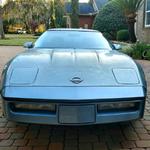


 Ventures into modernizing a C4 (build thread)






 I found them back in 2010, and my first unit was an MS1 on the old V2.2. That means very little to the lay person, so here is what it did. It was able to take a simple crank signal and provide either batch fire for an unlimited number of injectors or “semi-sequential” injection for 2 banks. It didn’t have native spark control and was very limited on its outputs for things like fans, fuel pumps, and any peripherals. This was a blast to learn on with my old V6 Firebird and that dog L32 3.4L engine. You couldn’t hurt it—I tried.










