


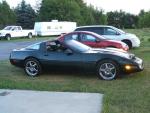


What is too much torque?

Safety Car


Joined: May 2002
Posts: 4,659
Likes: 82
From: Toronto ontario

Quite an interesting thread.
I wrote a really long post sharing a piece of my mind but it was turning into a novel I decided to just add that in MY opinion there are a few ways to best optimize torque for driveability..
Using a runner length that provides maximum flow at the desired rpm will give you more torque where you want it.
Second is to just build the BIGGEST cubic inch motor as possible. More cubes = more torque everywhere period. A BIG cubic inch motor with undersized heads and cam and a manifold that provides the best runner length that optimizes pressure waves at the desired rpm for torque.
I really just dont understand why you said most guys focus on HP and not torque. Well let me say this.. HP > torque. Most guys build engines to go faster no? Going faster is all about the HP NOT the torque.
I like that you want something different. I believe you want instant throttle response with tons of torque down low. There's nothing wrong with that. I just think the focus of the thread needs to be 'how many Cubic inches is enough'. Not torque. You increase Ci and you get increased torque which = increased Hp which = A faster car. Maximizing Torque at the expense of HP is like building a motor to lug more weight or for a tow truck motor. Focusing on torque and then gearing numerically higher is an absolute disaster. Mark my words on that. with a stump puller going from 3.45 to a 4.09 is throwing the advantages of that motor to the wind. a torquey low revving motor NEEDS a lower numerical gear to take advantage of the torque.
Sure you can get good throttle response and a good 'push' when dipping into the throttle after spending thousands on a stroker just for low end torque. I just think the money would have been better spent on the biggest CI possible. In the end if you are happy with the results that is all that matters.
Im drunk
I wrote a really long post sharing a piece of my mind but it was turning into a novel
I decided to just add that in MY opinion there are a few ways to best optimize torque for driveability..Using a runner length that provides maximum flow at the desired rpm will give you more torque where you want it.
Second is to just build the BIGGEST cubic inch motor as possible. More cubes = more torque everywhere period. A BIG cubic inch motor with undersized heads and cam and a manifold that provides the best runner length that optimizes pressure waves at the desired rpm for torque.
I really just dont understand why you said most guys focus on HP and not torque. Well let me say this.. HP > torque. Most guys build engines to go faster no? Going faster is all about the HP NOT the torque.
I like that you want something different. I believe you want instant throttle response with tons of torque down low. There's nothing wrong with that. I just think the focus of the thread needs to be 'how many Cubic inches is enough'. Not torque. You increase Ci and you get increased torque which = increased Hp which = A faster car. Maximizing Torque at the expense of HP is like building a motor to lug more weight or for a tow truck motor. Focusing on torque and then gearing numerically higher is an absolute disaster. Mark my words on that. with a stump puller going from 3.45 to a 4.09 is throwing the advantages of that motor to the wind. a torquey low revving motor NEEDS a lower numerical gear to take advantage of the torque.
Sure you can get good throttle response and a good 'push' when dipping into the throttle after spending thousands on a stroker just for low end torque. I just think the money would have been better spent on the biggest CI possible. In the end if you are happy with the results that is all that matters.
Im drunk

Le Mans Master


Joined: Mar 2002
Posts: 5,889
Likes: 2
From: Castro Valley Calif.
St. Jude Donor '03 thru '26

This is a pretty good thread. My peak torque comes in at 3000 RPMs and is still over 400lbs @ 4500.......I can tell you from personal experience, a torque motor is an absolute blast to drive on the street.......but you don't want to stretch it out to a 1/4 mile track, you'll get smoked

Thread Starter
Race Director

Joined: Nov 2003
Posts: 12,221
Likes: 446
From: Overland Park Kansas
2020 Corvette of the Year Finalist (appearance mods)
C4 of Year Winner (appearance mods) 2019
Build the BIGGEST cubic inch motor as possible. More cubes = more torque everywhere period. A BIG cubic inch motor with undersized heads and cam and a manifold that provides the best runner length that optimizes pressure waves at the desired rpm for torque.
I just think the focus of the thread needs to be 'how many Cubic inches is enough'. Not torque. You increase Ci and you get increased torque which = increased Hp which = A faster car. Maximizing Torque at the expense of HP is like building a motor to lug more weight or for a tow truck motor.
Focusing on torque and then gearing numerically higher is an absolute disaster. Mark my words on that. with a stump puller going from 3.45 to a 4.09 is throwing the advantages of that motor to the wind. a torquey low revving motor NEEDS a lower numerical gear to take advantage of the torque.
I just think the focus of the thread needs to be 'how many Cubic inches is enough'. Not torque. You increase Ci and you get increased torque which = increased Hp which = A faster car. Maximizing Torque at the expense of HP is like building a motor to lug more weight or for a tow truck motor.
Focusing on torque and then gearing numerically higher is an absolute disaster. Mark my words on that. with a stump puller going from 3.45 to a 4.09 is throwing the advantages of that motor to the wind. a torquey low revving motor NEEDS a lower numerical gear to take advantage of the torque.
This thread isn't about what's enough torque...It's about what's too much. Read the title again.
When putting together my build, I wanted a bit of everything. Plus, I have a stick -- which to me -- provides some different possiblities. You can pick the gear you want WHEN you want....
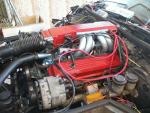
Now, don't lose me...If I found out 450ft/lbs of torque was overboard for a street car, I would have installed an HSR. I had one. I also drove an LS2 and thought "Cool, but hit me harder!". Here's a biggy...I wanted (and like) the look of a polished TPI. (This is a pretty hard thing for most readers to notice in my posts.) I like the look of a polished TPI way, way, way better than a motor with a sea of plastic on top. I also don't care for short, squatty intakes, or big-*** pancakes. Capish?
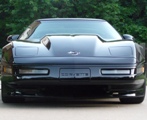
So, as much as it's performance, my car is art. It was a mechanical experiment about what I could UNIQUELY create on my own. It's not a racecar. Like all other pieces of art, either you like it or you don't. I spent lots of time on the details -- like a painter. I got my torque. But, I also got (some) extra power thru my siamesing/porting. I got a way to retain the mpg of the factory 350 (which is 30mpg hwy on a stick!). I also have an easy way to conform to emissions -- if they come around to my state. Even if they don't, it's got converters and is cleaner than an open exhaust car. I also shot for a compromise of lift, spring pressure and longevity. There are many more details too numberous to mention. I'm sure you think about the same issues in your stellar builds!
Most people build performance motors for one goal...to go fast. In that regard, I DO understand where most people are coming from. But, this thread isn't about that. If you don't get it, start from the top and re-read it. Heck, re-read this post if it's still not making sense!
It ain't that hard.
Last edited by GREGGPENN; Jul 31, 2011 at 03:17 AM.
Thread Starter
Race Director
Joined: Nov 2003
Posts: 12,221
Likes: 446
From: Overland Park Kansas
2020 Corvette of the Year Finalist (appearance mods)
C4 of Year Winner (appearance mods) 2019
Oh yeah....I'm not smart enough to figure out if a 400 block will fit in my car. More importantly what changes would affect the suspension and handling.
My builder (and other local builders) told me that even a 396 wasn't worth the extra work/clearancing, etc...to make it worth while. I think the crank sets, pistons, and other supporting parts cost more too.
So, guess what? I did build the biggest motor possible...for me. As it was, I had a couple of injectors go bad and started with the notion of improving the intake...then the springs...then the exhaust...then all the seals. With only a 55k (still relatively unused) stock 350 motor, I created something I shouldn't have even spent the money on. It took all of my severance savings to finish it...plus a couple bucks more.
If anyone thinks for a New York second that I wouldn't like to play with supercharging, turbos, BBC motors, and have money to burn, you're WRONG! Anyone who spends time THROWING money into a 22yr-old car, is nuts. You'll never get it back.
Again, it's the art thing...but something I want to keep for a long time (if possible), screw with as few human lungs as possible, waste as little fuel as possible...etc....
Oh yeah....I'm not drunk!
If people want to talk about how to make the fastest car possible, they're welcome to start a thread about that. Many do. This thread was a decision-making process for a 383 street driven car. I don't see why it can't be expanded to cover the unseen parts that need to be considered for a high-power/high-torque build. Many people don't consider the strength of the entire package....how it will drive after modifications...what's involved with tuning. It's a lot of work. Knowing when to say when is what this thread is about.
Continue as you see fit!
My builder (and other local builders) told me that even a 396 wasn't worth the extra work/clearancing, etc...to make it worth while. I think the crank sets, pistons, and other supporting parts cost more too.
So, guess what? I did build the biggest motor possible...for me. As it was, I had a couple of injectors go bad and started with the notion of improving the intake...then the springs...then the exhaust...then all the seals. With only a 55k (still relatively unused) stock 350 motor, I created something I shouldn't have even spent the money on. It took all of my severance savings to finish it...plus a couple bucks more.
If anyone thinks for a New York second that I wouldn't like to play with supercharging, turbos, BBC motors, and have money to burn, you're WRONG! Anyone who spends time THROWING money into a 22yr-old car, is nuts. You'll never get it back.
Again, it's the art thing...but something I want to keep for a long time (if possible), screw with as few human lungs as possible, waste as little fuel as possible...etc....
Oh yeah....I'm not drunk!
If people want to talk about how to make the fastest car possible, they're welcome to start a thread about that. Many do. This thread was a decision-making process for a 383 street driven car. I don't see why it can't be expanded to cover the unseen parts that need to be considered for a high-power/high-torque build. Many people don't consider the strength of the entire package....how it will drive after modifications...what's involved with tuning. It's a lot of work. Knowing when to say when is what this thread is about.
Continue as you see fit!
Thread Starter
Race Director
Joined: Nov 2003
Posts: 12,221
Likes: 446
From: Overland Park Kansas
2020 Corvette of the Year Finalist (appearance mods)
C4 of Year Winner (appearance mods) 2019
build the BIGGEST cubic inch motor as possible. More cubes = more torque everywhere period. A BIG cubic inch motor with undersized heads and cam and a manifold that provides the best runner length that optimizes pressure waves at the desired rpm for torque.
I really just dont understand why you said most guys focus on HP and not torque. Well let me say this.. HP > torque. Most guys build engines to go faster no? Going faster is all about the HP NOT the torque.
Maximizing Torque at the expense of HP is like building a motor to lug more weight or for a tow truck motor. Focusing on torque and then gearing numerically higher is an absolute disaster. Mark my words on that. with a stump puller going from 3.45 to a 4.09 is throwing the advantages of that motor to the wind. a torquey low revving motor NEEDS a lower numerical gear to take advantage of the torque.
I really just dont understand why you said most guys focus on HP and not torque. Well let me say this.. HP > torque. Most guys build engines to go faster no? Going faster is all about the HP NOT the torque.
Maximizing Torque at the expense of HP is like building a motor to lug more weight or for a tow truck motor. Focusing on torque and then gearing numerically higher is an absolute disaster. Mark my words on that. with a stump puller going from 3.45 to a 4.09 is throwing the advantages of that motor to the wind. a torquey low revving motor NEEDS a lower numerical gear to take advantage of the torque.
You're one of the first people I've seen recommend to use "undersized" heads. I've often thought people miss the opportunity to cam down with these new, higher-flowing heads. But....Should I have picked the 180's? Ehhhh, I don't know.....
I don't think I said I didn't understand why most people build for HP. If I said that...that's when I was drunk!!!
Hopefully, my two posts clarify my view/goals a bit better.And, I'd like to provide a special thanks for supporting why I thought it would be a BAD idea to change gearing on my setup. You are correct. It "needs" the lower gearing to stretch out the power band.
BTW...Another thing people might miss out in this discussion is I tried to port the crap out of an SLP setup. I actually TRIED to get a bit more HP and a bit less torque than the "Stealth 383 article" I linked on the last page. Though I spent HOURS AND HOURS on porting, I didn't get as much as I hoped. I hoped for 370rwhp. I didn't get it. I hoped for a 5200-5300 peak hp point. I didn't get that either. OTOH, I haven't tried running/dynoing it without the Y-piped, catalytic converted, dual-in/single out muffler that feeds my 360-deg-bending sidepipes! So maybe it IS there. Let's say it is!!! (Oh the price we pay for art! LOL)
The torque's there though! And, it's really, really, really not unenjoyable to drive.
Actually, It's quite fun.
Last edited by GREGGPENN; Jul 31, 2011 at 03:37 AM.

Pro

Joined: Mar 2000
Posts: 658
Likes: 7
From: Perth Amboy New Jersey
I did on the page before you first posted. Reading is your friend.
I agree tires make a difference. So does weather, temperature, and fuel blends. When I spun it in 3rd gear the weather was cool, air dense, and oxygenated summer blends weren't in the pump yet.
The 440-450rwtq you'll make in your MR setup won't be before 4k rpms. That's where my torque peaks. It hits faster and harder than yours will. But the party doesn't last (unless you keep targeting those rpms with a close-geared ZF6) Nope...RWHP is not as impressive -- nor should it be for a TPI setup. It peaks at 5k rpms.
If people are laughing at this setup, I don't care. I've laughed at those same people. What comes around, goes around.
I agree tires make a difference. So does weather, temperature, and fuel blends. When I spun it in 3rd gear the weather was cool, air dense, and oxygenated summer blends weren't in the pump yet.
The 440-450rwtq you'll make in your MR setup won't be before 4k rpms. That's where my torque peaks. It hits faster and harder than yours will. But the party doesn't last (unless you keep targeting those rpms with a close-geared ZF6) Nope...RWHP is not as impressive -- nor should it be for a TPI setup. It peaks at 5k rpms.
If people are laughing at this setup, I don't care. I've laughed at those same people. What comes around, goes around.
http://www.katechengines.com/street_...20Portrait.pdf
Pro
Joined: Mar 2000
Posts: 658
Likes: 7
From: Perth Amboy New Jersey
I'll be fun to see your build (and vid too). If I could afford to pile up extra parts, my first move would be to try an HSR and/or FIRST on top to see the results. I had an HSR in my hands but let it go (for too cheap) to Matt. Kinda wish I didn't decide to do that. 
That's because I keep thinking the FIRST is the best street intake to slap on a 383 (or 396). That is for a modest tire-spinner like myself!
I could probably sell my polished intake for enough to buy a FIRST. Of course, I'd have to go thru all that polishing again before I'd be happy.
My bigger issue is to find someone willing to hire me back to work. Then we'll talk about more mods. Maybe....
That's because I keep thinking the FIRST is the best street intake to slap on a 383 (or 396). That is for a modest tire-spinner like myself!
I could probably sell my polished intake for enough to buy a FIRST. Of course, I'd have to go thru all that polishing again before I'd be happy.
My bigger issue is to find someone willing to hire me back to work. Then we'll talk about more mods. Maybe....
Corvette Stories
The Best of Corvette for Corvette Enthusiasts

Every 2027 Corvette Engine Explained
Joe Kucinski
Designer Imagines A Corvette That Looks More Like a Corvette Than the Corvette
Verdad Gallardo
10 Ugly Corvettes That We Still Kinda Love
Joe Kucinski
Top 10 Most Expensive Corvettes Ever Sold on Bring A Trailer
Brett Foote
10 Things Every Corvette Owner Needs (2026 Edition)
Michael S. Palmer
8 Most "Only Corvette Owners Understand" Quirks and Problems
Pouria Savadkouei
10 Reasons the C6 Z06 is Still A Performance Benchmark After 20 Years
Joe Kucinski
How Much Horsepower Every Corvette Engine "LOST" in 1972
Joe Kucinski
Top 10 DOs and DON'Ts for Protecting Your Convertible Top!
Michael S. Palmer
Pro
Joined: Mar 2000
Posts: 658
Likes: 7
From: Perth Amboy New Jersey
450 ft/lbs of torque is not too much for the street,(IMO) if you can handle it. Just because you switch to a HSR or Miniram does not mean you won't have around the same amount of torque. You could have the same, just at a different (higher RPM). The torque placement is based on the total engine package.
My 434 was built for torque! I wanted to achieve at least 600 ft/lbs at the crank, I got 661 @5500 RPM, 763 HP @ 7000 RPM, the Horsepower was still rising at 7000 RPM. I stopped it there because according to Hank the Crank, the piston could run at 7500 RPM. I found where and what my max torque peak was and that was all I needed to know. at 2000 RPM it was around 400 ft/lbs, 3000 RPM was over 500 ft/lbs and 5000 RPM was over 600 ft/lbs. I was happy and bit upset since at 3000 RPM was over 500 ft/lbs, Then 4000 RPM should have 600 ft/lbs, which should mean 5000 RPM would be over 700 ft/lbs, but it does not work like that.
Drifting


Joined: Apr 2011
Posts: 1,925
Likes: 441
From: Albuquerque NM
If the application of reversion wave tuning in long tube runners can give an engine more torque throughout a specific rpm band (See original purpose of TPI in the 305 and 350) then why couldn't someone design and tune a long tube runner intake for a big block that would give that bigblock more torque throughout a specific rpm band?
Maybe that big block would make less horsepower, and could only rev to 5000rpm, but it could also make more torque.
IMO, with runner length tuning, an engine built for torque should be making peak torque numbers greater than it's peak HP numbers.
That however, might be too much torque.
Maybe that big block would make less horsepower, and could only rev to 5000rpm, but it could also make more torque.
IMO, with runner length tuning, an engine built for torque should be making peak torque numbers greater than it's peak HP numbers.
That however, might be too much torque.

Melting Slicks

Joined: Nov 2008
Posts: 2,765
Likes: 5
Not sure if you can/would speak to this but my winter car is a rare Isuzu Vehicross. One of it's strengths and apparent weaknesses is the 9" front/rear diffs. Good stuff really. It was a $30k concept introduced back in the early 90's (Japan). A few were shipped here.
The issue is about those (full-time 4x4) setups. They have a tendency (like Jeeps) to go thru differentials. As a protective measure, I called my local Isuzu dealership AND the U.S. quality representative for this vehicle. I wanted to know if switching to heavier weight gear oil would insure longer life for those gear boxs. They both replied with an emphatic "NO"! They went on to say the use of heavier weight oil could/would actually accelerate wear with the clutches/ltd slip parts.
I have to wonder the same about this type of lube conversion in a Dana44.
Consider we also had this same discussion about motor oils. So...not sure heavier weight is always better. Point well taken about converting to synthetic though!
The issue is about those (full-time 4x4) setups. They have a tendency (like Jeeps) to go thru differentials. As a protective measure, I called my local Isuzu dealership AND the U.S. quality representative for this vehicle. I wanted to know if switching to heavier weight gear oil would insure longer life for those gear boxs. They both replied with an emphatic "NO"! They went on to say the use of heavier weight oil could/would actually accelerate wear with the clutches/ltd slip parts.
I have to wonder the same about this type of lube conversion in a Dana44.
Consider we also had this same discussion about motor oils. So...not sure heavier weight is always better. Point well taken about converting to synthetic though!
The Japanese have built some very tough Limited Slip Differentials too.
The handle high horsepower OK but not big style American V8 sbc stroker or BBC torque levels so well.
You have around 600 ft/lbs of engine flywheel torque in your 1989 C4.
Torque will break rear diff & independent rear parts 1st before horsepower.
I would use a 75-90 w or whatever Isuzo recommends for gear oil.
Use a synthetic gear oil if funds allow.
Synthetic gear oils are superior to any mineral grade gear oils currently made.
Other than the old straight mineral grade 140w gear oil no longer being made.
Might find that old 140w straight gear oil at a diesel shop put away new yet on a shelf.
I find 140w gear oil on occasion.
I have used 85w140 gear oil in racing applications over 1,000HP, torque around 900 ft/lbs.
It works better protecting hypoid ring & pinions gearsets from scoring, shock loading, gear oil breaking down, extreme oil shearing action in high torque & HP applications.
C4 dana 44 is DINKY compared to a Ford 9", Ford 8.8" Chevy 8-7/8" 12 bolt Chevy, Dana 60, 1957-64 Pontiac- Olds rears.
Taking photos later today & post them on my solid axle thread swap.
Of My C4 dana 44 never installed I have.
And that 57 Pontiac Rear.
You will have a better idea of how weak these C4 Dana 44's are really.
Brian
Last edited by 87 vette 81 big girl; Jul 31, 2011 at 10:35 AM.


Melting Slicks
Joined: Nov 2008
Posts: 2,765
Likes: 5
LOL
Too much torque is when You snap the pinion gear head right off the rest of pinion gear shaft,
Not once but several times.
I have seen that happen to one guy that was using a 12- bolt Chevy rear diff & lots of nitrous on launch.
He eventually moved up to a Dana 60 rear.
Nitrous oxide will make a 454 ci BBC create over 1,000 ft/lbs flywheel torque instant on launch.
Thread Starter
Race Director
Joined: Nov 2003
Posts: 12,221
Likes: 446
From: Overland Park Kansas
2020 Corvette of the Year Finalist (appearance mods)
C4 of Year Winner (appearance mods) 2019
I would use a 75-90 w or whatever Isuzo recommends for gear oil.
Use a synthetic gear oil if funds allow.
I have used 85w140 gear oil in racing applications over 1,000HP, torque around 900 ft/lbs.
It works better protecting hypoid ring & pinions gearsets from scoring, shock loading, gear oil breaking down, extreme oil shearing action in high torque & HP applications.
Use a synthetic gear oil if funds allow.
I have used 85w140 gear oil in racing applications over 1,000HP, torque around 900 ft/lbs.
It works better protecting hypoid ring & pinions gearsets from scoring, shock loading, gear oil breaking down, extreme oil shearing action in high torque & HP applications.
Melting Slicks
Joined: Nov 2008
Posts: 2,765
Likes: 5
Does GM ever recommend (or informally say) they would use 85w140 in a Dana44? How does the heavier stuff work to lube/protect the smaller parts in the assembly? I assume there are clutches/smaller bearings in a Dana posi. I don't want to screw them up trying to protect the gears.
Its my recommendation to you Greg since your 383 motor makes somewhere in the neighborhood of 600ft/lbs of flywheel torque.
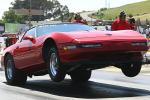
And since you are now experiencing VERY VIOLENT Rear wheel hop on quick takeoffs.
With all that low end torque your Dana 44 won't live forever.
You are shock loading it very bad.
85-140w lubricates the posi-traction clutches, the hypoid ring & pinion gearset, side bearings, pinion bearings, stub shaft bearings, & oil seals just fine.
If you don't feel comfortable with 85-140w gear oil then just use standard 75-90w instead.
When you explode the Dana 44 & the 75-90w gear oil spills everywhere on the ground,
You will maybe remember my recommendation of 75-140w.......
It will buy you more time driving and burning the rear tires off in 1st, 2nd, & 3rd gears.
Brian
Last edited by 87 vette 81 big girl; Jul 31, 2011 at 06:06 PM.

Drifting
Joined: Sep 2002
Posts: 1,642
Likes: 0
From: Suwanee,Ga
First off, Greg your Posts are always entertaining.
BUT...... "Doing a spreadsheet on my situation shows a modifed SLP intake will provide optimum torque using shifting described above. If I go with the HSR, I'd need to downshift to 1st under 40mph or 2nd under 60mph to enjoy the same level of torque. I really don't want to do that.
With that in mind, I'm trying to decide of the rediculous projection of 500ft/lbs of torque at mid-range rpms will constantly spin 315/35 tires all day long (3.33 gears)
...? That was the opening in 2009. Oh... and you spelled ridiculous rong...
See I think the HSR is just money spent .. you HAVE the equivalent.
I know you an air flow junky but take the mechanical advantage!!
Granted 3:90 gears are not pretty as an HSR [ Holley something or other right?] but leaving at idle like your launched by a Saturn booster is nice too?
Get Nitto Nt05's They are like glue... I worry about breaking axels... seriously.... they bite that well.
TJM
BUT...... "Doing a spreadsheet on my situation shows a modifed SLP intake will provide optimum torque using shifting described above. If I go with the HSR, I'd need to downshift to 1st under 40mph or 2nd under 60mph to enjoy the same level of torque. I really don't want to do that.
With that in mind, I'm trying to decide of the rediculous projection of 500ft/lbs of torque at mid-range rpms will constantly spin 315/35 tires all day long (3.33 gears)
...? That was the opening in 2009. Oh... and you spelled ridiculous rong...
See I think the HSR is just money spent .. you HAVE the equivalent.
I know you an air flow junky but take the mechanical advantage!!
Granted 3:90 gears are not pretty as an HSR [ Holley something or other right?] but leaving at idle like your launched by a Saturn booster is nice too?
Get Nitto Nt05's They are like glue... I worry about breaking axels... seriously.... they bite that well.
TJM
Thread Starter
Race Director
Joined: Nov 2003
Posts: 12,221
Likes: 446
From: Overland Park Kansas
2020 Corvette of the Year Finalist (appearance mods)
C4 of Year Winner (appearance mods) 2019
No, GM does not recommend 85-140w gear oil in a Dana 44.
Its my recommendation to you Greg since your 383 motor makes somewhere in the neighborhood of 600ft/lbs of flywheel torque.
And since you are now experiencing VERY VIOLENT Rear wheel hop on quick takeoffs.
With all that low end torque your Dana 44 won't live forever.
You are shock loading it very bad.
85-140w lubricates the posi-traction clutches, the hypoid ring & pinion gearset, side bearings, pinion bearings, stub shaft bearings, & oil seals just fine.
If you don't feel comfortable with 85-140w gear oil then just use standard 75-90w instead.
When you explode the Dana 44 & the 75-90w gear oil spills everywhere on the ground,
You will maybe remember my recommendation of 75-140w.......
It will buy you more time driving and burning the rear tires off in 1st, 2nd, & 3rd gears.
Brian
Its my recommendation to you Greg since your 383 motor makes somewhere in the neighborhood of 600ft/lbs of flywheel torque.
And since you are now experiencing VERY VIOLENT Rear wheel hop on quick takeoffs.
With all that low end torque your Dana 44 won't live forever.
You are shock loading it very bad.
85-140w lubricates the posi-traction clutches, the hypoid ring & pinion gearset, side bearings, pinion bearings, stub shaft bearings, & oil seals just fine.
If you don't feel comfortable with 85-140w gear oil then just use standard 75-90w instead.
When you explode the Dana 44 & the 75-90w gear oil spills everywhere on the ground,
You will maybe remember my recommendation of 75-140w.......
It will buy you more time driving and burning the rear tires off in 1st, 2nd, & 3rd gears.
Brian
That is to say I drive it fairly conservatively (if you consider getting as close to spin w/o breaking it loose "conservative").
I have to say...if GM doesn't recommend -- or flat says NOT to use the heavier weight stuff -- I'll listen to them. I'll assume they have their reasons. I will endeavor to make it last via conservative driving techniques and not feel guilty for observing the advice of well-trained engineers.
OTOH, if you know the specific reasons factory personnel would recommend against heavy-weight diff lube, I'd like the know the reason.
(Maybe they're just monkeys who are told not to recommend anything accept what's in the FSM?)
Thread Starter
Race Director
Joined: Nov 2003
Posts: 12,221
Likes: 446
From: Overland Park Kansas
2020 Corvette of the Year Finalist (appearance mods)
C4 of Year Winner (appearance mods) 2019
See I think the HSR is just money spent .. you HAVE the equivalent.
I know you an air flow junky but take the mechanical advantage!!
Granted 3:90 gears are not pretty as an HSR [ Holley something or other right?] but leaving at idle like your launched by a Saturn booster is nice too?
I know you an air flow junky but take the mechanical advantage!!
Granted 3:90 gears are not pretty as an HSR [ Holley something or other right?] but leaving at idle like your launched by a Saturn booster is nice too?
If, OTOH, you're suggesting I use gearing to provide better acceleration where my rwhp is dropping to 340,,,300, etc...I'd have an increased problem with traction. And, I'm not inclined to run DR on the street and increase the odds of Dana 44 failure just to get it.
Same result either way....I'm not changing gears. I'd have to break what I've got to even consider it. To do otherwise, would be reedickyouless.
Melting Slicks
Joined: Nov 2008
Posts: 2,765
Likes: 5
Hey,,,It's not like I don't understand what your msg is, but you probably overestimate the abuse I give to my Dana. After figuring out what types of surfaces are likely to cause hop/shutter and what throttle/rpm positions create wheel spin, I typcially make EVERY effort not to [violently] spin the setup.
That is to say I drive it fairly conservatively (if you consider getting as close to spin w/o breaking it loose "conservative").
I have to say...if GM doesn't recommend -- or flat says NOT to use the heavier weight stuff -- I'll listen to them. I'll assume they have their reasons. I will endeavor to make it last via conservative driving techniques and not feel guilty for observing the advice of well-trained engineers.
OTOH, if you know the specific reasons factory personnel would recommend against heavy-weight diff lube, I'd like the know the reason.
(Maybe they're just monkeys who are told not to recommend anything accept what's in the FSM?)
That is to say I drive it fairly conservatively (if you consider getting as close to spin w/o breaking it loose "conservative").
I have to say...if GM doesn't recommend -- or flat says NOT to use the heavier weight stuff -- I'll listen to them. I'll assume they have their reasons. I will endeavor to make it last via conservative driving techniques and not feel guilty for observing the advice of well-trained engineers.
OTOH, if you know the specific reasons factory personnel would recommend against heavy-weight diff lube, I'd like the know the reason.
(Maybe they're just monkeys who are told not to recommend anything accept what's in the FSM?)
If hotrodder's listened to everything GM dictates,
These C4's would never ever would be out of the 14's or 13's in 1/4 mile with a ZR-1 model.
You listen to the GM engineers if you are worried & scared.
I will use my 85-140w yet in my own cars & for racing rear diffs & build.
Brian