When you click on links to various merchants on this site and make a purchase, this can result in this site earning a commission. Affiliate programs and affiliations include, but are not limited to, the eBay Partner Network.
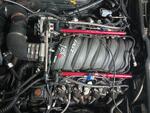
Hi guys, update on my "possibly" blown engine on my new-to-me 1996 LT4.
Oil level was fine, little on the low end but within the recommended bounds on the dip stick. Drained and kept the oil, strained it all through a coffee filter and found some metal particles in it. Just to be sure I cut open the oil filter as well and found more shiny pieces.
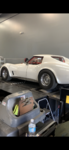
I live frugally so that every now and then I can buy something cool, and this was the most money I'd spent by far on anything just for fun. And man it was fun. Learned how to drive stick on this old gal (one year older than me haha). Most fun I've ever had driving a car for sure, was about to take the Targa top off now that the weather is warm. Put less than a thousand miles on her (out of her 106k). Guy I bought it from must have gotten really lucky.
But this isn't a pity party! I want to know what to do now. I just replaced the radiator and gave her a wash, she looks great. I suppose I'm not 100% sure the engine is complete toast but it probably is.
I was doing about 30mph in traffic when it sounded like some scrap metal got sucked into the engine. Pulled over and the sound stopped for a second and I drove a little farther down the road, then the sound came back and it threw a code out. The rattling sound went away but was replaced by a really awful whirring noise dependent on rpm. Autozone code reader gave a P0300 random/multiple cylinder misfire but this sounded like something metal broke off inside the engine. Probably a rod and/or rod bearing, but I'm no mechanic.
I guess the next step would be to remove the oil pan and have a look at the bottom end, or maybe take a peak under the valve covers but I'm wondering if its even worth it since I've got metal in the oil. Of course my curiosity is high but I don't have the motivation to do even more work than necessary at the moment (this may go away in the next few days).
I'm just caught up with how random it seemed to be, I don't abuse this thing. It was making no bad noises up to this point, no engine light, all gages were normal.
If the engine is truly destroyed I guess my options are to pull the engine and rebuild (maybe 383 stroker??), buy a 1:1 replacement LT4 engine, or get a crate engine. I do not have experience or knowledge about any of this, nor do I have a lot of money to throw at it, but I really want my car back. I work on my own cars (just fixed my gfs civic yesterday haha) but the engine is one thing I've never torn apart.
Thanks for reading my blog post. Just looking for some advice here really. What would you guys do?
Just a guess based on the noises that you described, but I’d suggest that you take a look at the top end. Start by pulling the spark plugs and looking to see if any are damaged.
Just a guess based on the noises that you described, but I’d suggest that you take a look at the top end. Start by pulling the spark plugs and looking to see if any are damaged.
ok I'm gonna take the valve covers off and see what I can see before I pull the engine. I forgot to mention that the motor seized up briefly in the autozone parking lot. After a few more tries it cranked and started right up.
Yep, remove the valve covers and look around. Doesn't look like much in the filter. If it got really loud, and sounded like rocks churning, may be a broken valve spring.
I had that happen once with aftermarket springs, luckily it didn't drop the valve or anything into the cylinder, and was fine.
Like others have said look at the top end. The noises you're describing sound like valve train not rod knock. Could also be a bad lifer. I've had a lifter break and cause metal pieces in the oil pan, but the engine was fine. I would pull the oil pan and make sure there isn't anything floating around in there. Also look at the oil pickup screen and see what's in it.
Are the fragments in the filter aluminum or metal? The stock rockers are aluminum and maybe one failed? I'd pull the valve covers first since that only takes a few minutes.
If you end up needing to go through the motor, if at all possible, rebuild what you have!!! There were many differences between the LT1 and LT4...not just the red intake, cam and roller rockers!!! The LT4 has some very, very nice factory upgrades that I would not part with! A little reading for you👍 https://www.grandsportregistry.com/l...itional%20mass.
That’s not an extreme or excessive amount of metal flake in the filter. Your bearings are fine.
look up on YouTube some videos of rod knock and main bearing knock. Based on what you’re describing I do not think you have either of those.
edit: is the noise present all the time?
Is the noise quiet at startup and gets louder as the engine comes up to temp?
If you rev the engine in neutral is the noise louder on decel?
this is all info that can determine bottom end problems.
if a bearing is wiped the noise is present 100% of the time, it’ll be quieter when the oil is cold(the oil is thicker) and get louder as the oil thins out.
more prominent noise on decel is indication of rod bearing vice main
I believe there also was an issue with the roller rockers from the factory that GM had to get corrected, it's possible your's never received the updated versions/fix👍
IMHO - The engine is hurt. The question is how badly, and how much $$$$ / work to get it back to where it should be.
Until you figure out what's broken - you don't want to run it. Running it further can take a several hundred dollar fix and turn it into a several thousand dollar fix.
IMHO - Start by pulling the plugs (and giving them a good looking over) and doing a leakdown test. Hopefully - that will give you an idea about what you may be dealing with. It could be something like a failed lifter, which is a sub $100 repair, or it could be something a lot larger. Only way to figure it out is to see what's going on, and the leakdown test is probably the best way to tell you where you're engine is at.
Just a guess based on the noises that you described, but I’d suggest that you take a look at the top end. Start by pulling the spark plugs and looking to see if any are damaged.
I pulled the valve covers last night and everything looks peachy. One of the rocker arms was at a different angle than the others which I thought was odd, but that probably just means that cylinder was in a different cycle of the cam? No bits of metal or anything in the top end.
Yep, remove the valve covers and look around. Doesn't look like much in the filter. If it got really loud, and sounded like rocks churning, may be a broken valve spring.
I had that happen once with aftermarket springs, luckily it didn't drop the valve or anything into the cylinder, and was fine.
This is what It sounded like but I pulled the valve covers last night and everything looked really good. What would a collapsed lifter be like?
Originally Posted by Phobos84
Like others have said look at the top end. The noises you're describing sound like valve train not rod knock. Could also be a bad lifer. I've had a lifter break and cause metal pieces in the oil pan, but the engine was fine. I would pull the oil pan and make sure there isn't anything floating around in there. Also look at the oil pickup screen and see what's in it.
One of the rocker arms was at a different angle than the others, with the push rod pushing on it and compressing the spring. This is just due to the spot in the cam I assume and not indicative of a failed lifter? Would you pull the oil pan or do a leakdown/compression test first?
Originally Posted by RichS
Are the fragments in the filter aluminum or metal? The stock rockers are aluminum and maybe one failed? I'd pull the valve covers first since that only takes a few minutes.
I had tiny amounts of both. Some in the oil reacted to a magnet but the shinies in the filter seemed to be aluminum.
Originally Posted by '78CorvetteS.A.
If you end up needing to go through the motor, if at all possible, rebuild what you have!!! There were many differences between the LT1 and LT4...not just the red intake, cam and roller rockers!!! The LT4 has some very, very nice factory upgrades that I would not part with! A little reading for you👍 https://www.grandsportregistry.com/l...itional%20mass.
Yea I'd really prefer to keep this engine, it ran great up until catastrophe. Is it super weird that I had no knock or signs of failure before this?
Originally Posted by randallsteel
That’s not an extreme or excessive amount of metal flake in the filter. Your bearings are fine.
look up on YouTube some videos of rod knock and main bearing knock. Based on what you’re describing I do not think you have either of those.
edit: is the noise present all the time?
Is the noise quiet at startup and gets louder as the engine comes up to temp?
If you rev the engine in neutral is the noise louder on decel?
this is all info that can determine bottom end problems.
if a bearing is wiped the noise is present 100% of the time, it’ll be quieter when the oil is cold(the oil is thicker) and get louder as the oil thins out.
more prominent noise on decel is indication of rod bearing vice main
So I had no issues with the car at all until I was driving at like 30mph and it just sounded like sudden scrap metal clanging around in the engine. Then that turned to a weird whine (loud) that just sounds bad. I really don't even want to start it at the moment in case im hurting it more.
Originally Posted by Purple92
IMHO - The engine is hurt. The question is how badly, and how much $$$$ / work to get it back to where it should be.
Until you figure out what's broken - you don't want to run it. Running it further can take a several hundred dollar fix and turn it into a several thousand dollar fix.
IMHO - Start by pulling the plugs (and giving them a good looking over) and doing a leakdown test. Hopefully - that will give you an idea about what you may be dealing with. It could be something like a failed lifter, which is a sub $100 repair, or it could be something a lot larger. Only way to figure it out is to see what's going on, and the leakdown test is probably the best way to tell you where you're engine is at.
Thanks for the reply, After removing the valve covers have turned up nothing, I think its time to dig deeper. Its my understanding that a compression test requires you to actually run the car, while a leakdown just blows compressed air into the cylinder. What kinds of issues would a leakdown test diagnose? At this point It sounds like a rod bearing just flew apart for some reason. You'd do a leakdown before pulling the oil pan and checking the rods/bearings?
The metal in the filter appears (to me) to be bearing flecks.
"It seized up in the autozone parking lot" indicates bearings. The "turned into a weird whine (loud)" also indicates bearing, ie possibly when a main bearing insert seized to the crank and spun in the block.
If you saved any of the drain oil that came out of the engine send it to Blackstone Labs for analysis. The results will tell you where to be looking.
Your description of the sound is not super descriptive. Rod bearings knock rhythmically. Valve failures or other maladies that introduce foreign matter into the combustion chamber(s) sound like shaking marbles in a coffee can. Pull the spark plugs and look for physical damage. If you find anything on a plug, the heads come off. If there's no visual damage to the plugs, remove the oil pan, windage tray, and oil pump. Look at the rod bearing caps for dark color, or even blue. The bad one will be noticeably different color than the others. Remove that cap and inspect the bearing. Then remove the main bearing associated with the rod journal. It will probably have damage or have "spun" in the block.
Good luck going forward. Here's hoping you get to enjoy your car again.
yea, especially now that I checked under the valve covers and found nothing, it seems like its a bottom-end issue like the rod bearings. But your comparison to marbles in a coffee can is exactly the sound I heard when it first happened. If something had happened in the top end, would it be readily evident by looking under the valve covers, or is there a deeper layer up there to dissect?
There was no knocking or anything before catastrophe, which seems odd for a rod bearing failure. Im going to pull the spark plugs (which I've heard is a PITA, also should I replace them and/or wires while im there?) and send a borescope into the cylinders to check around. If that doesnt turn up anything then I'll pull the oil pan. Thanks for the advice, pretty new to this stuff, but would like to learn.
Maladies with the valve train can be difficult to spot by looking "under the valve covers", particularly for a novice.
Pull the plugs. Yes, they are a PITA to access. The rear one on the passenger side (#8) is a real biotch. 2&4 aren't too tough. 1&2 may be easier if you remove the inner fender. 5&7 may be easier if you remove the large air hose, and possibly the ASR motor assembly and set it aside.
If something was above the piston, banging around, it should show as physical damage on the plug in the affected cyl(s).
Don't purchase any parts until you know what is wrong, and what is needed to fix it.
Yea I basically just confirmed that no rocker arm or spring had exploded, and the push rods looked not-bent, and no metal shavings up there. Everything seemed to be well oiled so it seems like oil starvation wasn't occurring. and the borescope is on amazon for $17 lol so i figure it cant hurt to get a GOOD look around in each cylinder if I'm going through the effort to pull each plug.
Thanks for the reply, After removing the valve covers have turned up nothing, I think its time to dig deeper. Its my understanding that a compression test requires you to actually run the car, while a leakdown just blows compressed air into the cylinder. What kinds of issues would a leakdown test diagnose? At this point It sounds like a rod bearing just flew apart for some reason. You'd do a leakdown before pulling the oil pan and checking the rods/bearings?
Thanks guys
Doing a compression test does NOT involve running the engine. It requires removing the plugs, screwing the compression gauge into one spark plug and cranking the engine over about 8 revolutions. Record the pressure and move on to the next cylinder. Repeat till all cylinders are done. You're looking for variation more than absolute pressure readings - all cylinders should be within about 10% of each other.
Doing a leakdown test involves setting a given cylinder on TDC of the compression stroke, and injecting air into the cylinder through a small fixed orifice (which is in the leakdown tester). You do the test on each cylinder one at a time. It tells you several things:
a) The percentage of air that is "leaking" out. You would like to see numbers somewhere around 5% or so.
b) Where the air that's leaking is going. If you hear air escaping in the exhaust - it's almost certainly a bad exhaust valve. Likewise - if you hear it by the air filter - it's almost certainly a bad intake valve. If you hear it in the crankcase / breather - it' either rings, a cracked head / block or a bad head gasket.
If the metal you found in the oil filter is magnetic - it's likely from rings or a lifter. If it's non metallic, it's likely bearing or piston material.
Thanks for the reply, After removing the valve covers have turned up nothing, I think its time to dig deeper. Its my understanding that a compression test requires you to actually run the car, while a leakdown just blows compressed air into the cylinder. What kinds of issues would a leakdown test diagnose? At this point It sounds like a rod bearing just flew apart for some reason. You'd do a leakdown before pulling the oil pan and checking the rods/bearings?
Thanks guys
Doing a compression test does NOT involve running the engine. It requires removing the plugs, screwing the compression gauge into one spark plug and cranking the engine over about 8 revolutions. Record the pressure and move on to the next cylinder. Repeat till all cylinders are done. You're looking for variation more than absolute pressure readings - all cylinders should be within about 10% of each other.
Doing a leakdown test involves setting a given cylinder on TDC of the compression stroke, and injecting air into the cylinder through a small fixed orifice (which is in the leakdown tester). You do the test on each cylinder one at a time. It tells you several things:
a) The percentage of air that is "leaking" out. You would like to see numbers somewhere around 5% or so.
b) Where the air that's leaking is going. If you hear air escaping in the exhaust - it's almost certainly a bad exhaust valve. Likewise - if you hear it by the air filter - it's almost certainly a bad intake valve. If you hear it in the crankcase / breather - it' either rings, a cracked head / block or a bad head gasket.
If the metal you found in the oil filter is magnetic - it's likely from rings or a lifter. If it's non metallic, it's likely bearing or piston material.
Designer Imagines A Corvette That Looks More Like a Corvette Than the Corvette
Slideshow: A Jaguar designer's personal project imagines what a modern front-engined Corvette might look like if Chevrolet revisited the golden age of the Stingray.












 "Possibly" blown 1996 LT4 engine, need advice