









Why do corvettes have battery issues?

Safety Car


Joined: Apr 2007
Posts: 3,640
Likes: 83
From: . New York

Been reading some of the posts, and it is all good information about batteries in general, limited use and how that effects batteries but I do think it seems from some of the replies that the issue with the C5 can be traced back to something about how you use (or dont use) the car.
While that is sometimes true, I still maintain that the C5, specificaly, is different than every other car Ive owned in that without a tender (which I do use btw), if you leave it for a long time, will kill the battery.
Its not just the cars with stuff wired incorectly, its not just the garage queens, its a known C5 thing.
My moms BMW sat in her garage for six months, started right up, an old Honda I had here sat for months and months at a time, started right up, over the years I havent had many other cars that sat for long periods because we used them more but there were a few that sat for a month, they all started.
I still maintain that the C5 is different in that way (eats batteries if not used).
I dont have experience with any other cars that were as computer driven as the C5, there may be a lot out there that suffer from the same malady that Im not aware of, but Im pretty sure its not a not using it or a how things are done aftermarket thing, I just think some vehicles have this problem and the C5 is one of them.
Just an opinion from my experience and what Ive read over the years.
While that is sometimes true, I still maintain that the C5, specificaly, is different than every other car Ive owned in that without a tender (which I do use btw), if you leave it for a long time, will kill the battery.
Its not just the cars with stuff wired incorectly, its not just the garage queens, its a known C5 thing.
My moms BMW sat in her garage for six months, started right up, an old Honda I had here sat for months and months at a time, started right up, over the years I havent had many other cars that sat for long periods because we used them more but there were a few that sat for a month, they all started.
I still maintain that the C5 is different in that way (eats batteries if not used).
I dont have experience with any other cars that were as computer driven as the C5, there may be a lot out there that suffer from the same malady that Im not aware of, but Im pretty sure its not a not using it or a how things are done aftermarket thing, I just think some vehicles have this problem and the C5 is one of them.
Just an opinion from my experience and what Ive read over the years.

2nd Gear

Joined: Feb 2010
Posts: 2
Likes: 0
From: Plant City Fl
I have come to the conclusion, at least on my c5 that the battery drain was largely attributed to having the key fob set on auto unlock,, everytime you walk anywhere in the vicinity of the car with the key fob in hand the interior lights, horn beeping, security system and locking mechanisms are activated and deactivated, this was happening sometimes when we didnt even know it, for instance picking up the keys inside the house while cleaning or using another key on that ring.. with all of this on and off of major systems in combo with not driving it to "recharge" the system seemed to be more of a drain than it would be with normal driving. That being said.. There is a little device called a "battery interrupter" or "battery cutoff switch" we 1st began using in our boat so the battery would not drain when not in use,, then we decided to get one for the vette after having so many battery issues. You can buy one for about 20 bucks,, it attaches directly to the negative battery post, super simple installation and does not harm the car or any electronic components,, ours is an older version and it has a sort of lever,, when the lever is in the down position the circuit is completed and battery works as always, when lever is in up position it cannot complete a circuit its just like disconnecting the negative cable (just easier) and the battery will not drain,, after just searching thru google they seem to be a little more techy now with an actual button or more electronic looking switch but basically same function.. cutting connection to negative battery post.. We have been using been using it on my 99 ""GARAGE QUEEN" for about 2 years now, no more battery drain. just have to remember to turn it to "off" position when you wont be driving for a while.. (hope this was helpful)
Last edited by lynnstrick; Feb 15, 2010 at 12:41 AM.

Safety Car


Joined: Apr 2004
Posts: 3,996
Likes: 77
From: Louisville KY
Wow some really good stuff in this thread.
99ssconv's posts 5 & 6 are great!!!!!!
I do not believe that the vette's are harder on battery's than the typical car. I still firmly believe that it is the lack of driving that causes the batteries to cause problems. Garage queens leak fluids, and have trouble with battery's as seems to be stated on forum here.
My 03 has about 46K on it. That is about 8K a year. I got 5 1/2 years out of my orginal delco battery. I replaced it with another delco.
I have a 68 Camaro (I am the only owner) in my garage (Heated). I have a kill circuit I put in the car. It dscounts the neg from the battery. That battery is now 8 years old. The car starts on the first hit. (I do cheat and pour some gas into the carb to prime it.) Old cars always have a drain that I blame on a short in the old wiring harness. Mine has one, I could never find it, so my solution was to kill the ground. I hate electrical problems.
My 68 leaks oil from the lack of consistent driving.
99ssconv's posts 5 & 6 are great!!!!!!
I do not believe that the vette's are harder on battery's than the typical car. I still firmly believe that it is the lack of driving that causes the batteries to cause problems. Garage queens leak fluids, and have trouble with battery's as seems to be stated on forum here.
My 03 has about 46K on it. That is about 8K a year. I got 5 1/2 years out of my orginal delco battery. I replaced it with another delco.
I have a 68 Camaro (I am the only owner) in my garage (Heated). I have a kill circuit I put in the car. It dscounts the neg from the battery. That battery is now 8 years old. The car starts on the first hit. (I do cheat and pour some gas into the carb to prime it.) Old cars always have a drain that I blame on a short in the old wiring harness. Mine has one, I could never find it, so my solution was to kill the ground. I hate electrical problems.
My 68 leaks oil from the lack of consistent driving.

Drifting

Joined: Sep 2002
Posts: 1,571
Likes: 1
From: suburban Philadelphia PA
My wife drive a MB S500 ... you can't get any more electronics than in an S500 with S600 options (power rear seats, 4 seating heated & cooled seats, 4 seating climate control, Parktronic, automatic head rests, illuminated door handles & foot wells, 4Matic, AirMatic suspension, TeleAid, Keyless Go, etc). The car can be left unstarted for weeks ... and it will start right up. Then again, the battery is a gel-battery.
As for my 2001 C5 ... I have had issues starting the car after sitting for 72 hours. I forget the AMP requirements, but it is my understanding, the car requires "x" amps ... let's say 435 CCA to work & start properly.
Along the same line of "guessing & forgetting" proper numbers ... I believe the C5 was originally supplied with a 450 CCA battery. As I understand battery technology, as time progresses, so too, does the amount of CCA available to the battery ... 450 CCA from day one. After a few months, it's a tad less. After one year, a tad less again (etc).
I had been at odds with my local Chevy dealer for non-start issues ... having to have the C5 towed to the Chevy dealer (2001-2003). I was told that eventually, the battery will not have enough CCA, to keep the battery at proper level, unless it is driven on a regular basis. With that in mind, it would seem as though the Corvette should have a higher rated CCA battery installed from day one. THAT WAY, it will last long enough to start the car, even if it is not started on a daily basis.
I don't want to hear about expensive electronics, and garage queens. My wife's S500 has more bells and whistles, and the battery is a no-brainer. On the other hand, GM put a battery in the Corvette with just enough guts to keep the car started for a few weeks, before it starts to loose its ability to do its job.
No, I am not an wrench or mechanic, but I was one of the key cases which lead to the resolution of OnStar issues in the 1999 Cadillac Escalade, and it's ability to track the vehicle 24/7 (blue wire). It was during these few years of ownership that I got a real dose of GM electronics.
As for my 2001 C5 ... I have had issues starting the car after sitting for 72 hours. I forget the AMP requirements, but it is my understanding, the car requires "x" amps ... let's say 435 CCA to work & start properly.
Along the same line of "guessing & forgetting" proper numbers ... I believe the C5 was originally supplied with a 450 CCA battery. As I understand battery technology, as time progresses, so too, does the amount of CCA available to the battery ... 450 CCA from day one. After a few months, it's a tad less. After one year, a tad less again (etc).
I had been at odds with my local Chevy dealer for non-start issues ... having to have the C5 towed to the Chevy dealer (2001-2003). I was told that eventually, the battery will not have enough CCA, to keep the battery at proper level, unless it is driven on a regular basis. With that in mind, it would seem as though the Corvette should have a higher rated CCA battery installed from day one. THAT WAY, it will last long enough to start the car, even if it is not started on a daily basis.
I don't want to hear about expensive electronics, and garage queens. My wife's S500 has more bells and whistles, and the battery is a no-brainer. On the other hand, GM put a battery in the Corvette with just enough guts to keep the car started for a few weeks, before it starts to loose its ability to do its job.
No, I am not an wrench or mechanic, but I was one of the key cases which lead to the resolution of OnStar issues in the 1999 Cadillac Escalade, and it's ability to track the vehicle 24/7 (blue wire). It was during these few years of ownership that I got a real dose of GM electronics.

Drifting
Joined: Apr 2008
Posts: 1,335
Likes: 0
From: Qualicum Beach British Columbia
I mean I have never heard of a car draining a battery so much. I just recently sold my 04 vert vette to a new buyer. I loved it very much but was wondering why does GM continue to let this affect our corvettes? I mean even my 03 Cobra does not have issues period of it draining my battery. Is this like a engineer design flaw in the electronics? I'm just curious as to why this hasn't been fixed. Kinda sucks you have to buy a battery tender for a expensive car. Thats all. 
Every engine needs a minimum amperage to turn over at start up. My Diesel Dodge needs 2 batteries to do so. Most cars have a larger battery then they "need" but the payoff is more weight.
The Corvette has exactly what it needs but no more, that way it can keep weight to a minimum but the payoff is that a Vette can only sit for a week or 2 and the battery loses enough power that it can't turn over the engine............. I think
Corvette Stories
The Best of Corvette for Corvette Enthusiasts

Top 10 Most Explosive Corvettes Ever Made: Power-to-Weight Ratio Ranked!
Joe Kucinski
150 hp to 1,250 hp: Every Corvette Generation Compared by the Specs That Matter
Joe Kucinski
8 Coolest Corvette Pace Cars (and Replicas) of All Time
Verdad Gallardo
Top 10 Corvette Engines RANKED by Peak Torque (70+ Years of Muscle!)
Joe Kucinski
Corvette ZR1X Will Be Pacing the Indy 500, And Could Probably Race, Too!
Verdad Gallardo
Top 10 Corvettes Coming to Mecum Indy 2026!
Brett Foote
Top 10 C9 Corvette MUST-HAVES to Fix These C8 Generation Flaws!
Michael S. Palmer
10 Revolutionary 'Corvette Firsts' Most People Don't Know
Joe Kucinski
5 Reasons to Upgrade to an LS6-Powered Corvette; 5 Reasons to Stay LT2
Michael S. Palmer

Tech Contributor

Joined: Dec 2003
Posts: 19,384
Likes: 87
From: Horncastle Lincolnshire, England
2023 C5 of the Year Finalist - Unmodified
Always an interesting topic and I'll throw in my $0.02.
For the record the shop manual quotes the GM spec for the Vette which requires a Cold Cranking Ampage (CCA) of 500A and a reserve capacity of 80 minutes.
I've had a number of different types of useage for my Vert and the battery has reacted in different ways. Based on my experience, you need to look at what you have fitted and how you use the car.
From new I had a stock AC Delco which in the 02 was an AGM, although I didn't know that at the time. GM had replaced the lead acid leakers with an AGM to prevent the fault. The early batteries had poorly designed posts which could break when over-tightened. I did some work on the lights which may have reduced it somewhat but the car ran fine for weeks afterwards. It died after only 8000 miles. No warning, just stone dead on a holiday weekend. I experienced all the classic symptoms with the chattering relays and all. It was a Vegas Summer so maybe the heat killed it but I'll never know. The car was a daily driver at the time.
My son's Camaro had had a leaky AC Delco so I replaced the OEM with an Optima Red Top. it performed great and lasted 2 years of daily driving without a glitch. I had a 25 mile commute in the extremes of the Vegas climate.
I then shipped the car to England. It went to LA on a flatbed and then to England in a container. The journey took 8 weeks and on arrival the battery was dead. At least on that occasion it was obvious. The parasitic drain for the extended trip killed it. I tried recharging but it wouldn't hold it.
I replaced that with an Optima Yellow Top (CCA 690)as my car is now a weekend warrior. This is a deep cycle battery and will tolerate being discharged much better. I'll leave it about a week between use. At that point I hook up to a bettery tender. It tops off quickly and has been extremely reliable. The down side is it was expensive.
So my summary would be don't use an AGM if you have a weekend car. Most of the latest lead acids are properly designed and the bad terminal posts of the early AC Delcos have been fixed in their latest design. A cheaper lead acid will probably be good enough but beware of over torquing the terminals.
I also found that it was possible to leave the internal lights on. The little rotary switch to the left of the steering wheel on the dash. Luckily I spotted it before it killed the battery but how many owners don't and are caught out.
I should finish on types of battery. Early in the cars life many of us suffered with leaky AC Delco batteries. To fix that we fitted Optima Red Top which are (almost) leak free. But a Red Top is an AGM battery. Although they dont leak they are very susceptible to premature failure if you run them to zero charge. Its hard to coax back a dead red Top as I found. How many owners know the difference between an AGM and a regular lead acid battery and which is best for their car? In short, a lead acid is better for irregular use whereas an AGM is better for daily use if you want peace of mind.
And eventually to answer the original question. This car has a drain; like it or not. Its prone to glitches. The interior lights can be left on, the hood light may not go out after 10 minutes and the PCM et al draws a small residual current. The seat switches are notorious for sticking and causing a drain. You need to look after your battery or drive the car on a decent run (not short hops) daily. If you don't then fit a battery tender. Its always worth putting a meter on the car and doing a drain check if theres any doubt.
As always JMHO
For the record the shop manual quotes the GM spec for the Vette which requires a Cold Cranking Ampage (CCA) of 500A and a reserve capacity of 80 minutes.
I've had a number of different types of useage for my Vert and the battery has reacted in different ways. Based on my experience, you need to look at what you have fitted and how you use the car.
From new I had a stock AC Delco which in the 02 was an AGM, although I didn't know that at the time. GM had replaced the lead acid leakers with an AGM to prevent the fault. The early batteries had poorly designed posts which could break when over-tightened. I did some work on the lights which may have reduced it somewhat but the car ran fine for weeks afterwards. It died after only 8000 miles. No warning, just stone dead on a holiday weekend. I experienced all the classic symptoms with the chattering relays and all. It was a Vegas Summer so maybe the heat killed it but I'll never know. The car was a daily driver at the time.
My son's Camaro had had a leaky AC Delco so I replaced the OEM with an Optima Red Top. it performed great and lasted 2 years of daily driving without a glitch. I had a 25 mile commute in the extremes of the Vegas climate.
I then shipped the car to England. It went to LA on a flatbed and then to England in a container. The journey took 8 weeks and on arrival the battery was dead. At least on that occasion it was obvious. The parasitic drain for the extended trip killed it. I tried recharging but it wouldn't hold it.
I replaced that with an Optima Yellow Top (CCA 690)as my car is now a weekend warrior. This is a deep cycle battery and will tolerate being discharged much better. I'll leave it about a week between use. At that point I hook up to a bettery tender. It tops off quickly and has been extremely reliable. The down side is it was expensive.
So my summary would be don't use an AGM if you have a weekend car. Most of the latest lead acids are properly designed and the bad terminal posts of the early AC Delcos have been fixed in their latest design. A cheaper lead acid will probably be good enough but beware of over torquing the terminals.
I also found that it was possible to leave the internal lights on. The little rotary switch to the left of the steering wheel on the dash. Luckily I spotted it before it killed the battery but how many owners don't and are caught out.
I should finish on types of battery. Early in the cars life many of us suffered with leaky AC Delco batteries. To fix that we fitted Optima Red Top which are (almost) leak free. But a Red Top is an AGM battery. Although they dont leak they are very susceptible to premature failure if you run them to zero charge. Its hard to coax back a dead red Top as I found. How many owners know the difference between an AGM and a regular lead acid battery and which is best for their car? In short, a lead acid is better for irregular use whereas an AGM is better for daily use if you want peace of mind.
And eventually to answer the original question. This car has a drain; like it or not. Its prone to glitches. The interior lights can be left on, the hood light may not go out after 10 minutes and the PCM et al draws a small residual current. The seat switches are notorious for sticking and causing a drain. You need to look after your battery or drive the car on a decent run (not short hops) daily. If you don't then fit a battery tender. Its always worth putting a meter on the car and doing a drain check if theres any doubt.
As always JMHO
Last edited by DeeGee; Feb 21, 2010 at 03:12 AM.



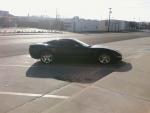
 mine too but this winter I did put a battery tender on it...

Instructor
Joined: Jan 2009
Posts: 140
Likes: 1
From: Whitesboro Texas
Not so lucky on my end.. If my car sits for 3 days without the battery tendor on it. It won't start. It's pretty much a daily driver. If I drive it or start it daily, no problems. If I let it sit for a few days. Not start.. Battery is an 08. It may just be getting to the point where it needs more maintenance.

Le Mans Master

Joined: Nov 2004
Posts: 8,718
Likes: 20
From: Dyer IN
Cruise-In IX Veteran
Not so lucky on my end.. If my car sits for 3 days without the battery tendor on it. It won't start. It's pretty much a daily driver. If I drive it or start it daily, no problems. If I let it sit for a few days. Not start.. Battery is an 08. It may just be getting to the point where it needs more maintenance.
Drifting
Joined: Sep 2002
Posts: 1,571
Likes: 1
From: suburban Philadelphia PA
I had the same situation ... had local dealer check the car ... charged me $300+ to *suggest* un unplug the CD changer. The car used to be temper-mental ... sometimes it would die in 3 days ... sometimes 14 days. I was watching TRUCK-U on Speed TV today. They had a segment on fauly ABS units (parasitic draw on a Silverado) ... something about an under-sized relay getting zapped. Replacing the ABS module/unit was not an option, as it would only be replaced with an OEM part, with OEM under-sized relay. They talked about sending the part out to get a larger relay.
For those of us who are not mechanically inclined, or who may not have electronic testing equipment, is there a test to have performed (at a non-dealer)? My memory was that the dealer put some sort of guage on the battery - let it sit for a while (after car went to sleep). The guage indicated whether there was a draw or not. When they determined it was a draw ... it became like a witch hunt ... nothing to point in the proper direction ... just start unplugging things, or pulling fuses.
For those of us who are not mechanically inclined, or who may not have electronic testing equipment, is there a test to have performed (at a non-dealer)? My memory was that the dealer put some sort of guage on the battery - let it sit for a while (after car went to sleep). The guage indicated whether there was a draw or not. When they determined it was a draw ... it became like a witch hunt ... nothing to point in the proper direction ... just start unplugging things, or pulling fuses.



Burning Brakes

Joined: Mar 2002
Posts: 844
Likes: 11
From: Il
I mean I have never heard of a car draining a battery so much. I just recently sold my 04 vert vette to a new buyer. I loved it very much but was wondering why does GM continue to let this affect our corvettes? I mean even my 03 Cobra does not have issues period of it draining my battery. Is this like a engineer design flaw in the electronics? I'm just curious as to why this hasn't been fixed. Kinda sucks you have to buy a battery tender for a expensive car. Thats all.

Drifting
Joined: Jan 2008
Posts: 1,549
Likes: 2
From: Cambridge Illinois
Simple. There is two reasons. First a goal with a sports car is light weight. The Corvette has a very small battery. Just look at the battery in a Chevy van with the 5.7 motor. It is huge in comparison.
The other reason is the draw from all the nanny systems even when the car is turned off. Even worse is On-Star and XM radio.
A Corvette Engineer at Corvette FunFest this last summer stated that a Corvette battery can drain in as short as one week and not more than 3 to 4 weeks. ABS, sound systems, stability control and other brains need juice 24/7. How do you think OnStar can open your door when you locked the keys in. Because the receiver is ON! The parasitic draw on these things is huge.
A Schumaker 1.5 tender at Walmart is about $20. Get one and pulg it in 100% of the time. Unplug when you leave the garage and replug when you come back.
I store 12 collector vehicles for up to 7 months and have never had a failure. My 02 Coupe with a 01 build still has the original battery. Again it has never been discharged.
Running a battery down and charging it back up shortens the life of the battery a lot each time. A deep cycle marine battery will last longer but it is still hard on it.
A battery treated this way will last up to ten years. I had a motorcycle battery go over 7 years and was in tip top shape when I sold the bike.
Put another way: Stop whining and start shining.
The other reason is the draw from all the nanny systems even when the car is turned off. Even worse is On-Star and XM radio.
A Corvette Engineer at Corvette FunFest this last summer stated that a Corvette battery can drain in as short as one week and not more than 3 to 4 weeks. ABS, sound systems, stability control and other brains need juice 24/7. How do you think OnStar can open your door when you locked the keys in. Because the receiver is ON! The parasitic draw on these things is huge.
A Schumaker 1.5 tender at Walmart is about $20. Get one and pulg it in 100% of the time. Unplug when you leave the garage and replug when you come back.
I store 12 collector vehicles for up to 7 months and have never had a failure. My 02 Coupe with a 01 build still has the original battery. Again it has never been discharged.
Running a battery down and charging it back up shortens the life of the battery a lot each time. A deep cycle marine battery will last longer but it is still hard on it.
A battery treated this way will last up to ten years. I had a motorcycle battery go over 7 years and was in tip top shape when I sold the bike.
Put another way: Stop whining and start shining.
Last edited by lh4x4; Feb 22, 2010 at 11:38 PM.