






Intermittant starting issue...need ideas!
Thread Starter
Burning Brakes

Joined: May 2007
Posts: 1,078
Likes: 5
From: Denver, North Carolina
 Intermittant starting issue...need ideas! Mystery Solved
My stock 98 has developed an issue with starting. Normally, when I get in to start my car I will just turn the key to the 'on' position for about 5 seconds before starting(having driven a diesel for many years its just a habit) and allow the gauges to sweep and the fuel pump to run up a little pressure, (the pump was easily heard making its whining noise for about 3 or 4 seconds). Now, intermitantly, when I try to start the car I will not hear the pump in the 'on' position and when I go to the 'start' position with the key the engine will spin normally but will not fire. I will get a P1518 code most of the time, have also gotten U1255,U1016,P0356,C1276 randomly. I also get the DIC display "Reduced Engine Power" along with the CEL.
Now that I have been dealing with this for a couple of days, if I turn the key to the on position and I don't hear the pump, I can turn it back off and back to on and back to off several times and eventually the pump will come on for it's ussual 4 seconds and the engine will start normally with no codes or DIC warnings.
I have cleaned the contacts in the ignition switch per Bill C's write up and I put in a brand new battery, a new fuel pump relay, and tested the fuel pressure at the rail with an instant and steady result of 62 lbs. Still the problem persists. I really thought it was going to be the fuel pump but now I am at a loss as to what it could be. Please offer ideas if you have dealt with something like this. Thanks.
Now that I have been dealing with this for a couple of days, if I turn the key to the on position and I don't hear the pump, I can turn it back off and back to on and back to off several times and eventually the pump will come on for it's ussual 4 seconds and the engine will start normally with no codes or DIC warnings.
I have cleaned the contacts in the ignition switch per Bill C's write up and I put in a brand new battery, a new fuel pump relay, and tested the fuel pressure at the rail with an instant and steady result of 62 lbs. Still the problem persists. I really thought it was going to be the fuel pump but now I am at a loss as to what it could be. Please offer ideas if you have dealt with something like this. Thanks.
Last edited by SebringSixSpeed; Jan 2, 2010 at 08:41 PM.
Tech Contributor

Joined: Dec 2006
Posts: 10,962
Likes: 29
From: Van Buren Arkansas
Wounded Warrior Escort '11
There is a chassis ground somewhere close to the fuel pump. I don't know exactly where, but use the search as there should be many diagrams of the ground locations. Someone else had this happen and the ground I'm talking about was the cause.
Thread Starter
Burning Brakes
Joined: May 2007
Posts: 1,078
Likes: 5
From: Denver, North Carolina
Update:
I checked the...
...fuel pump fuse, looked good no burns
...the wiring inside the door bellows, no exposed wires
...B+ at underhood relay for tightness
...all chassis grounds, clean
...Splice pack 122, it was clean inside
...TAC module connections, good and clean
...Throttle body, rotates smoothly, all connections clean
...Alternator wiring, all tight and clean
Still...the DTC P1518 persists with "Reduced Engine Power"
Still...I can turn the key off on off on til I hear the fuel pump actually run for a few seconds, and the car will start like there is nothing wrong and show no DTC's.
According to my service manual the P1518 is "PCM to TAC module Serial Data Circuit"
How do I tell if I need a new TAC module??? What are the symptoms of a bad TAC module?
Bill C.?, Anybody?
I checked the...
...fuel pump fuse, looked good no burns
...the wiring inside the door bellows, no exposed wires
...B+ at underhood relay for tightness
...all chassis grounds, clean
...Splice pack 122, it was clean inside
...TAC module connections, good and clean
...Throttle body, rotates smoothly, all connections clean
...Alternator wiring, all tight and clean
Still...the DTC P1518 persists with "Reduced Engine Power"
Still...I can turn the key off on off on til I hear the fuel pump actually run for a few seconds, and the car will start like there is nothing wrong and show no DTC's.
According to my service manual the P1518 is "PCM to TAC module Serial Data Circuit"
How do I tell if I need a new TAC module??? What are the symptoms of a bad TAC module?
Bill C.?, Anybody?

Team Owner


Joined: May 2001
Posts: 36,836
Likes: 244
From: Dear Karma, I have a list of people you missed.
St. Jude Donor '08-'09-'10-'11-'12-'13-'14-'15-'16
Not sure that I would give up on the ignition switch yet, even though you may have cleaned some contacts. I don't think the TAC will prevent power from getting to the fuel pump during the start cycle, or at least not when you first turn the key to the on position.
Also, dgrant makes a good point about the chassis ground(s) in the rear of the car. They are: G401 and G402 on the left rear and right rear frame rails respectively. I would think G401 would be the one to check first.
HTH
Also, dgrant makes a good point about the chassis ground(s) in the rear of the car. They are: G401 and G402 on the left rear and right rear frame rails respectively. I would think G401 would be the one to check first.
HTH
Thread Starter
Burning Brakes
Joined: May 2007
Posts: 1,078
Likes: 5
From: Denver, North Carolina
I have removed and cleaned and reinstalled the chassis grounds in the rear wheel wells. They were actually pretty clean to start with, just a little surface rust on the threads, but shiny metal on the back of the nut and the eyelets. No change w/ issue. The grounds behind the headlight were similarly clean and inside the black plastic junctions everything was shiny and clean, no corrosion. No change w/ issue. The ignition switch contacts a small amount of contact burn but I cleaned all that away with 2000 grit sandpaper, nice and clean now. No change w/ issue. what else could be wrong with the switch to cut power to the fuel pump?
Team Owner
Joined: May 2001
Posts: 36,836
Likes: 244
From: Dear Karma, I have a list of people you missed.
St. Jude Donor '08-'09-'10-'11-'12-'13-'14-'15-'16
I have removed and cleaned and reinstalled the chassis grounds in the rear wheel wells. They were actually pretty clean to start with, just a little surface rust on the threads, but shiny metal on the back of the nut and the eyelets. No change w/ issue. The grounds behind the headlight were similarly clean and inside the black plastic junctions everything was shiny and clean, no corrosion. No change w/ issue. The ignition switch contacts a small amount of contact burn but I cleaned all that away with 2000 grit sandpaper, nice and clean now. No change w/ issue. what else could be wrong with the switch to cut power to the fuel pump?
That P1518 is definitely TAC motor/module related and can be set for different reasons, one of which is open circuit, etc. Another is a short to ground in the TAC wiring circuitry or low battery voltage.
Since this just "happened" out of the clear blue so-to-speak, check all your TAC related wiring harnesses in the area of, and leading to, these components for any obvious signs of damage, rubbing, chafing, etc Check connectors for any loosness, damage, corrosion, signs of water/moisture intrusion. The two TAC related connectors of interest here would be the connector on the throttle body and the TAC module which is located inside the R/F wheelhouse next to the PCM.
The TAC module itself, like the PCM, is usually a pretty robust item that is not prone to failure but hey, you can't totally rule it out either. I tend to suspect a wiring/connector issue though. Since the TAC module is under the battery, also check closely for any signs of previous battery leakage damage to the wiring, etc. too.
Also remember, it's possible to have more than one cause to a problem too.
HTH

Le Mans Master


Joined: Nov 2003
Posts: 8,004
Likes: 250
From: Tampa Fl
St. Jude Donor '12-'13-'14
ill steal a post from bill curlee. he pin points grounds we need to clean
http://forums.corvetteforum.com/c5-t...tion-long.html
i have the same starting problem and need to clean the grounds
http://forums.corvetteforum.com/c5-t...tion-long.html
i have the same starting problem and need to clean the grounds
Corvette Stories
The Best of Corvette for Corvette Enthusiasts

Top 10 Most Explosive Corvettes Ever Made: Power-to-Weight Ratio Ranked!
Joe Kucinski
150 hp to 1,250 hp: Every Corvette Generation Compared by the Specs That Matter
Joe Kucinski
8 Coolest Corvette Pace Cars (and Replicas) of All Time
Verdad Gallardo
Top 10 Corvette Engines RANKED by Peak Torque (70+ Years of Muscle!)
Joe Kucinski
Corvette ZR1X Will Be Pacing the Indy 500, And Could Probably Race, Too!
Verdad Gallardo
Top 10 Corvettes Coming to Mecum Indy 2026!
Brett Foote
Top 10 C9 Corvette MUST-HAVES to Fix These C8 Generation Flaws!
Michael S. Palmer
10 Revolutionary 'Corvette Firsts' Most People Don't Know
Joe Kucinski
5 Reasons to Upgrade to an LS6-Powered Corvette; 5 Reasons to Stay LT2
Michael S. Palmer
Thread Starter
Burning Brakes
Joined: May 2007
Posts: 1,078
Likes: 5
From: Denver, North Carolina
It's been awhile now and I am still having this issue. It's driving me  . The car will always start.....eventually, after inserting, turning and removing the key repeatedly. To rule out the resistor pellet in the key and corresponding components inside the switch, I wrapped the resistor on the key with a little bit of electrical tape to see if I could duplicate the issue. The result was that the starter would not engage when the key was turned. So the resistor pellet and related circuitry is not related to the issue at hand. My starter will always turn when I turn the key, just sometimes it will fire up and sometimes it will not.
Just to recap...
...new battery (solid 13.8 v)
...fuel pump fuse good
...the wiring inside the door bellows good, no exposed wires
...B+ at underhood relay tight and clean
...all chassis grounds in cab and out, clean and tight
...splice pack 122 clean inside, no corrosion
...TAC module connections good and clean
...throttle body rotates smoothly, all connections clean
...alternator wiring, all tight and clean
...ignition switch contacts cleaned
There has to be someone else out there that has dealt with this same issue. Please advise.
Chuck.
. The car will always start.....eventually, after inserting, turning and removing the key repeatedly. To rule out the resistor pellet in the key and corresponding components inside the switch, I wrapped the resistor on the key with a little bit of electrical tape to see if I could duplicate the issue. The result was that the starter would not engage when the key was turned. So the resistor pellet and related circuitry is not related to the issue at hand. My starter will always turn when I turn the key, just sometimes it will fire up and sometimes it will not.Just to recap...
...new battery (solid 13.8 v)
...fuel pump fuse good
...the wiring inside the door bellows good, no exposed wires
...B+ at underhood relay tight and clean
...all chassis grounds in cab and out, clean and tight
...splice pack 122 clean inside, no corrosion
...TAC module connections good and clean
...throttle body rotates smoothly, all connections clean
...alternator wiring, all tight and clean
...ignition switch contacts cleaned
There has to be someone else out there that has dealt with this same issue. Please advise.
Chuck.

Heel & Toe

Joined: Aug 2005
Posts: 15
Likes: 0
From: Souderton PA
A friend's '02 had a similar problem in that every now and then the fuel pump would not run at start-up. We thought we had narrowed the problem down to a bad connection between the fuel pump fuse and the fuse block because I could get the fuel pump to run by a slight wiggle of the fuse while he turned the key on. It turned out that it was actaully a bad terminal in the fuse block connection to the relay. We put a slight bend in the lug coming from the relay in that spot, and the problem has not manifested itself again.
You can use a magnifying glass and good light to give a quick check of your fuse block. Remove the fuse and the relay and compare the contacts inside the block to each other. In his case, the relay terminal closest to the fuse was visually different from the others, as though the contact was a bit out of place when compared to the others.
Hope this helps.
You can use a magnifying glass and good light to give a quick check of your fuse block. Remove the fuse and the relay and compare the contacts inside the block to each other. In his case, the relay terminal closest to the fuse was visually different from the others, as though the contact was a bit out of place when compared to the others.
Hope this helps.


Thread Starter
Burning Brakes
Joined: May 2007
Posts: 1,078
Likes: 5
From: Denver, North Carolina
the security light is not coming on when this happens, so I doubt it's anything to do with the Theft Deterent System, but then, it could be... Does anybody know if a faulty MAF sensor, crankshaft position sensor, or camshaft position sensor could cause an intermittant issue with the PCM allowing power to the fuel pump, or are they like a light bulb, either working or not working. I hate problems that come and go with no rhyme or reason.
Does anybody know if a faulty MAF sensor, crankshaft position sensor, or camshaft position sensor could cause an intermittant issue with the PCM allowing power to the fuel pump, or are they like a light bulb, either working or not working. I hate problems that come and go with no rhyme or reason.
Thread Starter
Burning Brakes
Joined: May 2007
Posts: 1,078
Likes: 5
From: Denver, North Carolina
I think I may have found the problem. Well, I definately found a problem and now am in the process of repair, time will tell if it's THE problem.
I decided to pull my PCM and TAC module completely off the car. Apparently the PCM housing is very suseptable to corrosion. It's location and aluminum construction seem like a huge engineering mistake to me.
This is not from a leaky battery as far as I can tell because everything else in the area is pristine. Usually when you have a leaky battery the paint on the frame is affected and streaks of rust will be present.
Anyway I'll let the pictures speak for now, and I'll update the results later.
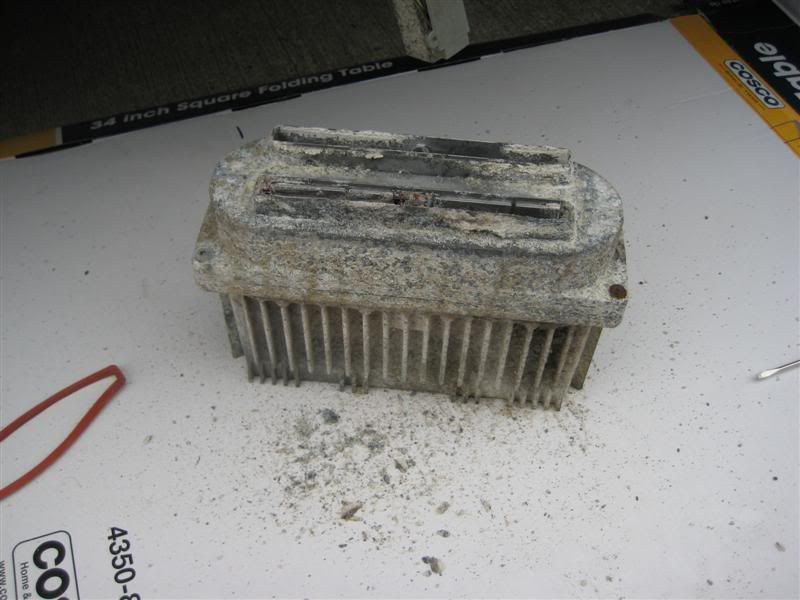
Actually I can't believe the car ran at all after seeing this.
Here you can see that the gasgets failed after the aluminum corroded away from them allowing moisture into the terminals.
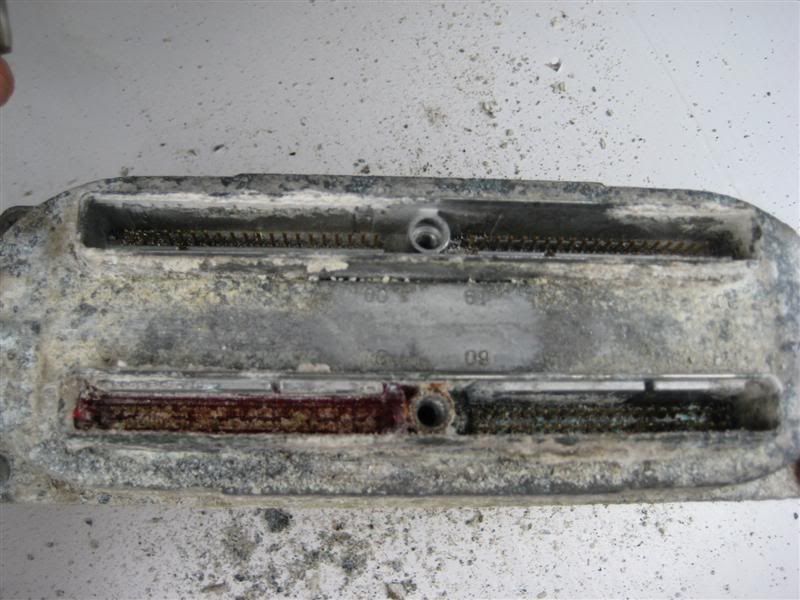
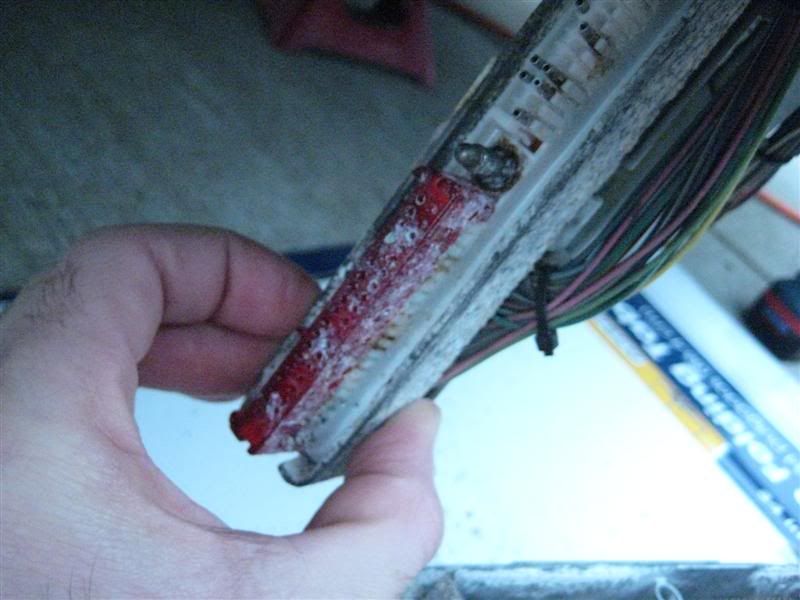
here you can see the surrounding area has not been subjected to battery acid so the PCM must have just corroded from water.
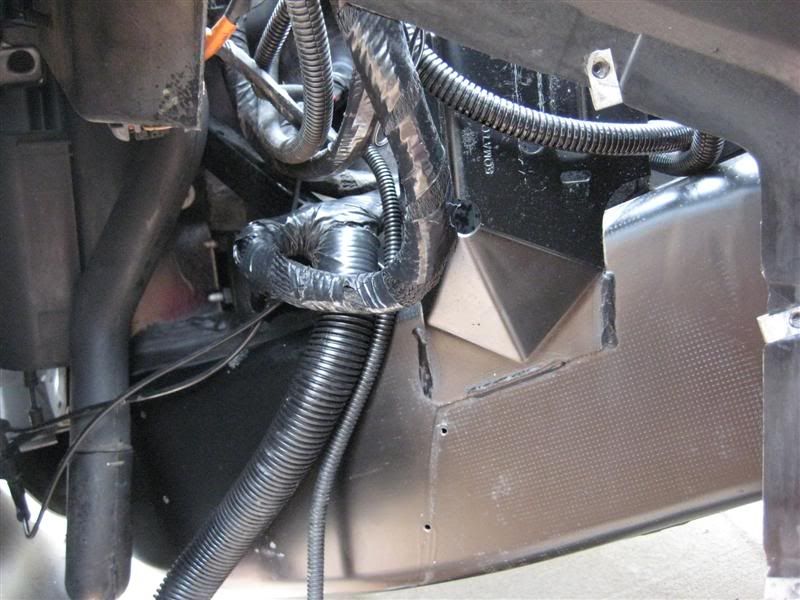
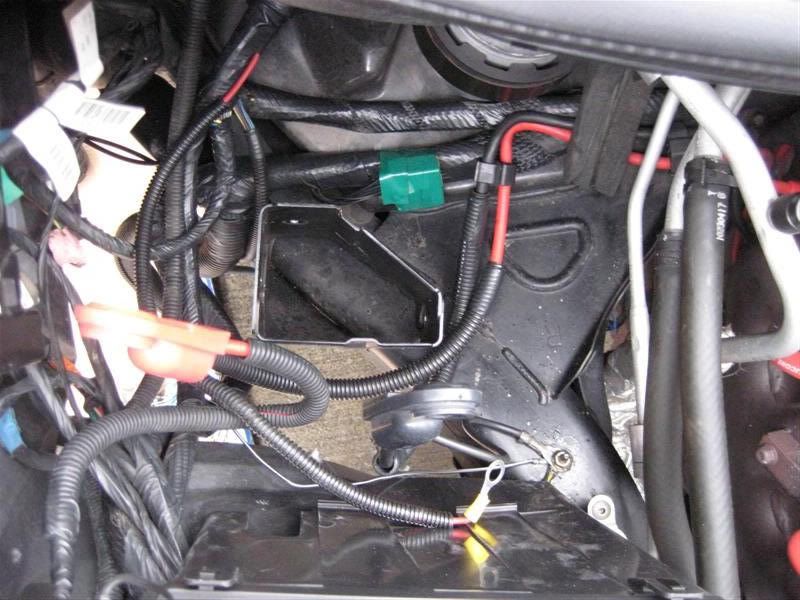
I decided to pull my PCM and TAC module completely off the car. Apparently the PCM housing is very suseptable to corrosion. It's location and aluminum construction seem like a huge engineering mistake to me.
This is not from a leaky battery as far as I can tell because everything else in the area is pristine. Usually when you have a leaky battery the paint on the frame is affected and streaks of rust will be present.
Anyway I'll let the pictures speak for now, and I'll update the results later.
Actually I can't believe the car ran at all after seeing this.
Here you can see that the gasgets failed after the aluminum corroded away from them allowing moisture into the terminals.
here you can see the surrounding area has not been subjected to battery acid so the PCM must have just corroded from water.
Last edited by SebringSixSpeed; Dec 14, 2009 at 04:16 PM.

Tech Contributor


Joined: Jan 2007
Posts: 19,401
Likes: 1,141
From: Dyer, IN
Being a former designer of diesel ECM's, we often would receive warranty returns for engineering evaluation. I've seen severe corrosion on commercial vehicle ECM's, but never anything to that extent on a vette. No question about this being a contributing factor to all your issues.


Thread Starter
Burning Brakes
Joined: May 2007
Posts: 1,078
Likes: 5
From: Denver, North Carolina
The thing is, nothing else is corroded like the PCM. The frame rails, the wiring, etc is all in excellent condition, so I don't suspect there was ever a leaking battery as the battery tray directs any acid directly onto the frame rail. I've only had the car for 3 years and during that time it's never seen salted roads and hardly ever been driven in rain. Before that time it could have been driven on salted roads in Virginia because that's were it lived until I got it. The rest of the chassis really doesn't look like it was ever subjected to salt though, so the severe corrosion on the PCM really just seems out of place compared to everything else.
Clean-up is going well so far. Took the red terminal apart after labeling all the wires. I think that everything will clean up well enough to reuse.
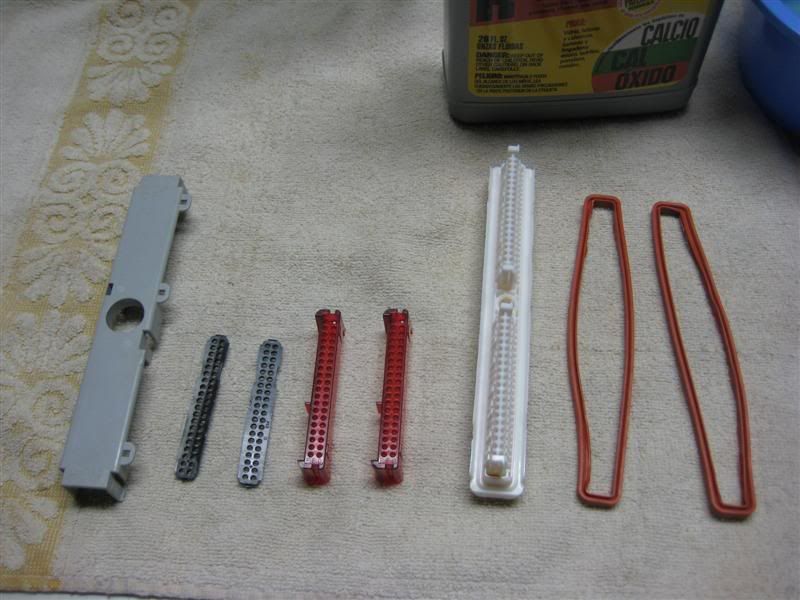
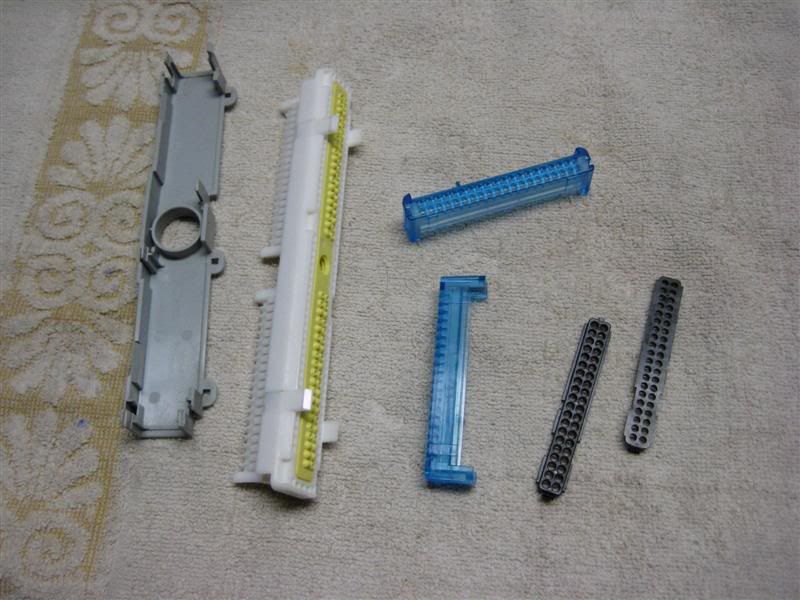
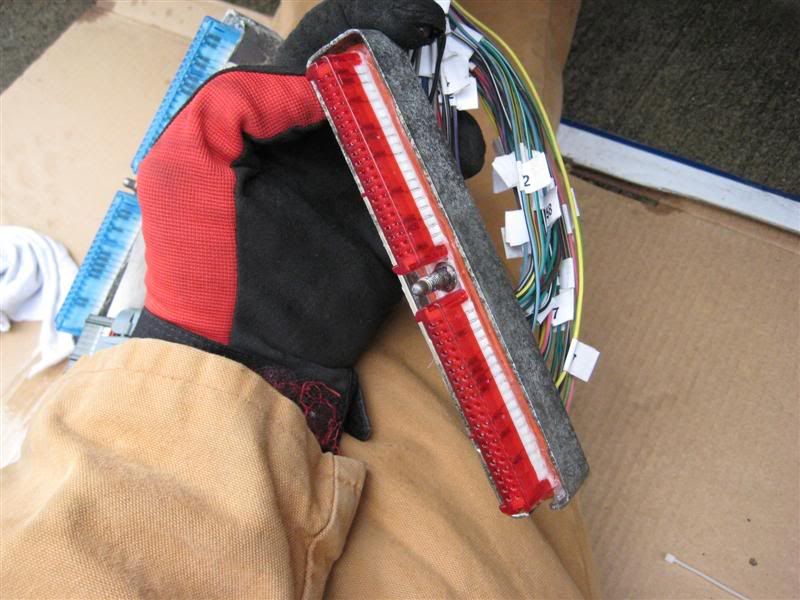
Clean-up is going well so far. Took the red terminal apart after labeling all the wires. I think that everything will clean up well enough to reuse.
Last edited by SebringSixSpeed; Dec 14, 2009 at 04:18 PM.
Team Owner
Joined: May 2001
Posts: 36,836
Likes: 244
From: Dear Karma, I have a list of people you missed.
St. Jude Donor '08-'09-'10-'11-'12-'13-'14-'15-'16
Yikes!  That level of corrosion is horrible. That fact that it's isolated to the PCM makes me suspicious. Those two (red and blue) connectors are on the underside of the body of the PCM when mounted in the car and I'm just not seeing how that much crud got there in the connectors and the housing too.
That makes me wonder if that is the original PCM. A previously acid damaged/used PCM is the only thing that makes sense to me. Have you checked the service history on your car with a dealer? A Give them the VIN and they can tell you, unless of course something was done by the owner themselves. A PCM change requires it to be programed, so that can be a tell-tale too.
That level of corrosion is horrible. That fact that it's isolated to the PCM makes me suspicious. Those two (red and blue) connectors are on the underside of the body of the PCM when mounted in the car and I'm just not seeing how that much crud got there in the connectors and the housing too. That makes me wonder if that is the original PCM. A previously acid damaged/used PCM is the only thing that makes sense to me. Have you checked the service history on your car with a dealer? A Give them the VIN and they can tell you, unless of course something was done by the owner themselves. A PCM change requires it to be programed, so that can be a tell-tale too.
Thread Starter
Burning Brakes
Joined: May 2007
Posts: 1,078
Likes: 5
From: Denver, North Carolina
Yikes! That level of corrosion is horrible. That fact that it's isolated to the PCM makes me suspicious. Those two (red and blue) connectors are on the underside of the body of the PCM when mounted in the car and I'm just not seeing how that much crud got there in the connectors and the housing too.
That makes me wonder if that is the original PCM. A previously acid damaged/used PCM is the only thing that makes sense to me. Have you checked the service history on your car with a dealer? A Give them the VIN and they can tell you, unless of course something was done by the owner themselves. A PCM change requires it to be programed, so that can be a tell-tale too.
That level of corrosion is horrible. That fact that it's isolated to the PCM makes me suspicious. Those two (red and blue) connectors are on the underside of the body of the PCM when mounted in the car and I'm just not seeing how that much crud got there in the connectors and the housing too. That makes me wonder if that is the original PCM. A previously acid damaged/used PCM is the only thing that makes sense to me. Have you checked the service history on your car with a dealer? A Give them the VIN and they can tell you, unless of course something was done by the owner themselves. A PCM change requires it to be programed, so that can be a tell-tale too.