



finding TDC to set valves?

Racer

Joined: May 2012
Posts: 257
Likes: 12
From: las vegas nevada

Had some difficulty doing this recently myself. I found by rotating the engine, I could tell when individual valves were closed, and just torqued those rocker arms to 22 ft lbs at that time, regardless of wherever the crank/cam was. If I could push on the push-rod side and get a little play, then the valve was closed or close to closed, no?

Team Owner


Joined: May 2001
Posts: 87,391
Likes: 1,593
From: Western NY
Had some difficulty doing this recently myself. I found by rotating the engine, I could tell when individual valves were closed, and just torqued those rocker arms to 22 ft lbs at that time, regardless of wherever the crank/cam was. If I could push on the push-rod side and get a little play, then the valve was closed or close to closed, no?

Drifting


Joined: Jan 2012
Posts: 1,341
Likes: 8
From: Hopatcong New Jersey
How much difference this would make unless your new cam has a decent amount of lift, I have no idea.
Last edited by dblerman; Jun 22, 2013 at 11:06 AM.
Team Owner
Joined: May 2001
Posts: 87,391
Likes: 1,593
From: Western NY
Why not? In the OE configuration, GM sets the preload by the pushrod length, since the OE valvetrain is not adjustable. 22 ft/lbs is nothing more than the proper torque for the rocker trunnion bolt....
Drifting
Joined: Jan 2012
Posts: 1,341
Likes: 8
From: Hopatcong New Jersey
I'd be curious to see how far off the torque would be between base circle and partial to full lift.
Corvette Stories
The Best of Corvette for Corvette Enthusiasts

Every 2027 Corvette Engine Explained
Joe Kucinski
Designer Imagines A Corvette That Looks More Like a Corvette Than the Corvette
Verdad Gallardo
10 Ugly Corvettes That We Still Kinda Love
Joe Kucinski
Top 10 Most Expensive Corvettes Ever Sold on Bring A Trailer
Brett Foote
10 Things Every Corvette Owner Needs (2026 Edition)
Michael S. Palmer
8 Most "Only Corvette Owners Understand" Quirks and Problems
Pouria Savadkouei
10 Reasons the C6 Z06 is Still A Performance Benchmark After 20 Years
Joe Kucinski
How Much Horsepower Every Corvette Engine "LOST" in 1972
Joe Kucinski
Top 10 DOs and DON'Ts for Protecting Your Convertible Top!
Michael S. Palmer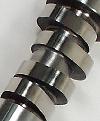



Drifting
Joined: Sep 2009
Posts: 1,719
Likes: 4
From: cinnaminson n.j.
St. Jude Donor '14
I believe the reason for the procedure is avoiding piston to valve contact. If a piston is at tdc at the end of the exhaust stroke, both valves are open. How much will vary with lobe profiles. If a lifter is pumped up with oil and the rocker is torqued, the valve could hit the piston before the lifter bleeds down.