


LT1 forced induction


Pro


Joined: Feb 2003
Posts: 745
Likes: 136
From: Detroit MI

Greg, cool that you weighed in. We've been doing work with piston dome designs on the LNF and 2.3 disi mazdas that intercept the spray pattern for an increased dwelltime when the piston is around tdc. This goal being a longer pulsewidth before and after tdc and give the tuner a improved mathematical window to inject fuel .
...some have done a secondary injecting event btdc at the end of the compression stroke and a small portion atdc into the powerstroke before combustion pressure overcomes fuel pressure. I don't know if this does any damage to the injector itself, but considering what diesel injectors go through....probably not.
I've also seen some people talking about modding the pumps. We have some customers blueprinting the factory mechanical pumps and apparently extending the window. Because of the sheer volume of programmiing by the o.e. under different conditions, I'm wondering if there are any "constants" that can be changed in the GM software that rewrites all the pages at once rather than making one page right and 200 wrong. Testing a revised aftermarket fuel pump flow curve as accurately as the o.e. isn't an easy feat.
Any thoughts on these things?
Any thoughts on these things?
Burning Brakes


Joined: Apr 2008
Posts: 1,190
Likes: 68
From: Woodland Hills California
I heard that GM is aware of the issues people have had modding DI engines - significant mods to fuel delivery system and lack of aftermarket parts to support that. Supposedly, because GM is aware that Corvette owners mod their engines, GM has stated that the stock fuel delivery system on the LT1 will support 800 hp. Now, it might take some time to figure out how to get that extra fuel out of the stock system.

Racer

Joined: Sep 2012
Posts: 301
Likes: 0
From: Palmetto FL
St. Jude Donor '13
We have been heavily modding DI engines for years and all this was new to us at the time and it took a learning curve to get to where we are.
Have developed a ton of products for the DI LLT & LFX engines in the Cadillac & Camaros.
Here is a link to videos of some the owners have posted on you-tube: http://www.camaro5.com/forums/showthread.php?t=259858
Heres the top mount on the Caddy SRX:
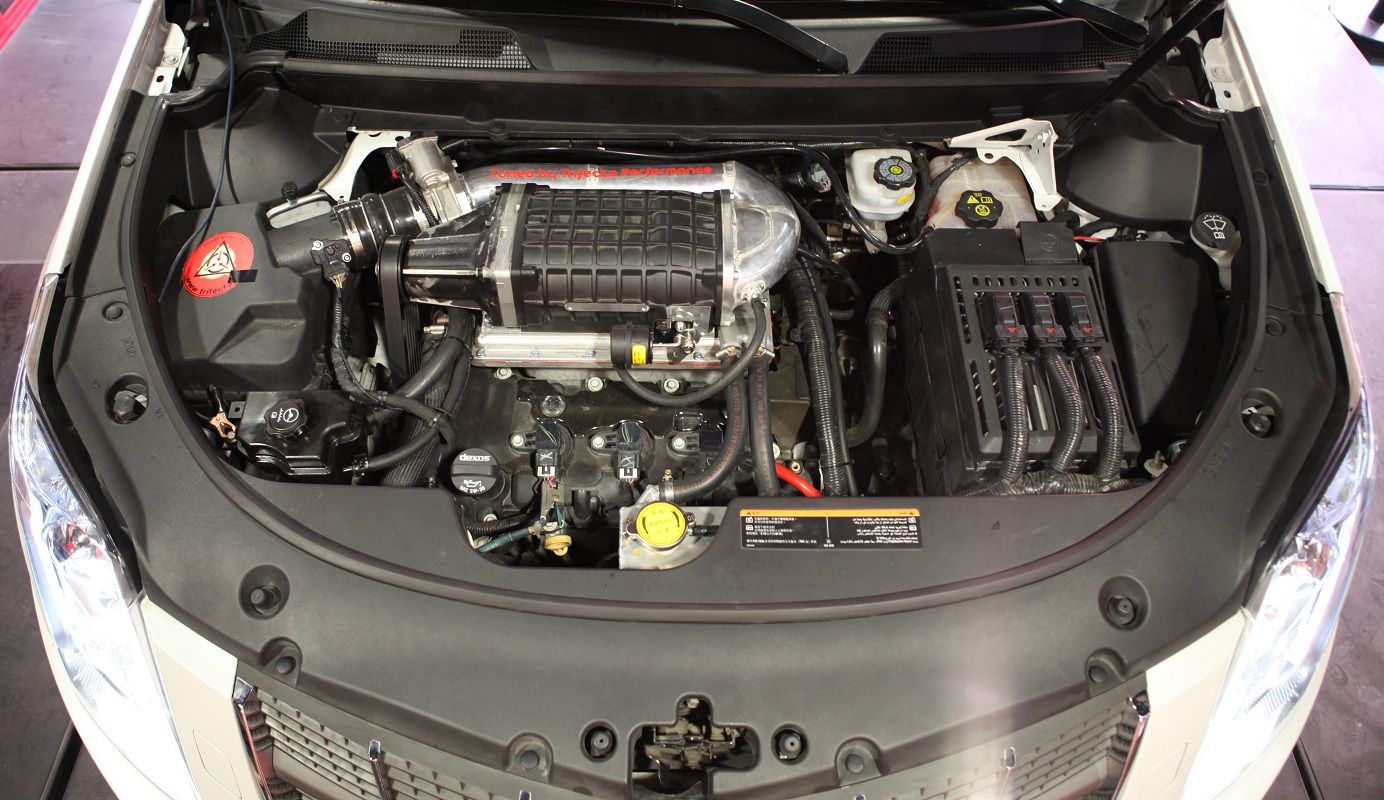
Have developed a ton of products for the DI LLT & LFX engines in the Cadillac & Camaros.
Here is a link to videos of some the owners have posted on you-tube: http://www.camaro5.com/forums/showthread.php?t=259858
Heres the top mount on the Caddy SRX:







