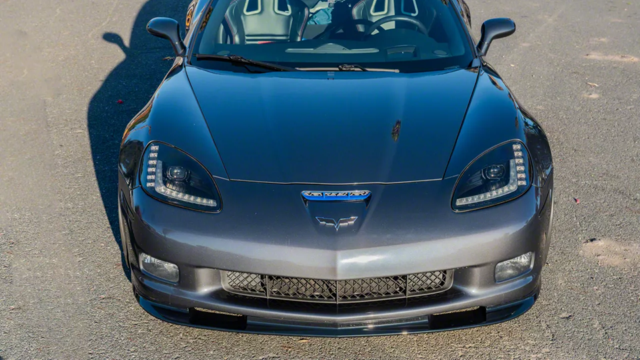
Changing hood struts.


Team Owner


Joined: Jul 2004
Posts: 28,327
Likes: 3,242
From: Hartford WI

Based on thermal measurements C7 owners have taken over the years:• Hood closed: under-hood temps can stay above 170–180°F for 20–40 minutes after a hot drive.
• Hood cracked: cooldown is 10–20% faster, depending on airflow.
• Hood fully open: cooldown is 20–40% faster.
What Raising the Hood Does Help With
1. Faster Dissipation of Under-Hood Heat (Heat Soak)
After a hot drive, the engine bay continues heating up even after shutdown — this is heat soak.
With the hood closed, the hot air is trapped.
With the hood open, heat rises and escapes more quickly.
Result:
• components cool faster
• under-hood temperatures drop noticeably sooner
• plastic parts, wiring, and hoses see slightly less long-term thermal stress
The C7 has good ventilation (front grille air exit + hood vent), but an open hood still releases heat faster.
2. Helps Electronics and Sensors Cool Faster
Your C7 has many heat-sensitive components:
• coil packs
• knock sensors
• O₂ sensors (indirectly)
• fuel rails
• various modules
Keeping overall bay temps lower is generally good for electronics longevity.
3. Reduces Heat Soak on the Intake Manifold
On the LT1, the composite intake absorbs heat after shutdown.
An open hood lets it cool faster, reducing:
• hot starts feeling “soft”
• intake air temps on the next drive
• potential knock retard right after startup
It won’t make a huge difference, but it’s not nothing.
4. Helps the Alternator and Belt-Drive Area Cool
The alternator sits in a hot pocket on the Corvette.
Reducing the time spent heat-soaked can be beneficial over the long term.
• Hood cracked: cooldown is 10–20% faster, depending on airflow.
• Hood fully open: cooldown is 20–40% faster.
What Raising the Hood Does Help With
1. Faster Dissipation of Under-Hood Heat (Heat Soak)
After a hot drive, the engine bay continues heating up even after shutdown — this is heat soak.
With the hood closed, the hot air is trapped.
With the hood open, heat rises and escapes more quickly.
Result:
• components cool faster
• under-hood temperatures drop noticeably sooner
• plastic parts, wiring, and hoses see slightly less long-term thermal stress
The C7 has good ventilation (front grille air exit + hood vent), but an open hood still releases heat faster.
2. Helps Electronics and Sensors Cool Faster
Your C7 has many heat-sensitive components:
• coil packs
• knock sensors
• O₂ sensors (indirectly)
• fuel rails
• various modules
Keeping overall bay temps lower is generally good for electronics longevity.
3. Reduces Heat Soak on the Intake Manifold
On the LT1, the composite intake absorbs heat after shutdown.
An open hood lets it cool faster, reducing:
• hot starts feeling “soft”
• intake air temps on the next drive
• potential knock retard right after startup
It won’t make a huge difference, but it’s not nothing.
4. Helps the Alternator and Belt-Drive Area Cool
The alternator sits in a hot pocket on the Corvette.
Reducing the time spent heat-soaked can be beneficial over the long term.
Team Owner
Joined: Jul 2004
Posts: 28,327
Likes: 3,242
From: Hartford WI
Whether it is worth it or not depends on the situation. I suspect any filter is a restriction. Whether that is meaningful to your situation is another thing.

Melting Slicks


Joined: Dec 2004
Posts: 2,425
Likes: 686
While it isn't nothing or huge, is it even worth doing from the car company's standpoint? As to what can be beneficial over the long term, how long a term are we talking about? Does "beneficial" have a number? If I have to wait for 20 years to save an average of $2 a year, why bother? $20 a day, sure. Question is where it lies in that spectrum.
Team Owner
Joined: Jul 2004
Posts: 28,327
Likes: 3,242
From: Hartford WI
Whether it is worthwhile is not a concern of mine. When I raise the hood on a hot summer day, I feel that hot air rise from the engine and move past my face, and it makes me feel good that I am helping that hot air escape. I mean, I am doing this only three or four months out of the year. In Virginia, we have hot humid days and temps outside soar into the mid 90s.