When you click on links to various merchants on this site and make a purchase, this can result in this site earning a commission. Affiliate programs and affiliations include, but are not limited to, the eBay Partner Network.
I get the world is turning force induction (heck I sell Mercedes and virtually every car we sell is a turbo or hybrid something)... but I was really sad about the C7 Z06 when they said they planning a high revving V8 and ended up doing the LT4 supercharged (which is a fine engine, not disputing it)...
I was hoping the DOHC talks/patents meant we were getting that engine finally in a mid engine.. but alas the CAD drawings and everything
The C7 grand sport with the voodoo v8 flat plane crank Ford GT350 engine would have made that car perfect... 8250rpms redline, 526hp...
I do love my GS , the LT1 isnt bad at ALL... just love high revving screaming engines
I'm just the opposite, have owned several high revving foreign builds, give me the good old massive torque done at 7200 rpm engine any day of the week. I loved the sound my ZR1 made lapping the track at Charlotte. could I adapt to a high revving engine, sure but it would take time. Never felt comfortable in the Ferrari that didn't make any torque or speed below 7,000 rpm, nor the flat plane crank GT40 that had to be 7,000 to feel the power. I think the new 4.2 DOHC and 5.5 DOHC engines might be a could compromise for the aging group I represent.
Last edited by Steve Garrett; Jan 1, 2018 at 12:41 PM.
NA high rev motors are going away, I am not happy. McLaren uses a high rev twin turbo. Specs below. Drove the 720s could not believe the power it was insane.
I'm just the opposite, have owned several high revving foreign builds, give me the good old massive torque done at 7200 rpm engine any day of the week. I loved the sound my ZR1 made lapping the track at Charlotte. could I adapt to a high revving engine, sure but it would take time. Never felt comfortable in the Ferrari that didn't make any torque or speed below 7,000 rpm, nor the flat plane crank GT40 that had to be 7,000 to feel the power. I think the new 4.2 DOHC and 5.5 DOHC engines might be a could compromise for the aging group I represent.
rsinor,
Let me suggest to you that a 5.7L DOHC can make plenty of torque. In the area of 485lbft crank NA at 5300rpm w a 6900rpm power peak. Lovely noise too.
yea I can see the love for either.. Its just the scream a Ferrari makes at 8-9k rpm... gives me chills
I agree.. especially with the engine sitting so close to the driver. It's such a visceral experience that one has to drive it to truly understand. I only hope GM doesn't make the ME so insulated and quiet for the waxers, that it doesn't have any soul.
NA high rev motors are going away, I am not happy. McLaren uses a high rev twin turbo. Specs below. Drove the 720s could not believe the power it was insane.
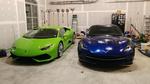
I'm in the high revving crowd. I currently own a Lamborghini Huracan 610-4. It's a measly little natural aspirated 5.2L, 317c.i. V10 with 610hp and 413lbs of tq. that revs up to 8500 and it sounds amazing, the computer though will actually take it up to 9k in thrust mode sometimes. It's quite the experience, and being one of the few naturally aspirated engines makes it more exciting. It's a 3400lb car and my best time completely stock, tires and all is 10.68 in a quarter mile. So it can be done by any of these manufactures, it's just a lot easier and cheaper to throw some turbos or a super charger on a car than putting the R&D into the engine.
I was really sad about the C7 Z06 when they said they planning a high revving V8 and ended up doing the LT4 supercharged (which is a fine engine, not disputing it)...
No doubt the Bean Counters insisted on it.
Originally Posted by ShahulX
Its just the scream a Ferrari makes at 8-9k rpm... gives me chills
I get the world is turning force induction (heck I sell Mercedes and virtually every car we sell is a turbo or hybrid something)... but I was really sad about the C7 Z06 when they said they planning a high revving V8 and ended up doing the LT4 supercharged (which is a fine engine, not disputing it)...
I was hoping the DOHC talks/patents meant we were getting that engine finally in a mid engine.. but alas the CAD drawings and everything
The C7 grand sport with the voodoo v8 flat plane crank Ford GT350 engine would have made that car perfect... 8250rpms redline, 526hp...
I do love my GS , the LT1 isnt bad at ALL... just love high revving screaming engines
-Shahul
Can anyone confirm of the C8 will have a Manual Trans available?
The problem with very high revs is durability. Valve train stress goes way up, as well as other stresses and heat build-up. Since HP= RPM x Torque/5252, you can make more power by creating more torque, more RPM, or both. The beauty of the big torque, big displacement lower revving engines is the engine is stressed much less than a smaller, higher revving motor.
As if any of this means a thing in our mad rush to electric motors that make max torque just off idle....
Torque
Ferrari 812 Superfast 530 lb-ft Reliability
Honda S2000 9,000 rpm for hundreds of race hours, no valve drop, no mess
Yes, you can have a high revving n/a engine with both torque and reliability. Heck, making a V10 or V12 engine out of either S2000 or E46 M3 tech will get you lots of torque and power reliably. By now most of Audi's V10s should be plenty reliable and offer a fat power band.
Too many enthusiasts are armchair specialists nowadays. That is the real reason we get turbo engines with crap heads and heavy bottom end reciprocating parts. Everyone is quoting 0-60s, quarter miles, and top speeds. What did you expect? Manufacturers are selling you a car that can get those times down. Boost will outperform n/a in drag applications and that's all anyone cares about.
As for reliability with boost, good luck keeping the bearings alive with 850hp motors that make just as much in torque. Technically even the new ZR1 motor will make that much, it just loses 100hp to spin the TVS. Not to mention, transmissions, LSDs, driveshafts and so forth. A 600hp n/a motor would be an endurance motor by comparison.
Originally Posted by quick04Z06
The problem with very high revs is durability. Valve train stress goes way up, as well as other stresses and heat build-up. Since HP= RPM x Torque/5252, you can make more power by creating more torque, more RPM, or both. The beauty of the big torque, big displacement lower revving engines is the engine is stressed much less than a smaller, higher revving motor.
As if any of this means a thing in our mad rush to electric motors that make max torque just off idle....
The proof is in the pudding as they say. If push-rods have a harder time moving valves precisely with in block cam you'll drop a valve before a high revving DOHC will wear out its valve guides. Show me one DOHC VTEC block that has a failed cam shifting mechanism if it even exists. On paper doesn't matter. Engine building is a complicated science.
Last edited by SBC_and_a_stick; Jan 2, 2018 at 08:50 PM.
The problem with very high revs is durability. Valve train stress goes way up, as well as other stresses and heat build-up. Since HP= RPM x Torque/5252, you can make more power by creating more torque, more RPM, or both. The beauty of the big torque, big displacement lower revving engines is the engine is stressed much less than a smaller, higher revving motor.
As if any of this means a thing in our mad rush to electric motors that make max torque just off idle....
This. Those of us that maintain track cars learn very quickly to watch RPM and short shift when appropriate. I would hate to pay the exotic import dealer for each service on the valve train. I drove a Lambo and Ferrari at a track event a couple of years ago. Neither one would idle very well and showed definite signs of the need for a trip to the dealer.
I was really sad about the C7 Z06 when they said they planning a high revving V8 and ended up doing the LT4 supercharged (which is a fine engine, not disputing it)...
Originally Posted by sunsalem
No doubt the Bean Counters insisted on it.
Three factors ruled a C7 supercharger in; financial reasons were not a consideration:
As per Tadge around early 2014:
1) Wanted to do a twin turbo, but there was not suspension room in a C7 with its lower and upper A arm configuration (hence why coil overs in the ME);
2) Really wanted to do a NA, but could not meet power goals for the Z06;
Thus, to generate Z06 power levels, also meet emissions and fuel usage standards, only the supercharger option was left, e.g., LT4 and the LT5.
Let me suggest to you that a 5.7L DOHC can make plenty of torque. In the area of 485lbft crank NA at 5300rpm w a 6900rpm power peak. Lovely noise too.
Dominic, you are preaching to the quire here as I own or have owned four C4 ZR1's, but I also believe one of the reasons the C4 ZR1 is not as popular in the collector car world is the fear of change and the lack of bottom end torque that the LS engine provided about the time the ZR1 would have come into its own as a collector item.
Torque
Ferrari 812 Superfast 530 lb-ft Reliability
Honda S2000 9,000 rpm for hundreds of race hours, no valve drop, no mess
Yes, you can have a high revving n/a engine with both torque and reliability. Heck, making a V10 or V12 engine out of either S2000 or E46 M3 tech will get you lots of torque and power reliably. By now most of Audi's V10s should be plenty reliable and offer a fat power band.
Too many enthusiasts are armchair specialists nowadays. That is the real reason we get turbo engines with crap heads and heavy bottom end reciprocating parts. Everyone is quoting 0-60s, quarter miles, and top speeds. What did you expect? Manufacturers are selling you a car that can get those times down. Boost will outperform n/a in drag applications and that's all anyone cares about.
As for reliability with boost, good luck keeping the bearings alive with 850hp motors that make just as much in torque. Technically even the new ZR1 motor will make that much, it just loses 100hp to spin the TVS. Not to mention, transmissions, LSDs, driveshafts and so forth. A 600hp n/a motor would be an endurance motor by comparison.
The proof is in the pudding as they say. If push-rods have a harder time moving valves precisely with in block cam you'll drop a valve before a high revving DOHC will wear out its valve guides. Show me one DOHC VTEC block that has a failed cam shifting mechanism if it even exists. On paper doesn't matter. Engine building is a complicated science.
Mmmm. Give me a big displacement iron small block low revving OHV V8 anytime. I have a crate 96 LT1 in my roadster with A?M cam and heads giving 400hp and 32 MPG. The reverse cooling system is good for 25HP. There is no engine on earth that would do as well in this 1850lb, 10.5 sec 1/4 car. The car is fully DOT and EPA certified.(97) Since GM saw fit to discontinue the LT4 iron block, I fitted a crate LS1 modified to 400hp. It weighs 50lbs more than the iron block, needs a bigger radiator and oil cooler adding 220lbs which included both body and chassis mods. 24 MPG engine which could not meet 2000 smog rules. It takes up much more real estate also. No space for DOHC heads, etc.
To meet future smog laws, 4 valves and turbos or blowers are required. The last thing I want is a high revving engine. Modern materials make friction less of a problem in OHV engines as long as the revs are below 6000. Since mass is the enemy, 4 cams, turbos, inter cooler, results in poor fuel consumption over 400hp which defeats the main design objective for performance. Gas guzzler tax??You almost have to go ME for the added real estate required.
Also that mass is in the wrong place. A 6 ltr LS1 has a heavy crankshaft which doesn't speed up or slow down rapidly, which renders a DCT useless, but keeps the CG very low which improves suspension load paths and roll couples. BMEP is actually superior (N/A) but low loads in city driving put out some toxic gases even with sophisticated fuel management. DI requires low revs and a very heavy fuel pump.
Inter coolers on top of the engine is horrible, however, it is the best way to reduce turbo lag. I have faith in the Corvette engineers to inavate with amazement.
I expect the chassis design and structure to be spectacular as the C7 chassis was, which will meet future trends and satisfy share holders.
Mmmm. Give me a big displacement iron small block low revving OHV V8 anytime. I have a crate 96 LT1 in my roadster with A?M cam and heads giving 400hp and 32 MPG. The reverse cooling system is good for 25HP. There is no engine on earth that would do as well in this 1850lb, 10.5 sec 1/4 car. The car is fully DOT and EPA certified.(97) Since GM saw fit to discontinue the LT4 iron block, I fitted a crate LS1 modified to 400hp. It weighs 50lbs more than the iron block, needs a bigger radiator and oil cooler adding 220lbs which included both body and chassis mods. 24 MPG engine which could not meet 2000 smog rules. It takes up much more real estate also. No space for DOHC heads, etc.
To meet future smog laws, 4 valves and turbos or blowers are required. The last thing I want is a high revving engine. Modern materials make friction less of a problem in OHV engines as long as the revs are below 6000. Since mass is the enemy, 4 cams, turbos, inter cooler, results in poor fuel consumption over 400hp which defeats the main design objective for performance. Gas guzzler tax??You almost have to go ME for the added real estate required.
Also that mass is in the wrong place. A 6 ltr LS1 has a heavy crankshaft which doesn't speed up or slow down rapidly, which renders a DCT useless, but keeps the CG very low which improves suspension load paths and roll couples. BMEP is actually superior (N/A) but low loads in city driving put out some toxic gases even with sophisticated fuel management. DI requires low revs and a very heavy fuel pump.
Inter coolers on top of the engine is horrible, however, it is the best way to reduce turbo lag. I have faith in the Corvette engineers to inavate with amazement.
I expect the chassis design and structure to be spectacular as the C7 chassis was, which will meet future trends and satisfy share holders.
A pure stock on pure stock GY tires C6 Z06 can do 10.981 in the 1/4. And that's in a 3130 pound car with 505bhp and 445 rwhp. And that includes a dry sump oil system with an oil cooler and a engine coolant radiator that keeps the LS7 running cool.
Plus the 3130 pound C6 Z06 will get 30+ MPG on the highway and it met ALL emission laws, etc when it was in production(2006-2013), and still do 198 MPH when asked to.
A few bolt on's and DR's and a C6 Z06 will be in the low 10's, while in a 3130 pound car.
Throw in a cam, etc and a 3130 pound C6 Z06 will be under 9.5 seconds in the 1/4 mile.
Put that 7L 7,000 RPM LS7 in your 1850 pound car and you will see some spectacular numbers in the 1/4 mile. Way lower than 10.5 seconds. Way better than a iron block LT1 will do.
Three factors ruled a C7 supercharger in; financial reasons were not a consideration:
As per Tadge around early 2014:
1) Wanted to do a twin turbo, but there was not suspension room in a C7 with its lower and upper A arm configuration (hence why coil overs in the ME);
2) Really wanted to do a NA, but could not meet power goals for the Z06;
Thus, to generate Z06 power levels, also meet emissions and fuel usage standards, only the supercharger option was left, e.g., LT4 and the LT5.
I think you know my feelings on Tadge's credibility...
Mmmm. Give me a big displacement iron small block low revving OHV V8 anytime. I have a crate 96 LT1 in my roadster with A?M cam and heads giving 400hp and 32 MPG. The reverse cooling system is good for 25HP. There is no engine on earth that would do as well in this 1850lb, 10.5 sec 1/4 car. The car is fully DOT and EPA certified.(97) Since GM saw fit to discontinue the LT4 iron block, I fitted a crate LS1 modified to 400hp. It weighs 50lbs more than the iron block, needs a bigger radiator and oil cooler adding 220lbs which included both body and chassis mods. 24 MPG engine which could not meet 2000 smog rules. It takes up much more real estate also. No space for DOHC heads, etc.
To meet future smog laws, 4 valves and turbos or blowers are required. The last thing I want is a high revving engine. Modern materials make friction less of a problem in OHV engines as long as the revs are below 6000. Since mass is the enemy, 4 cams, turbos, inter cooler, results in poor fuel consumption over 400hp which defeats the main design objective for performance. Gas guzzler tax??You almost have to go ME for the added real estate required.
Also that mass is in the wrong place. A 6 ltr LS1 has a heavy crankshaft which doesn't speed up or slow down rapidly, which renders a DCT useless, but keeps the CG very low which improves suspension load paths and roll couples. BMEP is actually superior (N/A) but low loads in city driving put out some toxic gases even with sophisticated fuel management. DI requires low revs and a very heavy fuel pump.
Inter coolers on top of the engine is horrible, however, it is the best way to reduce turbo lag. I have faith in the Corvette engineers to inavate with amazement.
I expect the chassis design and structure to be spectacular as the C7 chassis was, which will meet future trends and satisfy share holders.
In closing, I want the push rod mill in my Zora. I'll swap it for a cast iron LSX and loose DI and install a nice EMCO sequential.
The Ariel Atom 3s is basically just as fast in the quarter mile, but will destroy this in 0-60 and on any road course, autocross, canyon road, with far better driver engagement and consistency, reliability, you name it. You get all that with 4 cylinders in an aluminum block and DOHC. Oh, and you bet it will eat half the gas and output half the emissions.
It won't sound as good as the V8, I'll give you that.




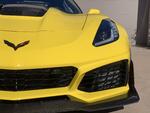

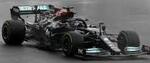

 Kinda sad about all the engine specs


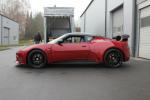




















 This. Those of us that maintain track cars learn very quickly to watch RPM and short shift when appropriate. I would hate to pay the exotic import dealer for each service on the valve train. I drove a Lambo and Ferrari at a track event a couple of years ago. Neither one would idle very well and showed definite signs of the need for a trip to the dealer.