




454/425: What's next?

Thread Starter
Melting Slicks


Joined: Jun 2001
Posts: 3,281
Likes: 6
From: NC USA
 454/425: What's next?
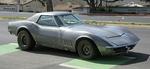
This description may show my ignorance but here goes: Currently installed in the car when I bought it with <10k miles is a 91 vintage GM Gen IV 4-bolt 454/425 crate engine with 4.495 bore and rectangular port open chamber 118cc/IP 325cc cast iron heads (valve size: 2.19 int, 1.88 exh) with 8.5-1 compression to run on pump gas. Cam is hydraulic, probably (not sure) .500 int and exh; duration at .050 lift is .222 int and .221 exh. Intake is a GM hi-rise restangular port aluminum (not sure if dual or single plane) used on the 72 454 hipo camaro with a new 850cfm dp Demon carb and Hooker SC headers. Engine is supposedly blueprinted and the heads have supposedly been polished and ported (how can I tell?). Can anyone do a desktop dyno to verify the 425HP or more claim? What would you do to this engine to get more HP? :D :D
Thx for your help! :cheers:
I also posted this in the C3 Forum.
[Modified by Marks69BB, 2:20 PM 10/2/2001]
[Modified by Marks69BB, 2:29 PM 10/2/2001]
[Modified by Marks69BB, 2:50 PM 10/2/2001]
[Modified by Marks69BB, 4:17 PM 10/2/2001]
[Modified by Marks69BB, 11:11 AM 10/3/2001]
Thx for your help! :cheers:
I also posted this in the C3 Forum.
[Modified by Marks69BB, 2:20 PM 10/2/2001]
[Modified by Marks69BB, 2:29 PM 10/2/2001]
[Modified by Marks69BB, 2:50 PM 10/2/2001]
[Modified by Marks69BB, 4:17 PM 10/2/2001]
[Modified by Marks69BB, 11:11 AM 10/3/2001]
Thread Starter
Melting Slicks
Joined: Jun 2001
Posts: 3,281
Likes: 6
From: NC USA
Re: 454/425: What's next? (71coupe)
71coupe - Could be 4.25 instead, the books listed either size for my block number. Anything else you can gather by the info? Thx and keep it coming....

Drifting


Joined: Aug 2000
Posts: 1,805
Likes: 36
From: Annapolis MD
Re: 454/425: What's next? (Marks69BB)
A 454 would be 4.25 bore x 4.0 stroke. The 4.495 (or 4.5) bore is the 502, which is not the same block. Rect port heads will handle a lot of power, but changing to 2.25 intakes could help. The cam timing is pretty mild, I'm running 0.553/.571 lift with no clearance problems on small dome pistons (9.8 CR with the 119cc rect port heads).
-Greg
-Greg
Thread Starter
Melting Slicks
Joined: Jun 2001
Posts: 3,281
Likes: 6
From: NC USA
Re: 454/425: What's next? (GregP)
GregP - Is the cam you are running a good choice for street and strip or is it more for the strip? Is it GM or aftermarket? Are you running premium pump gas or do you need more octane to get the 9.8 CR? What would be involved in changing the intake valve size on my heads? Do you think I should look into a diff intake like the wiend single-plane for better highend hp? :D
Appreciate the reply! :cheers:
[Modified by Marks69BB, 11:58 AM 10/3/2001]
Appreciate the reply! :cheers:
[Modified by Marks69BB, 11:58 AM 10/3/2001]
Drifting
Joined: Aug 2000
Posts: 1,805
Likes: 36
From: Annapolis MD
Re: 454/425: What's next? (Marks69BB)
My big blocks run in my boat, so my usage is a bit different than a high performance street application.
The cams are possibly a little much for an automatic (idle 1100 RPM in neutral and 800 in gear against the load of the props, which is more load than a high stall converter in an automatic would have), but would be fine for a manual. They run best from 3000 to 5000 RPM. Cams are Crane hydraulic #134552. A simmilar lift but shorter duration roller cam would be a good choice for the street too.
I'm currently running Edelbrock Performer RPM dual plane manifolds, but liked the single plane manifolds I had on previously better, as they gave more upper RPM power and I couldn't tell any loss at low RPM (but I rarely run at lower RPM than 3500).
The 9.8 CR runs fine on 92 octane (the boat is much more severe than car use for detonation) with 35 degrees total ignition advance, all in by 2500 RPM. I've never tried to see if they would run on 89 octane. Be aware that if you go to significantly less cam duration the maximum compression ratio you can run with 92 octane gas will go down.
Going to 2.25 intakes can be done by your machine shop, and you should check the clearance of the valves at the top of the cylinder walls with the stock 454 bore, the (existing) notches may need to be increased a little. I'd also recommend Manley severe duty valves, as we found the stock GM ones originally in my heads were starting to stretch under the spring loads and RPM with only about 20 hours on the motors.
-Greg
The cams are possibly a little much for an automatic (idle 1100 RPM in neutral and 800 in gear against the load of the props, which is more load than a high stall converter in an automatic would have), but would be fine for a manual. They run best from 3000 to 5000 RPM. Cams are Crane hydraulic #134552. A simmilar lift but shorter duration roller cam would be a good choice for the street too.
I'm currently running Edelbrock Performer RPM dual plane manifolds, but liked the single plane manifolds I had on previously better, as they gave more upper RPM power and I couldn't tell any loss at low RPM (but I rarely run at lower RPM than 3500).
The 9.8 CR runs fine on 92 octane (the boat is much more severe than car use for detonation) with 35 degrees total ignition advance, all in by 2500 RPM. I've never tried to see if they would run on 89 octane. Be aware that if you go to significantly less cam duration the maximum compression ratio you can run with 92 octane gas will go down.
Going to 2.25 intakes can be done by your machine shop, and you should check the clearance of the valves at the top of the cylinder walls with the stock 454 bore, the (existing) notches may need to be increased a little. I'd also recommend Manley severe duty valves, as we found the stock GM ones originally in my heads were starting to stretch under the spring loads and RPM with only about 20 hours on the motors.
-Greg
Thread Starter
Melting Slicks
Joined: Jun 2001
Posts: 3,281
Likes: 6
From: NC USA
Re: 454/425: What's next? (GregP)
Does this cam have a relatively smooth idle or is it 'lopey'? Why the shorter duration for the street vs ur marine use? To get the best CR on 92 octane, what duration would you recommend? Which brand of single plane manifold were you running b4 you went to the EDLs? Appreciate your patience with me as I'm still lernin! :cheers:
Corvette Stories
The Best of Corvette for Corvette Enthusiasts

Top 10 Most Explosive Corvettes Ever Made: Power-to-Weight Ratio Ranked!
Joe Kucinski
150 hp to 1,250 hp: Every Corvette Generation Compared by the Specs That Matter
Joe Kucinski
8 Coolest Corvette Pace Cars (and Replicas) of All Time
Verdad Gallardo
Top 10 Corvette Engines RANKED by Peak Torque (70+ Years of Muscle!)
Joe Kucinski
Corvette ZR1X Will Be Pacing the Indy 500, And Could Probably Race, Too!
Verdad Gallardo
Top 10 Corvettes Coming to Mecum Indy 2026!
Brett Foote
Top 10 C9 Corvette MUST-HAVES to Fix These C8 Generation Flaws!
Michael S. Palmer
10 Revolutionary 'Corvette Firsts' Most People Don't Know
Joe Kucinski
5 Reasons to Upgrade to an LS6-Powered Corvette; 5 Reasons to Stay LT2
Michael S. Palmer
Drifting
Joined: Aug 2000
Posts: 1,805
Likes: 36
From: Annapolis MD
Re: 454/425: What's next? (Marks69BB)
The shorter duration would give you a little smoother idle and more vacume. My engines have about 9" vacume at idle, which is a little low for power brakes. A roller cam would likely also give you a little more idle vacume. The cams have a nice lope, but not like a race motor.
There is some good discusion and formulas for dynamic CR (which more directly relates to fuel octane needs than static CR) in the book "Street Supercharging". Basically, a long duration high overlap cam bleeds off some of the compression so the engine "thinks" it has a lower CR (which is also why the cam manufacturers usually list a minimum CR for their cams, to make sure the dynamic CR is high engough to get the engine to run well).
I had Holley Strip Dominator single planes. If I were doing it again I'd use the Dart or Edelbrok Victor Jr as I hear better things about them, and they seem to have a litle smaller plenum for better throttle responce.
-Greg
There is some good discusion and formulas for dynamic CR (which more directly relates to fuel octane needs than static CR) in the book "Street Supercharging". Basically, a long duration high overlap cam bleeds off some of the compression so the engine "thinks" it has a lower CR (which is also why the cam manufacturers usually list a minimum CR for their cams, to make sure the dynamic CR is high engough to get the engine to run well).
I had Holley Strip Dominator single planes. If I were doing it again I'd use the Dart or Edelbrok Victor Jr as I hear better things about them, and they seem to have a litle smaller plenum for better throttle responce.
-Greg



Thread Starter
Melting Slicks
Joined: Jun 2001
Posts: 3,281
Likes: 6
From: NC USA
Re: 454/425: What's next? (Ganey)
GregP - Thanks for the info. Sounds like I need to do some reading since I want to continue to use pump gas.
Ganey - The facts are in my sig on the first post. Driving is a couple times a week, weekends to local cruise-ins and shows, and a couple of times a month to the strip for some fun! :D
Ganey - The facts are in my sig on the first post. Driving is a couple times a week, weekends to local cruise-ins and shows, and a couple of times a month to the strip for some fun! :D
