





Guess my rwhp ?

Race Director


Joined: Jun 2004
Posts: 19,459
Likes: 48
From: Schaumburg IL
CI 7-8-9-11 Veteran
St. Jude Donor '06-'10, '13

I would say 315 at the most. LS6 intake and aftermarket filter would give you that with the tune.
cat back normally does not gain you any HP
Stock, manuals usually dyno about 300 to 305.
cat back normally does not gain you any HP
Stock, manuals usually dyno about 300 to 305.

Thread Starter
Instructor

Joined: Sep 2009
Posts: 196
Likes: 3
Frank check out this article below (good read) they dyno a C5 vette with stock mufflers, then with a Magnaflow catback only and then with the X pipe installed. The C5 showed around 12-15rwhp though out the rpm range with just the catback only over stock mufflers and around a couple more hp with the x pipe installed.
Link at the bottom of article.
---------------------------------------------------------------------
I 'll get right to the point--recently I was able to buy a used C5 coupe to be my daily driver. I actually found a three-year-old C5 that was absolutely stock. The wheels were standard silver finish, it still had an AC Delco paper element air filter, and it didn't even have custom tips on its original equipment exhaust system. That's right, the funky little black tips were still there, gracing the factory's meek and mild sounding pipes and mufflers.
A few people may like the sound of a stock C5 exhaust. I haven't met one yet, but that doesn't mean they're not out there. Personally, I think non-Z06 C5s should sound a little more muscular; Z06s don't need a lot of help in that--or any other--department. I wasn't real excited about my C5 sounding almost as sedate as the late-model Cadillac De Ville owned and occasionally driven by the old folks down the street.
On the other hand, I didn't want my everyday ride to be too loud, or to suffer the dreaded interior resonance syndrome that's so commonplace on some cars with modified or custom exhausts. What to do...
I wanted to do something different; something we haven't done previously. That meant not just the de rigueur cat-backs. Almost every company involved in the C5 exhaust aftermarket is building systems from stainless steel Continued on Page 52 couple are now going way-high-bucks with titanium, a la the Z06. Titanium is excessive for my needs and for this car. After all, it's an automatic, it's a coupe, and it's a commuter--the 12-18 pound weight savings doesn't matter on this sort of car. All I wanted was something that looks good, sounds muscular, and might produce a few more ponies.
Anything forward of the catalytic converters is considered emissions related by the EPA types. I don't want headers on this car and I don't want the hassles when it comes time for smog inspections. That leaves trying an "X" type crossover pipe, which replaces the behind-the-cats "H" style factory crossover, in addition to some sort of cat-back system.
I know of three manufacturers of Corvette exhaust systems that also offer X crossover pipes for C5s; there may be others. All three of these companies make very high-quality products. The systems from all three are stainless steel and one also offers at least one system in titanium. One company is in the Midwest, and we've done C5 exhaust articles with them. The other two are located within a 50-mile radius of our headquarters here in Southern California. I made my decision based on convenience. One of them--MagnaFlow--has an in-house tech center with several installation bays and a Dynojet chassis dynamometer for testing purposes, and the other does not.
I wanted to find out exactly what difference, if any, an X crossover would make. Thus our agenda was to take baseline noise level readings on the C5 then establish "stock" horsepower and torque output on MagnaFlow's Dynojet. Then we'd install the Muffler Assembly (PN 15713), test drive the car and take noise level readings, followed by more pulls on the dyno. Finally, the Tech Center crew would install the X pipe (PN 15437) followed by another drive test, more noise measurements, and final dyno tests. The X pipe and Muffler Assembly are available as a set under PN 15660.
Crossover pipes on dual exhaust systems are supposed to balance and smooth out exhaust pulses between the two sides of the system. Theoretically, the crossover should also give a slight improvement on exhaust gas scavenging, which should offer some modest gains in power output. On C5s, the intermediate pipes (forward of the rear axle and aft of the catalytic converters) have a crossover, a straight section of pipe running perpendicular between and connected to the intermediate pipes. Many people refer to this as an H pipe or an H crossover.
An H section is inexpensive to mass produce. It's better than no crossover or balance tube whatsoever, but it is fairly inefficient. Exhaust gases want to follow the path of least resistance--that's why smooth mandrel bends produce better power than crimped and uneven (i.e. the corner muffler shop) bends on exhaust systems. Unless forced, exhaust gases are not going to make the hard 90-degree turns you see on an H pipe. An H pipe will offer some benefit, but not a lot.
An X section, with gentle beds and an open center chamber, offers substantially better balancing or equalizing of the exhaust gas pulses than are possible with an H crossover. Ergo, an X crossover should, with no other changes, offer enhanced power production. It should also eliminate the burbling and popping on deceleration that's not especially uncommon on aftermarket C5 cat-backs. We'll see.
Mother Nature put a crimp in our plans with a multi-day downpour that straddled our scheduled installation. The inclement weather precluded our intended exhaust noise measurements (wet roads would severely skew the interior sound levels) and also meant that we'd have to cut way back on the "vigorous" driving. We weren't going to let a little bit of liquid sunshine interfere with things since MagnaFlow's Tech Center and dyno are well protected from the elements. And we had a semi-adequate fallback plan for the sound level measurements.
One year ago we ran a series of tests on fellow Primedia staffer Randy Fish's C5 coupe, which is essentially a twin, albeit one model year older, to my "new" Corvette--a base interior and automatic with 3.15:1 gears coupe. Both cars are even shod with OEM run-flats. While no two cars are ever exactly the same, this pair ought to be close enough for comparative purposes. The after part of the sound measurements would be done at our offices (same place we'd tested Randy's car last year) and the only thing we'd be unable to measure would be what effect the X pipe would have on the noise levels from the MagnaFlow cat-backs. I gotta admit that I was a little apprehensive about how loud it might be, thanks to their naming the system "Wide Open" and touting the mufflers as having no baffles, no chambers, no louvers, and no restrictions.
I'm not going to rehash a C5 cat-back installation. The MagnaFlow system fit very well and is a gorgeous piece of work, with mirror-polished mufflers, outlets and quad tips. The guys in the Tech Center offered a suggestion that's simple and good to remember. Unbolt the rear stabilizer bar from the differential carrier and swing it down and out of the way before trying to remove the old pipes and mufflers; also temporarily remove the passenger side gas tank shield. The old system will come out a lot easier and your new setup will slip into place easier, too. Of course, be sure you securely reattach the stabilizer bar and reinstall the shield once the new pipes and mufflers are in place.
To install the X pipe, the original intermediate pipe must be unbolted at the rear, from the cat-backs, and cut off up front, several inches to the rear of the "cats," eliminating the original H crossover. The X pipe slips over the ends of the intermediate pipe and is clamped in place (stainless steel clamps are provided) and bolts up aft to the cat-backs, in the factory location. No welding whatsoever is required to install either the cat-backs or the X pipe.
The finished installation looks and fits great. The four large, round, polished stainless tips really brighten and beef up the back end of a C5. The small billet aluminum nameplate that connects the right and left halves of the system is a nice touch.
I was quite surprised by our test results, both the "numbers" off the Dynojet and in our noise level tests, using my hand-held decibel meter (Radio Shack, PN 33-2055). Baseline horsepower and torque output was about what I expected from a totally stock C5 with an automatic trans. The gains from the MagnaFlow muffler assembly were substantially higher than I expected, and both the horsepower and torque gains were across what portions of the powerband we could measure. The subjective (measureable) results from the X pipe installation fell short of my expectations. (See charts for comparative results.) Objectively, the improvement in throttle response is both noticeable and there at all times. The response is both crisp and more immediate, to part and full throttle inputs.
The Wide Open system proved to make less noise, at least as measured in decibels, than did the stock setup in four of our five tests. (Again, see the charts.) Objective evaluations: The exhaust note, both inside and out, is smoother with the X in place, and the car actually feels like it's running slightly smoother. I think it may also be minutely quieter inside with the X. There's little or no resonance. The exhaust note is deep and, for lack of a better way to explain it, authoritative. It doesn't make a lot of noise, although the volume definitely picks up at wide-open throttle--if you want a deafening roar, this ain't the one. However, the sound that comes out the pipes is very business-like, it has presence. You know just by the sound that it's a car you don't mess with.
Overall, I'm as happy as could be with the new exhaust. I'm still surprised at how sizable a power gain the car got from the MagnaFlow system, and I'm still surprised at the large amount of that gain that came from the mufflers. And I think the sound, both tone and the volume, is great. After all, thunderously loud is cool for Sting Rays and Stingrays with side pipes, or for Harleys, but gets tiresome everyday.
MagnaFlow Tech Center installer Matt Wideen removes the stock right-side muffler from our '00 coupe. Slipping the left-side muffler out of a C5 is a no-brainer; the right side takes a little more effort. The MagnaFlow crew offered a couple tips to simplify the job. Disconnect the rear stabilizer bar from the rear crossmember, leaving the end links connected, and swing it down and out of the way. This gives a lot more working room.
Also unbolt and remove the stamped metal shield from the right side of the gas tank. This also gives a noticeable gain in maneuvering room. Once the installation is completed, be absolutely certain to re-install the shield and remount the stabilizer bar.
Here's a look at the original intermediate pipe with its "H" crossover (arrow), before work was commenced. This view is looking forward, towards the catalytic converters. The square at the top of the picture is the automatic transmission's pan.
This view is looking aft, from the left front, after the "X" pipes and the "Wide Open" cat-back installation had been completed. The catalytic converters are in the upper left corner, and the X section is slightly to the right and below the center. The X pipe assembly bolts in place, once the rear portion of the original H pipe has been cut off a 1-1/2 feet or so behind the cats.
MagnaFlow technician Jim Gose told me that the factory H crossover had too small an opening to be very efficient, and to prove his point cut the H apart.
The hole within a 2 1/2-inch diameter pipe was no more than a 1/2-inch diameter.
Details count. Matt (with his back to us) and Jim used a small carpenter's level to make certain that the exhaust outlets lined up as well as humanly possible.
Purely a personal opinion, but I think the stock '97-00 exhaust tips are totally unsuitable for the rest of the car--uninspired looking and way too small to be in proportion to the car. Besides, a Corvette needs an exhaust system that looks and sounds authoritative, and the factory system does neither.
Here's an interesting contrast in appearances--the stock left-side cat-back (right and to the rear) and the MagnaFlow Wide Open left-side assembly, in all its polished/big tips glory.
We're quite happy with the looks, but getting a whopping 15.8hp gain, at the tires and through an automatic transmission, was a much bigger treat. The horsepower and torque gains are more than enough to really feel, especially since the increases in horsepower and torque were across the powerband. The new exhaust note, deep and potent yet quiet, is just icing on the proverbial cake.
DYNO TEST RESULTS
(rear wheel horsepower, approximate 20 percent less than at flywheel with automatic transmission due to drivetrain frictional losses)
BASELINE W/MUFFLERS MUFFLERS & "X" PIPE
RPM HP TORQUE (lb-ft.) HP TORQUE HP TORQUE
--------Stock--------Magna Muff----Muff w/X
3,900 206.5 278.1-- 220.8 297.4-- 222.1 299.1
4,000 219.9 288.8-- 226.2 298.1 --227.7 299.7
4,100 225.1 288.3-- 233.2 298.7 --234.6 300.6
4,200 231.7 289.8-- 239.8 299.8 --241.2 301.6
4,300 235.8 288.0-- 244.3 298.4 --246.1 301.1
4,400 242.3 289.2-- 249.5 298.1 --250.9 300.7
4,500 246.5 287.7-- 255.6 297.8 --257.6 300.6
4,600 246.9 286.4-- 260.5 297.4 --263.0 300.3
4,700 248.3 282.1 --265.6 296.9 --267.6 299.9
4,800 249.9 279.2-- 270.9 296.4 --274.1 299.0
4,900 251.6 266.6-- 276.0 295.8 --278.2 298.2
5,000 258.4 274.5 --278.4 292.5 --283.6 298.0
5,100 264.2 272.1-- 277.7 290.9 --285.7 294.2
5,200 269.3 272.0-- 288.0 287.1-- 290.6 293.6
5,300 271.4 268.9 --289.7 286.0 --290.7 288.1
5,400 273.5 266.0 --290.1 281.2 --291.6 283.6
5,500 274.9 262.6 --291.6 278.5 --293.9 280.7
5,600 275.6 258.4 --292.6 274.4 --294.0 275.7
5,700 277.8 256.0-- 293.4 270.3 --294.4 271.3
5,900 279.8 249.1-- 292.8 260.7 --295.1 262.7
6,000 278.6 243.9 --290.9 254.6 --293.4 256.9
MAX HP
279.8@5,900 rpm
MAX TORQUE (lb-ft.)
289.8@4,200 rpm
293.7@5,800 rpm
(+13.9 over base)
299.8@4,200 rpm
(+10.0 over base)
295.6 @5,800 rpm
(+15.8 over base)
301.6@4,200 rpm
(+11.8 over base)
SOUND LEVEL STOCK MEASUREMENTS, IN DECIBELS(db) STOCK MAGNAFLOW WIDE OPEN W/X PIPE
-------------------------------------Stock-----------Magnaflow
IDLE, NEUTRAL, INSIDE--------------- 83 dB------------76 dB
IDLE, NEUTRAL, 50 FEET BEHIND------ 70 dB------------74 dB
3,500 RPM, NEUTRAL, 50 FEET BEHIND 75 dB----------- 75 dB
30 MPH, SECOND GEAR, INSIDE CAR -- 101 dB -----------90 dB
30 MPH, SECOND GEAR, DRIVE BY ----- 80 dB -----------78 dB
How And Why "X"-Pipes Work
By Bruce Wayne, MagnaFlow Performance
There has been an enormous amount of press about getting more out of performance exhaust systems. By incorporating "cross-over" or "X"- pipes in dual pipe systems, to balance out flow, many enthusiasts have found an extra edge. However, the perception is that this is new technology. Nothing could be further from the truth. But, why is an "X" pipe better than an "H"?
The reason an X-Pipe crossover works better than an H-pipe crossover isn't more flow because of volume, but more effective use of exhaust gas velocity. Exhaust gas (or air) has surface tension, and flows much like liquid would through the same pipe system. As the cylinders of each bank on a "V" style motor fire, they create a pulse in the system. The pulses will alternate back and forth from bank to bank as the motor runs. With multiple cylinders, such as a V-8, the eight cylinders alternately fire creates lots of pulses in the system.
If you put your hand behind the tailpipe, it would feel like a constant flow of air, but what it really is a lot of singular pulses giving the impression of constant flow. The idea behind the H and X style crossover is to unite the two banks of cylinders for better exhaust gas scavenging. Instead of two separate banks of four cylinders doing their own work, the crossover uses the pulse created by a firing cylinder of one bank to create a vacuum in the other bank because of surface tension. When a cylinder of the other bank is ready to fire, instead of the piston having to force the exhaust gas out of the cylinder, the vacuum that was created by the other cylinder bank helps suck the exhaust gas out of the cylinder, hence the term "scavenging."
Whenever you can reduce the load on an internal combustion engine, you are likely going to see performance and efficiency benefits. The difference between an H and X crossover is a smoother path for the exhaust gas to follow. Exhaust gas, like a liquid, will follow a path with the least amount of resistance. An H crossover has a path with two sharp 90-degree angles that are close together. An X crossover has a path with a much more gradual bend to allow the exhaust gases to continue their path back out to the ends of the tailpipes, rather then turning sideways for a short distance, then turn again to head out the tailpipes. Smooth flow with high velocity means more power by use of scavenging. Using an exhaust system with too large of piping diameter work against scavenging in the same way that running an exhaust with too small of tubing chokes the motor and forces it to work harder to expel the exhaust gases.
http://www.exoticperformanceplus.com....html?item=461
*
Link at the bottom of article.
---------------------------------------------------------------------
I 'll get right to the point--recently I was able to buy a used C5 coupe to be my daily driver. I actually found a three-year-old C5 that was absolutely stock. The wheels were standard silver finish, it still had an AC Delco paper element air filter, and it didn't even have custom tips on its original equipment exhaust system. That's right, the funky little black tips were still there, gracing the factory's meek and mild sounding pipes and mufflers.
A few people may like the sound of a stock C5 exhaust. I haven't met one yet, but that doesn't mean they're not out there. Personally, I think non-Z06 C5s should sound a little more muscular; Z06s don't need a lot of help in that--or any other--department. I wasn't real excited about my C5 sounding almost as sedate as the late-model Cadillac De Ville owned and occasionally driven by the old folks down the street.
On the other hand, I didn't want my everyday ride to be too loud, or to suffer the dreaded interior resonance syndrome that's so commonplace on some cars with modified or custom exhausts. What to do...
I wanted to do something different; something we haven't done previously. That meant not just the de rigueur cat-backs. Almost every company involved in the C5 exhaust aftermarket is building systems from stainless steel Continued on Page 52 couple are now going way-high-bucks with titanium, a la the Z06. Titanium is excessive for my needs and for this car. After all, it's an automatic, it's a coupe, and it's a commuter--the 12-18 pound weight savings doesn't matter on this sort of car. All I wanted was something that looks good, sounds muscular, and might produce a few more ponies.
Anything forward of the catalytic converters is considered emissions related by the EPA types. I don't want headers on this car and I don't want the hassles when it comes time for smog inspections. That leaves trying an "X" type crossover pipe, which replaces the behind-the-cats "H" style factory crossover, in addition to some sort of cat-back system.
I know of three manufacturers of Corvette exhaust systems that also offer X crossover pipes for C5s; there may be others. All three of these companies make very high-quality products. The systems from all three are stainless steel and one also offers at least one system in titanium. One company is in the Midwest, and we've done C5 exhaust articles with them. The other two are located within a 50-mile radius of our headquarters here in Southern California. I made my decision based on convenience. One of them--MagnaFlow--has an in-house tech center with several installation bays and a Dynojet chassis dynamometer for testing purposes, and the other does not.
I wanted to find out exactly what difference, if any, an X crossover would make. Thus our agenda was to take baseline noise level readings on the C5 then establish "stock" horsepower and torque output on MagnaFlow's Dynojet. Then we'd install the Muffler Assembly (PN 15713), test drive the car and take noise level readings, followed by more pulls on the dyno. Finally, the Tech Center crew would install the X pipe (PN 15437) followed by another drive test, more noise measurements, and final dyno tests. The X pipe and Muffler Assembly are available as a set under PN 15660.
Crossover pipes on dual exhaust systems are supposed to balance and smooth out exhaust pulses between the two sides of the system. Theoretically, the crossover should also give a slight improvement on exhaust gas scavenging, which should offer some modest gains in power output. On C5s, the intermediate pipes (forward of the rear axle and aft of the catalytic converters) have a crossover, a straight section of pipe running perpendicular between and connected to the intermediate pipes. Many people refer to this as an H pipe or an H crossover.
An H section is inexpensive to mass produce. It's better than no crossover or balance tube whatsoever, but it is fairly inefficient. Exhaust gases want to follow the path of least resistance--that's why smooth mandrel bends produce better power than crimped and uneven (i.e. the corner muffler shop) bends on exhaust systems. Unless forced, exhaust gases are not going to make the hard 90-degree turns you see on an H pipe. An H pipe will offer some benefit, but not a lot.
An X section, with gentle beds and an open center chamber, offers substantially better balancing or equalizing of the exhaust gas pulses than are possible with an H crossover. Ergo, an X crossover should, with no other changes, offer enhanced power production. It should also eliminate the burbling and popping on deceleration that's not especially uncommon on aftermarket C5 cat-backs. We'll see.
Mother Nature put a crimp in our plans with a multi-day downpour that straddled our scheduled installation. The inclement weather precluded our intended exhaust noise measurements (wet roads would severely skew the interior sound levels) and also meant that we'd have to cut way back on the "vigorous" driving. We weren't going to let a little bit of liquid sunshine interfere with things since MagnaFlow's Tech Center and dyno are well protected from the elements. And we had a semi-adequate fallback plan for the sound level measurements.
One year ago we ran a series of tests on fellow Primedia staffer Randy Fish's C5 coupe, which is essentially a twin, albeit one model year older, to my "new" Corvette--a base interior and automatic with 3.15:1 gears coupe. Both cars are even shod with OEM run-flats. While no two cars are ever exactly the same, this pair ought to be close enough for comparative purposes. The after part of the sound measurements would be done at our offices (same place we'd tested Randy's car last year) and the only thing we'd be unable to measure would be what effect the X pipe would have on the noise levels from the MagnaFlow cat-backs. I gotta admit that I was a little apprehensive about how loud it might be, thanks to their naming the system "Wide Open" and touting the mufflers as having no baffles, no chambers, no louvers, and no restrictions.
I'm not going to rehash a C5 cat-back installation. The MagnaFlow system fit very well and is a gorgeous piece of work, with mirror-polished mufflers, outlets and quad tips. The guys in the Tech Center offered a suggestion that's simple and good to remember. Unbolt the rear stabilizer bar from the differential carrier and swing it down and out of the way before trying to remove the old pipes and mufflers; also temporarily remove the passenger side gas tank shield. The old system will come out a lot easier and your new setup will slip into place easier, too. Of course, be sure you securely reattach the stabilizer bar and reinstall the shield once the new pipes and mufflers are in place.
To install the X pipe, the original intermediate pipe must be unbolted at the rear, from the cat-backs, and cut off up front, several inches to the rear of the "cats," eliminating the original H crossover. The X pipe slips over the ends of the intermediate pipe and is clamped in place (stainless steel clamps are provided) and bolts up aft to the cat-backs, in the factory location. No welding whatsoever is required to install either the cat-backs or the X pipe.
The finished installation looks and fits great. The four large, round, polished stainless tips really brighten and beef up the back end of a C5. The small billet aluminum nameplate that connects the right and left halves of the system is a nice touch.
I was quite surprised by our test results, both the "numbers" off the Dynojet and in our noise level tests, using my hand-held decibel meter (Radio Shack, PN 33-2055). Baseline horsepower and torque output was about what I expected from a totally stock C5 with an automatic trans. The gains from the MagnaFlow muffler assembly were substantially higher than I expected, and both the horsepower and torque gains were across what portions of the powerband we could measure. The subjective (measureable) results from the X pipe installation fell short of my expectations. (See charts for comparative results.) Objectively, the improvement in throttle response is both noticeable and there at all times. The response is both crisp and more immediate, to part and full throttle inputs.
The Wide Open system proved to make less noise, at least as measured in decibels, than did the stock setup in four of our five tests. (Again, see the charts.) Objective evaluations: The exhaust note, both inside and out, is smoother with the X in place, and the car actually feels like it's running slightly smoother. I think it may also be minutely quieter inside with the X. There's little or no resonance. The exhaust note is deep and, for lack of a better way to explain it, authoritative. It doesn't make a lot of noise, although the volume definitely picks up at wide-open throttle--if you want a deafening roar, this ain't the one. However, the sound that comes out the pipes is very business-like, it has presence. You know just by the sound that it's a car you don't mess with.
Overall, I'm as happy as could be with the new exhaust. I'm still surprised at how sizable a power gain the car got from the MagnaFlow system, and I'm still surprised at the large amount of that gain that came from the mufflers. And I think the sound, both tone and the volume, is great. After all, thunderously loud is cool for Sting Rays and Stingrays with side pipes, or for Harleys, but gets tiresome everyday.
MagnaFlow Tech Center installer Matt Wideen removes the stock right-side muffler from our '00 coupe. Slipping the left-side muffler out of a C5 is a no-brainer; the right side takes a little more effort. The MagnaFlow crew offered a couple tips to simplify the job. Disconnect the rear stabilizer bar from the rear crossmember, leaving the end links connected, and swing it down and out of the way. This gives a lot more working room.
Also unbolt and remove the stamped metal shield from the right side of the gas tank. This also gives a noticeable gain in maneuvering room. Once the installation is completed, be absolutely certain to re-install the shield and remount the stabilizer bar.
Here's a look at the original intermediate pipe with its "H" crossover (arrow), before work was commenced. This view is looking forward, towards the catalytic converters. The square at the top of the picture is the automatic transmission's pan.
This view is looking aft, from the left front, after the "X" pipes and the "Wide Open" cat-back installation had been completed. The catalytic converters are in the upper left corner, and the X section is slightly to the right and below the center. The X pipe assembly bolts in place, once the rear portion of the original H pipe has been cut off a 1-1/2 feet or so behind the cats.
MagnaFlow technician Jim Gose told me that the factory H crossover had too small an opening to be very efficient, and to prove his point cut the H apart.
The hole within a 2 1/2-inch diameter pipe was no more than a 1/2-inch diameter.
Details count. Matt (with his back to us) and Jim used a small carpenter's level to make certain that the exhaust outlets lined up as well as humanly possible.
Purely a personal opinion, but I think the stock '97-00 exhaust tips are totally unsuitable for the rest of the car--uninspired looking and way too small to be in proportion to the car. Besides, a Corvette needs an exhaust system that looks and sounds authoritative, and the factory system does neither.
Here's an interesting contrast in appearances--the stock left-side cat-back (right and to the rear) and the MagnaFlow Wide Open left-side assembly, in all its polished/big tips glory.
We're quite happy with the looks, but getting a whopping 15.8hp gain, at the tires and through an automatic transmission, was a much bigger treat. The horsepower and torque gains are more than enough to really feel, especially since the increases in horsepower and torque were across the powerband. The new exhaust note, deep and potent yet quiet, is just icing on the proverbial cake.
DYNO TEST RESULTS
(rear wheel horsepower, approximate 20 percent less than at flywheel with automatic transmission due to drivetrain frictional losses)
BASELINE W/MUFFLERS MUFFLERS & "X" PIPE
RPM HP TORQUE (lb-ft.) HP TORQUE HP TORQUE
--------Stock--------Magna Muff----Muff w/X
3,900 206.5 278.1-- 220.8 297.4-- 222.1 299.1
4,000 219.9 288.8-- 226.2 298.1 --227.7 299.7
4,100 225.1 288.3-- 233.2 298.7 --234.6 300.6
4,200 231.7 289.8-- 239.8 299.8 --241.2 301.6
4,300 235.8 288.0-- 244.3 298.4 --246.1 301.1
4,400 242.3 289.2-- 249.5 298.1 --250.9 300.7
4,500 246.5 287.7-- 255.6 297.8 --257.6 300.6
4,600 246.9 286.4-- 260.5 297.4 --263.0 300.3
4,700 248.3 282.1 --265.6 296.9 --267.6 299.9
4,800 249.9 279.2-- 270.9 296.4 --274.1 299.0
4,900 251.6 266.6-- 276.0 295.8 --278.2 298.2
5,000 258.4 274.5 --278.4 292.5 --283.6 298.0
5,100 264.2 272.1-- 277.7 290.9 --285.7 294.2
5,200 269.3 272.0-- 288.0 287.1-- 290.6 293.6
5,300 271.4 268.9 --289.7 286.0 --290.7 288.1
5,400 273.5 266.0 --290.1 281.2 --291.6 283.6
5,500 274.9 262.6 --291.6 278.5 --293.9 280.7
5,600 275.6 258.4 --292.6 274.4 --294.0 275.7
5,700 277.8 256.0-- 293.4 270.3 --294.4 271.3
5,900 279.8 249.1-- 292.8 260.7 --295.1 262.7
6,000 278.6 243.9 --290.9 254.6 --293.4 256.9
MAX HP
279.8@5,900 rpm
MAX TORQUE (lb-ft.)
289.8@4,200 rpm
293.7@5,800 rpm
(+13.9 over base)
299.8@4,200 rpm
(+10.0 over base)
295.6 @5,800 rpm
(+15.8 over base)
301.6@4,200 rpm
(+11.8 over base)
SOUND LEVEL STOCK MEASUREMENTS, IN DECIBELS(db) STOCK MAGNAFLOW WIDE OPEN W/X PIPE
-------------------------------------Stock-----------Magnaflow
IDLE, NEUTRAL, INSIDE--------------- 83 dB------------76 dB
IDLE, NEUTRAL, 50 FEET BEHIND------ 70 dB------------74 dB
3,500 RPM, NEUTRAL, 50 FEET BEHIND 75 dB----------- 75 dB
30 MPH, SECOND GEAR, INSIDE CAR -- 101 dB -----------90 dB
30 MPH, SECOND GEAR, DRIVE BY ----- 80 dB -----------78 dB
How And Why "X"-Pipes Work
By Bruce Wayne, MagnaFlow Performance
There has been an enormous amount of press about getting more out of performance exhaust systems. By incorporating "cross-over" or "X"- pipes in dual pipe systems, to balance out flow, many enthusiasts have found an extra edge. However, the perception is that this is new technology. Nothing could be further from the truth. But, why is an "X" pipe better than an "H"?
The reason an X-Pipe crossover works better than an H-pipe crossover isn't more flow because of volume, but more effective use of exhaust gas velocity. Exhaust gas (or air) has surface tension, and flows much like liquid would through the same pipe system. As the cylinders of each bank on a "V" style motor fire, they create a pulse in the system. The pulses will alternate back and forth from bank to bank as the motor runs. With multiple cylinders, such as a V-8, the eight cylinders alternately fire creates lots of pulses in the system.
If you put your hand behind the tailpipe, it would feel like a constant flow of air, but what it really is a lot of singular pulses giving the impression of constant flow. The idea behind the H and X style crossover is to unite the two banks of cylinders for better exhaust gas scavenging. Instead of two separate banks of four cylinders doing their own work, the crossover uses the pulse created by a firing cylinder of one bank to create a vacuum in the other bank because of surface tension. When a cylinder of the other bank is ready to fire, instead of the piston having to force the exhaust gas out of the cylinder, the vacuum that was created by the other cylinder bank helps suck the exhaust gas out of the cylinder, hence the term "scavenging."
Whenever you can reduce the load on an internal combustion engine, you are likely going to see performance and efficiency benefits. The difference between an H and X crossover is a smoother path for the exhaust gas to follow. Exhaust gas, like a liquid, will follow a path with the least amount of resistance. An H crossover has a path with two sharp 90-degree angles that are close together. An X crossover has a path with a much more gradual bend to allow the exhaust gases to continue their path back out to the ends of the tailpipes, rather then turning sideways for a short distance, then turn again to head out the tailpipes. Smooth flow with high velocity means more power by use of scavenging. Using an exhaust system with too large of piping diameter work against scavenging in the same way that running an exhaust with too small of tubing chokes the motor and forces it to work harder to expel the exhaust gases.
http://www.exoticperformanceplus.com....html?item=461
*
Last edited by TR97C5; Nov 20, 2009 at 11:05 PM.
Thread Starter
Instructor
Joined: Sep 2009
Posts: 196
Likes: 3
Interesting very wide range 53rwhp difference from low to high. Hmm will be interesting to see the results for sure. If on the low end (under 300rwhp) a LS6 take off intake could be up for sale maybe.  No plans for H+C but have thought about headers in the future so maybe the LS6 could help even more with headers air in and air out. The LS6 intake I have read could be good for anywhere from 5-15hp on a stock LS1. This is where a before and after dyno would of be interesting (on mine w/tune-Z06-K&N/MF exhaust) to see hp&tq difference for myself with the LS6.
Here is the list so far for rwhp.
Botnv1-------------------295
lil Vette------------------297
Vegas Vette (w/Ls6)----- 303
lil Vette------------------309
Rooster Tail--------------309
Mr Bill--------------------310
Frank Tank---------------315
Blowen 2kvette-----------318
Devil Dog-----------------319
Silverbulluit---------------321
ChargedC5----------------322
0331marine---------------335
Chris 273-----------------347
No plans for H+C but have thought about headers in the future so maybe the LS6 could help even more with headers air in and air out. The LS6 intake I have read could be good for anywhere from 5-15hp on a stock LS1. This is where a before and after dyno would of be interesting (on mine w/tune-Z06-K&N/MF exhaust) to see hp&tq difference for myself with the LS6.Here is the list so far for rwhp.
Botnv1-------------------295
lil Vette------------------297
Vegas Vette (w/Ls6)----- 303
lil Vette------------------309
Rooster Tail--------------309
Mr Bill--------------------310
Frank Tank---------------315
Blowen 2kvette-----------318
Devil Dog-----------------319
Silverbulluit---------------321
ChargedC5----------------322
0331marine---------------335
Chris 273-----------------347
Last edited by TR97C5; Nov 21, 2009 at 12:51 PM.

Burning Brakes

Joined: Feb 2001
Posts: 793
Likes: 2
From: Milwaukee & Long Beach WI & CA
I've dyno'd my '01 MN6 at three different dyno's over the years. Untuned and with a Breathless Performance Vortex intake it always put down about 318 rwhp.
This was with California 91 octane and a couple of tuners told me it was pulling timing up top and could use a tune.
So with your setup, tuned on 93, I'd say around 325 rwhp.

This was with California 91 octane and a couple of tuners told me it was pulling timing up top and could use a tune.
So with your setup, tuned on 93, I'd say around 325 rwhp.
Corvette Stories
The Best of Corvette for Corvette Enthusiasts

Every 2027 Corvette Engine Explained
Joe Kucinski
Designer Imagines A Corvette That Looks More Like a Corvette Than the Corvette
Verdad Gallardo
10 Ugly Corvettes That We Still Kinda Love
Joe Kucinski
Top 10 Most Expensive Corvettes Ever Sold on Bring A Trailer
Brett Foote
10 Things Every Corvette Owner Needs (2026 Edition)
Michael S. Palmer
8 Most "Only Corvette Owners Understand" Quirks and Problems
Pouria Savadkouei
10 Reasons the C6 Z06 is Still A Performance Benchmark After 20 Years
Joe Kucinski
How Much Horsepower Every Corvette Engine "LOST" in 1972
Joe Kucinski
Top 10 DOs and DON'Ts for Protecting Your Convertible Top!
Michael S. Palmer
Administrator


Joined: Mar 2001
Posts: 368,541
Likes: 24,831
From: In a parallel universe. Currently own 2014 Stingray Coupe.
C7 of the Year - Modified Finalist 2021
MO Events Coordinator
St. Jude Co-Organizer
St. Jude Donor '03 thru '26
NCM Sinkhole Donor
CI 5, 8 & 11 Veteran
Stock manual C5 should dyno somewhere between 295-305 rwhp (assuming about a 15% drivetrain loss factor). I'd guess your car will dyno at about 320 rwhp after the tune.

Thread Starter
Instructor
Joined: Sep 2009
Posts: 196
Likes: 3
Update
This is interesting all these different dyno numbers and I have learned a little more from some of the recent posts thanks! I recently have a confirmed dyno number for a stock 99 manual (345/350) from a forum member from here (Blaclula99-thanks!) when his car was stock he dyno at 296rwhp. This is the first dyno I have seen on a pre my 2000 manual C5. So I am going to use this revised higher dyno (295-300) number as a base number for my 97 manual. That would be around up to 21 rwhp (see article/dyno above on C5 rwhp 279rwhp) more than on some 2000+ C5's running an auto I have seen and was going by previously to use as my base. Just thinking out loud so I am now hoping for the following new revised higher dyno numbers (vs my previous post) with my mods.
Base 295-300rwhp
315rwhp--------Ok I that increase would be fine would have preferred a little higher but this is fine per my mods-- 15-20rwhp increase
320rwhp--------I would be very happy with these numbers per my mods. mods worth the bang for the buck-------20-25rwhp increase
320-325rwhp+--More happy mods well worth the bang for the buck imo----------------------------------------- 25-30rwhp increase
I know the above as far as rwhp increase is not exact but willing to go by this for me imo as a rough but close what I have picked up
Under 310rwhp I will be selling the LS6 intake manifold (take off from a crate motor) just would not be worth for me bang for the buck wise per my mods.
This is interesting all these different dyno numbers and I have learned a little more from some of the recent posts thanks! I recently have a confirmed dyno number for a stock 99 manual (345/350) from a forum member from here (Blaclula99-thanks!) when his car was stock he dyno at 296rwhp. This is the first dyno I have seen on a pre my 2000 manual C5. So I am going to use this revised higher dyno (295-300) number as a base number for my 97 manual. That would be around up to 21 rwhp (see article/dyno above on C5 rwhp 279rwhp) more than on some 2000+ C5's running an auto I have seen and was going by previously to use as my base. Just thinking out loud so I am now hoping for the following new revised higher dyno numbers (vs my previous post) with my mods.
Base 295-300rwhp
315rwhp--------Ok I that increase would be fine would have preferred a little higher but this is fine per my mods-- 15-20rwhp increase
320rwhp--------I would be very happy with these numbers per my mods. mods worth the bang for the buck-------20-25rwhp increase
320-325rwhp+--More happy mods well worth the bang for the buck imo----------------------------------------- 25-30rwhp increase
I know the above as far as rwhp increase is not exact but willing to go by this for me imo as a rough but close what I have picked up
Under 310rwhp I will be selling the LS6 intake manifold (take off from a crate motor) just would not be worth for me bang for the buck wise per my mods.
Last edited by TR97C5; Nov 22, 2009 at 01:01 PM.
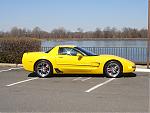

Drifting

Joined: Apr 2007
Posts: 1,760
Likes: 4
From: Broward County Florida
Oh really? cuz my '02 pulled 310rwhp 315rwtq SAE corrected on a mustang dyno after my catback and x pipe.
Thread Starter
Instructor
Joined: Sep 2009
Posts: 196
Likes: 3
Just a small update
Just a quick update the LS6 intake arrived pics below I will get the intake on this weekend might even start today and weather (MW) permitting schedule a dyno for next week. I will be doing the throttle body bypass no comments on this please. I also will be using CRC MAFS cleaner to clean the sensor read might pick up to around 4 rwhp you could of lost if dirty car has 41K on it. I have no ideal if true or not same as the TB bypass but while I have it apart no reason not to do both imo and car sits in the garage in the winter per TB bypass. I though about removing the MAF screen but decided against it for now need to do more resarch on this. I think I am going to mod the Z06 AB similar to what I think if I remember correctly it was Hotweels57 (nice mod imo)did pic below of the mod. The only thing I am going to do different is not run the screen on the Z06 AB mod. I also am thinking about cutting out a piece of the shroud 2" vertical by 12 "horizontal between the radiator and the shroud about 6'inches up from the lip of where the front bumper cover bolts on the bottom under the car. I then want to attach a small 1/2-3/4" x 12" long deflector to direct air to the Z06 AB. I really believe this will drive more and cooler air in once you get rolling. Does anyone have any negatives about doing this? Just to note I rarely drive in rain let alone any puddles and this will be higher that the Vararam air pick up. If anyone can suggest any thing else to do while have I have the car a part doing this the LS6 intake swap please post?
I think the only mod I will do next is headers research if a tune is needed put it on the dyno look at the numbers decide if tuning is needed per tune and maybe tune that day and do another dyno pull. Thanks for your input and info in these posts also thanks to LoneStarFRC, Bill Curlee & Yostie05 from the tech forum per my questions and good info! If it turns ou dyno numbers are not as high as I was hoping it was still fun researching and working on the car imo. I will see if I can get the dyno numbers in both sae corrected and standard just for comparison.


Z06 AB mod by I think it was member Hotwheels57 I like this mod

Just a quick update the LS6 intake arrived pics below I will get the intake on this weekend might even start today and weather (MW) permitting schedule a dyno for next week. I will be doing the throttle body bypass no comments on this please
. I also will be using CRC MAFS cleaner to clean the sensor read might pick up to around 4 rwhp you could of lost if dirty car has 41K on it. I have no ideal if true or not same as the TB bypass but while I have it apart no reason not to do both imo and car sits in the garage in the winter per TB bypass. I though about removing the MAF screen but decided against it for now need to do more resarch on this. I think I am going to mod the Z06 AB similar to what I think if I remember correctly it was Hotweels57 (nice mod imo)did pic below of the mod. The only thing I am going to do different is not run the screen on the Z06 AB mod. I also am thinking about cutting out a piece of the shroud 2" vertical by 12 "horizontal between the radiator and the shroud about 6'inches up from the lip of where the front bumper cover bolts on the bottom under the car. I then want to attach a small 1/2-3/4" x 12" long deflector to direct air to the Z06 AB. I really believe this will drive more and cooler air in once you get rolling. Does anyone have any negatives about doing this? Just to note I rarely drive in rain let alone any puddles and this will be higher that the Vararam air pick up. If anyone can suggest any thing else to do while have I have the car a part doing this the LS6 intake swap please post? I think the only mod I will do next is headers research if a tune is needed put it on the dyno look at the numbers decide if tuning is needed per tune and maybe tune that day and do another dyno pull. Thanks for your input and info in these posts also thanks to LoneStarFRC, Bill Curlee & Yostie05 from the tech forum per my questions and good info! If it turns ou dyno numbers are not as high as I was hoping it was still fun researching and working on the car imo. I will see if I can get the dyno numbers in both sae corrected and standard just for comparison.
Z06 AB mod by I think it was member Hotwheels57 I like this mod
Last edited by TR97C5; Nov 25, 2009 at 03:29 PM.

Drifting

Joined: Nov 2006
Posts: 1,682
Likes: 2
From: Plano Texas
St. Jude Donor '08
my 2002 a4 went from 271 to 310 with a tune... mods at the time were just halltech air intake, nxt step exhaust and 3.42 gears (which probably took a few rhwp away). my 02 already had the ls6 intake from the factory.
so with yours, basically the same mods, only difference being yours is manual.. I'll say yours will be around 315, maybe 320.
so with yours, basically the same mods, only difference being yours is manual.. I'll say yours will be around 315, maybe 320.