When you click on links to various merchants on this site and make a purchase, this can result in this site earning a commission. Affiliate programs and affiliations include, but are not limited to, the eBay Partner Network.
Can only start engine by holding gas pedal to the floor
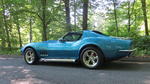
My car ('64 with 300hp engine and Carter carburetor) has had an ongoing issue starting easily. I had a professional mechanic who is very familiar with C2 Corvettes go over it. He replaced the Carter carburetor with a newly rebuilt one, replaced the fuel pump with a new correct repro, and did adjustments. It seemed like the engine would start up easily at his shop, though it never started as easily later after it sat in my garage for a while. It generally will not start if I push the pedal in to the floor and release (to set choke), if I press the pedal down twice in a row, if I do that 5 times in a row, or if I just try to start it up without pressing the gas pedal at all. The only thing that seems to work is if I push the gas pedal all the way to the floor, hold it there, the engine cranks for a 3-5 seconds, and then it sputters a bit as it fires up and seems to have some gas smell (presumably flooding) after starting. The engine smooths out and runs fine while driving. I am getting quite frustrated since I have thrown time and money at it, though the problem continues. Any ideas on what to check or adjust for this kind of scenario?
If the car has been recently run when this is occurring, percolation of the fuel is probably the cause, or at least a contributor. The ethanol in today's fuel creates this problem.
You don't need to put the pedal to the floor to set the choke. A partial depressing of the pedal is all that's required. Multiple movements of the pedal pumps more fuel into the intake.
Holding the pedal to the floor while cranking the engine is a pretty standard method for restarting a hot engine that has sat a little while, heat soaked and slightly flooded from percolation. It shouldn’t be necessary for a cold start. As SWJ says, that would be consistent with an engine being flooded. Flooding on a cold engine could be from too much pedal pumping, some form of internal carb leak or running an auxiliary electrical fuel pump prior to starting to the point it overpowers the needle/seat and overfills the bowl and floods out. In general it would be unlikely for a Carter to leak internally.
Unless you want to prime your carb prior to starting it after it’s been sitting a few days, try this procedure. Depressed the pedal about half way and release. Then without touching the pedal, crank the engine about five seconds, pause about 5 seconds, crank five seconds, pause 5 seconds, crank 5 seconds. Depress the pedal twice to the floor and release, wait a few seconds and then crank the engine to start. It should start immediately.
Myself, I prime my cars prior to a cold start with a mix of fuel and a little 2-cycle oil.
If you drive the car and then park it for 10 minutes or more, the modern fuel does seem to flood the intake. I have that problem in 80 to 90 degree weather. If I pop the hood upon parking the car, it greatly reduces the flooding and thus the car restarts more easily. This is true both on R66 with a Holley and our 68RS with a Edelbrock AFB.
Once you park the car, prior to restarting, pop the air cleaner off and check for fuel on the throttle blades which indicates flooding.
A cold restart, 4 hours or more after parking is generally good with both carburetors. However, the Edelbrock AFB seems to require pumping the accelerator to restart after setting overnight, even with the choke closed.
My car ('64 with 300hp engine and Carter carburetor) has had an ongoing issue starting easily ... It seemed like the engine would start up easily at his shop, though it never started as easily later after it sat in my garage for a while.
Scott:
The advice above is valid, but I think your problem is not with your car but with you and present circumstances. I own a lot of cars that use the Aluminum Four Barrel carburetor (AFB) you have. A hallmark of the AFB, being all aluminum and having its fuel bowls situated directly over the manifold is that the fuel left behind, after you put the car in the garage, evaporates away. Days later when you want to use it again the carburetor bowls are empty. No amount of foot palpitation on the gas pedal will fill them. Only cranking the engine long enough for the fuel pump to pump fuel back into the bowls will work from the drivers seat.
The other Dan and I use the priming method which has two distinct advantages over gnashing your teeth and those on the flywheel cranking the starter until she eventually starts. It saves your battery, your starter and your mood. Take a ride to Sally Beauty and buy a squeeze bottle for hair coloring compounds (or use a priming bottle as Dan shows). I use canned two cycle fuel from the auto parts store. Two cycle fuel with its oil helps lubricate the dry cylinder walls as a properly primed AFB will light off with one revolution.
This regimen is part and parcel of the AFB in occasionally used hobby cars. The AFB was designed for daily use passenger cars that burned real gasoline instead that laced with alcohol. So this is not the carbs fault. Some fellas run phenolic spacers under the carb to cut down on this but it just is.
It re-starts fine in your mechanics shop after a restart. It will do the same in your garage. But not after a week. Me neither.
These are legitimate questions that follow. How long have you owned your Corvette? Is this the first classic car that you've owned? Has anyone ever explained to you the proper procedure to use when cold starting these old cars?
Answer these questions and I'll tell you how to solve your "problem"...which, really isn't a problem
Just curious if you smell fuel after an overnight sit? If so....can you check your float bowl levels? If they are full when you pull the car into your garage....them low or empty after sitting overnight you could have a leaky carb. If you smell fuel after an overnight pulling the carb on the cold engine and looking at the plenum floor might show a fuel puddle.
Just shooting some ideas out since the one thing that was done was a rebuilt carb swap.
Scott: Only cranking the engine long enough for the fuel pump to pump fuel back into the bowls will work from the drivers seat.
The other Dan and I use the priming method which has two distinct advantages over gnashing your teeth and those on the flywheel cranking the starter until she eventually starts. It saves your battery, your starter and your mood. Take a ride to Sally Beauty and buy a squeeze bottle for hair coloring compounds (or use a priming bottle as Dan shows). I use canned two cycle fuel from the auto parts store. Two cycle fuel with its oil helps lubricate the dry cylinder walls as a properly primed AFB will light off with one revolution.
Dan
This was the starting regimen on my 440 powered dodge with an AFB on it.... I would not do anything except to crank the engine over for about 15 seconds then stop.. No harm here except to maybe build up some oil pressure before starting.. 2 pumps on the gas and it fired right up.... I " believe " this filled the carb at least enough for the pisser pump work..
The advice above is valid, but I think your problem is not with your car but with you and present circumstances. I own a lot of cars that use the Aluminum Four Barrel carburetor (AFB) you have. A hallmark of the AFB, being all aluminum and having its fuel bowls situated directly over the manifold is that the fuel left behind, after you put the car in the garage, evaporates away. Days later when you want to use it again the carburetor bowls are empty. No amount of foot palpitation on the gas pedal will fill them. Only cranking the engine long enough for the fuel pump to pump fuel back into the bowls will work from the drivers seat.
The other Dan and I use the priming method which has two distinct advantages over gnashing your teeth and those on the flywheel cranking the starter until she eventually starts. It saves your battery, your starter and your mood. Take a ride to Sally Beauty and buy a squeeze bottle for hair coloring compounds (or use a priming bottle as Dan shows). I use canned two cycle fuel from the auto parts store. Two cycle fuel with its oil helps lubricate the dry cylinder walls as a properly primed AFB will light off with one revolution.
This regimen is part and parcel of the AFB in occasionally used hobby cars. The AFB was designed for daily use passenger cars that burned real gasoline instead that laced with alcohol. So this is not the carbs fault. Some fellas run phenolic spacers under the carb to cut down on this but it just is.
It re-starts fine in your mechanics shop after a restart. It will do the same in your garage. But not after a week. Me neither.
Dan
Does this only apply to AFB carbs, not the Holly and Carter WCFB models?
Does this only apply to AFB carbs, not the Holly and Carter WCFB models?
I have to do much the same thing for both my Holley and Q-Jet. The Holley will need it after just 5-7 days or so (it has an open vent above the fuel bowl); the Q-Jet holds fuel better, but after a few weeks it also needs a crank-fill or manual squirt-priming.
Scott11, you can't compare a carburetored engine to a modern fuel-injected engine. The modern engine gets fuel immediately upon cranking, the carburetor has to fill the bowls (if they've sat for days to months) plus it has to pull air past the liquid fuel to vaporize it and pull it into the combustion chambers. All of this takes time and is far far less efficient than fuel injection. You need to experiment and discover the sequence that works for your engine and carb.
Last edited by barkingrats; May 9, 2026 at 01:03 PM.
Does this only apply to AFB carbs, not the Holly and Carter WCFB models?
The above is an inescapable fact. I have those carbs on cars too. In my experience the WCFB & 4G are the best at retaining fuel in their bowls. These are taller carbs made out of cast iron, pot metal and an aluminum air horn and both of mine will start on the second attempt after 6 months.
The Holley's on my Galaxie and Corvette are better than the AFB at retaining fuel but go dry after a week or two.
The AFB is the worst and the funny thing is I've proved it to myself with my own cars. I own a long-ram inducted Chrysler and Plymouth, with two AFB's each hanging over the valve covers on aluminum intakes far from engine heat. Those two cars hold fuel for two or more weeks, easy to start, and the Plymouth has no chokes. I have a Buick and a Pontiac with AFB's that I prime after a few days, especially in warm weather to save the starters.
The AFB was introduced in 1957 as a modern replacement for the WCFB, to sit lower under the hood. Its engineers figured that it would be used on engines run nearly every day, burn pure gasoline, and that its owners knew how to coax a cold one to life.
I own a long-ram inducted Chrysler and Plymouth, with two AFB's each hanging over the valve covers on aluminum intakes far from engine heat. Those two cars hold fuel for two or more weeks, easy to start, and the Plymouth has no chokes. .
Dan
One of the coolest fuel intake systems from an early era of " back in the day"... Any pics? I will bet alot on here have never seen one....







 Can only start engine by holding gas pedal to the floor