When you click on links to various merchants on this site and make a purchase, this can result in this site earning a commission. Affiliate programs and affiliations include, but are not limited to, the eBay Partner Network.
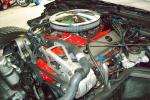
So, my daughter and I have been going through this 1984 Chevy Corvette with Cross Fire Injection. The car did run (though poorly) before we tore into it. The car was ready for a junkyard, basically (it had previously had a car fire, etc.). We essentially tore everything off the front of the motor, restored / repainted everything. EVERYTHING is new, except the long block, which was running and had good compression, so we left it in there. When I say everything is new, I mean everything is new, or repainted. We've gotten it all back together, and it looks amazing. With it together, I'm having a hard time getting it to start and run. It will just crank, then backfire through the throttle bodies (once it even caught fire which I blew out), and occasionally it will run for a few seconds or minutes. I actually even got it to run for a solid 3 minutes, and it idled pretty good (slightly high idle) and it was smoking... which I don't think too much about it, because really it was just burning off excess oil that were sprayed in the combustion chambers and some other stuff. But it DID run, and it ran pretty smoothly too. I took a short video, wanted to know what you guys though:
So, a couple of things:
- Both throttle bodies are in great shape, both rebuilt. Clearly, the engine is getting fuel... maybe too much fuel?
- I have a fuel pressure regulator installed, and it says 10 PSI. I don't think fuel is the problem. Fuel pump is brand new (we changed it), all the fuel lines are new and replaced, fuel filter is new and replaced, and clearly, it's getting plenty of fuel. I think it might actually be getting too much fuel.
- Double checked TDC and spark plug 1, and verified all the spark plugs are in the correct order / sequence, and that the distributor is pointing to plug 1 just as it's about to fire.
- Timing chain and everything is new, and the dots aligned on the gears.
- I checked the ECM codes, and got a code 34, which indicated low voltage on the TPS... so I just disconnected the TPS all together so that it would use default ECM values in open loop. No other codes.
What are your thoughts?
Another thing we did was rebuild the distributor. It went together well, and we kept everything aligned... but I'm almost thinking it's an ignition issue? I've never had an engine backfire backwards like that... just curious what you guys think. Is that generally a timing thing?
I'll see if I can get the video of when it was running well...
Ok, here's an additional video that I was able to pull off of one of the other cameras:
First part of it is a funny video where it catches fire and my daughter freaks out and runs to go get the fire extinguisher, and I tell her it's OK and then blow it out with my mouth.
Starting at 21 seconds, the engine fires to life, a little rough at first and runs very smoothly for about 20 seconds, and then dies.
For me, there are a few take-aways here (please correct me of I'm wrong)
- 1 the timing is generally OK, enough that clearly it was running well for a period of time.
- 2 I'm not really having a fuel issue. Too much, too little... not enough to cause it not to idle.
- 3 I'm seeing this more as an ignition problem... ? Maybe the ignition control module isn't operating as it should? Maybe the pick-up coil, or something?
The ignition control module is a GM one, but the coil and pickup coil are both some fairly inexpensive aftermarket ones. I'm of a mind to go buy a rebuilt distributor and install it, just to see if that's my problem.
Appreciate the advice / help... let me know what you guys think?
Also... I have "sparkalators" that I can install in line of each of the spark plugs that light up and show if the plugs are firing. Should I install those and give it a try?
OK, just to be on the safe side, I just purchased a rebuilt distributor from Rock Auto. I also got an AC Delco distributor cap, and a premium ignition coil instead of one from Standard Motor Products. I also got a set of new AC Delco plugs (normal kinds) to replace the "fancy" E3 spark plugs I installed in there. I'm just buying this stuff just to rule out the possibility that the distributor and ignition system is faulty.
I would like some confirmation though, that the fact that it did run (and smoothly for that matter) for 20 seconds, indicates that generally the "timing" is pretty good and that I don't have my wires crossed. Backfiring from the TBIs usually is an indication to me that there's an ignition problem.
Did you upgrade the coolant temp sensor and connecter? The originals are troublesome.
No, it was working when I tore it apart, so all I did was clean up the sensor (light sanding) and replaced the connector. But that wouldn't prevent it from starting I wouldn't think... it would just cause it to run like *** when it eventually went to closed loop.
Fuel pump comes on, but I just discovered that when I run 12 volts to terminal G on the ALDL, the fuel pump doesn't come on. It DOES come on for 5 seconds when I first turn the car to the on position though.
So, my daughter and I have been going through this 1984 Chevy Corvette with Cross Fire Injection. The car did run (though poorly) before we tore into it. The car was ready for a junkyard, basically (it had previously had a car fire, etc.). We essentially tore everything off the front of the motor, restored / repainted everything. EVERYTHING is new, except the long block, which was running and had good compression, so we left it in there. When I say everything is new, I mean everything is new, or repainted. We've gotten it all back together, and it looks amazing. With it together, I'm having a hard time getting it to start and run. It will just crank, then backfire through the throttle bodies (once it even caught fire which I blew out), and occasionally it will run for a few seconds or minutes. I actually even got it to run for a solid 3 minutes, and it idled pretty good (slightly high idle) and it was smoking... which I don't think too much about it, because really it was just burning off excess oil that were sprayed in the combustion chambers and some other stuff. But it DID run, and it ran pretty smoothly too. I took a short video, wanted to know what you guys though:
So, a couple of things:
- Both throttle bodies are in great shape, both rebuilt. Clearly, the engine is getting fuel... maybe too much fuel?
- I have a fuel pressure regulator installed, and it says 10 PSI. I don't think fuel is the problem. Fuel pump is brand new (we changed it), all the fuel lines are new and replaced, fuel filter is new and replaced, and clearly, it's getting plenty of fuel. I think it might actually be getting too much fuel.
- Double checked TDC and spark plug 1, and verified all the spark plugs are in the correct order / sequence, and that the distributor is pointing to plug 1 just as it's about to fire.
- Timing chain and everything is new, and the dots aligned on the gears.
- I checked the ECM codes, and got a code 34, which indicated low voltage on the TPS... so I just disconnected the TPS all together so that it would use default ECM values in open loop. No other codes.
What are your thoughts?
Another thing we did was rebuild the distributor. It went together well, and we kept everything aligned... but I'm almost thinking it's an ignition issue? I've never had an engine backfire backwards like that... just curious what you guys think. Is that generally a timing thing?
I'll see if I can get the video of when it was running well...
timing problem. is rotor pointed at #1 wire on compression stroke?
as mentioned, backfire is usually ignition or timing issue. Also check to see if you have good/substantial grounds to the heads, intake, block, chassis, alternator, etc.
Do you have ESC bypass connector unplugged? It's by the MAP sensor area, single weatherpac connector tan/black wire. I would get that unplugged and a timing light hooked up and get the timing set to 6° BTDC (you can bump that up to 8°-10° later) All of the above are good suggestions. If it were me, like I said, when you do get it to start...I would want to verify the timing is not initially too far out. When it dies, what is the fuel pressure gauge doing? Obviously time for some troubleshooting, one thing at a time to figure it out...are you losing fuel or spark when it quits running? You'll get it figured out!👍
Edit: I would verify the "dots" you used for installing the timing chain, were the correct ones for straight up camshaft timing. Also, I would be very suspicious of the new pickup coil if it is not an ACDELCO 1945 or 1945X!
Last edited by '78CorvetteS.A.; Jun 1, 2026 at 05:40 AM.
timing problem. is rotor pointed at #1 wire on compression stroke?
Yes, for the most part. I'm not sure if that means it needs to be DIRECTLY on spark plug 1, or just before, or just after, but I got it pretty close. I've got the distributor loose so I can adjust it forwards or backwards a little bit. Basically, with spark plug one on the compression stroke, and the harmonic balancer indicator exactly at 0, the little rubber plug I stuffed into spark plug 1 then shot across the room. At that point, I re-installed the distributor (while adjusting the oil pump drive) to make sure the rotor was pointing to where the spark plug 1 boot would go (which incidentally is also the actual physical direction of pointing towards spark plug one)
Originally Posted by AZSP33D
sparkalators — tell me more :-)
Ordered them from England, there's a company that makes them, helps you troubleshoot ignition problems... well, somewhat. Just shows you that your spark plugs are getting power while you're driving.
as mentioned, backfire is usually ignition or timing issue. Also check to see if you have good/substantial grounds to the heads, intake, block, chassis, alternator, etc.
Well... I do have the negative battery attached directly to the engine, and of course, the smaller gauge wire then goes to the frame itself. I do have one additional ground strap on the passenger side that I added from one of the exhaust manifolds to the frame itself, and there is another ground strap on the driver's side. But I can add a couple of more.
Originally Posted by '78CorvetteS.A.
Do you have ESC bypass connector unplugged? It's by the MAP sensor area, single weatherpac connector tan/black wire.
I'll have to look, I've seen nothing like that. The only wires I've seen there are the positive battery connections. I'll have to look really carefully... I hope it's not hooked up to positive power. Isn't the ESC bypass what happens when you put the car in diagnostic mode (A/B terminal short)?
Originally Posted by '78CorvetteS.A.
I would get that unplugged and a timing light hooked up and get the timing set to 6° BTDC (you can bump that up to 8°-10° later) All of the above are good suggestions. If it were me, like I said, when you do get it to start...I would want to verify the timing is not initially too far out.
Ok, I'll look through my shop manual and try to find that. THank you!
Originally Posted by '78CorvetteS.A.
When it dies, what is the fuel pressure gauge doing?
While it IS running (barely), the fuel pressure gauge sits at around 9-10 PSI (closer to 9). When it dies, the fuel pressure gauge VERY quickly drops back to 0. It does not maintain fuel pressure for more than a second or a second and a half.
Originally Posted by '78CorvetteS.A.
Obviously time for some troubleshooting, one thing at a time to figure it out...are you losing fuel or spark when it quits running? You'll get it figured out!👍
From my "sparkalator" video above, it doesn't seem like it is... it seems like it maintains spark through to the end.
Originally Posted by '78CorvetteS.A.
Edit: I would verify the "dots" you used for installing the timing chain, were the correct ones for straight up camshaft timing. Also, I would be very suspicious of the new pickup coil if it is not an ACDELCO 1945 or 1945X!
This is what I'm really worried about... I would hate to have to tear off the entire front of the engine again just to get to that. It was a **** ton of work for my daughter.
We kept the old crank sprocket on there, and replaced only the cam gear and the timing chain. We did not need to move or rotate the crank and / or the cam. They just fit perfectly like this. I would hope, with some confirmation though, that this is not the problem... correct me if I'm wrong, but when it did run for that 20 seconds or so, it wouldn't have run like that at all if this (the sprockets) were misaligned, correct?
The Ignition Control Module was an AC DELCO... but it was not one that I had tested, though spark doesn't seem to be the issue.
The only other thing I didn't mention, is that I screwed around a bit with valve lash on cyl 1 and 3. I tightened them both down a half-turn (they seemed really lose at one point), and someone said not to do that, so I turned them back. I am eventually going to swap out to 1.6:1 roller rockers, but wanted to keep it stock first so I could get it running again before we did "upgrades." I doubt this would have caused that. With it slightly out of lash (if it even is), it should still run.
Despite the clattering sound you hear in the running video, it doesn't actually sound like that in person, that's just overwhelming the mic on that crappy camera, but there's no lifter rattle or clattering.
as mentioned, backfire is usually ignition or timing issue. Also check to see if you have good/substantial grounds to the heads, intake, block, chassis, alternator, etc.
verify tdc on #1 is actually tdc on #1. u dont need a fancy piston stop, just a cheap endoscope cam.
then id verify distributor. did u know u can test it on the bench? its pretty cool and i discovered a weak coil doing it years ago. you rotate the drive gear while feeding it battery voltage in a specific way. this rules out a messed up components in the dizzy.
id rig up a fuel pressure testor. leave it installed inline.
looks like in an 84 — i see u have that.
Your fuel pump should run when u apply 12v to pin g directly from battery. not jumping a and g.
id say ur issue is ignition related. swap your ignition control module out to the old one.
Last edited by VikingTrad3r; Jun 1, 2026 at 10:38 AM.
The ONLY difference with these is that you're supposed to be able to drive around with them, haha... not sure how that would help, but if you have a camera on them, it would.
Originally Posted by VikingTrad3r
verify tdc on #1 is actually tdc on #1. u dont need a fancy piston stop, just a cheap endoscope cam.
then id verify distributor. did u know u can test it on the bench? its pretty cool and i discovered a weak coil doing it years ago. you rotate the drive gear while feeding it battery voltage in a specific way. this rules out a messed up components in the dizzy.
id rig up a fuel pressure testor. leave it installed inline.
looks like in an 84 — i see u have that.
Your fuel pump should run when u apply 12v to pin g directly from battery. not jumping a and g.
id say ur issue is ignition related. swap your ignition control module out to the old one.
Thanks, I will go back through and do that. I shot the parts cannon at it hard core last night. I have a brand new set of normal AC Delco plugs coming in the mail, so I'll just pull all the plugs, along with a rebuilt distributor that I ordered, and I'll re-do TDC. It was REALLY hard to turn the motor with the crank bolt... it's also the smallest crank bolt I've ever seen in my life, and I swear to got that thing is going to break. It tells me at least the engine has awesome compression. So, with all the plugs out, it should be super easy to turn.
Also... you mentioned something. I ALSO tried running a wire to pin G directly from a battery that I brought in and sat on the driver's side floor. It did nothing.
I was thinking about it last night...
I THINK I pulled the fuel pump fuse... when I started tearing everything apart because I didn't want the fuel pump to come on accidentally while I was working on the fuel lines. But... if I pulled the fuse, then it shouldn't ever come on at all... I don't think the relay will send power to it. It does come on when I first turn the key. I would feel pretty dumb if this was because of a fuse. I will check that tonight.
Yes, for the most part. I'm not sure if that means it needs to be DIRECTLY on spark plug 1, or just before, or just after, but I got it pretty close. I've got the distributor loose so I can adjust it forwards or backwards a little bit. Basically, with spark plug one on the compression stroke, and the harmonic balancer indicator exactly at 0, the little rubber plug I stuffed into spark plug 1 then shot across the room. At that point, I re-installed the distributor (while adjusting the oil pump drive) to make sure the rotor was pointing to where the spark plug 1 boot would go (which incidentally is also the actual physical direction of pointing towards spark plug one)
Ordered them from England, there's a company that makes them, helps you troubleshoot ignition problems... well, somewhat. Just shows you that your spark plugs are getting power while you're driving.
Well... I do have the negative battery attached directly to the engine, and of course, the smaller gauge wire then goes to the frame itself. I do have one additional ground strap on the passenger side that I added from one of the exhaust manifolds to the frame itself, and there is another ground strap on the driver's side. But I can add a couple of more.
I'll have to look, I've seen nothing like that. The only wires I've seen there are the positive battery connections. I'll have to look really carefully... I hope it's not hooked up to positive power. Isn't the ESC bypass what happens when you put the car in diagnostic mode (A/B terminal short)?
Ok, I'll look through my shop manual and try to find that. THank you!
While it IS running (barely), the fuel pressure gauge sits at around 9-10 PSI (closer to 9). When it dies, the fuel pressure gauge VERY quickly drops back to 0. It does not maintain fuel pressure for more than a second or a second and a half.
From my "sparkalator" video above, it doesn't seem like it is... it seems like it maintains spark through to the end.
This is what I'm really worried about... I would hate to have to tear off the entire front of the engine again just to get to that. It was a **** ton of work for my daughter.
We kept the old crank sprocket on there, and replaced only the cam gear and the timing chain. We did not need to move or rotate the crank and / or the cam. They just fit perfectly like this. I would hope, with some confirmation though, that this is not the problem... correct me if I'm wrong, but when it did run for that 20 seconds or so, it wouldn't have run like that at all if this (the sprockets) were misaligned, correct?
The Ignition Control Module was an AC DELCO... but it was not one that I had tested, though spark doesn't seem to be the issue.
The only other thing I didn't mention, is that I screwed around a bit with valve lash on cyl 1 and 3. I tightened them both down a half-turn (they seemed really lose at one point), and someone said not to do that, so I turned them back. I am eventually going to swap out to 1.6:1 roller rockers, but wanted to keep it stock first so I could get it running again before we did "upgrades." I doubt this would have caused that. With it slightly out of lash (if it even is), it should still run.
Despite the clattering sound you hear in the running video, it doesn't actually sound like that in person, that's just overwhelming the mic on that crappy camera, but there's no lifter rattle or clattering.
Thanks everyone!
seems to me the intake valve is open when the spark plug is firing. maybe you already know this. can check valve timing by removing valve cover. rotating damper, exhaust valve opens first, then intake valve opens. when intake valve closes this should be the compression stroke. turn damper until TDC and rotor should be pointing at #1 on distributer. I have gotten wires on wrong before, hard to follow wires on this car. I always double check.
seems to me the intake valve is open when the spark plug is firing. maybe you already know this. can check valve timing by removing valve cover. rotating damper, exhaust valve opens first, then intake valve opens. when intake valve closes this should be the compression stroke. turn damper until TDC and rotor should be pointing at #1 on distributer. I have gotten wires on wrong before, hard to follow wires on this car. I always double check.
I actually did not know this, though it should have been obvious to me. I guess I can assume then (to some degree) that a backfiring exhaust could also be caused by the spark plug firing with the exhaust port opening prematurely too? (or too much unburned fuel in the exhaust and it ignites in the catalytic converter). Neither of these are happening to me, but they for sure are happening on the intake, so I really appreciate you mentioning this, because while it should be obvious, it makes absolute sense and helps me figure out what could be going wrong. Obviously, that turns out to be a timing issue... or worse case, timing is good but one of the valves is opening too soon (or not fully closing).
Here's what I think I'll do, in this order:
- Check to make sure the Fuel Pump fuse is actually in there
- Figure out why sending power to terminal G isn't doing anything.
- Figure out test what the fuel pressure is for the TBIs and try to adjust it to at least 10 PSI while the fuel pump is running continuously.
- Figure out what this ESC lockout thing is, and make sure I didn't just accidentally send power to it, or accidentally hook something else up to it (in my defense, half the wires were burned)
- Remove ALL the spark plugs, remove the valve covers, and remove all the rocker arms and install my 1.6:1 roller-tipped rockers and re-do valve lash for all 8 cyls.
- Remove the distributor, and re-set crank to TDC on the compression stroke (I have a spark plug whistle) and then re-set distributor to spark plug 1.
(just to clarify... when we say set it to spark plug one, the assumption is that at TDC, the plug would literally fire at that moment with the rotor pointing EXACTLY to plug 1 on the cap, dead center)
Turn the key... haha
My wife and daughter are going to Miami this Friday, so I'll have the entire weekend to have at it.
Thanks everyone. I'll try to knock out some of these things earlier in the week if I can... but hopefully I can get it running. My daughter isn't discouraged, but she is kind of bummed... she loves the sound of the Corvette above her Pontiac Fiero. It also sounds way more awesome than her Pontiac Solstice.
Unless the damper has been replaced you should not trust the timing mark. It is quite common for the rubber bond to break and then the outer ring will rotate,
It is quite easy to make a TDC tool from an old spark plug. It is best to stop the piston a bit down for better accuracy. Manually rotate the creak to the stop in both directions. TDC is in the middle.
I usually rotat the crankusing the alternator pulley bolt. The small pulleu gived you good mechanical advantage.
The trick is to keep the belt from slipping. You can use the belt tensioner to increase bet tension with a ratchet.
Unless the damper has been replaced you should not trust the timing mark. It is quite common for the rubber bond to break and then the outer ring will rotate,
It is quite easy to make a TDC tool from an old spark plug. It is best to stop the piston a bit down for better accuracy. Manually rotate the creak to the stop in both directions. TDC is in the middle.
I usually rotat the crankusing the alternator pulley bolt. The small pulleu gived you good mechanical advantage.
The trick is to keep the belt from slipping. You can use the belt tensioner to increase bet tension with a ratchet.
Yeah, the damper is brand new. Unfortunately, we also installed a decoupler pulley on the alternator, so I can't use that. But I will pull the plugs and that should make it easier so I don't have to fear breaking the crank bolt!
"Manually rotate the crank to the stop in both directions. TDC is in the middle."
Ok, daughter is in Miami with the wife, so I have the weekend all to myself to try to fix it where I can hopefully do it before the family gets back. She'll be mad I didn't solve it with her, but I really want to help her get this beast finished.
I took the distributor cap off, removed all the spark plugs, and removed the valve cover on the driver's side.
With the piston JUST after TDC... meaning I moved the crank just a hair and the piston started to come down again, here is where the rotor is:
Note, this is with the distributor "body" oriented in the correct location. I made a black magic marker notch on the distributor body, which directly lines up to where the spark plug 1 location is on the distributor cap. So as you can see, the rotor is not even there yet... so it would literally be firing at the moment it would be sucking in the fuel and air mixture... which is wild.
Obviously, I'm a few teeth off on the distributor.
One thing that concerns me though is that the harmonic balancer (which is brand new), sits directly at the top of the timing mark on the timing cover? I assumed all harmonic balancers were the same for the SBC. I can confirm though that when the piston is at TDC, the rocker arms are totally level (neither open nor closed). So, the timing gears (crank and cam) are properly aligned. But the harmonic balancer "notch" (which is unpainted), shows it's at 16 degrees on the timing mark. I had been setting ignition (and distributor adjustment) when the harmonic balancer is at the 0 mark (which is obviously why it's off). Just curious why this could be?
I'm going to replace all the rocker arms with the 1.6:1 roller rockers, since I figured I'd do valve lash, and why not... might as well complicate things... haha...
Curious on everyone's thoughts!? I really appreciate the help... thank you!
Ok, daughter is in Miami with the wife, so I have the weekend all to myself to try to fix it where I can hopefully do it before the family gets back. She'll be mad I didn't solve it with her, but I really want to help her get this beast finished.
I took the distributor cap off, removed all the spark plugs, and removed the valve cover on the driver's side.
With the piston JUST after TDC... meaning I moved the crank just a hair and the piston started to come down again, here is where the rotor is:
Note, this is with the distributor "body" oriented in the correct location. I made a black magic marker notch on the distributor body, which directly lines up to where the spark plug 1 location is on the distributor cap. So as you can see, the rotor is not even there yet... so it would literally be firing at the moment it would be sucking in the fuel and air mixture... which is wild.
Obviously, I'm a few teeth off on the distributor.
One thing that concerns me though is that the harmonic balancer (which is brand new), sits directly at the top of the timing mark on the timing cover? I assumed all harmonic balancers were the same for the SBC. I can confirm though that when the piston is at TDC, the rocker arms are totally level (neither open nor closed). So, the timing gears (crank and cam) are properly aligned. But the harmonic balancer "notch" (which is unpainted), shows it's at 16 degrees on the timing mark. I had been setting ignition (and distributor adjustment) when the harmonic balancer is at the 0 mark (which is obviously why it's off). Just curious why this could be?
I'm going to replace all the rocker arms with the 1.6:1 roller rockers, since I figured I'd do valve lash, and why not... might as well complicate things... haha...
Curious on everyone's thoughts!? I really appreciate the help... thank you!
Ok, I swapped out all the rocker arms with the newer 1.6:1 roller rockers. I went around the engine twice and double checked my valve lash for each one. Basically, here's what I did. Got to TDC for each piston using a worm camera that I stuck in the cyl bore. As soon as I saw that the piston "just" stopped moving, I verified both rocker arms were more or less kinda loose (though there was always one just a hair more snug). I then replaced the rocker arm with new pivot ball and nut, lots of assembly lube, and then tightened the nut down until there was no play in the pushrod (meaning, being able to move it up and down). As soon as the pushrod could not be moved up or down anymore with the rocker arm on it, then I did a full 180 degree turn (half-turn) of the socket. I did this for all the rocker arms, and was sure to double-check cyl 1 at least three times to make sure.
I also set TDC again and adjusted the distributor. As you can see, it's not perfect. For some reason I keep being a little off, but I think I got the hang of it enough now that I can take the distributor back off again, move it one tooth, and I should be good. Anyway, the engine seems to be running, but runs a little rough... I can see it shaking in the engine compartment, but it otherwise SOUNDS pretty good. See here:
My first guess is that MAYBE one of the spark plug wires isn't properly connected... just a guess, but I figured the engine would still run missing 1 spark plug, but it would probably shake like this since it would be imbalanced?
I'm going to go back outside when the engine cools off and try to re-seat the distributor so that it's a bit more "correct" in the placement (rather than turned a few degrees as it is).
Note, I also disconnected the ESC bypass connector unplugged that @'78CorvetteS.A. suggested I disconnect.
I noticed that I could plug it back in when the car was running. But if I tried to start it again with it plugged in, it would sputter and die. If I disconnected it, I could then start it again and it would idle like this.
Appreciate any thoughts? I am definitely making progress.
Also, I noticed that when I push the gas pedal down, it just kind of lags and wants to die. I got a TPS voltage error before... (low voltage), so I need to check to make sure I didn't hook the wires up wrong when I replaced the connector. I took lots of pictures, so I'll verify that too.
Ok, so... a few things. I re-did all the wires, and discovered that I did in fact have one wire in the wrong place... which... if I'm doing my math right, meant that I actually had two spark plug wires in the wrong place! Haha...
So, I fixed that, reset the ECM, disconnected the ESC thingy, and ran the car. It idled poorly, but when I advanced it (or retarded it?) I was able to get it to idle pretty well, though at 1,000 rpms.
I then plugged in the ESC connector again, and let it run... and it ran pretty well. I also bumped up the fuel pressure. In the video, it's only showing about 11 PSI, but I bumped it up to about 12.5 PSI after this video. I let it run (with the ESC thing plugged in) and I let it run for about 15 minutes as I checked and topped off the transmission fluid (now that the cooling lines are hooked up, etc.).
The temperature slowly rose to about 211 degrees... not sure if that's normal. When I shut it off, it rose to about 235 degrees.
If I try to give it any gas, it stumbles.
I ran the ECM codes, and here's what I'm getting:
- MAP Sensor Signal Low (Code 34)
- EST Electronic Spart Timing (Code 42)
The MAP sensor is a GM one, and it's hooked up with a new connector and a new hose directly to the rear most throttle body, which is where I think it's supposed to be. I'll check again. For the EST... I don't know if this is because I had it disconnected again.
However, when I try to start the car again after it's shut off... it stumbles a little and dies.
Any thoughts? I'm going to change the MAP, but would appreciate some thoughts on timing. If you note in the above video (this one I just posted), the distributor had to be turned way in that direction for the car to run and idle properly. It idles quite well, no shaking, etc... but damn if I can't seem to figure out how to get that damn thing poiting in the right direction. I'm going to leave it like this for now because I want to get it running well. And then I'll fiddle with the distributor.
Thanks!
EDIT: The smoke is the freshly painted exhaust components slowly baking the paint (and whatever). There WAS blue smoke coming out of the exhaust when I first got it running, but the blue smoke is completely gone after just a couple of minutes. I assumed it was oil that got into the exhaust pipes.
Ok... I went out there and changed out the MAP sensor with one from the local auto parts store. The car won't even start at all. I swapped back over the other MAP sensor, still won't start. I figured... ok, maybe the ignition control module failed, so I swapped over the brand new (rebuilt) distributor that I just ordered from Rock Auto. Still did nothing. I can see fuel, I can see spark (using the spark testing tool that I have). What in the world is going on? The car won't even slightly run. I don't understand what I'm doing wrong. No popping or backfiring either... just nothing.
I went and got more fuel too just to make sure, it now shows 1/4 tank. Completely dead.
ECM still says 34 and 42. I'll have to go disconnect the ECM just to reset it. But man, this is really frustrating. Anyone have any thoughts? I'm at a loss... I'm of the mind to just completely swap out the CFI system and drop in a FAST EZ EFI 2.0 system with the 1985 fuel injection stuff I have, and I really don't want to do that because I love CFI... I'm just so frustrated right now.
EDIT: I bought some starting fluid... sprayed some in there and I was able to get the car started for a couple of seconds (5-6 seconds). It ran fine, and then died. I'm wondering if the fuel pump is failing? It's a brand new pump with new lines and new filter, and the TBIs were just rebuilt as well, with new injectors.
Question, when I turn the key, and the fuel pump primes. Is the fuel pressure supposed to immediately drop the second the fuel pump turns off? In my MPFI systems, the fuel pressure remains somewhat, because if I hit the shrader valve, it squirts fuel (when turned off and pump not on). WIth this CFI system, the fuel pressure drops immediately. I thought it was supposed to close and maintain fuel pressure (rather than sending it back through the return line immediately)?






 Help with a 1984 CFI that doesn't run! :)