



Locknuts: Distorted Thread vs Nylon Insert

Thread Starter
Le Mans Master


Joined: Jan 2002
Posts: 9,036
Likes: 13
From: Edmonton AB
 Locknuts: Distorted Thread vs Nylon Insert
Do Distorted Thread locknuts provide greater vibration resistance
to loosening than Nylon Insert locknuts?
The DT nuts in question are conical on one side and this cone shape
is deformed slightly into a triangle, distorting the ID and the threads.
They seem to require noticeably more torque (hand felt) to tighten.
.
to loosening than Nylon Insert locknuts?
The DT nuts in question are conical on one side and this cone shape
is deformed slightly into a triangle, distorting the ID and the threads.
They seem to require noticeably more torque (hand felt) to tighten.
.

Burning Brakes

Joined: Apr 2004
Posts: 792
Likes: 1
From: Stanfield NC
The nylon type loose their "lock" if removed and reinstalled too frequently. I have never had that happen with the distorted type. You also need to be careful with the nylon type anywhere they might be subjected to heat.

Drifting

Joined: Sep 2004
Posts: 1,638
Likes: 3
Hey Ken,
I have had the same experience as you - it seems to me distorted threads do give better vibrational loosening resistance - I have to crank on the wrench all the way till the end - while with Nylon - it gets progressively easier. so thats what I base my completely non scientific opinion on!
Carl
I have had the same experience as you - it seems to me distorted threads do give better vibrational loosening resistance - I have to crank on the wrench all the way till the end - while with Nylon - it gets progressively easier. so thats what I base my completely non scientific opinion on!
Carl

Melting Slicks


Joined: Mar 2005
Posts: 2,351
Likes: 228
From: Northeast FL
OK, so this is all new to me. I've never heard of these DT locknuts (not that I know everything!!!) but sounds like a good idea. Where do you get them? I would guess Home Depot doesn't sell them.
One other question, do they eventually ruin the threads on the stud / bolt you are using them on because of the way it stretched the threads?
One other question, do they eventually ruin the threads on the stud / bolt you are using them on because of the way it stretched the threads?

Pro

Joined: Apr 2006
Posts: 705
Likes: 0
Dt nuts do damage the threads of the bolt or stud.
Never use nylocks on anything that deals with temps greater than 200 f. the nylon melts out.
there's a great book by Carol Smith on fasteners.
It hurt my head with the tech.
Safty wire ing is the way that one should lock their fasteners down
Never use nylocks on anything that deals with temps greater than 200 f. the nylon melts out.
there's a great book by Carol Smith on fasteners.
It hurt my head with the tech.
Safty wire ing is the way that one should lock their fasteners down
Thread Starter
Le Mans Master
Joined: Jan 2002
Posts: 9,036
Likes: 13
From: Edmonton AB
Thank you all!
I was CERTAIN there was something wrong with the situation but I
couldn't put my finger on the root cause of my unease.
I own Mr. Smith's excellent book:
absorb the information. (Nor did I have the clarity of mind at the time
to intuit the problem on my own.)
Although I was asking about vibration resistance in the original post, I
was missing the nature of the real problem. For an engine compartment
application like the one I was questioning here, the KEY shortcoming of
nuts with a nylon insert is their low ceiling for heat tolerance.
As WNDOPDLR and 67 fastback both point out, the nylon becomes soft
and eventually flows or burns - no longer providing any locking function.
Mr. Smith states 250º F is the critical temperature for AN-365 (MS20045)
full height and AN-364 (MS20064) half height rated versions. The
commercial versions from the local hardware store that we mortals are
more likely to use may well only be suitable to 200º.
In contrast, Mr Smith writes that the elliptically offset (Distorted
Thread) lock nut is available in values up to 300,000 psi and 1400ºF.
On the matter of reusability, he writes that:
is McMaster. Type 'nuts distorted' into the search field and this will take you
to the general page from where you can drill down further. Pegasus Racing
lists a variety under hardware. There might be some technical
info at SPS Technologies
Again, thanks for directing my attention to the real issue.
.
I was CERTAIN there was something wrong with the situation but I
couldn't put my finger on the root cause of my unease.
I own Mr. Smith's excellent book:
Nuts, Bolts, Fasteners and Plumbing Handbook
Smith, Carroll. 1990. Motorbooks International
ISBN 0-87938-406-9
But I didn't have it with me. Obviously, I hadn't read it well enough to Smith, Carroll. 1990. Motorbooks International
ISBN 0-87938-406-9
absorb the information. (Nor did I have the clarity of mind at the time
to intuit the problem on my own.)
Although I was asking about vibration resistance in the original post, I
was missing the nature of the real problem. For an engine compartment
application like the one I was questioning here, the KEY shortcoming of
nuts with a nylon insert is their low ceiling for heat tolerance.
As WNDOPDLR and 67 fastback both point out, the nylon becomes soft
and eventually flows or burns - no longer providing any locking function.
Mr. Smith states 250º F is the critical temperature for AN-365 (MS20045)
full height and AN-364 (MS20064) half height rated versions. The
commercial versions from the local hardware store that we mortals are
more likely to use may well only be suitable to 200º.
In contrast, Mr Smith writes that the elliptically offset (Distorted
Thread) lock nut is available in values up to 300,000 psi and 1400ºF.
On the matter of reusability, he writes that:
'When manufactured to military specs they are almost indefinitely
reusable and will not harm the male threads of the bolts they are
meant to be used with - at least for many applications. However,
if you use a 220,000 psi nut on a 125,000 psi AN bolt, then the hard
deformed threads on the nut are going to act llike a misshaped thread
die on the relatively soft threads of the bolt and you will lose the bolt
threads.'
jwt1603 - one source of information and supply for Distorted Thread nutsreusable and will not harm the male threads of the bolts they are
meant to be used with - at least for many applications. However,
if you use a 220,000 psi nut on a 125,000 psi AN bolt, then the hard
deformed threads on the nut are going to act llike a misshaped thread
die on the relatively soft threads of the bolt and you will lose the bolt
threads.'
is McMaster. Type 'nuts distorted' into the search field and this will take you
to the general page from where you can drill down further. Pegasus Racing
lists a variety under hardware. There might be some technical
info at SPS Technologies
Again, thanks for directing my attention to the real issue.
.
Corvette Stories
The Best of Corvette for Corvette Enthusiasts

10 Reasons the C6 Z06 is Still A Performance Benchmark After 20 Years
Joe Kucinski
How Much Horsepower Every Corvette Engine "LOST" in 1972
Joe Kucinski
Top 10 DOs and DON'Ts for Protecting Your Convertible Top!
Michael S. Palmer
Top 10 Most Explosive Corvettes Ever Made: Power-to-Weight Ratio Ranked!
Joe Kucinski
150 hp to 1,250 hp: Every Corvette Generation Compared by the Specs That Matter
Joe Kucinski
8 Coolest Corvette Pace Cars (and Replicas) of All Time
Verdad Gallardo
Top 10 Corvette Engines RANKED by Peak Torque (70+ Years of Muscle!)
Joe Kucinski
Corvette ZR1X Will Be Pacing the Indy 500, And Could Probably Race, Too!
Verdad Gallardo
Top 10 Corvettes Coming to Mecum Indy 2026!
Brett Foote
Melting Slicks
Joined: Mar 2005
Posts: 2,351
Likes: 228
From: Northeast FL


Safety Car


Joined: Nov 2003
Posts: 4,979
Likes: 5
From: San Diego, CA "leaf" "tee" "e"
This hold, combined with the compression of the nylon, is sufficient to ensure that a properly tightened nut will not loosen on the bolt at temperatures up to 250degrees Fahrenheit; above that temperature the nylon loses its elasticity.
These nuts are available in tensile strengths to 300,000 psi with temperature ranges up to 1400 degrees Fahrenheit. When manufactured to military specs they a real most indefinitely reuseable and will not harm the male threads of the bolts that they are meant to be used with-at least for many applications. However, if you use a 220,000 psi nut on a 125,000psi AN bolt, then the hard deformed threads of the nut are going to act like a misshaped thread die on the relatively soft threads of the bolt and you will lose the bolt threads. On the other hand, some of the industrial copies are not meant to be disassembled and can wreck male threads in a single application.
Thread Starter
Le Mans Master
Joined: Jan 2002
Posts: 9,036
Likes: 13
From: Edmonton AB
One possible lock nut candidate for environments where nylon insert
lock nuts are not suitable is the Stover® lock nut.
These are described as being reusable and capable of withstanding
operating temperatures up to 450°F. They are rated as Grade C
and are typically finished with a zinc dichromate coating that gives
them a silver/grey appearance. I also see they are available in black
phosphate.
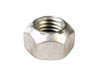
This is what I've used for my situation.
.
lock nuts are not suitable is the Stover® lock nut.
These are described as being reusable and capable of withstanding
operating temperatures up to 450°F. They are rated as Grade C
and are typically finished with a zinc dichromate coating that gives
them a silver/grey appearance. I also see they are available in black
phosphate.
This is what I've used for my situation.
.

Race Director


Joined: Sep 1999
Posts: 12,437
Likes: 919
From: CONCORD NC
I prefer nylocks, but maybe it is just because they are easier to use. Even the "crimped" nuts lose their locking capacity after use. For instance, the lower control arm nuts are supposed to be replaced on the C6Z.
I pretty much use nylocks for everything these days, even if vibration isn't a problem. Just eliminates any doubts.
I pretty much use nylocks for everything these days, even if vibration isn't a problem. Just eliminates any doubts.
Thread Starter
Le Mans Master
Joined: Jan 2002
Posts: 9,036
Likes: 13
From: Edmonton AB
I wrote above that the Stover nut has a Zinc Dichromate finish - I
checked afterward because I was repeating info from fastener sites
but I was sure that a Zinc Dichromate coating gives parts a
yellow/gold finish.
The fastener sites must be wrong because the nuts have a silver/grey
appearance and this suggests they are finished in Zinc Chromate (as
opposed to Zinc Dichromate)
I'm in complete agreement. It is just that this particular location
gets warm and the Nylock nuts simply didn't feel like they were going
to provide secure locking.
I'm yet to be convinced that the Stover nuts won't wear threads on
the bolts they're on. But these bolts are simple to replace and the
peace of mind is worth while. I'll continue to use Nylocks in more
temperate locations without reservation.
Again - thanks to everyone who commented.
.
checked afterward because I was repeating info from fastener sites
but I was sure that a Zinc Dichromate coating gives parts a
yellow/gold finish.
The fastener sites must be wrong because the nuts have a silver/grey
appearance and this suggests they are finished in Zinc Chromate (as
opposed to Zinc Dichromate)
gets warm and the Nylock nuts simply didn't feel like they were going
to provide secure locking.
I'm yet to be convinced that the Stover nuts won't wear threads on
the bolts they're on. But these bolts are simple to replace and the
peace of mind is worth while. I'll continue to use Nylocks in more
temperate locations without reservation.
Again - thanks to everyone who commented.
.

Drifting

Joined: Dec 2003
Posts: 1,895
Likes: 84
From: Darien IL
There is a lot of confusion even among some platers. Zinc chromate plating can be left clear, dyed yellow, blue (metric), olive etc. There are also trivalent & hexavalent specifications. They are all about the same in my experience and provide minimal protection against corrosion.

Pro
Joined: Oct 2004
Posts: 619
Likes: 1
From: Reno Nv
Aircraft Nylocks
I've gotten away from the crimped locknuts on everything except to attach brake discs on some cars. I use standard nylocks on all noncritical assemblies and replace them when they start to feel weak, they're cheap.
I've switched to aircraft AN stuff everywhere else.
The comment about crimped nuts distortion the threads is interesting. I find that even with the aircraft stuff, the nylock nuts start to loose the clamp force after maybe the 4th time they're used. I change them fairly often.
Any idea what the difference is between the crimped nut an the Stover?
And, did you get some Stover's to try out?
I've switched to aircraft AN stuff everywhere else.
The comment about crimped nuts distortion the threads is interesting. I find that even with the aircraft stuff, the nylock nuts start to loose the clamp force after maybe the 4th time they're used. I change them fairly often.
Any idea what the difference is between the crimped nut an the Stover?
And, did you get some Stover's to try out?
