






Self Alignment Question

Thread Starter
Melting Slicks


Joined: Jun 2002
Posts: 3,070
Likes: 5
From: Charleston South Carolina
 Self Alignment Question
When you use the string method, what do you use for the "center of the car" to make sure the thrust angles are zero and your toe angles are equal on both sides?
Or stated differently, what reference point do you use for the center of the car on both the front and back when setting toe?
Or stated differently, what reference point do you use for the center of the car on both the front and back when setting toe?

Melting Slicks


Joined: Jan 2004
Posts: 3,247
Likes: 210
From: Detroit MI
I don't reference the centerline; too difficult to find practically. I was taught to square up the strings by measuring to the wheel center caps, and making the difference in the distances (from string to center cap) front and rear the same on both sides.
I saw a good write up the other day somewhere online that I copied and saved. If I can find the link again I'll post it here.
I saw a good write up the other day somewhere online that I copied and saved. If I can find the link again I'll post it here.
Last edited by 69autoXr; Jan 9, 2009 at 11:21 AM.
Melting Slicks
Joined: Jan 2004
Posts: 3,247
Likes: 210
From: Detroit MI
Found that write up, here is the link:
http://wrx.grapon.com/techdocs/howto...0alignment.htm
Obviously the numbers don't apply but the method is similar.
http://wrx.grapon.com/techdocs/howto...0alignment.htm
Obviously the numbers don't apply but the method is similar.
Last edited by 69autoXr; Jan 9, 2009 at 11:36 AM.

Race Director


Joined: Sep 1999
Posts: 12,438
Likes: 919
From: CONCORD NC
you should download my guide. I use a laser level mounted to the rear wheels, to "center" them relative to the front wheels. Once you get the thrust angle close to zero, you simply adjust rear to symetric to keep the thrust angle centered.
http://www.davidfarmerstuff.com/align.pdf
If you have a nice straight 2x4, you can get a pretty close approximation also. Just hold it against the rear wheel , and see how where it hits the front (or how far out from it). Do on both sides. You must make sure you measure relative to the CENTER of the front wheel, as that is a fixed point in the suspension.
http://www.davidfarmerstuff.com/align.pdf
If you have a nice straight 2x4, you can get a pretty close approximation also. Just hold it against the rear wheel , and see how where it hits the front (or how far out from it). Do on both sides. You must make sure you measure relative to the CENTER of the front wheel, as that is a fixed point in the suspension.

Race Director
Joined: Oct 2002
Posts: 10,864
Likes: 196
From: Southern CA
I don't reference the centerline; too difficult to find practically. I was taught to square up the strings by measuring to the wheel center caps, and making the difference in the distances (from string to center cap) front and rear the same on both sides.
I saw a good write up the other day somewhere online that I copied and saved. If I can find the link again I'll post it here.
I saw a good write up the other day somewhere online that I copied and saved. If I can find the link again I'll post it here.
I'm sure this can be improved on, but that's how I do it. I don't try for a centerline.


Instructor

Joined: Mar 2008
Posts: 148
Likes: 0
From: Rindge NH
I use a bastardized version of the smart strings set up on my 'vette. Two PVC pipes, one across each end of the car supported by jack stands. Strings run along both side of the car - sewing thread works great, less sagging along the length. The trick is to have the strings equal distance apart on the poles. Measure from the left and right rear hubs to the strings, set the distance the same. Measure from the left and right front hubs, set the distance the same. Real tedious work. Because the strings are the same distance apart on the poles, the strings along the sides will be parallel to the center line of the car, even if the track width is different front and rear - or at least close enough for me.
Turn plates are plastic zip lock bags with a little wheel bearing grease in them.
I level the garage floor with pieces of plywood, 1/8 inch floor tiles, and a laser level.
Turn plates are plastic zip lock bags with a little wheel bearing grease in them.
I level the garage floor with pieces of plywood, 1/8 inch floor tiles, and a laser level.

Instructor
Joined: Feb 2005
Posts: 151
Likes: 0
From: Santa Monica CA
Hi Guys,
Good thread. So how long does it take approximately to do your alignment?
I may be getting some garage space soon, so have been thinking about trying to do my own prep again. As is, the fluids change, brake bleed, clean, nut and bolt and alignment add up when paying labor before each race weekend.
Thanks,
s
Good thread. So how long does it take approximately to do your alignment?
I may be getting some garage space soon, so have been thinking about trying to do my own prep again. As is, the fluids change, brake bleed, clean, nut and bolt and alignment add up when paying labor before each race weekend.
Thanks,
s
Corvette Stories
The Best of Corvette for Corvette Enthusiasts

Top 10 Most Expensive Corvettes Ever Sold on Bring A Trailer
Brett Foote
10 Things Every Corvette Owner Needs (2026 Edition)
Michael S. Palmer
8 Most "Only Corvette Owners Understand" Quirks and Problems
Pouria Savadkouei
10 Reasons the C6 Z06 is Still A Performance Benchmark After 20 Years
Joe Kucinski
How Much Horsepower Every Corvette Engine "LOST" in 1972
Joe Kucinski
Top 10 DOs and DON'Ts for Protecting Your Convertible Top!
Michael S. Palmer
Top 10 Most Explosive Corvettes Ever Made: Power-to-Weight Ratio Ranked!
Joe Kucinski
150 hp to 1,250 hp: Every Corvette Generation Compared by the Specs That Matter
Joe Kucinski
8 Coolest Corvette Pace Cars (and Replicas) of All Time
Verdad Gallardo
Race Director
Joined: Jan 2005
Posts: 10,924
Likes: 854
From: Daytona Beach FL
I use David Farmer's technique for setting the thrust angle to zero, and I have Gary's (hardbarusa.com) toe plates with a couple of digital tape measures for setting the toe.
On the C6 Z06 the camber is very easy to adjust by adding/removing washers/shims behind the upper A-arm brackets:
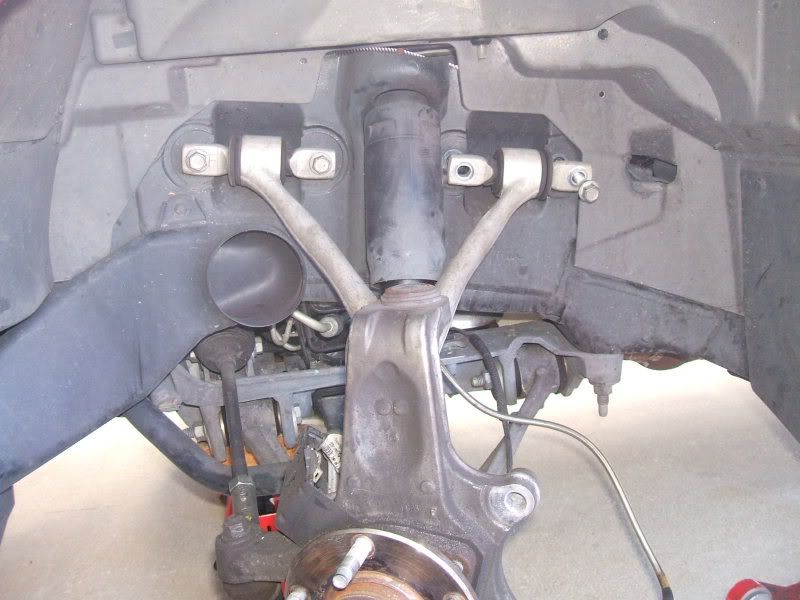
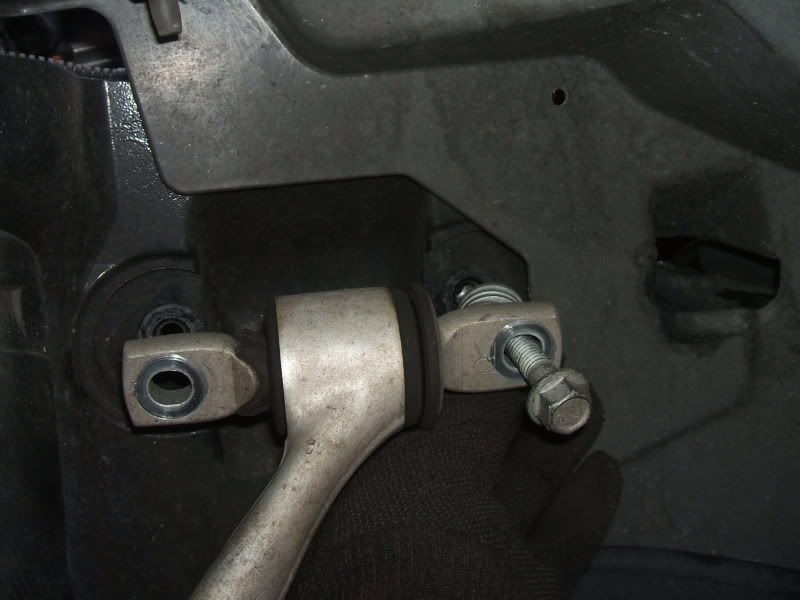
The C6Z has exactly the same arrangement in the rear suspension so it's very easy to adjust camber both front and rear without messing with the eccentric cam bolts.
In my case I go back and forth from street to track and once you know you have a good street setup just make sure you work symetrically.
To go from street to track the common wisdom is that each of those washers is about 1/2 degree of camber. From the factory I had 4 washers up front and 2 in the rear behind each bracket. I take 3 out up front and both out in the rear.
The common wisdom on the forum also says that when turning the tie rods or rear toe adjusters, each flat is about 1/32 inch.
After I take out the washers I know I have to tighten each front tie rod 9 flats and tighten each rear toe adjuster 4 flats and I'm at my track camber and toe.
When going back to street, I just replace the washers, then loosen the front tie rods 9 flats each side and loosen the rear adjusters 4 flats each side and I'm done.
To set camber you can get a Smart Camber device, but I just bought a digital level. I just put it vertically against the wheel or tire (make sure to avoid bulges on the wheel where spoke webs bulge it out, or if on the tire avoid the tire bulge).
Overall, I'm pretty sure I'm within 1/10th degree or less for camber and within 1/32nd inch toe of what a laser alignment machine would do for me, and I can measure and adjust them any time I want.
BTW, hardbar has a really nice alignment shim kit and some studs that replace the bolts for those upper A-arm brackets.
Bob
On the C6 Z06 the camber is very easy to adjust by adding/removing washers/shims behind the upper A-arm brackets:
The C6Z has exactly the same arrangement in the rear suspension so it's very easy to adjust camber both front and rear without messing with the eccentric cam bolts.
In my case I go back and forth from street to track and once you know you have a good street setup just make sure you work symetrically.
To go from street to track the common wisdom is that each of those washers is about 1/2 degree of camber. From the factory I had 4 washers up front and 2 in the rear behind each bracket. I take 3 out up front and both out in the rear.
The common wisdom on the forum also says that when turning the tie rods or rear toe adjusters, each flat is about 1/32 inch.
After I take out the washers I know I have to tighten each front tie rod 9 flats and tighten each rear toe adjuster 4 flats and I'm at my track camber and toe.
When going back to street, I just replace the washers, then loosen the front tie rods 9 flats each side and loosen the rear adjusters 4 flats each side and I'm done.
To set camber you can get a Smart Camber device, but I just bought a digital level. I just put it vertically against the wheel or tire (make sure to avoid bulges on the wheel where spoke webs bulge it out, or if on the tire avoid the tire bulge).
Overall, I'm pretty sure I'm within 1/10th degree or less for camber and within 1/32nd inch toe of what a laser alignment machine would do for me, and I can measure and adjust them any time I want.
BTW, hardbar has a really nice alignment shim kit and some studs that replace the bolts for those upper A-arm brackets.
Bob
Last edited by BEZ06; Jan 9, 2009 at 04:54 PM.

Melting Slicks
Joined: Dec 2004
Posts: 3,382
Likes: 250
I start with a flat floor then I measured the front craddle crossover member and the rear. I bisected the measure and drilled a tiny hole and run a wire front to back to be my chassis centerline. I adjust as I want then lower the car and roll it back and forth to settle the supension and check my measurement. If it is not right I alter it as needed and roll the car again. I do not understand the method where the car is on the jackstands supported by A-arms because I do not understand how you can get all the stichon our of the suspension (I.e. there is no way to settle the suspension on jackstands). In fact I have found it is harder to settle a vette suspension with transverse leafs than a coilover suspension.
Race Director
Joined: Sep 1999
Posts: 12,438
Likes: 919
From: CONCORD NC
It tells me that they should have put a roller bearing on the bottom of the spring adjuster!
Someone asked how long it takes to align....
I can measure the alignment on a car in about 4 minutes, including camber, castor, thrust angle and toe. I can take anywhere from 30min to many many hours to actually set the alignment.....depends on how picky the customer is.

Le Mans Master

Joined: Feb 2000
Posts: 5,708
Likes: 1
From: Bedford NH
Cruise-In II Veteran
Yes, I have said that for years, but there is not enough room to do that. The Delrin spring end kit we make does do that to a large extent. I think that is one of the major reason that coil overs do work better than the leaf sprngs. The Hardbar aglinment tool is very easy to use and is easy to calibrate any difference from the suspension on jack stands versus at ride height. Simply measure the toe before and after and note any difference with a Sharpie on the tool and set it to that while on the jack stands.
http://hardbarusa.com/uploads/image/...%20rev1(1).pdf
http://hardbarusa.com/uploads/image/...%20rev1(1).pdf
Last edited by ghoffman; Jan 10, 2009 at 08:01 AM.
Thread Starter
Melting Slicks
Joined: Jun 2002
Posts: 3,070
Likes: 5
From: Charleston South Carolina
And Dave, I notice that for camber measurement you suggest moving the level to the front of the rim to avoid the tire bulge at the bottom. I prefer to take two hub-centric measurments, one at the top of the rim and one at the bottom, and use the difference to determine the camber setting. Do you see anything wrong with the way I'm doing it?
Last edited by TedDBere; Jan 10, 2009 at 10:05 AM.
Instructor
Joined: Mar 2008
Posts: 148
Likes: 0
From: Rindge NH
Smart Strings take into account the difference in track by effectively forming a rectangle around the car. The strings are parallel as long as they're the same distance apart on the poles and the same length. If the distance from the hubs to the strings is the same left side and right side in the rear and the difference from the hubs to the strings left side to right side is the same in the front - and the measurement won't be the same front and rear - the strings will be parallel to the center line - no calculations required.
The real beauty of Smart Strings is they attach to the car - once they're set they're set, even if you roll the car back and forth. Wish I had a set of those.
Gary's stuff looks nice, too. Unfortunately my budget can cover a roll of sewing thread.
The real beauty of Smart Strings is they attach to the car - once they're set they're set, even if you roll the car back and forth. Wish I had a set of those.
Gary's stuff looks nice, too. Unfortunately my budget can cover a roll of sewing thread.
Melting Slicks
Joined: Jan 2004
Posts: 3,247
Likes: 210
From: Detroit MI
You don't even have to get the same distances from the string to hub left and right, as long as the difference in the front/rear measurements is the same left and right. Although I usually do shoot for the same distances left and right just to avoid confusing myself.
I've never heard of doing an alignment with the car on jackstands. I can see the benefit of doing it that way, but I have ramps that I drive on to to raise the car so I can get underneath to adjust the toe, and I have steel slip plates so I don't have to lift the wheels off the ground.
I've never heard of doing an alignment with the car on jackstands. I can see the benefit of doing it that way, but I have ramps that I drive on to to raise the car so I can get underneath to adjust the toe, and I have steel slip plates so I don't have to lift the wheels off the ground.
Melting Slicks
Joined: Dec 2004
Posts: 3,382
Likes: 250
It tells me that I need to pay extra attention in settling the suspension which in my method means rolling the car back and forth.
Drifting


Joined: Nov 2005
Posts: 1,745
Likes: 35
From: Turlock CA
I use steel plates now but I think I'll drop a little Mobil 1 in four bags and see how they work as the bags will be much easier to move around and store. Mobil 1 works well to lubricate the 4x6" 0.25" plates I've been using.To the OP -- I use David Farmer's methods and recommended tools along with the Pfadt Camber Adjustment plates and studs to quickly and easily go between street and race settings.
--Dan
Race Director
Joined: Oct 2002
Posts: 10,864
Likes: 196
From: Southern CA
[QUOTE=TedDBere;1568499350]So if I measure from the hubs, without centercaps, do I have to adjust for differences in front and rear track, or are they the same? I know the front tires stick out more than the rears but is that because of wheel offsets or track differences? I want to make sure the string is parallel with the centerline before adjusting the toe.
QUOTE]
If you measure across the string side to side (make equal)& then you are equi distant off each axle (I try to get within 1/64), then I think you are ok re being parallel to centerline, unless your axles are off if it's been wrecked.
If the car's been wrecked then I'm not sure how you would adjust for that. I think it has to be put back to exact true.
In any case I get good tire wear & my alignments seem to be doing what is intended re setup. My alignment knowledge is still a work in progress, but I think the more you do your own the more you learn & the better your setup will be thru the season.
QUOTE]
If you measure across the string side to side (make equal)& then you are equi distant off each axle (I try to get within 1/64), then I think you are ok re being parallel to centerline, unless your axles are off if it's been wrecked.
If the car's been wrecked then I'm not sure how you would adjust for that. I think it has to be put back to exact true.
In any case I get good tire wear & my alignments seem to be doing what is intended re setup. My alignment knowledge is still a work in progress, but I think the more you do your own the more you learn & the better your setup will be thru the season.
Last edited by froggy47; Jan 11, 2009 at 08:26 PM.
Melting Slicks
Joined: Dec 2004
Posts: 3,382
Likes: 250
[QUOTE=froggy47;1568516782]
I'm not sure this is a good way because if you have an equidistant set-up from the hubs as the referrence point how do you prevent "dog tracking?" You have to assume with your method that the factory set-up was proper. It probably is but when you are tyring to improve laptimes and doing testing with different tires etc don't you want to "know" that you are starting from a solid referrence point? I think you want left and right equidistant from a centerline which automatically prevents dog tracking. In fact if you used the hubs how would you detect dog tracking? This is all pretty new stuff to me. I've been tinkering with my own alignment and scales for maybe half a dozen years so I think sort of basically.
So if I measure from the hubs, without centercaps, do I have to adjust for differences in front and rear track, or are they the same? I know the front tires stick out more than the rears but is that because of wheel offsets or track differences? I want to make sure the string is parallel with the centerline before adjusting the toe.
QUOTE]
If you measure across the string side to side (make equal)& then you are equi distant off each axle (I try to get within 1/64), then I think you are ok re being parallel to centerline, unless your axles are off if it's been wrecked.
QUOTE]
If you measure across the string side to side (make equal)& then you are equi distant off each axle (I try to get within 1/64), then I think you are ok re being parallel to centerline, unless your axles are off if it's been wrecked.
I'm not sure this is a good way because if you have an equidistant set-up from the hubs as the referrence point how do you prevent "dog tracking?" You have to assume with your method that the factory set-up was proper. It probably is but when you are tyring to improve laptimes and doing testing with different tires etc don't you want to "know" that you are starting from a solid referrence point? I think you want left and right equidistant from a centerline which automatically prevents dog tracking. In fact if you used the hubs how would you detect dog tracking? This is all pretty new stuff to me. I've been tinkering with my own alignment and scales for maybe half a dozen years so I think sort of basically.