






Another problem

Thread Starter
POSSE ZR-1 Driver


Joined: Feb 2002
Posts: 3,980
Likes: 138
From: Groton CT
 Another problem
Seems everytime I fix one thing, I get another problem.
Here's today's mystery.. A beautiful day, low 70's. I replaced the fan clutch yesterday, and let the car idle for an hour in the driveway so I could watch the temperature. Stayed right at 180* the whole time. Verified with an IR gun. Took a one hour leasurely ride on the back roads to see how everything would perform on the road.
When I first started out, the car idled fine at 800 rpm. About 20 minutes into the cruise, the idle started to drop. At steady throttle in 4th gear between 1000 and 1500 rpm the car was starting to "buck" a bit. As I kept cruising, it got steadily worse.
I thought it was loading up, so I did a couple of blasts to 6500 rpm with no breaking up or any other problem, so it seems the ignition system is working correctly. By the time I got home, the car was barely idling at 550 rpm. It seemed to be running really rich. Engine temp never got above 185*, so I know it's not a coolant overheating issue.
Checked the timing, 10* BTDC, Dwell 30. No fuel leakage observed, but that may not mean anything.
Both float levels appeared to be correct when I pulled the sight plugs, but I knocked both front and rear float levels down about 1/2 turn each, but haven't made another run yet. Hoping that will fix it.
Car is a '64 vert, running a "correct as GM built it" '64 327/365 setup with LT-1 cam. M20, 3.36 rear. "New" restored 2818 carb installed last month.
Any other ideas out there? Thanks.
Here's today's mystery.. A beautiful day, low 70's. I replaced the fan clutch yesterday, and let the car idle for an hour in the driveway so I could watch the temperature. Stayed right at 180* the whole time. Verified with an IR gun. Took a one hour leasurely ride on the back roads to see how everything would perform on the road.
When I first started out, the car idled fine at 800 rpm. About 20 minutes into the cruise, the idle started to drop. At steady throttle in 4th gear between 1000 and 1500 rpm the car was starting to "buck" a bit. As I kept cruising, it got steadily worse.
I thought it was loading up, so I did a couple of blasts to 6500 rpm with no breaking up or any other problem, so it seems the ignition system is working correctly. By the time I got home, the car was barely idling at 550 rpm. It seemed to be running really rich. Engine temp never got above 185*, so I know it's not a coolant overheating issue.
Checked the timing, 10* BTDC, Dwell 30. No fuel leakage observed, but that may not mean anything.
Both float levels appeared to be correct when I pulled the sight plugs, but I knocked both front and rear float levels down about 1/2 turn each, but haven't made another run yet. Hoping that will fix it.
Car is a '64 vert, running a "correct as GM built it" '64 327/365 setup with LT-1 cam. M20, 3.36 rear. "New" restored 2818 carb installed last month.
Any other ideas out there? Thanks.
Last edited by Subfixer; Jun 19, 2005 at 08:13 AM.

Burning Brakes


Joined: Aug 2000
Posts: 883
Likes: 2
From: Hilton Head SC
Paul, That's exactly the way a 365/327 acts when it has a failing or incorrect vacuum advance can or has a leak causing the can not to do its job. The Echlin VC 1810 is less than $20 and only takes a few minutes to install if you don't see anything else.

Le Mans Master


Joined: Feb 1999
Posts: 5,825
Likes: 370
From: Mobile AL
Who rebuilt your carburetor? I only ask because so many commercial rebuilders are known for doing a poor job, including the Holley Custom Shop.
The most common rebuilding mistake is failure to machine the main body sides and bottom to remove warpage.
The most common rebuilding mistake is failure to machine the main body sides and bottom to remove warpage.
Thread Starter
POSSE ZR-1 Driver
Joined: Feb 2002
Posts: 3,980
Likes: 138
From: Groton CT
JSB, The vacuum can is an brand new VC1810, installed last month. I've checked it's operation and it's still good.
Jerry, The carb was rebuilt by Custom Rebuilt Carburetors (I think that's the name) in New Jersey. I bought mine via eBay from them. The eBay handle for the place is "thecarburetorman". Several others have given the place high marks. If nothing else, they do beautiful work.
http://customrebuiltcarbs.com/
Ran beautifully right out of the box with minor idle mixture tweaks, but I may have screwed something up when I readjusted the float levels. Initial settings out of the box seemed to be a bit low. I adjusted them with the car at normal operation temperature, but it may not have been warm enough to effect fuel expansion in the bowls. When I get home tonight, the car ought to be warm enough for me to see if they are still too high. I still have no visual evidence of an internal or external leak anywhere.
Jerry, The carb was rebuilt by Custom Rebuilt Carburetors (I think that's the name) in New Jersey. I bought mine via eBay from them. The eBay handle for the place is "thecarburetorman". Several others have given the place high marks. If nothing else, they do beautiful work.
http://customrebuiltcarbs.com/
Ran beautifully right out of the box with minor idle mixture tweaks, but I may have screwed something up when I readjusted the float levels. Initial settings out of the box seemed to be a bit low. I adjusted them with the car at normal operation temperature, but it may not have been warm enough to effect fuel expansion in the bowls. When I get home tonight, the car ought to be warm enough for me to see if they are still too high. I still have no visual evidence of an internal or external leak anywhere.
Last edited by Subfixer; Jun 20, 2005 at 09:37 AM.
Le Mans Master
Joined: Feb 1999
Posts: 5,825
Likes: 370
From: Mobile AL
Paul, the float level isn't really critical at very low engine speeds. The engine is running on gas mostly fed through the idle circuits rather than the primary jets from idle to about 1,500 rpm. You adjust this flow by turning the idle mixture screws on each side of the primary metering block.
Main body warpage causes internal carb leaks with symptoms such as you describe. One of the ways to tell if your carb is leaking internally is to seat each of the idle mixture screws one at a time. Each screw should kill the engine at idle as it is seated (turning clockwise). If the engine will idle with either of the mixture screws seated (closed), then you have an internal carb leak.
I would next check the main body to see if it has been machined flat on the bottom. You will have to remove the carb from the engine, turn it upside down, and take off the baseplate to do this. Holley assembles their carburetor main bodies in "as-cast" condition. If you see machining marks on the main body gasket surfaces, then the rebuilder has probably re-surfaced them.
Main body warpage causes internal carb leaks with symptoms such as you describe. One of the ways to tell if your carb is leaking internally is to seat each of the idle mixture screws one at a time. Each screw should kill the engine at idle as it is seated (turning clockwise). If the engine will idle with either of the mixture screws seated (closed), then you have an internal carb leak.
I would next check the main body to see if it has been machined flat on the bottom. You will have to remove the carb from the engine, turn it upside down, and take off the baseplate to do this. Holley assembles their carburetor main bodies in "as-cast" condition. If you see machining marks on the main body gasket surfaces, then the rebuilder has probably re-surfaced them.
Thread Starter
POSSE ZR-1 Driver
Joined: Feb 2002
Posts: 3,980
Likes: 138
From: Groton CT
Thanks Jerry. I did the idle mixture trick during lunch. Killed the engine on both sides individually.
It's going to rain Wednesday, So I'll take the carb apart then to check the main body.
It's going to rain Wednesday, So I'll take the carb apart then to check the main body.
Corvette Stories
The Best of Corvette for Corvette Enthusiasts

Top 10 Most Explosive Corvettes Ever Made: Power-to-Weight Ratio Ranked!
Joe Kucinski
150 hp to 1,250 hp: Every Corvette Generation Compared by the Specs That Matter
Joe Kucinski
8 Coolest Corvette Pace Cars (and Replicas) of All Time
Verdad Gallardo
Top 10 Corvette Engines RANKED by Peak Torque (70+ Years of Muscle!)
Joe Kucinski
Corvette ZR1X Will Be Pacing the Indy 500, And Could Probably Race, Too!
Verdad Gallardo
Top 10 Corvettes Coming to Mecum Indy 2026!
Brett Foote
Top 10 C9 Corvette MUST-HAVES to Fix These C8 Generation Flaws!
Michael S. Palmer
10 Revolutionary 'Corvette Firsts' Most People Don't Know
Joe Kucinski
5 Reasons to Upgrade to an LS6-Powered Corvette; 5 Reasons to Stay LT2
Michael S. Palmer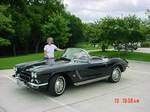
Burning Brakes
Joined: Mar 2004
Posts: 1,108
Likes: 4
From: Plano Texas
Subfixer, a couple of things can cause your problems. First, make sure that the base of the carb is snugged down against the intake manifold and that you're using the correct base gasket. A vacuum leak can originate here that can drive you nuts. Next, adjust your primary and secondary floats so that just a dribble of gas exits the hole with the engine idling. I usually set up my secondaries so that they don't dribble to make sure that no gas is being sucked through that circuit. Next adjust your idle with a vacuum gauge to achieve the highest reading you can using both idle mixture screws. Set your idle speed really low when you do this so that you can get the best idle vacuum reading before setting the correct idle speed. Assuming your timing is set correctly and there are no vacuum leaks, blip the throttle a couple of times. The reason to do this is to determine if your throttle shaft could be hanging up on the base gasket. I had this problem on a Holley once and corrected the problem with an additional spring. If you're still having trouble and none of the above is faulty, I would turn my attention to the internal power valve on the primary metering block. It might not be tight to the gasket and allowing gas to bypass the valve. Also, the valve could have a pinhole leak allowing gas to enter causing a rich condition. This advice is worth what you paid for it! Good luck. 
Thread Starter
POSSE ZR-1 Driver
Joined: Feb 2002
Posts: 3,980
Likes: 138
From: Groton CT
Thanks Coves.
Everything you have suggested has been checked/done with the exception of the PV check. Hadn't thought of that one yet. Got to get a new gasket set prior to tearing the carb apart.
Here's my latest "theory"....
Once the idle starts dropping (for as yet unknown reasons) a bunch of other stuff starts not working. Like a cascade effect. Once the idle drops down to about 600 rpm or less, due to the solid lifter LT-1 cam, there's not enough vacuum at that speed to keep the vacuum advance fully deployed, (VC1810 - 8" vacuum for full advance) which in turn lowers the idle more, etc... By the time the engine is idling at around 500-550 rpm, the power valve is probably starting to open as well (6.5" PV) giving me a real rich condition.
As you can see, once all this stuff starts to screw up, it's really hard to tell what the real cause is because everything is wrong.
Everything you have suggested has been checked/done with the exception of the PV check. Hadn't thought of that one yet. Got to get a new gasket set prior to tearing the carb apart.
Here's my latest "theory"....
Once the idle starts dropping (for as yet unknown reasons) a bunch of other stuff starts not working. Like a cascade effect. Once the idle drops down to about 600 rpm or less, due to the solid lifter LT-1 cam, there's not enough vacuum at that speed to keep the vacuum advance fully deployed, (VC1810 - 8" vacuum for full advance) which in turn lowers the idle more, etc... By the time the engine is idling at around 500-550 rpm, the power valve is probably starting to open as well (6.5" PV) giving me a real rich condition.
As you can see, once all this stuff starts to screw up, it's really hard to tell what the real cause is because everything is wrong.
Burning Brakes
Joined: Mar 2004
Posts: 1,108
Likes: 4
From: Plano Texas
Since you say that the items I listed have been addressed, I wonder if the choke isn't opening fully giving you the false idle readings. In other words, your problems occur when the engine has had a chance to warm up. Your choke is vacuum fed and the coil thermostatic spring gets warm from heated air flowing through tubing and your exhaust manifold. Have you checked the choke for "fully open" and off the "high idle steps" on the throttle cam when setting the "hot" idle speed? I'm thinking that maybe your throttle blade shaft may be on one of the lower steps of the high idle cam )passenger side) when your setting your idle speed and then when the choke spring gets hot enough after a few minutes of driving, it forces the choke vane fully open and comes off the high idle step. This, in turn, causes your throttle blades to close down reducing your hot idle speed. It's the only thing I can think of right now. Hope I've helped. 
Burning Brakes
Joined: Mar 2004
Posts: 1,108
Likes: 4
From: Plano Texas
I had another thought (a rare occurrence these days according to my wife), check to make sure that your secondary throttle shaft can't open when the engine is idling. Many moons ago on a Blue Oval product I had a Holley that has an incorrectly assembled secondary vacuum diaphragm that allowed the secondary throttle blades to open ever so slightly allowing the carb to go way rich. If they can open when the engine is idling, then you may have found the problem. It could be as simple as making a lever adjustment on the side of the carb to re-installing a new vacuum diaphragm. Good luck.

Race Director


Joined: Jan 2003
Posts: 17,655
Likes: 3,665
From: Central Arkansas
Another slight possibility - may be a couple of problems - do you have real light springs on the advance weights in the distributor from an advance kit? If your running with some centrifigal advance already in at your 800 idle, and something is killing the vacuum at idle it may be pulling vacuum and some centrifigal advance both out of the engine as the rpm decreases - causing the engine to really falter.
Thread Starter
POSSE ZR-1 Driver
Joined: Feb 2002
Posts: 3,980
Likes: 138
From: Groton CT
Coves, the choke is working as intended. I'll check on the secondaries.
Dan, I checked the timing again yesterday. At 800 rpm, the centrifigal is not advancing. Checked this by lowering the rpm and watching the timing mark with the Vac Adv disconnected. Centrifigal advance just starts moving at about 900-925rpm. Did the test several times and it was very repeatable.
Just like anything else, I'll find the solution eventually.
Dan, I checked the timing again yesterday. At 800 rpm, the centrifigal is not advancing. Checked this by lowering the rpm and watching the timing mark with the Vac Adv disconnected. Centrifigal advance just starts moving at about 900-925rpm. Did the test several times and it was very repeatable.
Just like anything else, I'll find the solution eventually.

Drifting

Joined: Jun 2000
Posts: 1,596
Likes: 52
From: Southern NJ
C2 of Year Finalist (stock) 2019
Paul -- I am familiar with the people who rebuilt your carb and their work is excellent.
Now, I have a feeling that the idle circuit in the carb is clogged. I know it has just been rebuilt however there may have been foreign matter somewhere that got in the system during the car rebuild. It just took this long to get to the carb.
Now, I have a feeling that the idle circuit in the carb is clogged. I know it has just been rebuilt however there may have been foreign matter somewhere that got in the system during the car rebuild. It just took this long to get to the carb.
Thread Starter
POSSE ZR-1 Driver
Joined: Feb 2002
Posts: 3,980
Likes: 138
From: Groton CT
John, that could be. The whole thing that makes this problem weird, is that the car runs great for the first half hour or so after initial warmup. The longer I drive, the worse it gets. Once the car is completely cooled down, it runs great again. I'm starting to think that the carb body may be warping as it heats up, and when things cool down it returns to its "correct" shape.
When I first installed the intake, I didn't block the exhaust crossover. Figured I wouldn't need to since I'm running an FI spacer(no heat riser valve). This weekend I'm going to pull the intake again and block those. Maybe with a little less heat buildup under the carb it may run better.
When I first installed the intake, I didn't block the exhaust crossover. Figured I wouldn't need to since I'm running an FI spacer(no heat riser valve). This weekend I'm going to pull the intake again and block those. Maybe with a little less heat buildup under the carb it may run better.
Last edited by Subfixer; Jun 21, 2005 at 08:24 AM.


Thread Starter
POSSE ZR-1 Driver
Joined: Feb 2002
Posts: 3,980
Likes: 138
From: Groton CT
Brian, Ain't that the truth....
Coil was replaced about 3 weeks ago when I had a different problem (it didn't fix that one, turned out to be a loose wire).
I've had 2 go bad in the middle of nowhere since I've owned this car and I'm real familiar with the symptoms. I even carry a spare.
Thanks for the suggestion anyway. Keep 'em coming.
Coil was replaced about 3 weeks ago when I had a different problem (it didn't fix that one, turned out to be a loose wire).
I've had 2 go bad in the middle of nowhere since I've owned this car and I'm real familiar with the symptoms. I even carry a spare.
Thanks for the suggestion anyway. Keep 'em coming.
Burning Brakes
Joined: Mar 2004
Posts: 1,108
Likes: 4
From: Plano Texas
OK, my bag of tricks is running thin, but could it be fuel percolation? Do any of your fuel lines touch the engine block? Are they exposed and close to the block or heads? This could be as simple as insulating a fuel line that is getting too hot, causing the fuel to boil and reducing the fuel pressure to the carb causing it to run to lean and dying. I know that these cars had serious fuel hot soak problems, but most could be fixed fairly easy. For years, I used a fuel line slit along its length to cover up an exposed fuel line. Worked fairly well, as I remember. The coil would be a cheap check, for sure. Good luck. 
Thread Starter
POSSE ZR-1 Driver
Joined: Feb 2002
Posts: 3,980
Likes: 138
From: Groton CT
Originally Posted by Coves4me
OK, my bag of tricks is running thin
Been a mechanic for over 35 years, and this one is really getting the better of me. However, in all those years, this is only the second Holley equiped car I've owned. The first was a 440 Six-Pak Challenger. It had it's share of carb problems also.