


scared while driving C1

Thread Starter
Advanced

Joined: Jan 2005
Posts: 85
Likes: 0
 scared while driving C1
I just got my 61 from my dad this past christmas and on the 3rd cruise the engine harness melted completely... first the smoke poured outta the dash and all I smelt was buring wires, I pulled over and shut off the ignition and jumped out looking under the dash (no fire yet) then I went for the hood which has four hood pins and removed it... lying it in the grass, I ran to the passenger side to disconnect the battery... well then the wires melted together and the vette began to turn over and it was in gear and began moving forward, I ran and jumped in it just as it started and took off about ten feet! I pulled the e-brake and it was still running and turning over... then went and diconnected the battery.
This happened about 2 months ago...
Since then I replaced the harness with an exact replica, along with the starter solinoid, voltage regulator and horn relay and added the need in-line circuit breakers. It seems to be back to its old self and I have driven it a few times but...
Everytime I start it, I get this sick feeling in my stomach and am scared to death this may happen again! The whole time I'm driving it my hand is down under the dash feeling the ignition wires for heat! I never found what the cause was and just wanted to share this with you guys... what do you think? anyone every been through anything similar? or get nervous driving your vette for any reason?
Yes I carry a fire extinglisher and got the battery quick disconnect and also disconnect it everytime I put it in the garage!
here is my previous posts http://forums.corvetteforum.com/show....php?t=1377666
This happened about 2 months ago...
Since then I replaced the harness with an exact replica, along with the starter solinoid, voltage regulator and horn relay and added the need in-line circuit breakers. It seems to be back to its old self and I have driven it a few times but...
Everytime I start it, I get this sick feeling in my stomach and am scared to death this may happen again! The whole time I'm driving it my hand is down under the dash feeling the ignition wires for heat! I never found what the cause was and just wanted to share this with you guys... what do you think? anyone every been through anything similar? or get nervous driving your vette for any reason?
Yes I carry a fire extinglisher and got the battery quick disconnect and also disconnect it everytime I put it in the garage!
here is my previous posts http://forums.corvetteforum.com/show....php?t=1377666

Tech Contributor


Joined: May 2005
Posts: 15,576
Likes: 118
From: Conroe Texas
Originally Posted by 61Vettedad
...anyone every been through anything similar? or get nervous driving your vette for any reason?
Eventually though after working on and driving the cars enough times without incident, I begin to see the car as a vehicle and not a recently-completed-project just waiting to come undone.

Burning Brakes


Joined: Oct 2004
Posts: 1,210
Likes: 1
From: fighter pilots make movies, bomber pilots make history
Where do you install the fuse ?
I had that happen to my 61 in 1976, I guess it would be prudent to install the fuse after 30 years.
What size fuse (30amp) ? and where in the circuit ?
thanks
Joe
What size fuse (30amp) ? and where in the circuit ?
thanks
Joe

Race Director


Joined: Oct 2005
Posts: 12,470
Likes: 1,548
From: Camp Verde AZ
C1 of Year Finalist (performance mods) 2019
2017 C1 of Year Finalist
If you are properly fused, you are safe. the worst that can happen is the car won't run.
Now make sure the brakes are up to snuff, that is a bigger worry.
Doug
Now make sure the brakes are up to snuff, that is a bigger worry.
Doug
Tech Contributor
Joined: May 2005
Posts: 15,576
Likes: 118
From: Conroe Texas
Originally Posted by AZDoug
If you are properly fused, you are safe. the worst that can happen is the car won't run.
Now make sure the brakes are up to snuff, that is a bigger worry.
Doug
Now make sure the brakes are up to snuff, that is a bigger worry.
Doug

Race Director


Joined: May 2006
Posts: 15,555
Likes: 555
From: Eagle, Idaho
On our 1954, we have a battery disconnect switch (race car type) mounted under the dash on the passenger side. The positive cable goes to the switch, then to the starter. I can reach it if I smell smoke, and older cars were prone to electrical fires anyway. It's always off when parked in the garage. If you want to keep a clock running, jump a small fuse over the terminals on the back side of the switch.
Back in 1975 I was racing a purpose built 1960 Corvette that shorted out at about 100 miles per hour and caught fire and I still think about it. Now the switch under the dash lets me sleep at night.
Back in 1975 I was racing a purpose built 1960 Corvette that shorted out at about 100 miles per hour and caught fire and I still think about it. Now the switch under the dash lets me sleep at night.

Racer


Joined: Dec 2003
Posts: 347
Likes: 0
From: Limmen NH, The Netherlands
I found out myself the fuel sender unit connection can be a very dangerous. The connection can short to ground when the fuel pipe is slightly bend. I've put a fuse inline with this wire as well since it is not fused in the original harness...
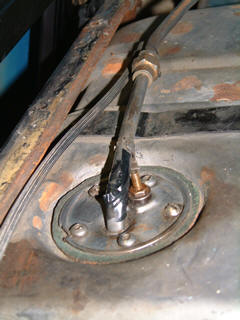
Also the area behind the dash is quite dangerous. Be sure your wiper washer steel cables don't saw through any of your wires (they shouldn't touch the electrical wire).
An in-line fuse (app. 50 Amp for the starter) and master switch at the dash as suggested above is a wise move but still be aware that some circuits are not fused (e.g. like the fuel sender unit and the clock circuit).
greetings,
Rob.
Also the area behind the dash is quite dangerous. Be sure your wiper washer steel cables don't saw through any of your wires (they shouldn't touch the electrical wire).
An in-line fuse (app. 50 Amp for the starter) and master switch at the dash as suggested above is a wise move but still be aware that some circuits are not fused (e.g. like the fuel sender unit and the clock circuit).
greetings,
Rob.
Corvette Stories
The Best of Corvette for Corvette Enthusiasts

5 Best & 5 Worst Corvette Daily Drivers
Joe Kucinski
The Headlights of Every Corvette Generation Explained
Joe Kucinski
5 Best & 5 Most Overrated Corvette Track Packages of All Time!
Joe Kucinski
Every 2027 Corvette Engine Explained
Joe Kucinski
Designer Imagines A Corvette That Looks More Like a Corvette Than the Corvette
Verdad Gallardo
10 Ugly Corvettes That We Still Kinda Love
Joe Kucinski
Top 10 Most Expensive Corvettes Ever Sold on Bring A Trailer
Brett Foote
10 Things Every Corvette Owner Needs (2026 Edition)
Michael S. Palmer
8 Most "Only Corvette Owners Understand" Quirks and Problems
Pouria Savadkouei
Racer

Joined: Jan 2005
Posts: 411
Likes: 3
From: New Jersey
Corvette fires
Don't forget to put a in line fuse going to the cigarette lighter , sometimes they get corroded and short out! Noland Adams also recommends a fusible link between the generator and amp guage also a fusible link between the amp guage and starter [ I am using a 30 amp fuse on each of those with with no problems.]
Last edited by lovevettes; May 5, 2006 at 08:03 AM.


Melting Slicks

Joined: Jul 2004
Posts: 2,870
Likes: 196
From: Maryland
Originally Posted by 62Jeff
The harness from the ignition switch to the starter is unfused from the factory. I put my in-line fuse down at the starter, don't remember which circuit though (it's been 20+ years)
Pro

Joined: Jun 2004
Posts: 573
Likes: 1
From: Scottsdale, AZ
Boy, can I sympathize. We are almost done with the car, but we have had (2) shorts and I've seen the smoke under the dash twice now which led to the panicked battery disconnect process.
My problem is that the car is real custom and doesn't have several things (wipers, heater, horn, etc.). So 1 guy who did the chassis work installed new harnesses but spliced wires more than I wanted, then the interior guy comes in next and installs the electric door solenoids and gauges, then we are working to wire up the electric fans, and lastly I think I have shorts in the original steering column (we are going to replace that with a new tilt unit).
So, I am virtually paranoid every time I start it and I think I just want to take it to a professional car electrical guy and just say start fresh...
James
My problem is that the car is real custom and doesn't have several things (wipers, heater, horn, etc.). So 1 guy who did the chassis work installed new harnesses but spliced wires more than I wanted, then the interior guy comes in next and installs the electric door solenoids and gauges, then we are working to wire up the electric fans, and lastly I think I have shorts in the original steering column (we are going to replace that with a new tilt unit).
So, I am virtually paranoid every time I start it and I think I just want to take it to a professional car electrical guy and just say start fresh...
James

Melting Slicks

Joined: Jul 2000
Posts: 2,097
Likes: 99
From: Boston MA
If you have old wires in your car, you should replace them. The insulation on old wires seems to get brittle. Breaks then occur and lead to shorts. But with new wires and a circuit breaker or a fusible link in the main lead coming out of the solenoid, you'll be protected.
This probably isn't a good time to mention that steering column pointed at your chest. Or that gas tank right behind your seat. Or the single master brake cylinder. You got rid of the bias ply tires, right? Consider the steering column a safety feature. It'll impale you in a front collision and hold you in place so that the rear view mirror on the dash doesn't poke out your eye.
This probably isn't a good time to mention that steering column pointed at your chest. Or that gas tank right behind your seat. Or the single master brake cylinder. You got rid of the bias ply tires, right? Consider the steering column a safety feature. It'll impale you in a front collision and hold you in place so that the rear view mirror on the dash doesn't poke out your eye.

Le Mans Master


Joined: Apr 2000
Posts: 5,112
Likes: 1,371
From: New York New York
2024 C1 of the Year Finalist - Unmodified
2024 C2 of the Year Finalist - Unmodified
2023 C2 of the Year Finalist - Unmodified
2023 C1 of the Year Finalist - Unmodified
I would not use a fuse to protect the main feed wire. If you get a spike it will blow immediately. This is why manufactures use fuseable links.
To protect a 10 gu. wire you use a 14 gu. fuse link,
a 12 gu. wire use a 16 gu. link. They should not be more than 6 - 8" long. The connections to the main wire should be soldered.
I installed my fuse link at the starter which will protect the main power wires. You can get them premade with a 3/8 eyelet on one end and a butt connector on the other.
What I did notice on C-1's is that the main power harness that feeds the ammeter and then goes to the generator is very close to the right hand shielding. I had a 58 and 61 and both harnesses were starting to cut through on the sharp edge of the shield.
To protect a 10 gu. wire you use a 14 gu. fuse link,
a 12 gu. wire use a 16 gu. link. They should not be more than 6 - 8" long. The connections to the main wire should be soldered.
I installed my fuse link at the starter which will protect the main power wires. You can get them premade with a 3/8 eyelet on one end and a butt connector on the other.
What I did notice on C-1's is that the main power harness that feeds the ammeter and then goes to the generator is very close to the right hand shielding. I had a 58 and 61 and both harnesses were starting to cut through on the sharp edge of the shield.

Race Director

Joined: Feb 2005
Posts: 14,738
Likes: 16
From: SF Bay Area California
One problem I had was an inadvertant contact between one side of the ballast resistor in the ignition circuit, and the main distributor shielding piece. (The resistor is underneath the shielding, and it had come a little loose, and it moved too close to the side of the shield.) This created an unfused direct connection between the battery and ground, through a small wire, as soon as I turned the ignition switch to the ON position. The heat was enough to melt the insulation off of multiple wires in the harness. Smoke was coming out from under the dash. I reacted pretty quickly, by turning off the ignition, but it was still a pain to deal with the melted wires.
You might want to check that you have sufficient clearance around the ballast resistor, and or insulate the terminals. Of course, the suggestion to fuse the primary ignition circuit (providing +12 to the coil) is a better long-term solution.
You might want to check that you have sufficient clearance around the ballast resistor, and or insulate the terminals. Of course, the suggestion to fuse the primary ignition circuit (providing +12 to the coil) is a better long-term solution.
Race Director
Joined: Oct 2005
Posts: 12,470
Likes: 1,548
From: Camp Verde AZ
C1 of Year Finalist (performance mods) 2019
2017 C1 of Year Finalist
Originally Posted by chris ritchie
This probably isn't a good time to mention that steering column pointed at your chest. Or that gas tank right behind your seat. Or the single master brake cylinder. You got rid of the bias ply tires, right? Consider the steering column a safety feature. It'll impale you in a front collision and hold you in place so that the rear view mirror on the dash doesn't poke out your eye.

I gave up thinking about those things years ago, I just accept the fact that the car is a rolling death mobile and drive it.
Also, in reply to another post: Slo-Blo fuses, takes a tad longer to to blow so transiants don't blow the fuse and use a 40 amp fuse in the main power wire.
Doug

Team Owner


Joined: Oct 2000
Posts: 38,897
Likes: 1,927
From: Washington Michigan
Another common source of a dead short in the starter harness is contact between the (+) terminal on the coil and the inside of the upper ignition shield (C1's don't have the plastic insulator inside the top of the upper shield like C2's do); pay attention to the orientation of the coil in its clamp and where the flag connectors on the wires are before you install the upper shield, and don't push the shield all the way down before you tighten the wing nuts.

Race Director
Joined: Jan 2004
Posts: 18,195
Likes: 145
From: Snake handler
Best thing I ever did was install a brand new Painless wiring system in my car. Fully fused including the 50amp bugger on the main circuit. No more fires, no more problems. Plus, fully wired for electric fan, stereo, etc. and uses the mini fuses with a GM fuse box. The insulation on the wire is indestructable! (of course if you were doing a NCRS restore you wouldn't want to do this but it was perfect for my resto mod and thousands of dollars cheaper than the factory harnesses.

Instructor
Joined: Jun 2006
Posts: 115
Likes: 0
From: Portland Oregon
Unselfish response requested on wiring.
Ok, my recently acquired 58 now has a new dash harness installed. Today, I will fuse the clock with a 10 ampere, the solenoid to harness with either a 30 ampere fuse or a 14 gauge fusable link. To help me sleep, I disconnect the battery when parked (and no, I dont apply lipstick to the car anywhere), but I dont like operating the hood excessively, so I want to install a main disconnect switch in the cabin under the dash. Is it safe to increase my positive battery wire the two or so feet needed to do this? Thank you very much, you big collective bundle of knowledge.