




L 88 Introduction Date
Thread Starter
Burning Brakes


Joined: Nov 2001
Posts: 1,188
Likes: 104
From: Tank sticker? I ain't got no tank sticker! I don't need no tank sticker! I don't have to show any stinking tank sticker!
 L 88 Introduction Date
Does anyone know the month/day that GM announced the L 88 option to dealers via an official notification letter?
Thanks
Thanks

Race Director


Joined: Nov 2002
Posts: 12,142
Likes: 54
From: Taylor Michigan
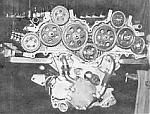
No answers? Probably in late 1966 Bob. Month and day I dont know. But I did buy two complete crate L88`s over the counter in Feburary of 1967 for $2400.00 and installed them in a 18 foot drag boat. The L88 "IT" tags are visable on the end of the right side valve covers. 


Race Director
Joined: Nov 2002
Posts: 12,142
Likes: 54
From: Taylor Michigan
Race Director


Joined: Mar 2001
Posts: 14,641
Likes: 4,688
From: Mustang OK
2026 Corvette of the Year Finalist - Modified
2025 c1 of the Year - Modified Winner
2024 C1 of the Year Finalist - Modified
2023 C1 of the Year Finalist - Modified
2015 C1 of the Year Finalist
As some people may (or may not) know, there has been, and still is, an ongoing debate about a very tiny handful of '66 Vettes that had L88 engines. Factory delivered, dealer installed, owner installed, which????
Who knows? Who will ever know?
Records (and they appear to be accurate) indicate that 20 '67 Corvettes were factory delivered with the L88 pkg. Thus, if only 20 '67s were built, how many, if any, '66s could have been built??? Documentation, at best, is very sketchy! But I've learned (the hard way) to never say never!
Who knows? Who will ever know?
Records (and they appear to be accurate) indicate that 20 '67 Corvettes were factory delivered with the L88 pkg. Thus, if only 20 '67s were built, how many, if any, '66s could have been built??? Documentation, at best, is very sketchy! But I've learned (the hard way) to never say never!
Thread Starter
Burning Brakes
Joined: Nov 2001
Posts: 1,188
Likes: 104
From: Tank sticker? I ain't got no tank sticker! I don't need no tank sticker! I don't have to show any stinking tank sticker!
Originally Posted by DZAUTO
As some people may (or may not) know, there has been, and still is, an ongoing debate about a very tiny handful of '66 Vettes that had L88 engines. Factory delivered, dealer installed, owner installed, which????
Who knows? Who will ever know?
Records (and they appear to be accurate) indicate that 20 '67 Corvettes were factory delivered with the L88 pkg. Thus, if only 20 '67s were built, how many, if any, '66s could have been built??? Documentation, at best, is very sketchy! But I've learned (the hard way) to never say never!
Who knows? Who will ever know?
Records (and they appear to be accurate) indicate that 20 '67 Corvettes were factory delivered with the L88 pkg. Thus, if only 20 '67s were built, how many, if any, '66s could have been built??? Documentation, at best, is very sketchy! But I've learned (the hard way) to never say never!
Interesting the $$ info provided by Wally. The dealer net for an ordered engine was $684, $47.90 factory D&H, list price $900.00, MSRP $947.90. BTW the dealer order code was 30-7. Also, could not register "engine" in California as there was "no provision has been made for RPO K19.
Drifting

Joined: Nov 2005
Posts: 1,601
Likes: 4
From: Texas
1st L88 Corvette
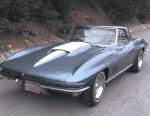
In 1966 Chevrolet released this C.O.P.O. Corvette with the 1st L-88-427 to Roger Penske Chevrolet. Besides the L-88 option the car had the factory competition race package which included:
1. J-56 brakes
2. 36 gallon tank
3. F-41 suspension
4. Prototype 2:73 posi rear end
5. TI ignition
6. M-22 trans
7. off road exhaust
8. radio and heater delete
9. teakwood steering wheel
10. special cowl induction hood
The car was released to Dick Guldstrand in mid-January of 1966 at the St. Louis Plant..
Guldstrand drove the car back to Penske's Newton Square Garage in
Penn. and began prep work for the Daytona Race.
The car was raced in it's original Red at Daytona... then painted
dark blue at the request of sponsor Sunoco.
The L-88/66 finished 1st in GT class......... 11th overall

the 1st L-88 Corvette.... Penske-Daytona winner 1966
1. J-56 brakes
2. 36 gallon tank
3. F-41 suspension
4. Prototype 2:73 posi rear end
5. TI ignition
6. M-22 trans
7. off road exhaust
8. radio and heater delete
9. teakwood steering wheel
10. special cowl induction hood
The car was released to Dick Guldstrand in mid-January of 1966 at the St. Louis Plant..
Guldstrand drove the car back to Penske's Newton Square Garage in
Penn. and began prep work for the Daytona Race.
The car was raced in it's original Red at Daytona... then painted
dark blue at the request of sponsor Sunoco.
The L-88/66 finished 1st in GT class......... 11th overall
the 1st L-88 Corvette.... Penske-Daytona winner 1966
Last edited by KyleDallas; Aug 2, 2006 at 05:03 PM.
Corvette Stories
The Best of Corvette for Corvette Enthusiasts

5 Best & 5 Worst Corvette Daily Drivers
Joe Kucinski
The Headlights of Every Corvette Generation Explained
Joe Kucinski
5 Best & 5 Most Overrated Corvette Track Packages of All Time!
Joe Kucinski
Every 2027 Corvette Engine Explained
Joe Kucinski
Designer Imagines A Corvette That Looks More Like a Corvette Than the Corvette
Verdad Gallardo
10 Ugly Corvettes That We Still Kinda Love
Joe Kucinski
Top 10 Most Expensive Corvettes Ever Sold on Bring A Trailer
Brett Foote
10 Things Every Corvette Owner Needs (2026 Edition)
Michael S. Palmer
8 Most "Only Corvette Owners Understand" Quirks and Problems
Pouria Savadkouei
Drifting
Joined: Nov 2005
Posts: 1,601
Likes: 4
From: Texas
My understanding is that though a race prepped L-88 from Traco
was installed in this car the day before the race... it WAS factory delivered with an L-88 under the hood... the documentation I have for this
is an article from Corvette Enthusiast magazine...this car is generally
acknowledged as the 1st factory equipped L-88 Corvette.
In fact... with the Factory equipped motor... and not the Traco full race
mill.... the 66 turned one of Daytona's fastest laps ever during practice.
I have struggled to find a date for you on the Corvette Enthusiast Article but I don't think I'm going to have success.... my copy is on a pdf file and the edges are skewed....
was installed in this car the day before the race... it WAS factory delivered with an L-88 under the hood... the documentation I have for this
is an article from Corvette Enthusiast magazine...this car is generally
acknowledged as the 1st factory equipped L-88 Corvette.
In fact... with the Factory equipped motor... and not the Traco full race
mill.... the 66 turned one of Daytona's fastest laps ever during practice.
I have struggled to find a date for you on the Corvette Enthusiast Article but I don't think I'm going to have success.... my copy is on a pdf file and the edges are skewed....
Last edited by KyleDallas; Aug 2, 2006 at 05:36 PM.
Drifting
Joined: Nov 2005
Posts: 1,601
Likes: 4
From: Texas
January 14th, 1966 was the date of delivery to Guldstrand in St. Louis..
another article was written on the car .. this time in
Corvette News... Volume 9 Number 5...
One of the articles I read mentioned a meeting between Penske, Sunoco
and Chevrolet representatives..... one of the Chevrolet attendees was
Vince Piggins.... John Z's old boss...
another article was written on the car .. this time in
Corvette News... Volume 9 Number 5...
One of the articles I read mentioned a meeting between Penske, Sunoco
and Chevrolet representatives..... one of the Chevrolet attendees was
Vince Piggins.... John Z's old boss...
Drifting
Joined: Nov 2005
Posts: 1,601
Likes: 4
From: Texas
Article says that Duntov contacted Penske in October of 1965 by phone
on the availability of the L-88.... I don't know if an official memo to all
dealers was released at this time..
There was a mention of Penske being involved in the L-88's field testing..
official dealer notification could have come..
1. about the same time as the Duntov/Penske phone call
2. or AFTER field testing was completed
3. or anytime..
the car... at the time of the article.. was owned by Kevin Mackay of
Valley Stream, NY..
on the availability of the L-88.... I don't know if an official memo to all
dealers was released at this time..
There was a mention of Penske being involved in the L-88's field testing..
official dealer notification could have come..
1. about the same time as the Duntov/Penske phone call
2. or AFTER field testing was completed
3. or anytime..
the car... at the time of the article.. was owned by Kevin Mackay of
Valley Stream, NY..
Thread Starter
Burning Brakes
Joined: Nov 2001
Posts: 1,188
Likes: 104
From: Tank sticker? I ain't got no tank sticker! I don't need no tank sticker! I don't have to show any stinking tank sticker!
Originally Posted by KyleDallas
In 1966 Chevrolet released this C.O.P.O. Corvette with the 1st L-88-427 to Roger Penske Chevrolet. Besides the L-88 option the car had the factory competition race package which included:
1. J-56 brakes
2. 36 gallon tank
3. F-41 suspension
4. Prototype 2:73 posi rear end
5. TI ignition
6. M-22 trans
7. off road exhaust
8. radio and heater delete
9. teakwood steering wheel
10. special cowl induction hood
The car was released to Dick Guldstrand in mid-January of 1966 at the St. Louis Plant..
Guldstrand drove the car back to Penske's Newton Square Garage in
Penn. and began prep work for the Daytona Race.
The car was raced in it's original Red at Daytona... then painted
dark blue at the request of sponsor Sunoco.
The L-88/66 finished 1st in GT class......... 11th overall
the 1st L-88 Corvette.... Penske-Daytona winner 1966
1. J-56 brakes
2. 36 gallon tank
3. F-41 suspension
4. Prototype 2:73 posi rear end
5. TI ignition
6. M-22 trans
7. off road exhaust
8. radio and heater delete
9. teakwood steering wheel
10. special cowl induction hood
The car was released to Dick Guldstrand in mid-January of 1966 at the St. Louis Plant..
Guldstrand drove the car back to Penske's Newton Square Garage in
Penn. and began prep work for the Daytona Race.
The car was raced in it's original Red at Daytona... then painted
dark blue at the request of sponsor Sunoco.
The L-88/66 finished 1st in GT class......... 11th overall
the 1st L-88 Corvette.... Penske-Daytona winner 1966
I still go back to my original question - what was the date that dealers were notified the L 88 could be ordered in a production car.
Le Mans Master

Joined: Jul 2000
Posts: 8,506
Likes: 3
From: Calhoun, GA_______ Let It Rock
A little more info. But, still don't know, when dealers were notified.
M.F. Dobbins - L88 entered production Feb. 1967
VINS of L-88 cars in Nolands book.
109097
110702
112527 1/4/66 dated heads.
117527
121550
M.F. Dobbins - L88 entered production Feb. 1967
VINS of L-88 cars in Nolands book.
109097
110702
112527 1/4/66 dated heads.
117527
121550
Racer


Joined: Jul 2001
Posts: 286
Likes: 3
From: Ct
Originally Posted by nassau66427
Anyone know the VIN # of this car?

http://corvetterepair.com/Penske/index.htm

Safety Car


Joined: Nov 2004
Posts: 4,182
Likes: 94
From: going faster miles an hour...with the radio on in browns mills new jersey
427 Mitch - Thanks for the info. Didn't find a VIN though. I just wanted to see how close my car was to such exhalted company.
Mine was [NCRS birthday calc.] born on the 13th. Curious, mine has a job #418 and the Penske car shows #403. Maybe mine actually popped out on the 14th.
Mine was [NCRS birthday calc.] born on the 13th. Curious, mine has a job #418 and the Penske car shows #403. Maybe mine actually popped out on the 14th.

Race Director
Joined: May 2000
Posts: 12,712
Likes: 2,271
Neither the cowl induction hood nor the L-88 were installed at St. Louis. No definitive documentation exists that a L-88 was installed at St. Louis, and documentation exists that the cowl induction hood was installed by Penske.
This car was the engineering development prototype for the L-88, and the only way to develop a racing engine is to race it, but given the internal GM policies at the time this could only be done by an outside contractor, not GM employees.
According to a contemporaneous Corvette News article the cowl induction hood was added at Penske's race shop and the car was qualified with the "stock" engine.
Prior to the race a specal Traco built engine was installed. Guess what that engine was and where the internal parts came from!
At that time in early 1966 the L-88 package was not released, but was in development. As is common with development cars, a COPO is generated with the appropriate RPOs, and then prototype parts are installed by engineering, or in this case, an outside contractor - Penske. Prototype parts are not installed on the production line because they disrupt production. Only after production parts are released does the plant do a "pilot build" with parts that are production spec. Pilot build parts may not be built with production tooling, but they conform to released production drawings.
Chevrolet Engineering supplied the prototype cowl induction hood parts to Penske, who installed them at his race shop prior to taking the car to Daytona. The car was then qualified with the production L-72 with the cowl induction hood, and after qualificiation the Traco built engine with L-88 prototype parts supplied by Chevrolet Engineering was installed for the race.
Duke
This car was the engineering development prototype for the L-88, and the only way to develop a racing engine is to race it, but given the internal GM policies at the time this could only be done by an outside contractor, not GM employees.
According to a contemporaneous Corvette News article the cowl induction hood was added at Penske's race shop and the car was qualified with the "stock" engine.
Prior to the race a specal Traco built engine was installed. Guess what that engine was and where the internal parts came from!
At that time in early 1966 the L-88 package was not released, but was in development. As is common with development cars, a COPO is generated with the appropriate RPOs, and then prototype parts are installed by engineering, or in this case, an outside contractor - Penske. Prototype parts are not installed on the production line because they disrupt production. Only after production parts are released does the plant do a "pilot build" with parts that are production spec. Pilot build parts may not be built with production tooling, but they conform to released production drawings.
Chevrolet Engineering supplied the prototype cowl induction hood parts to Penske, who installed them at his race shop prior to taking the car to Daytona. The car was then qualified with the production L-72 with the cowl induction hood, and after qualificiation the Traco built engine with L-88 prototype parts supplied by Chevrolet Engineering was installed for the race.
Duke
Last edited by SWCDuke; Aug 2, 2006 at 09:33 PM.
Le Mans Master
Joined: Jul 2000
Posts: 8,506
Likes: 3
From: Calhoun, GA_______ Let It Rock
One more comment...at least it keeps your thread towards the top
I thought, I once read that you had to be REALLY connected, and in the know, to order an L-88 car. They only built and released them to SPECIAL customers..?
I thought, I once read that you had to be REALLY connected, and in the know, to order an L-88 car. They only built and released them to SPECIAL customers..?
Race Director
Joined: May 2000
Posts: 12,712
Likes: 2,271
There was likely "special handling" for L-88 orders, as it was strictly a racing engine.
In fact, the '67 L-88 was not legal to register on the street because it did not have a closed PCV system as was federal law for all cars from 1963 and all cars licensed in California from 1961.
For 1968 a closed PCV system was added, the heater delete option was discontinued to meet the new FMVSS that all cars have windshield defrosters, and they had an AIR pump and supposedly it meet at least EPA emission requirements, so technically they could be licensed for street use, but this was discouraged. It was, and still is, a racing engine unsuited for normal driving on streets and highways.
Duke
In fact, the '67 L-88 was not legal to register on the street because it did not have a closed PCV system as was federal law for all cars from 1963 and all cars licensed in California from 1961.
For 1968 a closed PCV system was added, the heater delete option was discontinued to meet the new FMVSS that all cars have windshield defrosters, and they had an AIR pump and supposedly it meet at least EPA emission requirements, so technically they could be licensed for street use, but this was discouraged. It was, and still is, a racing engine unsuited for normal driving on streets and highways.
Duke