



Troubleshooting...help please!
Thread Starter
Instructor


Joined: Sep 2000
Posts: 121
Likes: 0
From: Appomattox Va
 Troubleshooting...help please!
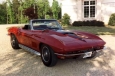
I have a 67 427 tri-power that seemed to be running great but then gradually seemed to get a little miss. A turn of a couple of screws on the carb by someone trying to help really did it in. The engine was completely redone just 3000 miles ago. I got some experienced help and these are the things we ran in to.
Power valve on the center carb was stuck causing the severe rich idling (I guess). All carbs taken off, cleaned, reinstalled. Car still ran rough. Checked points, they were pretty bad (and cheap) so they were replaced and set. New plugs installed. After a drive around the block the plugs still look pretty rough but one looks worse than others. Pulled valve cover and found a broken exhaust spring. Replaced them and compression tested cylinders and all fine. Drive around the block much smoother(smooth and strong) but once 4500rpms achieved the front end fell on its nose. Plug inspection shows them looking rough but still the same one worse than others.
Tested plug wires with ohm meter and measured 10 ohms on all except the troublesome one which measured 15 ohms. The wires have a braided cloth type grounding shield around them grounded on the valve cover and a stud inside the housing at the distributor. What would a normal set of wires measure? I realize they have nice wires that claim low resistance and I am buying a set of snake wires in the morning (around 3 ohms). A rational (non-mechanic) person such as myself would believe that the wires are the last problem here...causing the plugs not to fire well and the wire with the most resistance has the worst looking plug.
I'm hoping someone on the forum will tell me that these new plug wires are going to solve my problem (ie. something simple). Everything else I can think of seems to have been checked. How could this 4500rpm problem have started so abruptly and how can the engine run so well up to that point? I am inclined to think it is electrical...what do you think?
While I'm at it...the cylinders measure 185 pounds. what does that correlate to in compression ratio and how is ratio determined?
Thanks a bunch to you experienced guys. Without guys like you it would be hard for a new guy to understand this stuff.
Power valve on the center carb was stuck causing the severe rich idling (I guess). All carbs taken off, cleaned, reinstalled. Car still ran rough. Checked points, they were pretty bad (and cheap) so they were replaced and set. New plugs installed. After a drive around the block the plugs still look pretty rough but one looks worse than others. Pulled valve cover and found a broken exhaust spring. Replaced them and compression tested cylinders and all fine. Drive around the block much smoother(smooth and strong) but once 4500rpms achieved the front end fell on its nose. Plug inspection shows them looking rough but still the same one worse than others.
Tested plug wires with ohm meter and measured 10 ohms on all except the troublesome one which measured 15 ohms. The wires have a braided cloth type grounding shield around them grounded on the valve cover and a stud inside the housing at the distributor. What would a normal set of wires measure? I realize they have nice wires that claim low resistance and I am buying a set of snake wires in the morning (around 3 ohms). A rational (non-mechanic) person such as myself would believe that the wires are the last problem here...causing the plugs not to fire well and the wire with the most resistance has the worst looking plug.
I'm hoping someone on the forum will tell me that these new plug wires are going to solve my problem (ie. something simple). Everything else I can think of seems to have been checked. How could this 4500rpm problem have started so abruptly and how can the engine run so well up to that point? I am inclined to think it is electrical...what do you think?
While I'm at it...the cylinders measure 185 pounds. what does that correlate to in compression ratio and how is ratio determined?
Thanks a bunch to you experienced guys. Without guys like you it would be hard for a new guy to understand this stuff.

Melting Slicks


Joined: Oct 2001
Posts: 3,025
Likes: 12
From: Pleasant Grove AL
Re: Troubleshooting...help please! (catball)
Very possible that a bad plug wire is the culprit. Sometimes just pulling on a wire to change the plugs can do the wire in. Be careful you don't strech the wires when removing. They are fragile.
What type plug are you using? The original AC 44 is too cold for the type driving most of the vintage cars see. 43's are way too cold, even for agressive driving. Most folks recommend AC 46 or equivalent. 46's are no longer produced, but 45's are readily available and will work pretty well. There are several posts on the NCRS discussion board concerning crossover nmbers to other brands. Current prodution AC plugs aren't the best they ever made...... :cheers:
What type plug are you using? The original AC 44 is too cold for the type driving most of the vintage cars see. 43's are way too cold, even for agressive driving. Most folks recommend AC 46 or equivalent. 46's are no longer produced, but 45's are readily available and will work pretty well. There are several posts on the NCRS discussion board concerning crossover nmbers to other brands. Current prodution AC plugs aren't the best they ever made...... :cheers:

Le Mans Master

Joined: Mar 1999
Posts: 6,744
Likes: 1
From: delmont pa
Cruise-In I Veteran
Cruise-In II Veteran
Re: Troubleshooting...help please! (catball)
67 435 HP engines required the TI system and you will not have much luck keeping plugs with a point ignition. extended tip plugs will last the longest in a BB. try R 45 XLS plugs.
[Modified by clem zahrobsky, 8:42 PM 11/22/2001]
[Modified by clem zahrobsky, 8:42 PM 11/22/2001]
Thread Starter
Instructor
Joined: Sep 2000
Posts: 121
Likes: 0
From: Appomattox Va
Re: Troubleshooting...help please! (clem zahrobsky)
Sorry I didn't specify before that this is a 400hp with points ignition. I am really nervous hoping that it is just a plug/wire problem and will find out tomorrow. I'm still curious as to why it idles great and runs great to 4500 before the breakdown occurs. Could it be that the wire can handle it ok until it gets up to the stress of that rpm level? I'm really thinking of some kind of TI ignition real soon.

Safety Car


Joined: Feb 1999
Posts: 3,631
Likes: 14
From: Fountain Hills AZ
Re: Troubleshooting...help please! (catball)
Seeing as that you've identified one wire as having greater resistance than the others, that should be your most likely suspect. Higher rpms, especially under load, are more likely to reveal shortcomings in the ignition that might not be noticed at lower rpm. Replace the wires but save a couple of the longer good ones to use for trouble shooting in the future. There still may be another problem but that's where I would start.
Thread Starter
Instructor
Joined: Sep 2000
Posts: 121
Likes: 0
From: Appomattox Va
Re: Troubleshooting...help please! (Kid_Again)
Rough in this case is black and maybe a little wet. The worst one is black and oily. Is there anything in the distributor that could start malfunctioning once reaching the 4500rpm (or any rpm) but perform fine up to that point?...assuming the wires this morning don't cure the problem.

5th Gear
Joined: May 2000
Posts: 5
Likes: 0
From: Whittier, California
Re: Troubleshooting...help please! (catball)
There is an alternative after the TI, for the points distributors, HEI or MSD trigger. http://www.davessmallbodyheis.com
Oil and fuel on the plugs would seem to me to be pyhsical problems, and not much ignition. For years, points ran those engines just fine, but modern day electronic systems are much better. There will never be, however, an electronic ignition system that will fire a compromised cylinder.
I'd think there's a more serious series of problems with the engine than ignition, like gasket leaking under the intake from valley into the cylinder affected or intake valve guide/seal wiped out, for the oil to be getting into the one cylinder. Wires are the first place to start.
My neighbor's '78 Suburban with 454 he drove for about a year on 7 cylinders. Had a completely dead wire, on cyl no. 7, a new set of wires fixed it. Plug was just gas fouled, not oil.
Oil and fuel on the plugs would seem to me to be pyhsical problems, and not much ignition. For years, points ran those engines just fine, but modern day electronic systems are much better. There will never be, however, an electronic ignition system that will fire a compromised cylinder.
I'd think there's a more serious series of problems with the engine than ignition, like gasket leaking under the intake from valley into the cylinder affected or intake valve guide/seal wiped out, for the oil to be getting into the one cylinder. Wires are the first place to start.
My neighbor's '78 Suburban with 454 he drove for about a year on 7 cylinders. Had a completely dead wire, on cyl no. 7, a new set of wires fixed it. Plug was just gas fouled, not oil.
Corvette Stories
The Best of Corvette for Corvette Enthusiasts

Top 10 Most Expensive Corvettes Ever Sold on Bring A Trailer
Brett Foote
10 Things Every Corvette Owner Needs (2026 Edition)
Michael S. Palmer
8 Most "Only Corvette Owners Understand" Quirks and Problems
Pouria Savadkouei
10 Reasons the C6 Z06 is Still A Performance Benchmark After 20 Years
Joe Kucinski
How Much Horsepower Every Corvette Engine "LOST" in 1972
Joe Kucinski
Top 10 DOs and DON'Ts for Protecting Your Convertible Top!
Michael S. Palmer
Top 10 Most Explosive Corvettes Ever Made: Power-to-Weight Ratio Ranked!
Joe Kucinski
150 hp to 1,250 hp: Every Corvette Generation Compared by the Specs That Matter
Joe Kucinski
8 Coolest Corvette Pace Cars (and Replicas) of All Time
Verdad Gallardo
Safety Car


Joined: Feb 2000
Posts: 4,977
Likes: 38
From: Massachusetts , USA,
Re: Troubleshooting...help please! (IgnitionMan)
MSD system reccomended.....MSD has a chevy dist with mech tach drive & vac advance . I went MSD system over 5 years ago on my 1966 big/block.....instantaniouis starting better throttle response & spark jumps 1/2" ...no more pionts & no follin around..worked for me. :yesnod: :chevy :flag

Team Owner


Joined: Oct 2000
Posts: 38,897
Likes: 1,926
From: Washington Michigan
Re: Troubleshooting...help please! (IgnitionMan)
I'd also suspect the points themselves - the GM points available these days aren't the best quality, and are the 19-23 oz. tension variety. I use either Accel or Borg-Warner A112HP points, which are the 28-32 oz. type in my stock 480 distributor with a stock coil and stock plug wires in my '69 Z/28, and it will howl to 6500+ with no problems at all, any time, using either AC R45 or Champion RJ14YC plugs (small-block). Another contributor could be the distributor itself, if it hasn't been rebuilt; if the end-play is excessive (spec is .002"-.007"), it will alter drive phasing and result in spark scatter at high rpm, and if the lube for the upper bushing in the grease well has dried up (as most of them have after 30 years without a proper rebuild), the bushing wears rapidly (and can damage the shaft), which will also contribute to spark scatter and high-rpm miss. A points system will perform very nicely if the distributor is mechanically in spec, the secondary wiring is in good shape, and high-tension points are used. My '57 270 Vette ignition system also performs flawlessy and revs like mad with the original (and properly rebuilt) 44-year-old stock dual-point 891 distributor with either NOS GM points or Blue Streak premium points. Distributors need maintenance just like engines do, but seldom get any attention. Clem's right on the money with the recommendation for 45XLS plugs for your big-block; 43's are too cold, and are race plugs.
Thread Starter
Instructor
Joined: Sep 2000
Posts: 121
Likes: 0
From: Appomattox Va
Re: Troubleshooting...help please! (JohnZ)
OK, I GIVE UP!!! :( The car runs better than ever, strong, idles great, BUT I get what feels like "spark scatter" at 5000rpms. What I can't figure out is that it wasn't doing this with the broken exhaust valve spring, worn out points, bad wires, etc. Now all of a sudden this creeps up. We are using the Blue Streak premium points. Without killing any more time fixing this old points distributor, should I go ahead and sit back and order that TI system now?? I just don't want that 5000rpm problem to happen after installing the TI system. Then I'd really be scratching my head! :(
Le Mans Master
Joined: Mar 1999
Posts: 6,744
Likes: 1
From: delmont pa
Cruise-In I Veteran
Cruise-In II Veteran
Re: Troubleshooting...help please! (catball)
the 400 HP engine has hydraulic lifters and if not set right you could have lifter pump up at 5000 rpm. try zero lashing the lifters.
Thread Starter
Instructor
Joined: Sep 2000
Posts: 121
Likes: 0
From: Appomattox Va
Re: Troubleshooting...help please! (clem zahrobsky)
It would seem that since I didn't have the problem before fooling with points that I probably don't have any trouble with lifters...I hope?
I think instead of spending more money on different points and the time involved that I am going to go electronic and put this thing in a box with other car parts.
I probly should start another thread right here but I'll post right here and see how it goes. What is the easiest and best way to go electronic from here? I understand Pertronix makes some kind of converter for under $100 that can replace my existing distributor. I want to keep the stainless shroud to look original and I want to keep my tach. Any recommendations on the way to go and where I should buy the parts? Thanks.
I think instead of spending more money on different points and the time involved that I am going to go electronic and put this thing in a box with other car parts.
I probly should start another thread right here but I'll post right here and see how it goes. What is the easiest and best way to go electronic from here? I understand Pertronix makes some kind of converter for under $100 that can replace my existing distributor. I want to keep the stainless shroud to look original and I want to keep my tach. Any recommendations on the way to go and where I should buy the parts? Thanks.
Team Owner
Joined: Oct 2000
Posts: 38,897
Likes: 1,926
From: Washington Michigan
Re: Troubleshooting...help please! (catball)
The Pertronix units work great, but they also depend on a distributor in good mechanical condition; pull it out and check it for end-play and upper bushing wear before you install the Pertronix module.

Burning Brakes

Joined: May 1999
Posts: 1,132
Likes: 1
From: Bradford,Mass.,USA
Re: Troubleshooting...help please! (JohnZ)
My 396 when I first bought, fell on it's face at 4000 rpm. Turned out my coil was a non TI coil. Your points coil may be weak. Is it leaking anywhere? There are some resistance measurements you can make on the coil. Forget the figures off the top of my head.
The resistance of wires is real low(good) so doubt that is the problem. Make sure all your distributor, coil, electrical connections, etc. are tight!
New points cured my buddies L68 4000 rpm break-up.
Keep at it...you'll get it.
The resistance of wires is real low(good) so doubt that is the problem. Make sure all your distributor, coil, electrical connections, etc. are tight!
New points cured my buddies L68 4000 rpm break-up.
Keep at it...you'll get it.
Thread Starter
Instructor
Joined: Sep 2000
Posts: 121
Likes: 0
From: Appomattox Va
Re: Troubleshooting...help please! (Mag Red Man)
Thanks for the posts guys. I went with the Pertronix Ignitor II. That was a no-brainer. Should have done that when I first bought the car. Those brand new points were a piece of crap. Spark scatter at 4500rpms. This new unit is humming. I had to get out of it as soon as it got to 6000. It was pulling great at that point but I don't have the ***** to take it any further. Unfortunately, now that it is running great I just got a buyer. Deposited the check today. Hope to buy a small block 67 sometime in the future. Want to "modernize" it and put a 540 in it. I'm sick of this old nostalgic crap but I love the looks of the car. Thanks guys...it's been fun.
