






Help with PCV system
Thread Starter
Instructor


Joined: Feb 2007
Posts: 223
Likes: 1
From: Celina, TX
 Help with PCV system
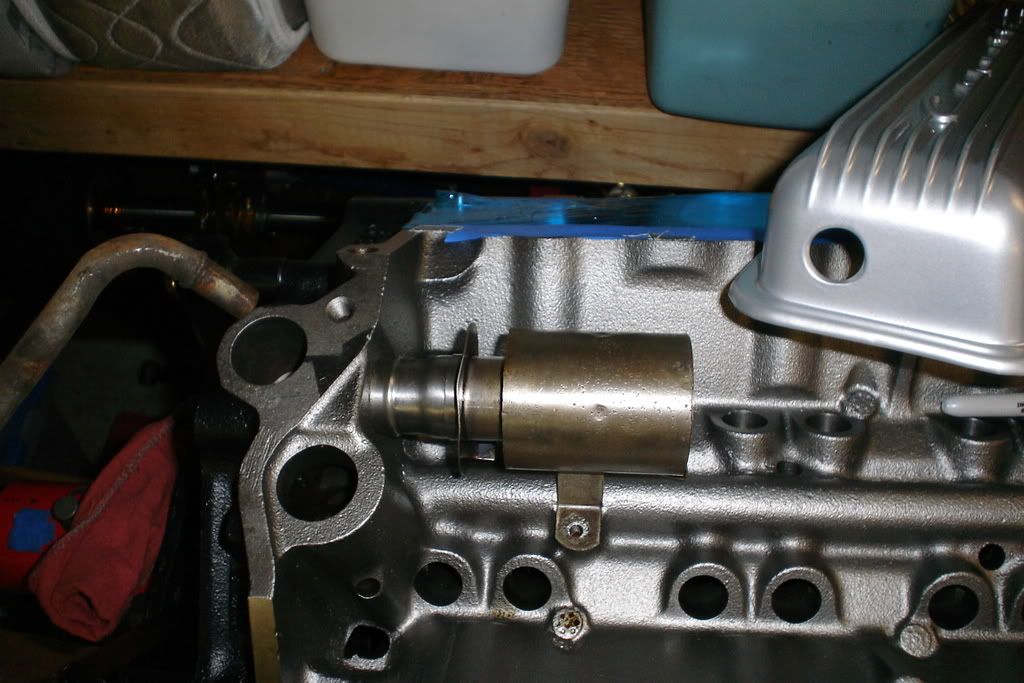
This picture show the extent of my PCV system. This is an old race car and relied on breater hoses from both rocker arm covers and a hose from the block to an expansion tank. This new to me block does not have the piece from the block adapting to the hose. I have know idea what it should look like other than a press fit with a 1/4 inch screw. What should I do for this setup?

Melting Slicks


Joined: Jul 2000
Posts: 2,097
Likes: 99
From: Boston MA
The picture didn't come through. Or, my firewall blocked it.
If you have breather holes in both rocker arm covers, you don't need one from the back of the block. The 2 rocker arm cover holes are waht Chevy used in late 60s, 70s, and into the 80s. Look at how Chevy plumbed the PCV system for these cars.
If you have breather holes in both rocker arm covers, you don't need one from the back of the block. The 2 rocker arm cover holes are waht Chevy used in late 60s, 70s, and into the 80s. Look at how Chevy plumbed the PCV system for these cars.

Safety Car


Joined: Jun 2000
Posts: 4,711
Likes: 552
From: St. Louis MO
2020 Corvette of the Year (appearance mods)
C2 of Year Winner (appearance mods) 2019
CI 4-5-7-9-10-11 Car Show Winner
CI 2-3-4-5-6-7-9-10-11 Vet
It would help it you filled out your PROFILE or at least state what year/engine/hp/etc you are wanting information for.
George.
George.

Team Owner

Joined: Mar 2003
Posts: 26,118
Likes: 1,874
From: Greenville, Indiana
With this block, you have the luxury of making any configuration used from '55 to the end of the production run on 1st generation sb's. What is it you're trying to do? Race car? Driver? Judging?
Thread Starter
Instructor
Joined: Feb 2007
Posts: 223
Likes: 1
From: Celina, TX
Driver during the week and a road race track day car a couple times each year. The theme of the car is keeping with it's racing background.

Tech Contributor


Joined: May 2005
Posts: 15,576
Likes: 118
From: Conroe Texas
Roger,
I think the question you may be asking is: What parts am I missing for a basically stock looking configuration.
My 65 327/350 has the following:
1) Metal tube that bolts to the top of the block, in that big hole you see next to the distributor hold. That metal tube isn't very long, and has a large diameter rubber hose that connects the tube, to a large fitting on the bottom of the air cleaner
2) An oil fill tube with a metal fitting on the side
3) A metered orifice fitting in the side of my Holley 2810 carb
4) A rubber hose joining the metal fitting in the oil fill tube, to the metered orifice in the side of the carb.
This photo shows all 4 pieces, but for the air cleaner.

I think the question you may be asking is: What parts am I missing for a basically stock looking configuration.
My 65 327/350 has the following:
1) Metal tube that bolts to the top of the block, in that big hole you see next to the distributor hold. That metal tube isn't very long, and has a large diameter rubber hose that connects the tube, to a large fitting on the bottom of the air cleaner
2) An oil fill tube with a metal fitting on the side
3) A metered orifice fitting in the side of my Holley 2810 carb
4) A rubber hose joining the metal fitting in the oil fill tube, to the metered orifice in the side of the carb.
This photo shows all 4 pieces, but for the air cleaner.
Team Owner
Joined: Mar 2003
Posts: 26,118
Likes: 1,874
From: Greenville, Indiana
Your description of what goes there is correct as far as it goes. It's a hat section that shoves in the block and a long 1/4" bolt holds it in place. Branching off the hat section are a variety of style of tubes. Some are a road draft tube that goes down over the bellhousing. Some have a nipple sticking out about an inch long that you can slip a pcv hose over and route it to a valve and vacuum source and some have a larger tube running to the air inlet system to siphon off filtered air to enter the crankcase.
It doesn't matter whether the flow goes in or out that hole in the block. You just have to have a vacuum source with a pcv valve or restrictor fitting plumbed in one end of your crankcase and clean filtered air on the other end or side feeding the draw of the vacuum.
I have no idea what you need for your racing needs. If you have a lot of blowby and you're pretty fast on the track, your engine will probably overload the pcv system and start blowing oil out somewhere.
I wouldn't keep what you have in any case. You'll have oil vapor everywhere and not an effective system to draw out moisture and contaminants in your crankcase .
It doesn't matter whether the flow goes in or out that hole in the block. You just have to have a vacuum source with a pcv valve or restrictor fitting plumbed in one end of your crankcase and clean filtered air on the other end or side feeding the draw of the vacuum.
I have no idea what you need for your racing needs. If you have a lot of blowby and you're pretty fast on the track, your engine will probably overload the pcv system and start blowing oil out somewhere.
I wouldn't keep what you have in any case. You'll have oil vapor everywhere and not an effective system to draw out moisture and contaminants in your crankcase .
Corvette Stories
The Best of Corvette for Corvette Enthusiasts

Top 10 Most Expensive Corvettes Ever Sold on Bring A Trailer
Brett Foote
10 Things Every Corvette Owner Needs (2026 Edition)
Michael S. Palmer
8 Most "Only Corvette Owners Understand" Quirks and Problems
Pouria Savadkouei
10 Reasons the C6 Z06 is Still A Performance Benchmark After 20 Years
Joe Kucinski
How Much Horsepower Every Corvette Engine "LOST" in 1972
Joe Kucinski
Top 10 DOs and DON'Ts for Protecting Your Convertible Top!
Michael S. Palmer
Top 10 Most Explosive Corvettes Ever Made: Power-to-Weight Ratio Ranked!
Joe Kucinski
150 hp to 1,250 hp: Every Corvette Generation Compared by the Specs That Matter
Joe Kucinski
8 Coolest Corvette Pace Cars (and Replicas) of All Time
Verdad Gallardo
Tech Contributor
Joined: May 2005
Posts: 15,576
Likes: 118
From: Conroe Texas
Roger, can you help us out by telling us what your real goal is, and what year of car you are working on?
Thread Starter
Instructor
Joined: Feb 2007
Posts: 223
Likes: 1
From: Celina, TX
Ahhh, you make an excellent point. I had 63-67 on the brain, but yes my 62 has a road draft tube that goes down along the belhousing and dumps out next to the ground. For that matter, so does my 56 Olds.
Roger, can you help us out by telling us what your real goal is, and what year of car you are working on?
Roger, can you help us out by telling us what your real goal is, and what year of car you are working on?
All the missing parts had me confused, and the thought of oil blow by all over the place brought me to ask advice from the forum folks. My main concern is whether the system needs to have a vaccum source, or just a big catch can for the three breather sources.
Thread Starter
Instructor
Joined: Feb 2007
Posts: 223
Likes: 1
From: Celina, TX

Race Director


Joined: Jun 2006
Posts: 17,901
Likes: 751
From: Inverness FL
St. Jude Donor '07
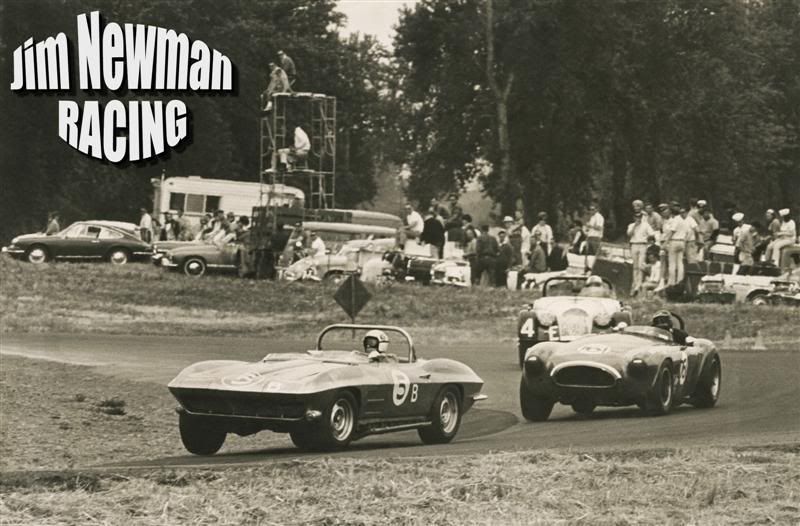
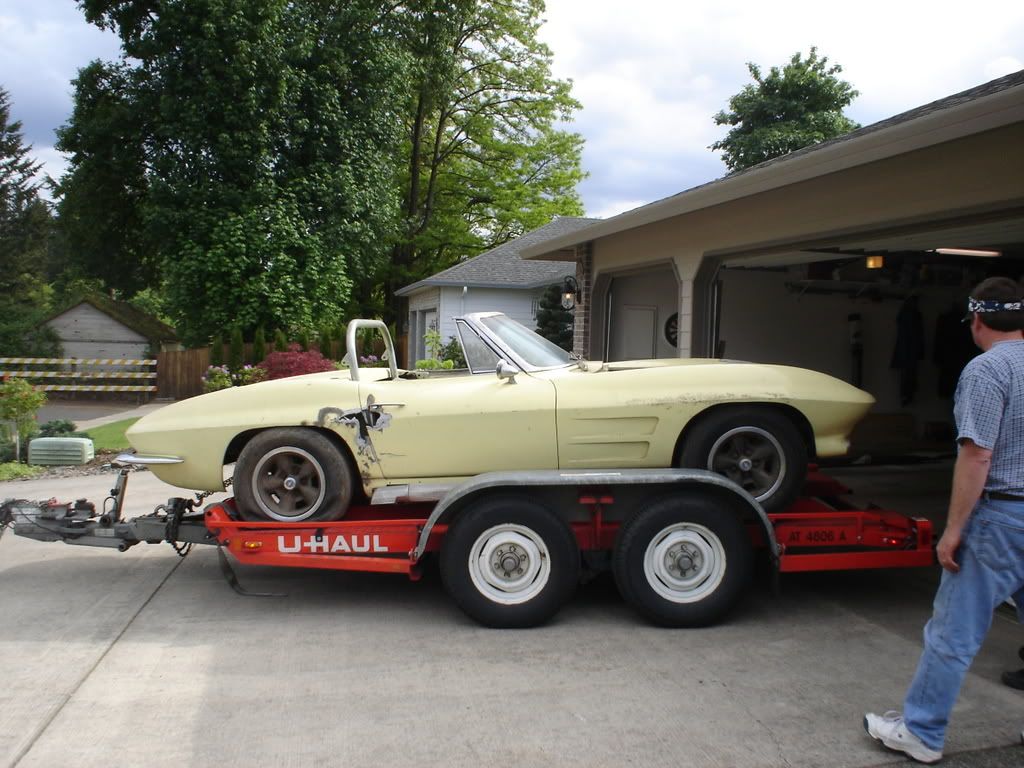
1963 convertible. I live 7 miles from Portland International raceway and am a member of several car clubs. These clubs make running track days very affordable and fun. I want this car to be fast on the track but still somewhat driveable on the street. I am sure this is completely contradictory, but if I can sacrafice some on both ends I will be happy.
All the missing parts had me confused, and the thought of oil blow by all over the place brought me to ask advice from the forum folks. My main concern is whether the system needs to have a vaccum source, or just a big catch can for the three breather sources.
All the missing parts had me confused, and the thought of oil blow by all over the place brought me to ask advice from the forum folks. My main concern is whether the system needs to have a vaccum source, or just a big catch can for the three breather sources.
Bill
Race Director

Joined: Mar 2001
Posts: 14,634
Likes: 4,683
From: Mustang OK
2026 Corvette of the Year Finalist - Modified
2025 c1 of the Year - Modified Winner
2024 C1 of the Year Finalist - Modified
2023 C1 of the Year Finalist - Modified
2015 C1 of the Year Finalist
Up through 67, all small blocks had the crankcase vent hole in the rear of the block. ALLLLLLLLLLLLLLLLLLLLLL of them used the vapor seperator can under the intake as in the top picture.
From there, there were various configurations, BUT, all of them included SOME KIND of inlet (breather cap on the oil filler tube plumbing from the air cleaner) air for the crankcase and SOME KIND of outlet for the crankcase. All engines still have this setup in some form or fashon-----------------ALL of them!
Up through 62 (EXCEPT Calif), all engines had a road draft tube. I can only guess, but I presume you know what a road draft tube looks like (if not, I'll show you a picture). The road draft tube was attached to the hole in the rear of the block with a long 1/4in bolt like the one in the below picture. The bolt had a small washer and a seal, as you can see.
Beginning in 63 to 67, there were multiple configurations of positive crankcase ventilation (PCV). Except for Calif cars in 62, all engines got a PCV valve in 63-up. And this was done in several ways (the road draft tube was gone forever). Many engines used the vent hole adapter and long bolt (below) with a hose connected to the adapter and then connected to a PCV valve at the base of the carb. Some engines had various shapes of tubes connected to the vent hole which went to the base of the air cleaner and another hose connected to a fitting and/or PCV valve at the oil filler tube. As already mentioned, inlet air could either come into the oil filler tube and be sucked out of the rear vent hole or vice versa. It all depended on the configuration of the engine/carb/FI setup.
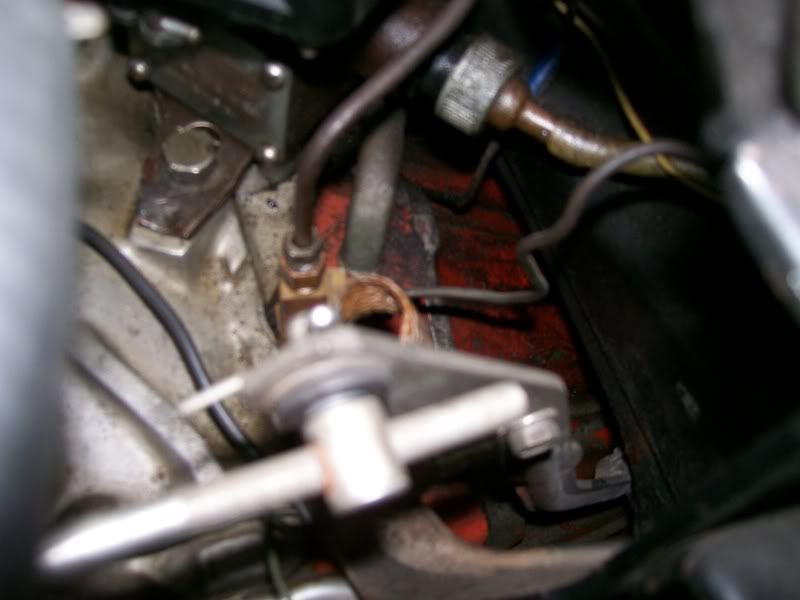
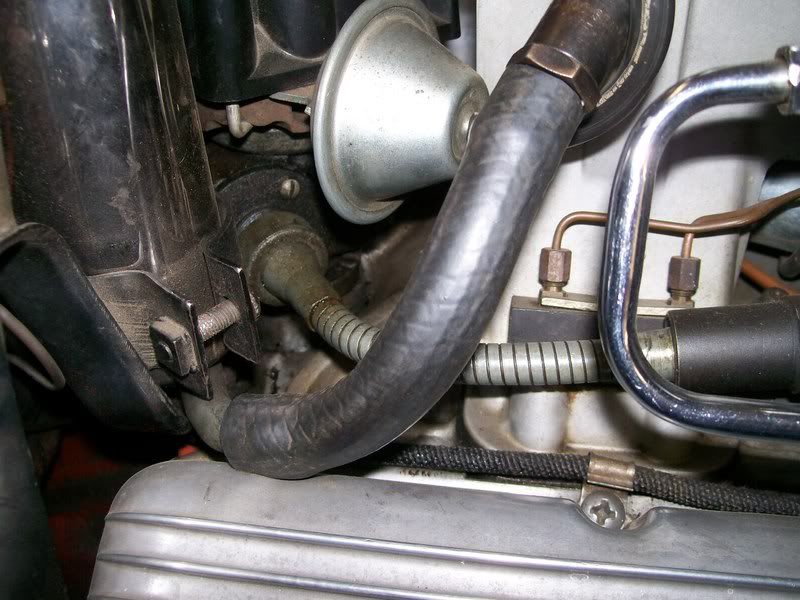
The 2nd and 3rd pictures are the PCV setup for a 63 FI car (customer's car). There was simply a rubber gormmet with a tube in it that was pressed into the rear vent hole, then it snaked under the distributor and connected to a PCV valve that screwed into the side of the FI plenum. Inlet air came from the air cleaner over to the oil filler tube. The 64-65 FI engines reversed this PCV routing. Inlet air went into the rear vent hole and was sucked out through the oil filler tube into the FI plenum.
Bottom line, fresh air into the crankcase (SOMEWHERE) and vapors (dirty air) sucked out into the carb or FI (YUK!!!!).

By the way, it's your car, your money and you have the right to do anything you please with it and NO ONE should criticize you. BUT, it sure hurts me to see holes cut into the finned alum Corvette script valve covers.
If by chance those are no-line valve covers, and they were mine, I would locate a person who is an EXCELLENT alum welder, have the holes welded, grind down the weld and finish it smooth and install the covers with the repair toward the rear.
From there, there were various configurations, BUT, all of them included SOME KIND of inlet (breather cap on the oil filler tube plumbing from the air cleaner) air for the crankcase and SOME KIND of outlet for the crankcase. All engines still have this setup in some form or fashon-----------------ALL of them!
Up through 62 (EXCEPT Calif), all engines had a road draft tube. I can only guess, but I presume you know what a road draft tube looks like (if not, I'll show you a picture). The road draft tube was attached to the hole in the rear of the block with a long 1/4in bolt like the one in the below picture. The bolt had a small washer and a seal, as you can see.
Beginning in 63 to 67, there were multiple configurations of positive crankcase ventilation (PCV). Except for Calif cars in 62, all engines got a PCV valve in 63-up. And this was done in several ways (the road draft tube was gone forever). Many engines used the vent hole adapter and long bolt (below) with a hose connected to the adapter and then connected to a PCV valve at the base of the carb. Some engines had various shapes of tubes connected to the vent hole which went to the base of the air cleaner and another hose connected to a fitting and/or PCV valve at the oil filler tube. As already mentioned, inlet air could either come into the oil filler tube and be sucked out of the rear vent hole or vice versa. It all depended on the configuration of the engine/carb/FI setup.
The 2nd and 3rd pictures are the PCV setup for a 63 FI car (customer's car). There was simply a rubber gormmet with a tube in it that was pressed into the rear vent hole, then it snaked under the distributor and connected to a PCV valve that screwed into the side of the FI plenum. Inlet air came from the air cleaner over to the oil filler tube. The 64-65 FI engines reversed this PCV routing. Inlet air went into the rear vent hole and was sucked out through the oil filler tube into the FI plenum.
Bottom line, fresh air into the crankcase (SOMEWHERE) and vapors (dirty air) sucked out into the carb or FI (YUK!!!!).
By the way, it's your car, your money and you have the right to do anything you please with it and NO ONE should criticize you. BUT, it sure hurts me to see holes cut into the finned alum Corvette script valve covers.
If by chance those are no-line valve covers, and they were mine, I would locate a person who is an EXCELLENT alum welder, have the holes welded, grind down the weld and finish it smooth and install the covers with the repair toward the rear.
Last edited by DZAUTO; Mar 18, 2008 at 11:07 PM.
Thread Starter
Instructor
Joined: Feb 2007
Posts: 223
Likes: 1
From: Celina, TX
DZAuto, thanks for the pictures, infor , and insights on this matter. This info is exactly what I need to understand my situation and make a determination on how to proceed.
As for the valve covers, the rules for the time required extra breathing and for it to be captured. The hole saw was the answer. I hope to repair them in the future but for now I will make them work. Out of the things that could have been done to this car for the racing stuff, this is probably the only butcher job I can think of.
As for the valve covers, the rules for the time required extra breathing and for it to be captured. The hole saw was the answer. I hope to repair them in the future but for now I will make them work. Out of the things that could have been done to this car for the racing stuff, this is probably the only butcher job I can think of.
