



 That's why I quit shooting lacquer a long time ago. You'll have to strip all the old stuff off before repainting it.



Lacquer check?
Thread Starter
Instructor


Joined: Dec 2006
Posts: 198
Likes: 30
From: Denver CO
 Lacquer check?
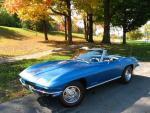
Have a '66 Laguna Blue convertible. When looking closely at the paint you can see what appears to be cracking below the surface of the paint but you cannot feel it with your hand. The car was repainted at some point (used to be red then painted the correct Laguna Blue) but I don't know if the current Laguna Blue is lacquer, acrylic or urethane. Have some questions about this:
1. Can "lacquer check" occur even when lacquer paint is not used, or is it unique to lacquer paint?
2. How does the car need to be prepped in order to ensure the new paint will not do the same thing? I'm planning to have the car repainted but am not clear on whether or not the old paint MUST be stripped off (media blasted or other) or if there is a special sealant/primer that can be used to properly prepare the surface for painting in non-lacquer paint.
Thanks much in advance for your input-
1. Can "lacquer check" occur even when lacquer paint is not used, or is it unique to lacquer paint?
2. How does the car need to be prepped in order to ensure the new paint will not do the same thing? I'm planning to have the car repainted but am not clear on whether or not the old paint MUST be stripped off (media blasted or other) or if there is a special sealant/primer that can be used to properly prepare the surface for painting in non-lacquer paint.
Thanks much in advance for your input-

Le Mans Master

Joined: Dec 2007
Posts: 8,000
Likes: 659
From: Puget Sound
Thread Starter
Instructor
Joined: Dec 2006
Posts: 198
Likes: 30
From: Denver CO

Le Mans Master

Joined: Mar 2005
Posts: 7,631
Likes: 11
From: Rocklin California
Checking can become a problem with paint build-up, too much primer, too much shrinking. You can't rub or polish it out. If not too noticeable, leave it. When it gets very noticeable, strip to glass and start over. 
Pro


Joined: Sep 2005
Posts: 656
Likes: 17
From: Northeastern PA
OK, I am not a professional painter, but I will go out on a limb here. I am getting ready to paint my 67 for judging and here are tips I have picked up.
1. Lacquer paint will continue to dry forever, thus the shrinking and cracking. If you see original lacquer on an old car that is very nice, it probably was kept in a climate controlled environment. Current lacquer is not the same quality as factory used lacquer. Harder to get correct shade, but not impossible.
2. Plastic paints stretch and give, thus probably won't see cracking
3. Primers: Polyester and epoxy are best. So called gel coating is not necessary as these primers will seal the rough surface from heavy sanding and where fiberglas strands show.
4. For judging purposes consider single stage urethane. Can spot repair when needed for stone chips, etc.
5. Don't want to judge the car, clear coat will shine it up, but repairs to paint require repainting whole sections of body panels...thus more expensive.
6. Stripping paint....chemically done runs risks of contamination under the primer and can develop a reaction into the paint down the road due to heat or sun....might take a couple years.
7. Sanding or dry removal of paint is best. And, it does not hurt to leave the old factory primer on the body as that was baked on and won't react or cause a problem.
8. After removing the paint, let it bake in a paint oven or set outside in the sun even in a big black plastic bag for a few days to find any impurities in the surface and dry the moisture out of it.
9. After priming the surface, do same as #8
10. If you have had oil or brake fluid spilled or splattered on the surface or underneath the fiberglass surface (like under the hood from air cond) be sure you get it out...heat lamps and dry towels. Acetone will help with this too I am told. This could take several days to get all removed.
11. If you are going for judging, be sure to dull down the door opening area, hood drain troughs and other places the factory would not be able to hit with a buffer....plus throw in a couple spots of orange peel.
I had my other 67 painted 2 years ago. I had the shop sand the paint off, prime it with polyester and paint with single stage urethane. Two years later, there are no issues yet.
Maybe others will take issue with what is said, or add to it. The above comes from paint suppliers, top shelf painters, blogs, and owners of expensive cars I have talked to. I have judged paint several times for the NCRS too, and have seen many mistakes people have made. This is scary because of the cost, so do your homework.
1. Lacquer paint will continue to dry forever, thus the shrinking and cracking. If you see original lacquer on an old car that is very nice, it probably was kept in a climate controlled environment. Current lacquer is not the same quality as factory used lacquer. Harder to get correct shade, but not impossible.
2. Plastic paints stretch and give, thus probably won't see cracking
3. Primers: Polyester and epoxy are best. So called gel coating is not necessary as these primers will seal the rough surface from heavy sanding and where fiberglas strands show.
4. For judging purposes consider single stage urethane. Can spot repair when needed for stone chips, etc.
5. Don't want to judge the car, clear coat will shine it up, but repairs to paint require repainting whole sections of body panels...thus more expensive.
6. Stripping paint....chemically done runs risks of contamination under the primer and can develop a reaction into the paint down the road due to heat or sun....might take a couple years.
7. Sanding or dry removal of paint is best. And, it does not hurt to leave the old factory primer on the body as that was baked on and won't react or cause a problem.
8. After removing the paint, let it bake in a paint oven or set outside in the sun even in a big black plastic bag for a few days to find any impurities in the surface and dry the moisture out of it.
9. After priming the surface, do same as #8
10. If you have had oil or brake fluid spilled or splattered on the surface or underneath the fiberglass surface (like under the hood from air cond) be sure you get it out...heat lamps and dry towels. Acetone will help with this too I am told. This could take several days to get all removed.
11. If you are going for judging, be sure to dull down the door opening area, hood drain troughs and other places the factory would not be able to hit with a buffer....plus throw in a couple spots of orange peel.
I had my other 67 painted 2 years ago. I had the shop sand the paint off, prime it with polyester and paint with single stage urethane. Two years later, there are no issues yet.
Maybe others will take issue with what is said, or add to it. The above comes from paint suppliers, top shelf painters, blogs, and owners of expensive cars I have talked to. I have judged paint several times for the NCRS too, and have seen many mistakes people have made. This is scary because of the cost, so do your homework.
Corvette Stories
The Best of Corvette for Corvette Enthusiasts

Top 10 Most Expensive Corvettes Ever Sold on Bring A Trailer
Brett Foote
10 Things Every Corvette Owner Needs (2026 Edition)
Michael S. Palmer
8 Most "Only Corvette Owners Understand" Quirks and Problems
Pouria Savadkouei
10 Reasons the C6 Z06 is Still A Performance Benchmark After 20 Years
Joe Kucinski
How Much Horsepower Every Corvette Engine "LOST" in 1972
Joe Kucinski
Top 10 DOs and DON'Ts for Protecting Your Convertible Top!
Michael S. Palmer
Top 10 Most Explosive Corvettes Ever Made: Power-to-Weight Ratio Ranked!
Joe Kucinski
150 hp to 1,250 hp: Every Corvette Generation Compared by the Specs That Matter
Joe Kucinski
8 Coolest Corvette Pace Cars (and Replicas) of All Time
Verdad Gallardo
Le Mans Master
Joined: Mar 2005
Posts: 7,631
Likes: 11
From: Rocklin California
OK, I am not a professional painter, but I will go out on a limb here. I am getting ready to paint my 67 for judging and here are tips I have picked up.
1. Lacquer paint will continue to dry forever, thus the shrinking and cracking. If you see original lacquer on an old car that is very nice, it probably was kept in a climate controlled environment. Current lacquer is not the same quality as factory used lacquer. Harder to get correct shade, but not impossible.
2. Plastic paints stretch and give, thus probably won't see cracking
3. Primers: Polyester and epoxy are best. So called gel coating is not necessary as these primers will seal the rough surface from heavy sanding and where fiberglas strands show.
4. For judging purposes consider single stage urethane. Can spot repair when needed for stone chips, etc.
5. Don't want to judge the car, clear coat will shine it up, but repairs to paint require repainting whole sections of body panels...thus more expensive.
6. Stripping paint....chemically done runs risks of contamination under the primer and can develop a reaction into the paint down the road due to heat or sun....might take a couple years.
7. Sanding or dry removal of paint is best. And, it does not hurt to leave the old factory primer on the body as that was baked on and won't react or cause a problem.
8. After removing the paint, let it bake in a paint oven or set outside in the sun even in a big black plastic bag for a few days to find any impurities in the surface and dry the moisture out of it.
9. After priming the surface, do same as #8
10. If you have had oil or brake fluid spilled or splattered on the surface or underneath the fiberglass surface (like under the hood from air cond) be sure you get it out...heat lamps and dry towels. Acetone will help with this too I am told. This could take several days to get all removed.
11. If you are going for judging, be sure to dull down the door opening area, hood drain troughs and other places the factory would not be able to hit with a buffer....plus throw in a couple spots of orange peel.
I had my other 67 painted 2 years ago. I had the shop sand the paint off, prime it with polyester and paint with single stage urethane. Two years later, there are no issues yet.
Maybe others will take issue with what is said, or add to it. The above comes from paint suppliers, top shelf painters, blogs, and owners of expensive cars I have talked to. I have judged paint several times for the NCRS too, and have seen many mistakes people have made. This is scary because of the cost, so do your homework.
1. Lacquer paint will continue to dry forever, thus the shrinking and cracking. If you see original lacquer on an old car that is very nice, it probably was kept in a climate controlled environment. Current lacquer is not the same quality as factory used lacquer. Harder to get correct shade, but not impossible.
2. Plastic paints stretch and give, thus probably won't see cracking
3. Primers: Polyester and epoxy are best. So called gel coating is not necessary as these primers will seal the rough surface from heavy sanding and where fiberglas strands show.
4. For judging purposes consider single stage urethane. Can spot repair when needed for stone chips, etc.
5. Don't want to judge the car, clear coat will shine it up, but repairs to paint require repainting whole sections of body panels...thus more expensive.
6. Stripping paint....chemically done runs risks of contamination under the primer and can develop a reaction into the paint down the road due to heat or sun....might take a couple years.
7. Sanding or dry removal of paint is best. And, it does not hurt to leave the old factory primer on the body as that was baked on and won't react or cause a problem.
8. After removing the paint, let it bake in a paint oven or set outside in the sun even in a big black plastic bag for a few days to find any impurities in the surface and dry the moisture out of it.
9. After priming the surface, do same as #8
10. If you have had oil or brake fluid spilled or splattered on the surface or underneath the fiberglass surface (like under the hood from air cond) be sure you get it out...heat lamps and dry towels. Acetone will help with this too I am told. This could take several days to get all removed.
11. If you are going for judging, be sure to dull down the door opening area, hood drain troughs and other places the factory would not be able to hit with a buffer....plus throw in a couple spots of orange peel.
I had my other 67 painted 2 years ago. I had the shop sand the paint off, prime it with polyester and paint with single stage urethane. Two years later, there are no issues yet.
Maybe others will take issue with what is said, or add to it. The above comes from paint suppliers, top shelf painters, blogs, and owners of expensive cars I have talked to. I have judged paint several times for the NCRS too, and have seen many mistakes people have made. This is scary because of the cost, so do your homework.


Le Mans Master


Joined: Sep 2009
Posts: 9,151
Likes: 481
From: "You may all go to Hell- and I will go to Texas- Davy Crockett
St. Jude Donor '12
OK, I am not a professional painter, but I will go out on a limb here. I am getting ready to paint my 67 for judging and here are tips I have picked up.
1. Lacquer paint will continue to dry forever, thus the shrinking and cracking. If you see original lacquer on an old car that is very nice, it probably was kept in a climate controlled environment. Current lacquer is not the same quality as factory used lacquer. Harder to get correct shade, but not impossible.
2. Plastic paints stretch and give, thus probably won't see cracking
3. Primers: Polyester and epoxy are best. So called gel coating is not necessary as these primers will seal the rough surface from heavy sanding and where fiberglas strands show.
4. For judging purposes consider single stage urethane. Can spot repair when needed for stone chips, etc.
5. Don't want to judge the car, clear coat will shine it up, but repairs to paint require repainting whole sections of body panels...thus more expensive.
6. Stripping paint....chemically done runs risks of contamination under the primer and can develop a reaction into the paint down the road due to heat or sun....might take a couple years.
7. Sanding or dry removal of paint is best. And, it does not hurt to leave the old factory primer on the body as that was baked on and won't react or cause a problem.
8. After removing the paint, let it bake in a paint oven or set outside in the sun even in a big black plastic bag for a few days to find any impurities in the surface and dry the moisture out of it.
9. After priming the surface, do same as #8
10. If you have had oil or brake fluid spilled or splattered on the surface or underneath the fiberglass surface (like under the hood from air cond) be sure you get it out...heat lamps and dry towels. Acetone will help with this too I am told. This could take several days to get all removed.
11. If you are going for judging, be sure to dull down the door opening area, hood drain troughs and other places the factory would not be able to hit with a buffer....plus throw in a couple spots of orange peel.
I had my other 67 painted 2 years ago. I had the shop sand the paint off, prime it with polyester and paint with single stage urethane. Two years later, there are no issues yet.
Maybe others will take issue with what is said, or add to it. The above comes from paint suppliers, top shelf painters, blogs, and owners of expensive cars I have talked to. I have judged paint several times for the NCRS too, and have seen many mistakes people have made. This is scary because of the cost, so do your homework.
1. Lacquer paint will continue to dry forever, thus the shrinking and cracking. If you see original lacquer on an old car that is very nice, it probably was kept in a climate controlled environment. Current lacquer is not the same quality as factory used lacquer. Harder to get correct shade, but not impossible.
2. Plastic paints stretch and give, thus probably won't see cracking
3. Primers: Polyester and epoxy are best. So called gel coating is not necessary as these primers will seal the rough surface from heavy sanding and where fiberglas strands show.
4. For judging purposes consider single stage urethane. Can spot repair when needed for stone chips, etc.
5. Don't want to judge the car, clear coat will shine it up, but repairs to paint require repainting whole sections of body panels...thus more expensive.
6. Stripping paint....chemically done runs risks of contamination under the primer and can develop a reaction into the paint down the road due to heat or sun....might take a couple years.
7. Sanding or dry removal of paint is best. And, it does not hurt to leave the old factory primer on the body as that was baked on and won't react or cause a problem.
8. After removing the paint, let it bake in a paint oven or set outside in the sun even in a big black plastic bag for a few days to find any impurities in the surface and dry the moisture out of it.
9. After priming the surface, do same as #8
10. If you have had oil or brake fluid spilled or splattered on the surface or underneath the fiberglass surface (like under the hood from air cond) be sure you get it out...heat lamps and dry towels. Acetone will help with this too I am told. This could take several days to get all removed.
11. If you are going for judging, be sure to dull down the door opening area, hood drain troughs and other places the factory would not be able to hit with a buffer....plus throw in a couple spots of orange peel.
I had my other 67 painted 2 years ago. I had the shop sand the paint off, prime it with polyester and paint with single stage urethane. Two years later, there are no issues yet.
Maybe others will take issue with what is said, or add to it. The above comes from paint suppliers, top shelf painters, blogs, and owners of expensive cars I have talked to. I have judged paint several times for the NCRS too, and have seen many mistakes people have made. This is scary because of the cost, so do your homework.
I knew I was gonna have problems!! My good friend who is an absolute fibreglass repair wizard has had my 63 SWC since March doing all the body work, repair on a badly damaged front end, and stripped the car to bare glass. I TOLD HIM to leave the bonding strip lines and not get carried away making the car too smooth- I want to have it NCRS correct. So what did he do? He didn't listen! The damn thing is painted now and its perfect! It is smooth as the proverbial pane of glass. Now what the hell am I gonna do?? Is there any way I can go back and make it wavy and put the bonding strip lines back in it? Maybe I can put enough overspray on stuff where it won't be so noticeable. It is base coat /clear coat. Any suggestions?

Le Mans Master
Joined: Mar 2005
Posts: 7,631
Likes: 11
From: Rocklin California
Dammit-
I knew I was gonna have problems!! My good friend who is an absolute fibreglass repair wizard has had my 63 SWC since March doing all the body work, repair on a badly damaged front end, and stripped the car to bare glass. I TOLD HIM to leave the bonding strip lines and not get carried away making the car too smooth- I want to have it NCRS correct. So what did he do? He didn't listen! The damn thing is painted now and its perfect! It is smooth as the proverbial pane of glass. Now what the hell am I gonna do?? Is there any way I can go back and make it wavy and put the bonding strip lines back in it? Maybe I can put enough overspray on stuff where it won't be so noticeable. It is base coat /clear coat. Any suggestions?
I knew I was gonna have problems!! My good friend who is an absolute fibreglass repair wizard has had my 63 SWC since March doing all the body work, repair on a badly damaged front end, and stripped the car to bare glass. I TOLD HIM to leave the bonding strip lines and not get carried away making the car too smooth- I want to have it NCRS correct. So what did he do? He didn't listen! The damn thing is painted now and its perfect! It is smooth as the proverbial pane of glass. Now what the hell am I gonna do?? Is there any way I can go back and make it wavy and put the bonding strip lines back in it? Maybe I can put enough overspray on stuff where it won't be so noticeable. It is base coat /clear coat. Any suggestions?

Pro
Joined: Sep 2005
Posts: 656
Likes: 17
From: Northeastern PA
Dammit-
I knew I was gonna have problems!! My good friend who is an absolute fibreglass repair wizard has had my 63 SWC since March doing all the body work, repair on a badly damaged front end, and stripped the car to bare glass. I TOLD HIM to leave the bonding strip lines and not get carried away making the car too smooth- I want to have it NCRS correct. So what did he do? He didn't listen! The damn thing is painted now and its perfect! It is smooth as the proverbial pane of glass. Now what the hell am I gonna do?? Is there any way I can go back and make it wavy and put the bonding strip lines back in it? Maybe I can put enough overspray on stuff where it won't be so noticeable. It is base coat /clear coat. Any suggestions?
I knew I was gonna have problems!! My good friend who is an absolute fibreglass repair wizard has had my 63 SWC since March doing all the body work, repair on a badly damaged front end, and stripped the car to bare glass. I TOLD HIM to leave the bonding strip lines and not get carried away making the car too smooth- I want to have it NCRS correct. So what did he do? He didn't listen! The damn thing is painted now and its perfect! It is smooth as the proverbial pane of glass. Now what the hell am I gonna do?? Is there any way I can go back and make it wavy and put the bonding strip lines back in it? Maybe I can put enough overspray on stuff where it won't be so noticeable. It is base coat /clear coat. Any suggestions?
Instructor
Joined: Apr 2006
Posts: 150
Likes: 2
From: Taylor MI
FWIW, just my two cents
Have a '66 Laguna Blue convertible. When looking closely at the paint you can see what appears to be cracking below the surface of the paint but you cannot feel it with your hand. The car was repainted at some point (used to be red then painted the correct Laguna Blue) but I don't know if the current Laguna Blue is lacquer, acrylic or urethane. Have some questions about this:
1. Can "lacquer check" occur even when lacquer paint is not used, or is it unique to lacquer paint?
2. How does the car need to be prepped in order to ensure the new paint will not do the same thing? I'm planning to have the car repainted but am not clear on whether or not the old paint MUST be stripped off (media blasted or other) or if there is a special sealant/primer that can be used to properly prepare the surface for painting in non-lacquer paint.
Thanks much in advance for your input-
1. Can "lacquer check" occur even when lacquer paint is not used, or is it unique to lacquer paint?
2. How does the car need to be prepped in order to ensure the new paint will not do the same thing? I'm planning to have the car repainted but am not clear on whether or not the old paint MUST be stripped off (media blasted or other) or if there is a special sealant/primer that can be used to properly prepare the surface for painting in non-lacquer paint.
Thanks much in advance for your input-

Race Director

Joined: Mar 2009
Posts: 19,777
Likes: 4,592
From: Canada's capital
2020 Corvette of the Year Finalist (appearance mods)
C1 of Year Finalist (appearance mods) 2019
Ya gotta STRIP...STRIP...STRIP, no way around it my friend. Or it'll come back and bite you in the azz.
