




How high RPMs can you pull?

Thread Starter
Advanced

Joined: Feb 2010
Posts: 58
Likes: 0
From: Daytona Beach Florida
 How high RPMs can you pull?
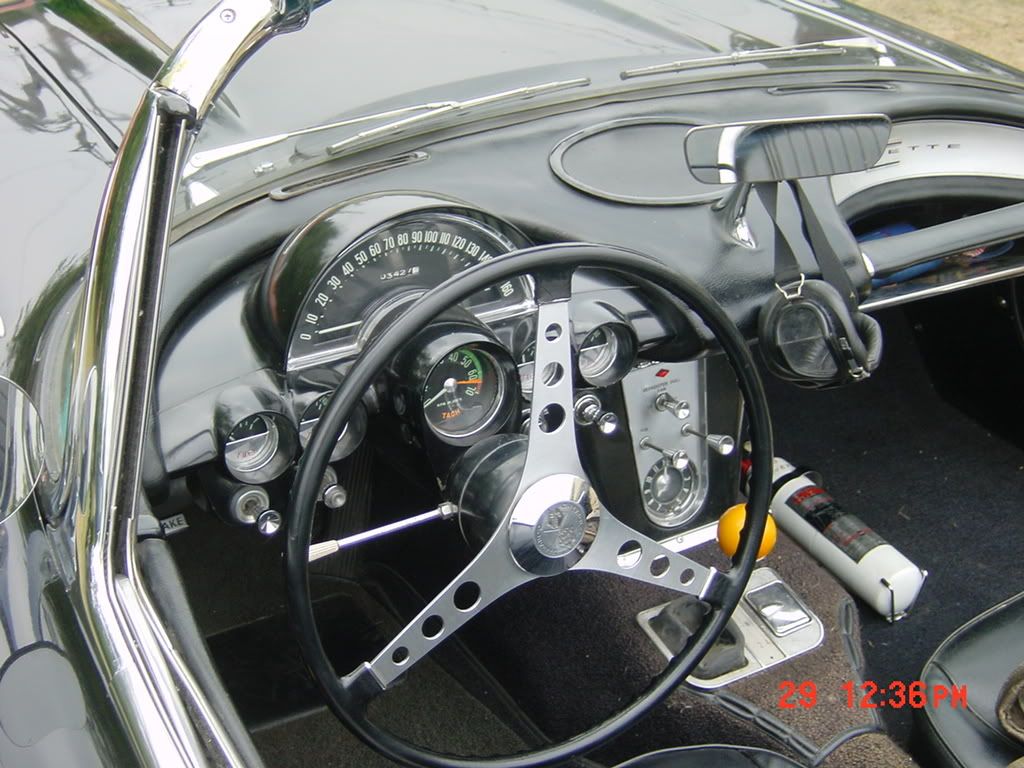
my 64 FI doesn't rev up very high. It has hydraulic lifters and i know those limit revs. I dont want to push it past the 4500 mark because it gets REALLY noisy with my chambered exhaust and sounds like its about the limit. The redline is 7000 so i know originally it had more to give. What RPM do you guys with solid lifters reach in the high horse small blocks?

Race Director


Joined: Mar 2009
Posts: 19,777
Likes: 4,592
From: Canada's capital
2020 Corvette of the Year Finalist (appearance mods)
C1 of Year Finalist (appearance mods) 2019
What's the point of seeing how high you can turn your motor. Are you a masochist or what. After you hit the peak horsepower, usually governed by your camshaft, any more is just abusing your mill. Why? Most hydrallics peak out at below 6000, some 5000. Solids with a racing cam maybe 7500-9000max. I remember Grumpy Jenkens coming off the line at 9 grand, what a screaming small block, I think a 331, (327+.30), in a VEGA.
^^^^^^^^^^^^^^^ ^^^^^^^^^^^^^^^
^^^^^^^^^^^^^^^
^^^^^^^^^^^^^^^

Drifting

Joined: Jun 2007
Posts: 1,640
Likes: 0
From: DeBary Fl. Amateur Radio Operator K3CQR
 These are OLD engines and metal, don't abuse them. The times of leaving 100' of rubber on the road, and high rpm power shifts should be out of our systems by now. But Oh for the old days, when we didn't give a ****. Bill
Melting Slicks


Joined: Nov 2002
Posts: 2,460
Likes: 5
From: Wheaton IL
my 64 FI doesn't rev up very high. It has hydraulic lifters and i know those limit revs. I dont want to push it past the 4500 mark because it gets REALLY noisy with my chambered exhaust and sounds like its about the limit. The redline is 7000 so i know originally it had more to give. What RPM do you guys with solid lifters reach in the high horse small blocks?
Melting Slicks
Joined: Nov 2002
Posts: 2,460
Likes: 5
From: Wheaton IL
Almost forgot -- one time my accelerator pedal got stuck under the edge of the carpeting and the tach went way past 7000 until the points bounced. It was bouncing around so bad I don't know where it ended up. This occured during a 1-2 shift (free revving when after the clutch was engaged) and scared the crap out of me. The engine is remains ready for more abuse.
Brian
Brian

Drifting
Joined: Jul 2007
Posts: 1,671
Likes: 10
From: california
 i can always pull 1 RPS (rev per second) more than it takes to grenade any engine...
 . when i ran a gasser in the early 70s with modded 327s and 4 speeds i would always exceed the RPMs at the end of each season and blow the engine to learn it's limits (to learn the limits of any engine you must exceed them) this way i could see what failed an improve the build. most of the time at the end of the season it was just a bang.
i raced my gasser at the long gone Fremont raceway in NorCal. at the end of one season i revved the engine to the moon. the engine grenaded at the top of second gear. about at 70 1/3 way down the strip. it was by far the worst engine failure i have ever had, the car instantly filled with oil smoke. i could not see where i was going. everybody enjoyed the show (my gasser was built for traction-it NEVER burned rubber--it just did wheelies) i managed to get the car stopped and everyone had a good show.
of course everybody loved the blown engine episode, but they hated the 10 quarts of oil my engine dumped on the track.
autopsy, at my shop, a forged piston head seperatated from the piston skirt at high RPM. the top of piston slammed into the the valves. the piston skirt desintergrated, that loose rod was slinging around at 6 grand, it cut my engine in half, it was a wild ride...

Corvette Stories
The Best of Corvette for Corvette Enthusiasts

Corvette ZR1X Will Be Pacing the Indy 500, And Could Probably Race, Too!
Verdad Gallardo
Top 10 Corvettes Coming to Mecum Indy 2026!
Brett Foote
Top 10 C9 Corvette MUST-HAVES to Fix These C8 Generation Flaws!
Michael S. Palmer
10 Revolutionary 'Corvette Firsts' Most People Don't Know
Joe Kucinski
5 Reasons to Upgrade to an LS6-Powered Corvette; 5 Reasons to Stay LT2
Michael S. Palmer
2027 Corvette vs The World: Every C8 vs Its Closest Competitor
Joe Kucinski
10 Most Common Corvette Problems of the Last 20 Years!
Joe Kucinski
5 MOST and 5 LEAST Popular Corvette Model Years in History!
Joe Kucinski
2027 Corvette Buyer's Guide: Everything You Need to Know!
Joe Kucinski
POSSE ZR-1 Driver


Joined: Feb 2002
Posts: 3,980
Likes: 138
From: Groton CT
I try not to run more than 7000 rpm. I have set the Rev limiter on the Ignitor III to 6900. In my past, I have been able to consistently run 327s and 350s well past 7500 without ill affects.
Back in the 70s, I launched my 62 Corvette at 8500 and shifted at 9000. When I took the engine out of the car a year later, it needed nothing. Sold it to another racer who dropped it in a 57 Chevy and ran 2 more seasons before a rebuild.
I've never lost a small block. Proper maintenance helps.
Back in the 70s, I launched my 62 Corvette at 8500 and shifted at 9000. When I took the engine out of the car a year later, it needed nothing. Sold it to another racer who dropped it in a 57 Chevy and ran 2 more seasons before a rebuild.
I've never lost a small block. Proper maintenance helps.

Team Owner

Joined: Aug 2007
Posts: 58,061
Likes: 7,144
Army
I try not to run more than 7000 rpm. I have set the Rev limiter on the Ignitor III to 6900. In my past, I have been able to consistently run 327s and 350s well past 7500 without ill affects.
Back in the 70s, I launched my 62 Corvette at 8500 and shifted at 9000. When I took the engine out of the car a year later, it needed nothing. Sold it to another racer who dropped it in a 57 Chevy and ran 2 more seasons before a rebuild.
I've never lost a small block. Proper maintenance helps.
Back in the 70s, I launched my 62 Corvette at 8500 and shifted at 9000. When I took the engine out of the car a year later, it needed nothing. Sold it to another racer who dropped it in a 57 Chevy and ran 2 more seasons before a rebuild.
I've never lost a small block. Proper maintenance helps.
I've left the Ignitor III at the default 5,500 RPM as that is more than high enough for my driving..

Race Director


Joined: Feb 2007
Posts: 15,384
Likes: 8,808
From: northern california
C2 of Year Finalist (track prepared) 2019
It's quite possible you've got a poorly matched set of components that, taken together, limit your engine revs.
Jim
Thread Starter
Advanced
Joined: Feb 2010
Posts: 58
Likes: 0
From: Daytona Beach Florida
What are the cam specs? What heads are on the engine? What is the compression ratio? Do you know FOR A FACT that the FI unit has been properly dialed in? (FI units are quite capable of working to 8000 RPM)
It's quite possible you've got a poorly matched set of components that, taken together, limit your engine revs.
Jim
It's quite possible you've got a poorly matched set of components that, taken together, limit your engine revs.
Jim
it was totally machined and rebuild. now has a 64' holly on it
this is the cam he put in it but it was custom ground to be slightly larger the the 365 horse cam
http://performanceparts.com/part.php?partID=247293
hydraulic lifters
heads i believe are original, ported and polished
1964 winters aluminum intake manifold
The engine was defiantly done right. all work was done by Harris performance & Machine (i have the receipt). i have an engine blueprint with all clearances.
i just dont want 4500 to be my cars absolute limit. I want to be able to take it on the highway and not feel like the prolonged 3800 rpms is doing harm. (3.70 rear end)

Drifting
Joined: Oct 2008
Posts: 1,935
Likes: 92
From: Rochester Hills Michigan
i can always pull 1 RPS (rev per second) more than it takes to grenade any engine.... when i ran a gasser in the early 70s with modded 327s and 4 speeds i would always exceed the RPMs at the end of each season and blow the engine to learn it's limits (to learn the limits of any engine you must exceed them) this way i could see what failed an improve the build. most of the time at the end of the season it was just a bang.i raced my gasser at the long gone Fremont raceway in NorCal. at the end of one season i revved the engine to the moon. the engine grenaded at the top of second gear. about at 70 1/3 way down the strip. it was by far the worst engine failure i have ever had, the car instantly filled with oil smoke. i could not see where i was going. everybody enjoyed the show (my gasser was built for traction-it NEVER burned rubber--it just did wheelies) i managed to get the car stopped and everyone had a good show.
of course everybody loved the blown engine episode, but they hated the 10 quarts of oil my engine dumped on the track.
autopsy, at my shop, a forged piston head seperatated from the piston skirt at high RPM. the top of piston slammed into the the valves. the piston skirt desintergrated, that loose rod was slinging around at 6 grand, it cut my engine in half, it was a wild ride...
I saw the same piston failure on production 396 hydraulic cam engines in 1969 on the Chevy durability test...with a similar result. The 396 block didn't break, they were tough, but only the opposite bank's cylinder head wasn't trashed. I did see a 350 block break in two...what a mess that made.

Team Owner


Joined: Oct 2000
Posts: 38,897
Likes: 1,920
From: Washington Michigan

Safety Car

Joined: Sep 2004
Posts: 4,049
Likes: 134
From: St. Clair Shores MI
C2 of Year Finalist (track prepared) 2019
2017 C2 of the Year Finalist


Race Director


Joined: Nov 2000
Posts: 10,339
Likes: 664
From: Beverly Hills (Pine Ridge) Florida
my 64 FI doesn't rev up very high. It has hydraulic lifters and i know those limit revs. I dont want to push it past the 4500 mark because it gets REALLY noisy with my chambered exhaust and sounds like its about the limit. The redline is 7000 so i know originally it had more to give. What RPM do you guys with solid lifters reach in the high horse small blocks?
Other lower horse camshafts may only rev (up to peak horsepower) in the 4500-5000 range.
But many other engine factors also contribute to a "rev limit". If you really want to determine what the engine can do (performance wise), and have faith in it holding up without catastrophic failure, then put it on a dyno.
Just note that hydraulic cams can experience valve float at their upper rpm range, and that float (where the spring can no longer hold the lifter in contact with the cam lobe) will result in lifter pump up, which can cause valves to contact piston tops with unpleasant results.
Plasticman


Race Director
Joined: Nov 2000
Posts: 10,339
Likes: 664
From: Beverly Hills (Pine Ridge) Florida