After 33 years

Thread Starter
Advanced

Joined: Aug 2011
Posts: 96
Likes: 0
 After 33 years
Ok,here's the deal. I've just aquired a '66 coupe that has been parked in a dry garage since 1978. Never moved an inch. Nassau blue with black interior. it's still covered with cardboard boxes and blankets. I'm just uncovering it now so it's going to be an adventure. I know it only had two owners before me, and it's all there. I want to move it out and begin the journey to getting it on the road. You guys are the experts, and I'd appreciate your input as I start looking at codes and #s to see just what I've got, and if it is all original. I've been told it is. I know, you've heard that before. Where would you guys start with the restoration? When it was parked 33 years ago there was something amiss in either the 327 engine or the tranny. Any do's or dont's while rolling it onto a trailer or other advice would be appreciated, and no I'm not going to stick a new battery in it and try to start her up after 33 years. I know my way around cars, but I'm new to Vettes. I'm going to take pictures from beginning to end, and I'll post them here. It's like uncovering a time capsule, and finding a '66 Vette inside.
Last edited by Packrat66; Aug 28, 2011 at 08:35 PM.
Le Mans Master


Joined: Feb 2008
Posts: 6,535
Likes: 1,944
From: Folsom CA
Welcome abord Packrat66. I too am the proud owner of a 1966 that sat in a garage since 1978, mine went in with Engine and rust issues and that is how I bought it 4 years ago.
With two son's in college I have waited to start this project, I bought it thinking I needed to buy before they went out of sight price wise. I should have waited. I could have picked up a much better deal today.
This forum is full of great guys that really enjoy the C2 and offer many great idea's, most from direct experience and that is invaluable.
Things to start with.
Don't trust the electrical at all or you can fire up the whole car.
The brakes will be toast. Drain fluids and flush, hope for the best but most likely they will need rebuilding all the way around. Rubber rots with age, when usede daily or parked.
Antifreeze needs to be drained and the system flushed and checked.
Freeze plugs in the engine may be completely rusted out after this much time.
Exciting to hear of another coming back from the dead.
Good luck and keep us posted, WITH PICTURES.
With two son's in college I have waited to start this project, I bought it thinking I needed to buy before they went out of sight price wise. I should have waited. I could have picked up a much better deal today.
This forum is full of great guys that really enjoy the C2 and offer many great idea's, most from direct experience and that is invaluable.
Things to start with.
Don't trust the electrical at all or you can fire up the whole car.
The brakes will be toast. Drain fluids and flush, hope for the best but most likely they will need rebuilding all the way around. Rubber rots with age, when usede daily or parked.
Antifreeze needs to be drained and the system flushed and checked.
Freeze plugs in the engine may be completely rusted out after this much time.
Exciting to hear of another coming back from the dead.
Good luck and keep us posted, WITH PICTURES.

Melting Slicks

Joined: May 2010
Posts: 3,169
Likes: 2
From: Cemetery of a town Montana
http://forums.corvetteforum.com/c1-a...sual-aids.html
 Another vote for pictures, I use Photobucket as the host and it is simple. We like stories and pictures (as found), this sounds like a good one.
I start this type of project by asking why was the car parked, fix that, and work out from there.
Another vote for pictures, I use Photobucket as the host and it is simple. We like stories and pictures (as found), this sounds like a good one.I start this type of project by asking why was the car parked, fix that, and work out from there.
Last edited by UberLegend; Aug 27, 2011 at 04:18 AM.
Thread Starter
Advanced
Joined: Aug 2011
Posts: 96
Likes: 0
Thanks for the welcome advice guys. I'm going to the garage today to start the excavation. You'll understand what I mean when you see the pictures. You guys have given me some great advice so far and I will take pictures as I go. I know it's not some rare 427 that they only made two of or anything, but any '66 Vette is a good Vette in my book. Like I said I'm a newbie to Corvettes so this looks like a great place. I'm looking forward to bringing this machine back to life, and sharing it with knowledgable people who can give me some help along the way. Later!

Le Mans Master

Joined: Nov 2008
Posts: 5,691
Likes: 12
From: columbus oh
welcome to the "dark side", packrat66.....patience here will be rewarded later on....you will receive help here for your de coding. then you will know what you have and how to go about your goals. fwiw, do not attempt to turn the mill over, even by hand! once you are able to delve into this, there is a systematic approach to all your concerns.
obtain a good digital camera and clean out a resting place for the project. not knowing how you are tooled up, my first suggestion is to buy 4 quality jack stands and at least a 2 1/2 ton floor jack......
obtain a good digital camera and clean out a resting place for the project. not knowing how you are tooled up, my first suggestion is to buy 4 quality jack stands and at least a 2 1/2 ton floor jack......
Thread Starter
Advanced
Joined: Aug 2011
Posts: 96
Likes: 0
Thanks Midyear. I've got the floor jack and jack stands. I'll have to fill the tires, and make sure she's out of gear when it's time to load her up. This car has not moved an inch, except down, in 33 years. Later with pics.

Tech Contributor


Joined: May 2005
Posts: 15,576
Likes: 118
From: Conroe Texas
- Cast into intake manifold
- Cast into left rear of block
- Cast into right rear of block
- Stamped into front right pad of block, just forward of right head
- Stamped into carburetor
- Stamped into alternator
- Stamped into top of radiator
- Stamped into aluminum band around base of distributor
- Case and stamped into transmission (several places)
- Stamped into bottom of rear axle pumpkin
- Stamped into VIN plate (under glove box)
- Stamped into TRIM plate (under glove box)
- Etched into windows under the LOF logo (look in the bottom corner of the windows)
That will get us a starting point on what your car has, is, etc.
Where would you guys start with the restoration?
- Figure out what you have by getting us the numbers above
- Show us what kind of shape the car is in by posting photos as requested earlier
- Determine what your goals are for the car
- If you decide to restore it, ask a lot of questions here first. You'll get a lot of advice, and a lot of opinions, you'll need to wade through ti all to figure out what makes the most sense for your situation.
- If you decide to do a full restoration yourself, don't understimate how much that can cost.
Any do's or dont's while rolling it onto a trailer or other advice would be appreciated
- air up the tires
- be prepared for one or more of the wheels to be stuck due to brakes (front) or brakes/parking brakes (rear). The rear parking brakes are inside the rear brake disc, like a miniature brake drum. Not easy to unstick if they are rusted up.
Jeff

Melting Slicks
Joined: Sep 2003
Posts: 2,114
Likes: 33
From: ct
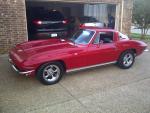
Dose it look anything like this? This one was parked in 1978 and never touched again till I pulled it out a few years ago.
I found that the orig. steel shim head gaskets had rotted after sitting all those years. I pulled the motor without even trying to start it. You may want to do the same thing.
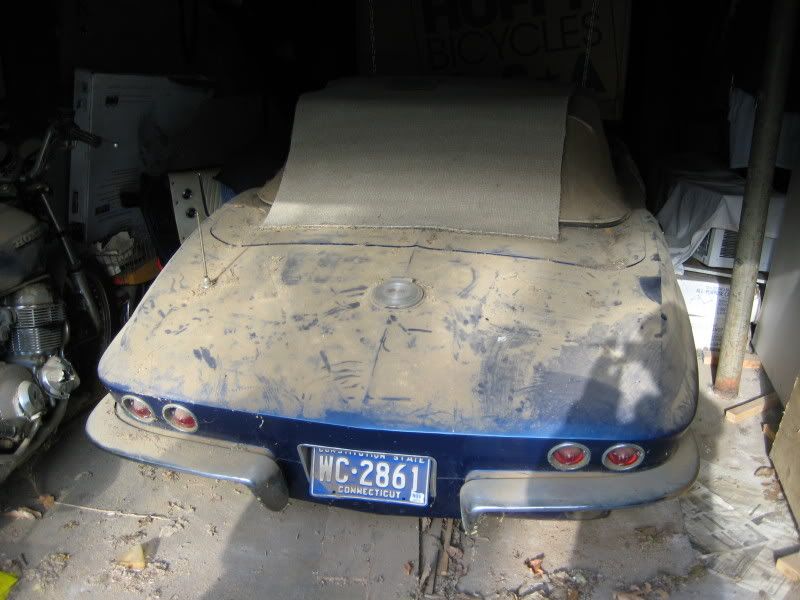
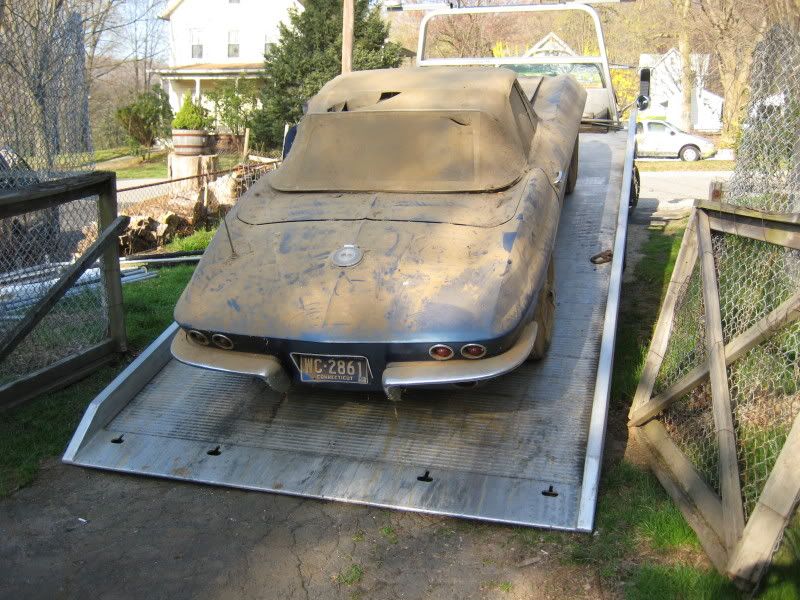
Just to give you some inspiration. This is after a nut and bolt frame off.
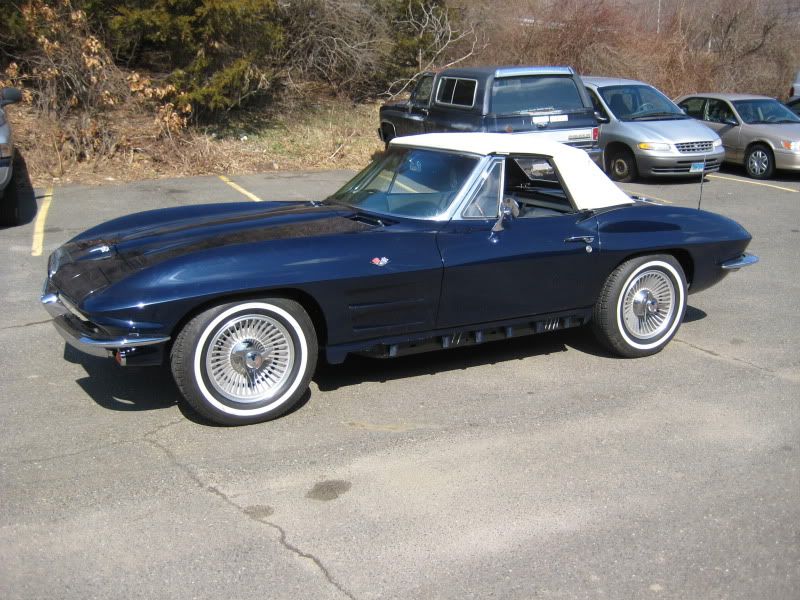
I found that the orig. steel shim head gaskets had rotted after sitting all those years. I pulled the motor without even trying to start it. You may want to do the same thing.
Just to give you some inspiration. This is after a nut and bolt frame off.
Last edited by aworks; Aug 27, 2011 at 10:45 AM.
Corvette Stories
The Best of Corvette for Corvette Enthusiasts

5 Best & 5 Worst Corvette Daily Drivers
Joe Kucinski
The Headlights of Every Corvette Generation Explained
Joe Kucinski
5 Best & 5 Most Overrated Corvette Track Packages of All Time!
Joe Kucinski
Every 2027 Corvette Engine Explained
Joe Kucinski
Designer Imagines A Corvette That Looks More Like a Corvette Than the Corvette
Verdad Gallardo
10 Ugly Corvettes That We Still Kinda Love
Joe Kucinski
Top 10 Most Expensive Corvettes Ever Sold on Bring A Trailer
Brett Foote
10 Things Every Corvette Owner Needs (2026 Edition)
Michael S. Palmer
8 Most "Only Corvette Owners Understand" Quirks and Problems
Pouria Savadkouei
Burning Brakes


Joined: Mar 2004
Posts: 1,112
Likes: 1
From: Reno NV
You Might Also Want To Check the Interior or the Car...
and the engine compartment for any evidence of insects, rats, mice or other "critters" that have taken up residence in the vehicle. The last thing you want to do is push it into your garage and find out you have a "critter" infestation on your hands..

Safety Car

Joined: Feb 2006
Posts: 4,367
Likes: 59
From: FL

Before doing much, begin with simple soap and water washing of everything to see what you find. Intense scrubbing can destroy chalk marks, grease pencil markings, and such that were put on during the assembly.
Like one said, get a digital camera and take pictures of EVERYTHING and do it often as you disassemble. It will be invaluable putting it back.
That long, odds are the engine won't budge, but if the car looks really good, you might try to turn it over by hand and do some minor things to get it so you can get a Bloomington Gold Survivor award.
Post some pictures and we can give you an idea.

Safety Car


Joined: Oct 2000
Posts: 4,236
Likes: 355
From: Albuquerque, NM
You'll need to upload them to a tinypic or photobucket account first. Those sites are free, you just have to create an account and upload your pictures. Then see this thread:
http://forums.corvetteforum.com/c1-a...sual-aids.html
http://forums.corvetteforum.com/c1-a...sual-aids.html
Thread Starter
Advanced
Joined: Aug 2011
Posts: 96
Likes: 0
Ok, here we go. Please note the Christmas tree complete with train set on the top of the car. It took my son and I 5 hours today to slowly uncover and sort through all the junk on top of the car. Next up a look under the hood and inside the interior.
http://public.fotki.com/Packrat66/66-vette/
http://public.fotki.com/Packrat66/66-vette/
Last edited by Packrat66; Aug 28, 2011 at 02:53 AM.


BubbaHut

Joined: May 2004
Posts: 944
Likes: 32
From: Lake Norman NC
2020 C5 of the Year Finalist - Modified
congrats
Keep us posted with pictures of your progress.
You have found the buried treasure, Now you just have
to bring the shine back to it...
Best of luck

You have found the buried treasure, Now you just have
to bring the shine back to it...
Best of luck

Thread Starter
Advanced
Joined: Aug 2011
Posts: 96
Likes: 0
Thanks guys. There is almost as much stuff inside the car as there was outside. That's up next. The good news is that we can see Corvette parts and pieces under some of the other stuff stored in back of the seats. The dash and front seats look good, but we need to get her empty to make a full assessment. We are working at cleaning the rest of the home while we work on the car getting it ready to move. Otherwise we would have it all cleaned out already. We may not get back to it for a few days, but pictures of the interior and engine compartment will be coming. The front bumpers are off, but they may be in the back of the car or someplace else in the garage. I know, I know "what's taking this guy so long?". If you can imagine a house that is as equally buried in stuff as the Vette you'll get the picture. Thanks for the help so far everyone. The journey continues. 

Le Mans Master

Joined: Mar 2010
Posts: 6,501
Likes: 1,938
From: The Golden Triangle, Florida
2024 C2 of the Year Finalist - Unmodified
2023 C2 of the Year Finalist - Unmodified
St. Jude Donor '20 thru '25
Thanks guys. There is almost as much stuff inside the car as there was outside. That's up next. The good news is that we can see Corvette parts and pieces under some of the other stuff stored in back of the seats. The dash and front seats look good, but we need to get her empty to make a full assessment. We are working at cleaning the rest of the home while we work on the car getting it ready to move. Otherwise we would have it all cleaned out already. We may not get back to it for a few days, but pictures of the interior and engine compartment will be coming. The front bumpers are off, but they may be in the back of the car or someplace else in the garage. I know, I know "what's taking this guy so long?". If you can imagine a house that is as equally buried in stuff as the Vette you'll get the picture. Thanks for the help so far everyone. The journey continues.
BTW, nice planning for whomever put the car away with the headlights open. The driver's side headlight bucket appears to be preventing an avalanche
.Looks like a nice car so far.
-- Steve