


Bell Housing

Race Director


Joined: Feb 2007
Posts: 15,490
Likes: 8,963
From: northern california
C2 of Year Finalist (track prepared) 2019

The bellhousings that take the larger stud which screws in from the transmission side were NOT unique to Corvettes. ALL hi-perf passenger car applications also used this bellhousing (at least in '57....)
Jim

Team Owner


Joined: Oct 2000
Posts: 38,897
Likes: 1,926
From: Washington Michigan
The bellhousings that take the stud which screws in from within the bellhousing were used on low HP applications, such as 2BBL V8s (at least in '57 this was true).
The bellhousings that take the larger stud which screws in from the transmission side were NOT unique to Corvettes. ALL hi-perf passenger car applications also used this bellhousing (at least in '57....)
Jim
The bellhousings that take the larger stud which screws in from the transmission side were NOT unique to Corvettes. ALL hi-perf passenger car applications also used this bellhousing (at least in '57....)
Jim


Drifting


Joined: Oct 2008
Posts: 1,936
Likes: 92
From: Rochester Hills Michigan
I'm sure my '59 has a '58 dated bell housing WITH side mounts AND the correct Corvette style ball stud.
The thing I am always leery about with the '60 - '63 aluminum bell h'sg is how much deflection sag must occur due to the awful way GM decided to mount the motor.
I feel (without digging into my old school books) that the aluminum stretches more than Cast Iron and consequently impacts transmission / input shaft alignment and wear.
The thing I am always leery about with the '60 - '63 aluminum bell h'sg is how much deflection sag must occur due to the awful way GM decided to mount the motor.
I feel (without digging into my old school books) that the aluminum stretches more than Cast Iron and consequently impacts transmission / input shaft alignment and wear.

Le Mans Master


Joined: Sep 2009
Posts: 9,151
Likes: 481
From: "You may all go to Hell- and I will go to Texas- Davy Crockett
St. Jude Donor '12

Melting Slicks


Joined: Aug 2011
Posts: 3,186
Likes: 266
Yeah I missed it also : All knowing one(s) - Why did they do it ?
Also can the '58 & '59 owners please confirm that their cast iron bell housings DON'T have side mounts ?
I am really having a hard time with that one ?!
Also can the '58 & '59 owners please confirm that their cast iron bell housings DON'T have side mounts ?
I am really having a hard time with that one ?!
Drifting
Joined: Oct 2008
Posts: 1,936
Likes: 92
From: Rochester Hills Michigan
Melting Slicks
Joined: Aug 2011
Posts: 3,186
Likes: 266
That's exactly my point : Is that a correct '58 / '59 bellhousing ?
Because other knowledgeable folks have said that they lost the side mounts after '57 ?
And I really don't think GM moved the stud location so it was easier to replace.
When did anyone change a design to make seldom required operation easier ?? - it's probably easier to replace inside the housing anyway.
Because other knowledgeable folks have said that they lost the side mounts after '57 ?
And I really don't think GM moved the stud location so it was easier to replace.
When did anyone change a design to make seldom required operation easier ?? - it's probably easier to replace inside the housing anyway.
Corvette Stories
The Best of Corvette for Corvette Enthusiasts

5 Best & 5 Worst Corvette Daily Drivers
Joe Kucinski
The Headlights of Every Corvette Generation Explained
Joe Kucinski
5 Best & 5 Most Overrated Corvette Track Packages of All Time!
Joe Kucinski
Every 2027 Corvette Engine Explained
Joe Kucinski
Designer Imagines A Corvette That Looks More Like a Corvette Than the Corvette
Verdad Gallardo
10 Ugly Corvettes That We Still Kinda Love
Joe Kucinski
Top 10 Most Expensive Corvettes Ever Sold on Bring A Trailer
Brett Foote
10 Things Every Corvette Owner Needs (2026 Edition)
Michael S. Palmer
8 Most "Only Corvette Owners Understand" Quirks and Problems
Pouria Savadkouei
Team Owner
Joined: Mar 2003
Posts: 26,118
Likes: 1,874
From: Greenville, Indiana
The basic aluminum bellhousing first appeared in 1962 for the new 4/6 cylinder Chevy II engines. The Chevy II engines also were the first to have the 154 tooth flywheel and the smaller front bearing and retainer on the manual transmission which was essentially a carryover '55-'62 Pass car design. The new 4/6 cylinder engines also used the same block/bellhousing configuration as the v-8 engines.
The balance of the 1962 Chevrolet model lineup (except 409) kept the old Blue Flame 6 cylinder as standard, the cast iron bellhousing, large flywheel and large front bearing retainer.
Starting in 1963, the "new" aluminum bellhousing was integreted into the full size carline and Corvette along with the 154 tooth flywheel, small bearing retainer and block mounted starter, across the board. In 1963, Pass car also received the new 6 cylinder engine that had a block bellhousing bolt patter like the existing V-8 so now, all bellhousings are common except 409.
In order to commonize machining operations, all these bellhousings were machined for the carryover small bearing retainer. That included Chevy II, Corvette, and Pass car, except 409.
The following model year, all those product lines switched back to the larger front bearing retainer. If my memory is correct, I think there were durability problems with the small front bearing in use behind 327 engines and the decision was made to upgrade to the former size across the board. Again, to commonize machining.
Now you know the rest of the story.
The balance of the 1962 Chevrolet model lineup (except 409) kept the old Blue Flame 6 cylinder as standard, the cast iron bellhousing, large flywheel and large front bearing retainer.
Starting in 1963, the "new" aluminum bellhousing was integreted into the full size carline and Corvette along with the 154 tooth flywheel, small bearing retainer and block mounted starter, across the board. In 1963, Pass car also received the new 6 cylinder engine that had a block bellhousing bolt patter like the existing V-8 so now, all bellhousings are common except 409.
In order to commonize machining operations, all these bellhousings were machined for the carryover small bearing retainer. That included Chevy II, Corvette, and Pass car, except 409.
The following model year, all those product lines switched back to the larger front bearing retainer. If my memory is correct, I think there were durability problems with the small front bearing in use behind 327 engines and the decision was made to upgrade to the former size across the board. Again, to commonize machining.
Now you know the rest of the story.

Race Director


Joined: Mar 2001
Posts: 14,641
Likes: 4,688
From: Mustang OK
2026 Corvette of the Year Finalist - Modified
2025 c1 of the Year - Modified Winner
2024 C1 of the Year Finalist - Modified
2023 C1 of the Year Finalist - Modified
2015 C1 of the Year Finalist
The basic aluminum bellhousing first appeared in 1962 for the new 4/6 cylinder Chevy II engines. The Chevy II engines also were the first to have the 154 tooth flywheel and the smaller front bearing and retainer on the manual transmission which was essentially a carryover '55-'62 Pass car design. The new 4/6 cylinder engines also used the same block/bellhousing configuration as the v-8 engines.
The balance of the 1962 Chevrolet model lineup (except 409) kept the old Blue Flame 6 cylinder as standard, the cast iron bellhousing, large flywheel and large front bearing retainer.
Starting in 1963, the "new" aluminum bellhousing was integreted into the full size carline and Corvette along with the 154 tooth flywheel, small bearing retainer and block mounted starter, across the board. In 1963, Pass car also received the new 6 cylinder engine that had a block bellhousing bolt patter like the existing V-8 so now, all bellhousings are common except 409.
In order to commonize machining operations, all these bellhousings were machined for the carryover small bearing retainer. That included Chevy II, Corvette, and Pass car, except 409.
The following model year, all those product lines switched back to the larger front bearing retainer. If my memory is correct, I think there were durability problems with the small front bearing in use behind 327 engines and the decision was made to upgrade to the former size across the board. Again, to commonize machining.
Now you know the rest of the story.
The balance of the 1962 Chevrolet model lineup (except 409) kept the old Blue Flame 6 cylinder as standard, the cast iron bellhousing, large flywheel and large front bearing retainer.
Starting in 1963, the "new" aluminum bellhousing was integreted into the full size carline and Corvette along with the 154 tooth flywheel, small bearing retainer and block mounted starter, across the board. In 1963, Pass car also received the new 6 cylinder engine that had a block bellhousing bolt patter like the existing V-8 so now, all bellhousings are common except 409.
In order to commonize machining operations, all these bellhousings were machined for the carryover small bearing retainer. That included Chevy II, Corvette, and Pass car, except 409.
The following model year, all those product lines switched back to the larger front bearing retainer. If my memory is correct, I think there were durability problems with the small front bearing in use behind 327 engines and the decision was made to upgrade to the former size across the board. Again, to commonize machining.
Now you know the rest of the story.
Did I say it right that time?

Tom Parsons
Le Mans Master
Joined: Sep 2009
Posts: 9,151
Likes: 481
From: "You may all go to Hell- and I will go to Texas- Davy Crockett
St. Jude Donor '12
Thanks Mike Good information.
I've never taken one apart to measure/count the ball bearings in the front race, but I guess there might be (maybe) one more bearing in the 4 11/16 large bearing. Interesting!
I've never taken one apart to measure/count the ball bearings in the front race, but I guess there might be (maybe) one more bearing in the 4 11/16 large bearing. Interesting!
Race Director
Joined: Mar 2001
Posts: 14,641
Likes: 4,688
From: Mustang OK
2026 Corvette of the Year Finalist - Modified
2025 c1 of the Year - Modified Winner
2024 C1 of the Year Finalist - Modified
2023 C1 of the Year Finalist - Modified
2015 C1 of the Year Finalist
The bearings with 11 and 12 are commonly referred to as "max" bearings. I buy ALLLLLLLLLLL my 4sp parts from Larry Fischer of D&L Transmission and his rebuild kits always include the max front bearing.
Tom Parsons
Melting Slicks
Joined: Aug 2011
Posts: 3,186
Likes: 266
The basic aluminum bellhousing first appeared in 1962 for the new 4/6 cylinder Chevy II engines. The Chevy II engines also were the first to have the 154 tooth flywheel and the smaller front bearing and retainer on the manual transmission which was essentially a carryover '55-'62 Pass car design. The new 4/6 cylinder engines also used the same block/bellhousing configuration as the v-8 engines.
The balance of the 1962 Chevrolet model lineup (except 409) kept the old Blue Flame 6 cylinder as standard, the cast iron bellhousing, large flywheel and large front bearing retainer.
Starting in 1963, the "new" aluminum bellhousing was integreted into the full size carline and Corvette along with the 154 tooth flywheel, small bearing retainer and block mounted starter, across the board. In 1963, Pass car also received the new 6 cylinder engine that had a block bellhousing bolt patter like the existing V-8 so now, all bellhousings are common except 409.
In order to commonize machining operations, all these bellhousings were machined for the carryover small bearing retainer. That included Chevy II, Corvette, and Pass car, except 409.
The following model year, all those product lines switched back to the larger front bearing retainer. If my memory is correct, I think there were durability problems with the small front bearing in use behind 327 engines and the decision was made to upgrade to the former size across the board. Again, to commonize machining.
Now you know the rest of the story.
The balance of the 1962 Chevrolet model lineup (except 409) kept the old Blue Flame 6 cylinder as standard, the cast iron bellhousing, large flywheel and large front bearing retainer.
Starting in 1963, the "new" aluminum bellhousing was integreted into the full size carline and Corvette along with the 154 tooth flywheel, small bearing retainer and block mounted starter, across the board. In 1963, Pass car also received the new 6 cylinder engine that had a block bellhousing bolt patter like the existing V-8 so now, all bellhousings are common except 409.
In order to commonize machining operations, all these bellhousings were machined for the carryover small bearing retainer. That included Chevy II, Corvette, and Pass car, except 409.
The following model year, all those product lines switched back to the larger front bearing retainer. If my memory is correct, I think there were durability problems with the small front bearing in use behind 327 engines and the decision was made to upgrade to the former size across the board. Again, to commonize machining.
Now you know the rest of the story.
Jerry
Team Owner
Joined: Mar 2003
Posts: 26,118
Likes: 1,874
From: Greenville, Indiana
Team Owner
Joined: Oct 2000
Posts: 38,897
Likes: 1,926
From: Washington Michigan
Race Director
Joined: Mar 2001
Posts: 14,641
Likes: 4,688
From: Mustang OK
2026 Corvette of the Year Finalist - Modified
2025 c1 of the Year - Modified Winner
2024 C1 of the Year Finalist - Modified
2023 C1 of the Year Finalist - Modified
2015 C1 of the Year Finalist
The truck bell housing was VERY similar (but NOT identical) to the car/Vette housing. The mount pads on truck housings had a single threaded hole and the second hole had a pointed locating pin. Trucks used the side mounts up until about 1970.
For you guys who need to know some minor differences in early bell housings, here is a comparrison between a pass car (Vette) and truck bell housing. Often times at swap meets I've seen inscrupulous or unknowing sellers trying to pass off a truck housing as a 55-57 (or 59 Vette) housing.
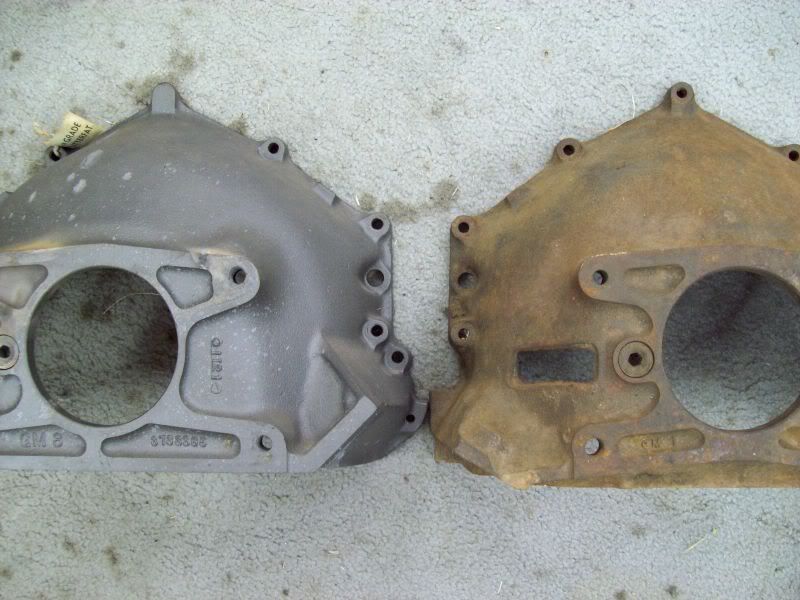
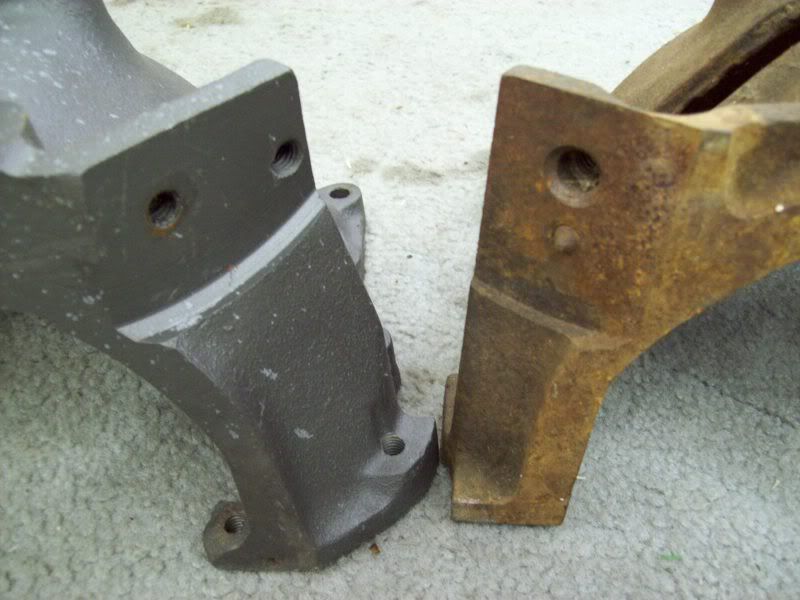
For an early Vette, a truck housing (as pictured above) would FUNCTION perfectly, but of course would not be "correct". If a person were in a bind to get their car together and a truck housing was all that was available at the time, it could be used as an interim housing until a correct one could be located.
Tom Parsons
Last edited by DZAUTO; Nov 29, 2011 at 04:41 PM.
Melting Slicks
Joined: Aug 2011
Posts: 3,186
Likes: 266
