


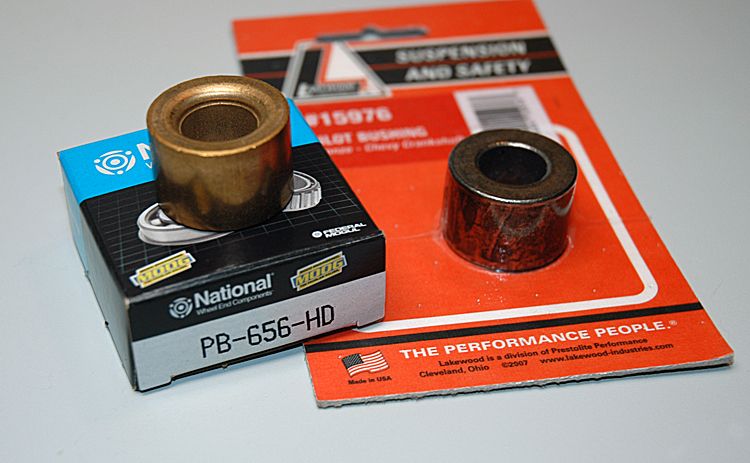
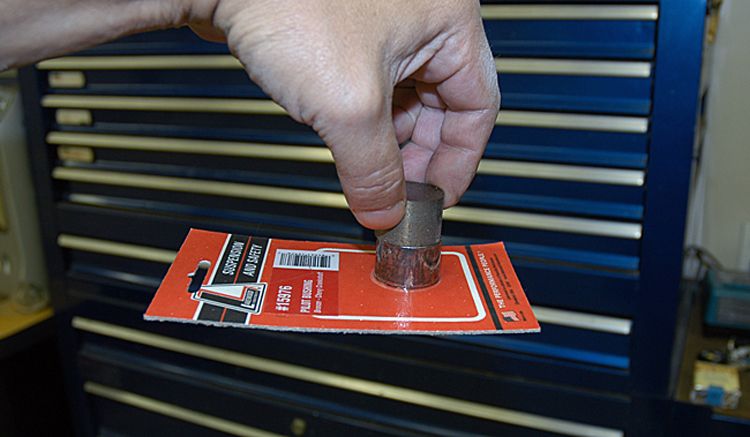


pilot bushing

Thread Starter
Drifting


Joined: Jul 2004
Posts: 1,554
Likes: 168
From: Wi
Safety Car


Joined: Mar 2009
Posts: 4,191
Likes: 951
From: Corpus Christi, TX

These are a new item. Probably not enough data from users to give an informed opinion. They certainly will not damage the pilot shaft on the transmission main drive gear. Kevlar is plastic. Cant imagine they would outlast the stock oilite bushings.
Do yourself a favor and get a roller pilot bearing.
I will now get jeers from half the foeum members and cheers from the other half lol
Do yourself a favor and get a roller pilot bearing.
I will now get jeers from half the foeum members and cheers from the other half lol

Melting Slicks

Joined: Feb 2007
Posts: 2,937
Likes: 163
From: OP Kansas
C2 of Year Finalist (appearance mods) 2019
I needed one for another engine and I figured that since all the tranny guys on here recommend them I would try one again, thinking they must have them figured out by now. NOPE, still junk. Now I have to pull my trans again to replace it. Never again.
Safety Car
Joined: Mar 2009
Posts: 4,191
Likes: 951
From: Corpus Christi, TX
I agree, this is the second time I tried one and they suck! I had one fail 7-8 years ago and replaced it with the bronze type. So far everything is fine.
I needed one for another engine and I figured that since all the tranny guys on here recommend them I would try one again, thinking they must have them figured out by now. NOPE, still junk. Now I have to pull my trans again to replace it. Never again.
I needed one for another engine and I figured that since all the tranny guys on here recommend them I would try one again, thinking they must have them figured out by now. NOPE, still junk. Now I have to pull my trans again to replace it. Never again.
At the risk of pissing off half the forum members (the other half agrees with me), then why did the car manufacturers convert to roller pilot bearings? They clearly don't make too many mistakes and for some mysterious reason the roller pilot bearings in later model cars seem to work for hundreds of thousands of miles without any problems whatsoever.
Yes, we have figured it out. I'm still running mine from 2004 and no longer have pop out of 4th gear problems, thrown clutch hub damper springs and every other weird failure associated with worn bronze pilot bushings. I'm willing to wager that every roller pilot bearing conversion failure is a result of improper clutch installation. The plastic alignment tool that is supplied with most clutch kits is NOT adequate for this purpose. They allow enough clutch disk misalignment to require using the transmission bolts to pull the transmission into place. If you have to use the transmission mounting bolts to apply ANY pull-in force during installation, you WILL damage the needle rollers and the pilot bearing will eventually fail and/or damage the pilot shaft on the transmission main drive gear. This will not happen if you use a spare main drive gear for an alignment tool.
Corvette Stories
The Best of Corvette for Corvette Enthusiasts

How Much Horsepower Every Corvette Engine "LOST" in 1972
Joe Kucinski
Top 10 DOs and DON'Ts for Protecting Your Convertible Top!
Michael S. Palmer
Top 10 Most Explosive Corvettes Ever Made: Power-to-Weight Ratio Ranked!
Joe Kucinski
150 hp to 1,250 hp: Every Corvette Generation Compared by the Specs That Matter
Joe Kucinski
8 Coolest Corvette Pace Cars (and Replicas) of All Time
Verdad Gallardo
Top 10 Corvette Engines RANKED by Peak Torque (70+ Years of Muscle!)
Joe Kucinski
Corvette ZR1X Will Be Pacing the Indy 500, And Could Probably Race, Too!
Verdad Gallardo
Top 10 Corvettes Coming to Mecum Indy 2026!
Brett Foote
Top 10 C9 Corvette MUST-HAVES to Fix These C8 Generation Flaws!
Michael S. Palmer
Race Director


Joined: Mar 2001
Posts: 14,619
Likes: 4,671
From: Mustang OK
2026 Corvette of the Year Finalist - Modified
2025 c1 of the Year - Modified Winner
2024 C1 of the Year Finalist - Modified
2023 C1 of the Year Finalist - Modified
2015 C1 of the Year Finalist
I've been jacking with old Chevys for about 50yrs and have always used the bronze bushings (YES, I've used a couple of roller pilot bearings and they have failed, and yes, I greased them, so I've returned to the bronze bushings). Also, $58 vs $5 is kind of hard for me to justify.
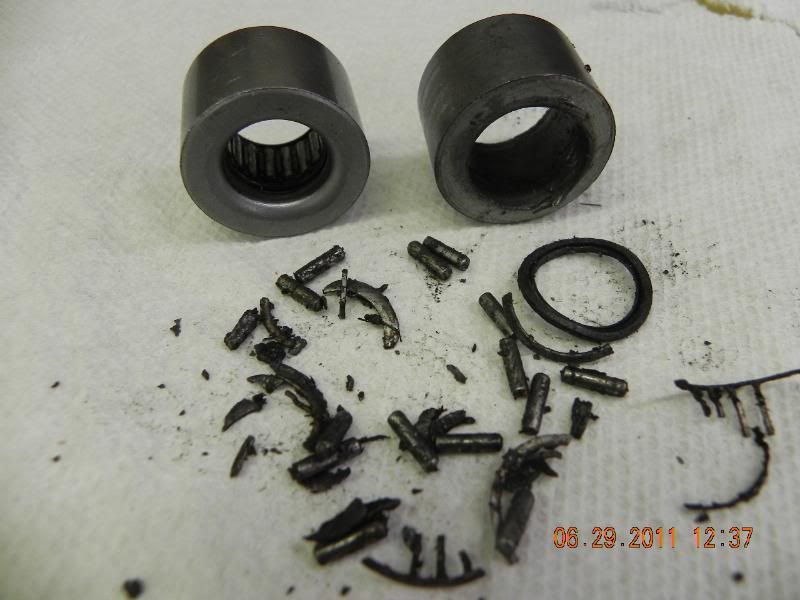
Here is a failed pilot bearing.
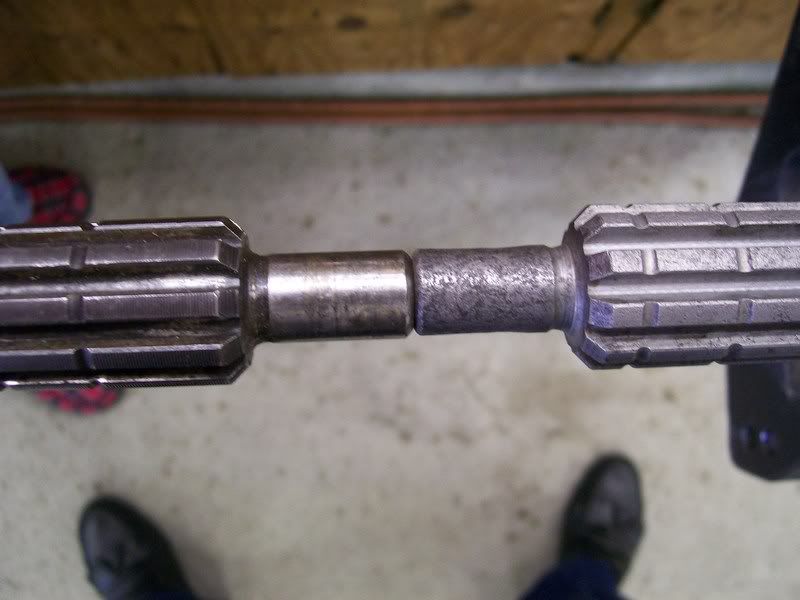
Here is what a failed pilot bearing can do to the end of an input shaft.
Tom Parsons
Here is a failed pilot bearing.
Here is what a failed pilot bearing can do to the end of an input shaft.
Tom Parsons

Race Director
Joined: Apr 2005
Posts: 11,265
Likes: 2,131
From: Bowling Green, Kentucky
Another vote for using the oillite bronze pilot bushing. 
If you want/need to install the needle bearing pilot, then make certain that you have a tool to install it in the crank correctly and without damage, AND that you use a dial indicator to verify bellhousing alignment (and correct with offset dowels if needed). The hardened needle bearings do not take kindly to any misalignment.
Larry
If you want/need to install the needle bearing pilot, then make certain that you have a tool to install it in the crank correctly and without damage, AND that you use a dial indicator to verify bellhousing alignment (and correct with offset dowels if needed). The hardened needle bearings do not take kindly to any misalignment.
Larry

Race Director

Joined: Jan 2003
Posts: 17,658
Likes: 3,665
From: Central Arkansas
I've been jacking with old Chevys for about 50yrs and have always used the bronze bushings (YES, I've used a couple of roller pilot bearings and they have failed, and yes, I greased them, so I've returned to the bronze bushings). Also, $58 vs $5 is kind of hard for me to justify.
Here is a failed pilot bearing.
Here is what a failed pilot bearing can do to the end of an input shaft.
Tom Parsons
Here is a failed pilot bearing.
Here is what a failed pilot bearing can do to the end of an input shaft.
Tom Parsons

Team Owner

Joined: Mar 2003
Posts: 26,118
Likes: 1,874
From: Greenville, Indiana
My guess, this is right on the money!

Melting Slicks


Joined: Aug 2011
Posts: 3,114
Likes: 258
I bet they would be great for boat trailers - wouldn't rust when water got inside the hubs !!

Drifting
Joined: Jul 2007
Posts: 1,671
Likes: 10
From: california
I've been jacking with old Chevys for about 50yrs and have always used the bronze bushings (YES, I've used a couple of roller pilot bearings and they have failed, and yes, I greased them, so I've returned to the bronze bushings). Also, $58 vs $5 is kind of hard for me to justify.
Here is a failed pilot bearing.
Here is what a failed pilot bearing can do to the end of an input shaft.
Tom Parsons
Here is a failed pilot bearing.
Here is what a failed pilot bearing can do to the end of an input shaft.
Tom Parsons
I have seen "Clutch dust" destroy more of those roller bearings than i can count. I would and never have installed one.
Back in the early 70s the roller bearing in the end of the crank was new tech, I did not buy into it. I saw too many cars come into my shop with chewed up input tranny shafts. When those roller bearings failed they also sometimes took out the crank. And
Melting Slicks
Joined: Aug 2011
Posts: 3,114
Likes: 258
It's always the tinkerers that come up with these latest and greatest brainwaves - they have just enough knowledge to get themselves into trouble.
Guys with experience usually have better logic on the implications of so called "improvements" and "don't like to screw with stuff that works"
Guys with experience usually have better logic on the implications of so called "improvements" and "don't like to screw with stuff that works"
Race Director
Joined: Jan 2003
Posts: 17,658
Likes: 3,665
From: Central Arkansas
Indexing the bellhousing to the engine is always a good idea even with a bronze bushing. As long as you train yourself to not sit at a light or anywhere else for that matter,with the clutch needlessly pushed in - a bronze bushing should outlast our lifetime in most cases.

Racer

Joined: Jul 2011
Posts: 330
Likes: 2
I've been jacking with old Chevys for about 50yrs and have always used the bronze bushings (YES, I've used a couple of roller pilot bearings and they have failed, and yes, I greased them, so I've returned to the bronze bushings). Also, $58 vs $5 is kind of hard for me to justify.
Tom Parsons
Tom Parsons
roller bearings are a fools dream. with so many possible causes of failure its just crazy to risk so much for absolutely no gain. Bushings are just plain common sense.
I have seen thousands of dollars of damage caused by a failed roller bearing on countless occasions
Last edited by mike16; Oct 11, 2012 at 03:57 PM.

Race Director

Joined: Aug 2004
Posts: 15,300
Likes: 2,262
From: NorCal
Indexing the bellhousing to the engine is always a good idea even with a bronze bushing. As long as you train yourself to not sit at a light or anywhere else for that matter,with the clutch needlessly pushed in - a bronze bushing should outlast our lifetime in most cases.
If the clutch is pushed in doesn't that take the load off of the pilot bearing/bushing, and put it on the throwout bearing? Unless I am thinking backwards here (which has been known to happen
) it seems like the effect is the opposite of what you are describing? 


Team Owner
Joined: Mar 2003
Posts: 26,118
Likes: 1,874
From: Greenville, Indiana
I would tend to agree with this if someone used a pilot needle bearing in an application where a bushing was originally specified.
There was a reason engineers specified the bushing (or the bearing) and I'm sure the rest of the design package complimented whichever choice the engineer picked.
Does anyone ever wonder why the BW/Muncie input shaft flops up and down and it's considered normaL?
There was a reason engineers specified the bushing (or the bearing) and I'm sure the rest of the design package complimented whichever choice the engineer picked.
Does anyone ever wonder why the BW/Muncie input shaft flops up and down and it's considered normaL?