




Engine start...I'm scared...
Thread Starter
Racer


Joined: Jun 2006
Posts: 413
Likes: 3
From: Frankfort Illinois
 Engine start...I'm scared...
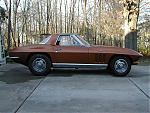
Ok I have gotten to the point where the next step is to fire the engine but to be quite honest I am scared as hell. The car has been dead for over 3 years and since the start of this restoration she has had everything rebuild, redone, refurbished and a few new things added here and there. So I guess my question is before I attach the battery feed her some gas and turn the key what is it those of you who have been in my place have missed in the past? I again plan to go over the wiring again and again. A little info on the car: its a 67 with NOM BB 427 w/tri power. The engine was was bulit by an engine shop and run on the dyno so it should run. I have an MSD ignition system and the only aditional wiring other than stock was the addition of a vintage air system. The wiring harness is new front to rear and would hate to fry it and start over. Any help or advise is greatly appreciated. Thanks Jim

Team Owner


Joined: May 2006
Posts: 37,663
Likes: 1,112
From: CA
Turn the key and have a little confidence in your work....
It will purrrr like a kitten...
Before you actually start it...JUST TURN THE KEY TO START....and watch/smell for smoke just in case...
Then give it a try...
It will purrrr like a kitten...
Before you actually start it...JUST TURN THE KEY TO START....and watch/smell for smoke just in case...
Then give it a try...

Team Owner
Joined: Aug 2007
Posts: 58,061
Likes: 7,145
Army
As an F-14 test pilot of many years once told me on the flight line.
"At some point you just have to put the tools down and go 'round the horn'"
"Round the horn" is the technique for manipulating the throttle to start these planes!
"At some point you just have to put the tools down and go 'round the horn'"
"Round the horn" is the technique for manipulating the throttle to start these planes!

Melting Slicks


Joined: Jul 2004
Posts: 2,451
Likes: 315
From: Scottsdale AZ
Have you considered getting the guy from the engine shop to come over for a couple of hours and go through everything with you and then be there when you crank it up? since it was no doubt a nice job for them with the dyno test and all seems like they would spare a couple of hours for a good customer and good reference.

Safety Car


Joined: Nov 2004
Posts: 4,182
Likes: 94
From: going faster miles an hour...with the radio on in browns mills new jersey
I'd make sure I had my battery hooked up with a quick disconnect.
It's also a good idea to put bits of a brown paper bag beneath the fuel lines atop the engine - Tri-Power fuel lines can be a pain. The paper bag bits will immediately alert you to any leaks.
Practice the steps of the 'Happy Dance' you'll soon be doing!
It's also a good idea to put bits of a brown paper bag beneath the fuel lines atop the engine - Tri-Power fuel lines can be a pain. The paper bag bits will immediately alert you to any leaks.
Practice the steps of the 'Happy Dance' you'll soon be doing!
Corvette Stories
The Best of Corvette for Corvette Enthusiasts

10 Reasons the C6 Z06 is Still A Performance Benchmark After 20 Years
Joe Kucinski
How Much Horsepower Every Corvette Engine "LOST" in 1972
Joe Kucinski
Top 10 DOs and DON'Ts for Protecting Your Convertible Top!
Michael S. Palmer
Top 10 Most Explosive Corvettes Ever Made: Power-to-Weight Ratio Ranked!
Joe Kucinski
150 hp to 1,250 hp: Every Corvette Generation Compared by the Specs That Matter
Joe Kucinski
8 Coolest Corvette Pace Cars (and Replicas) of All Time
Verdad Gallardo
Top 10 Corvette Engines RANKED by Peak Torque (70+ Years of Muscle!)
Joe Kucinski
Corvette ZR1X Will Be Pacing the Indy 500, And Could Probably Race, Too!
Verdad Gallardo
Top 10 Corvettes Coming to Mecum Indy 2026!
Brett Foote
Team Owner


Joined: Mar 2002
Posts: 44,653
Likes: 1,827
From: Huntsville AL

Oh as for the engine start, give it a once over and fire it up.
Last edited by Mr D.; Jul 29, 2013 at 03:47 PM.
Team Owner
Joined: Aug 2007
Posts: 58,061
Likes: 7,145
Army
Hell if you ain't scared around these cars once in a while what's the point of having 'em?
Mr D.: My last day on the Navy Depot flight line my pilot buddy stood a Tomcat on its turkey feathers on takeoff about 50 yards from me as a tribute. Etched in my memory forEVER!

Thanks for you service!
Last edited by Frankie the Fink; Jul 29, 2013 at 05:33 PM.

Le Mans Master

Joined: Aug 2000
Posts: 5,297
Likes: 3
From: Carlisle PA
PA Events Coordinator
Damn man, BTDT. The first time I fired mine up it caught fire! I said F- it! Had it hauled to the guy who built the motor and the dash fried there. The engine fire was the most scary thing I have experienced.



Le Mans Master
Joined: Feb 2008
Posts: 5,214
Likes: 447
From: NJ Hockey beer league
No guts, no glory. If you have done good work and been carefull then you can expect a good outcome. Been there many times and never dissapointed. A few minor things sometimes reveal themselves but are usually easily dealt with. Go for it!  Pilot Dan
Pilot Dan



Melting Slicks
Joined: Aug 2004
Posts: 3,078
Likes: 101
From: Riverhead New York


Melting Slicks


Joined: Jul 2000
Posts: 2,097
Likes: 99
From: Boston MA
Essential:
1. Have a fire extinguisher and a garden hose close by and ready to go.
2. Make sure you have a quick disconnect on the battery.
3. After it starts, keep checking for leaks.
Nice to have:
1. Start it outdoors.
2. Have a helper.
If this engine has been run before on a dynometer, you shouldn't worry. If there's an electrical screw-up, you'll want the ability to quickly and easily disconnect the battery.
1. Have a fire extinguisher and a garden hose close by and ready to go.
2. Make sure you have a quick disconnect on the battery.
3. After it starts, keep checking for leaks.
Nice to have:
1. Start it outdoors.
2. Have a helper.
If this engine has been run before on a dynometer, you shouldn't worry. If there's an electrical screw-up, you'll want the ability to quickly and easily disconnect the battery.
Le Mans Master
Joined: Feb 2008
Posts: 6,463
Likes: 1,889
From: Folsom CA
If it ran on a dyno the cam is broken in and the timing is set you should have a very easy start up. Fill coolant with the front of the engine higher than the back, nose up on driveway works or jack stands under the front end, this helps burp all air from your system. Fill down the thermostat opening if possible, have the heater on wide open full heat to help purge air. Listen as you fill for air escaping, if you hear air, stop and wait, if you keep pouring while hearing air escaping you may trap air in the system. If you dump cold water into a warm block, say 90 degree day, wait at least 15 minutes to start the engine. This allows the block and pistons to adjust to the cold water you just pumped in. You don't want cold water to shrink your cyl wall just before start up.
You can avoid this delay by filling with water warmer than the engine temp at time of fill.
Have a helper around to sit and watch the gages, if you have oil pressure look at everything else while it runs, if no oil pressure shut down and search for the cause.
Once the engine has run and the thermostat is open shut down and re tighten all hose connections. Warm rubber will loosen the clamps, Radiator Hoses, Overflow tank hoses and Heater Hoses. tighten all clamps while warm and you should be good to go. Check your fluids again after the first start up, top them off and enjoy.
Remember a brand new engine will create more heat than an old broken in engine so watch your Temp close the first 500 miles.
One more thing, if the car has been sitting more than 6 mos, drain the old gasoline and replace with new fresh gas. Many engines have stuck valves on start up with old gasoline.
It is a pain to flush the old fuel out but it is a much bigger problem to need a rebuild of your new engine in addition to still needing a fuel flush.
You can avoid this delay by filling with water warmer than the engine temp at time of fill.
Have a helper around to sit and watch the gages, if you have oil pressure look at everything else while it runs, if no oil pressure shut down and search for the cause.
Once the engine has run and the thermostat is open shut down and re tighten all hose connections. Warm rubber will loosen the clamps, Radiator Hoses, Overflow tank hoses and Heater Hoses. tighten all clamps while warm and you should be good to go. Check your fluids again after the first start up, top them off and enjoy.
Remember a brand new engine will create more heat than an old broken in engine so watch your Temp close the first 500 miles.
One more thing, if the car has been sitting more than 6 mos, drain the old gasoline and replace with new fresh gas. Many engines have stuck valves on start up with old gasoline.
It is a pain to flush the old fuel out but it is a much bigger problem to need a rebuild of your new engine in addition to still needing a fuel flush.
Last edited by Westlotorn; Jul 30, 2013 at 03:38 PM.
Thread Starter
Racer
Joined: Jun 2006
Posts: 413
Likes: 3
From: Frankfort Illinois
Countdown
Ok, Saturday is Start day. I installed the oil pressure line today and primed the engine to see if I had oil pressure--Check oil pressure. I filled it with coolant...no leaks another check. I went over all the wiring and it seems like all is good just need to hook it up to the battery and see what happens. There is no gas in the car so what is the best way to prime it in terms of fuel delivery? I am waiting until a friend of mine can be present to have another set of eyes and another nose to hopefully enjoy the sweet smell of hydrocarbons oozing out the side pipes opposed to the smell of wires frying. I will post a video of the car either running or on fire...stay tuned to see what happens after this girls 3 year slumber...Thanks Jim

