When you click on links to various merchants on this site and make a purchase, this can result in this site earning a commission. Affiliate programs and affiliations include, but are not limited to, the eBay Partner Network.
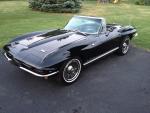
I was able to run the LS3 64 up on one of those 4 corner scales today. It was really out of interest only, not trying to setup the car or anything but I was really impressed with the front to rear weight distribution of nearly bang on 50/50 (I expect the 10kg difference is even within the error of the scale).
Also the total weight of 1310kg / 2880lb is a fair chunk lighter than the manufacturer number I could find for a 64 coupe (3180lb), especially given I havent done anything else to lighten the car.
It seems the LS conversion has some other nice benefits, would be interesting to see these numbers for a stock SBC/BBC midyear !
Now all you have to do is change out spring weight to match the weight lost for ride-ability...
I'm lucky since I have aftermarket chassis(s) with adjustable coil-overs that let me change out springs to match weight added or lost, balance weight left to right and front to rear, an adjust the shocks from soft to stiff, for better ride quality.
When I sit down in car, right rear tire still has 10 lbs more weight on it than left rear.
If I can find a place locally, I'd like to put my stock '64 on the scales just to see how it compares. I was always under the impression that the 63-67 Corvette had a slightly reward weight bias with the small block and that going to an all aluminum LS series engine would just aggravate the situation....apparently that is not the case. As you stated, I always thought the car was in the 3100 lb range as well.
I was able to run the LS3 64 up on one of those 4 corner scales today. It was really out of interest only, not trying to setup the car or anything but I was really impressed with the front to rear weight distribution of nearly bang on 50/50 (I expect the 10kg difference is even within the error of the scale).
Also the total weight of 1310kg / 2880lb is a fair chunk lighter than the manufacturer number I could find for a 64 coupe (3180lb), especially given I havent done anything else to lighten the car.
It seems the LS conversion has some other nice benefits, would be interesting to see these numbers for a stock SBC/BBC midyear !
Weight depends on how the car is configured. "Curb Weight" is with full fluids including fuel and all normal equipment - wheel covers, spare tire, jack and tools.
GM's "shipping weight" is as above, but with only three gallons of factory serviced fuel, so at six pounds per gallon, the difference for the same model/option configuration would be about 102 pounds.
Back in the sixties I weighed my SWC at a truck scale on a road trip. It came in at 3050 pounds with about half a tank of fuel and a small suitcase in back, so actual curb weight was about 3100.
The AMA specs list shipping weights, which seem a little low, and option weights, a few of which actually decrease weight of the base model like an aluminum inlet manifold SHP engine option compared to the base model engine with a cast iron manifold, and the aluminum case four-speed is lighter than the base cast iron case three-speed.
The weight of a "dressed" Corvette aluminum block LS engine is something on the order of a little over 500 pounds, which would include the flywheel (with a manual trans) and all front end accessories, which would include an AC compressor, but not a fan since they have electric fans.
An equivalently dressed Corvette Gen I small block would come in at about 75-100 pounds more, and that would include the engine driven clutch fan, which adds, maybe, about five pounds.
If I can find a place locally, I'd like to put my stock '64 on the scales just to see how it compares. I was always under the impression that the 63-67 Corvette had a slightly reward weight bias with the small block and that going to an all aluminum LS series engine would just aggravate the situation....apparently that is not the case. As you stated, I always thought the car was in the 3100 lb range as well.
The City of Virginia Beach has a dump just west of Centerville Turnpike and East of I 64 that has a scale. They weighed my truck the last time I was there. As you ride into the dump they made me run over the scale and they gave me the weight. It was free.
Now all you have to do is change out spring weight to match the weight lost for ride-ability...
Yeah I have the semi-coilover kit with global west arms and I actually chose the lighter spring to try and compensate for the LS3. When I dropped the engine in the first time on stock suspension the car sat *a lot* higher !
If I can find a place locally, I'd like to put my stock '64 on the scales just to see how it compares. I was always under the impression that the 63-67 Corvette had a slightly reward weight bias with the small block and that going to an all aluminum LS series engine would just aggravate the situation....apparently that is not the case. As you stated, I always thought the car was in the 3100 lb range as well.
According to the magazine roadtests, it does have a rear weight bias....at least with the BIG BLOCK engine!
According to the magazine roadtests, it does have a rear weight bias....at least with the BIG BLOCK engine!
That's a famous and very questionable road test... 12.8 ET with a 3.36 axle and the OE bias ply tires!? No other "showroom stock" SHP big block test ever came even close to this, even with a shorter axle ratio.
I also question the "curb weight"; 3180 would be about right for a base no option small block. I don't think they actually weighed the test car, but just used the AMA specs without adding the weights of the options, and the L-72 added about 150 pounds, most of it on the front end. The KO wheels also added a good amount of weight due to the heavy cast iron adapters and nuts.
GM claimed the '63 weight distribution was 48/52, but 49/51 is probably more accurate. Most big blocks are around 52/48, and measuring weight distribution "with driver" will always result in more rear bias than at curb weight because most of the driver's (and passenger's) weight is borne by the rear.
I had my 65 coupe with LS3/TKO 600 weighed on four wheel scales at a Good Guys event in Sept. Car had 3/4 tank of gas and all fluids. Came in at 2954 lbs and almost 50/50 F/R. No driver in the car.
Was pretty surprised and impressed with those #'s.
That's a famous and very questionable road test... 12.8 ET with a 3.36 axle and the OE bias ply tires!? No other "showroom stock" SHP big block test ever came even close to this, even with a shorter axle ratio.
I also question the "curb weight"; 3180 would be about right for a base no option small block. I don't think they actually weighed the test car, but just used the AMA specs without adding the weights of the options, and the L-72 added about 150 pounds, most of it on the front end. The KO wheels also added a good amount of weight due to the heavy cast iron adapters and nuts.
GM claimed the '63 weight distribution was 48/52, but 49/51 is probably more accurate. Most big blocks are around 52/48, and measuring weight distribution "with driver" will always result in more rear bias than at curb weight because most of the driver's (and passenger's) weight is borne by the rear.
Duke
I always questioned that as well until it recently came to light that car was actually equipped with a HD 427 which was basically an iron head L88. Even then it is an impressive time with the rear end and tires. Many ringers in those tests when the manufactures had time to prepare a car for those tests back in the day.
Designer Imagines A Corvette That Looks More Like a Corvette Than the Corvette
Slideshow: A Jaguar designer's personal project imagines what a modern front-engined Corvette might look like if Chevrolet revisited the golden age of the Stingray.



 LS3 Midyear Weight Distribution



















 .
.