




Caster

Thread Starter
Melting Slicks


Joined: Apr 2009
Posts: 2,564
Likes: 658
From: Virginia Beach VA
C2 of the Year Finalist - Modified 2020
C2 of Year Finalist (performance mods) 2019
 Caster
I now have Global West upper control arms and Del A Lum bushings. I am getting my car aligned Wednesday. GW recommends 3 degrees caster on the driver side and 3 1/2 degrees on the right with power steering. Other venders recommend up to 4.75 degrees. I don’t see a downside to increasing the caster as I welcome more resistance. I have Steeroids R & P. So do you guys have any opinions on this? I will not be tracking the car, just street driving. Thanks for your opinions.

Melting Slicks<br><img src="/forums/images/ranks/3k-4k.gif" border="0">

Joined: Mar 2008
Posts: 3,274
Likes: 2,220
From: Colorado Springs Colorado
2024 C2 of the Year Finalist - Modified
2023 C2 of the Year Finalist - Unmodified
Wouldn't Global West know their product best?
Race Director


Joined: Feb 2007
Posts: 15,491
Likes: 8,963
From: northern california
C2 of Year Finalist (track prepared) 2019
I can't think of a good reason to set R caster different from L caster. If that were mine, I would make both sides the same.
3 degrees is a good value whether you have manual or power steering. If you want to go to 5 degrees, you really want to have PS (and since you have the Steeroids R&P, I assume you do.) because the steering effort will be measurably greater.
Jim
3 degrees is a good value whether you have manual or power steering. If you want to go to 5 degrees, you really want to have PS (and since you have the Steeroids R&P, I assume you do.) because the steering effort will be measurably greater.
Jim
Thread Starter
Melting Slicks
Joined: Apr 2009
Posts: 2,564
Likes: 658
From: Virginia Beach VA
C2 of the Year Finalist - Modified 2020
C2 of Year Finalist (performance mods) 2019
Here is what Jim at GW said, you will notice a huge difference from 1 to 3 degrees but very little from 3 to 5 degrees. Vette Brakes recommends 4.75 on both sides and I have seen others recommend 4 to 5. It surprised me that there opinions varied so much. My steering with the R & P is pretty easy to turn so that is the reason I wanted to go at least 4 degrees.
Thread Starter
Melting Slicks
Joined: Apr 2009
Posts: 2,564
Likes: 658
From: Virginia Beach VA
C2 of the Year Finalist - Modified 2020
C2 of Year Finalist (performance mods) 2019
I can't think of a good reason to set R caster different from L caster. If that were mine, I would make both sides the same.
3 degrees is a good value whether you have manual or power steering. If you want to go to 5 degrees, you really want to have PS (and since you have the Steeroids R&P, I assume you do.) because the steering effort will be measurably greater.
Jim
3 degrees is a good value whether you have manual or power steering. If you want to go to 5 degrees, you really want to have PS (and since you have the Steeroids R&P, I assume you do.) because the steering effort will be measurably greater.
Jim
Race Director
Joined: Feb 2007
Posts: 15,491
Likes: 8,963
From: northern california
C2 of Year Finalist (track prepared) 2019
On our two track cars, I initially set caster to 5 degrees. Both had manual steering at the time. After a few sessions, my bride complained about the steering effort. When I dialed back the caster on her car to 3 degrees she was a lot happier.
So, my experience is that the difference in effort between 3 and 5 degrees is significant.
My steering with the R & P is pretty easy to turn so that is the reason I wanted to go at least 4 degrees.
Jim
Corvette Stories
The Best of Corvette for Corvette Enthusiasts

5 Best & 5 Worst Corvette Daily Drivers
Joe Kucinski
The Headlights of Every Corvette Generation Explained
Joe Kucinski
5 Best & 5 Most Overrated Corvette Track Packages of All Time!
Joe Kucinski
Every 2027 Corvette Engine Explained
Joe Kucinski
Designer Imagines A Corvette That Looks More Like a Corvette Than the Corvette
Verdad Gallardo
10 Ugly Corvettes That We Still Kinda Love
Joe Kucinski
Top 10 Most Expensive Corvettes Ever Sold on Bring A Trailer
Brett Foote
10 Things Every Corvette Owner Needs (2026 Edition)
Michael S. Palmer
8 Most "Only Corvette Owners Understand" Quirks and Problems
Pouria Savadkouei
Thread Starter
Melting Slicks
Joined: Apr 2009
Posts: 2,564
Likes: 658
From: Virginia Beach VA
C2 of the Year Finalist - Modified 2020
C2 of Year Finalist (performance mods) 2019
If this refers to a difference in steering effort, then I respectfully disagree.
On our two track cars, I initially set caster to 5 degrees. Both had manual steering at the time. After a few sessions, my bride complained about the steering effort. When I dialed back the caster on her car to 3 degrees she was a lot happier.
So, my experience is that the difference in effort between 3 and 5 degrees is significant.
Inside the control valve for your power steering will be (or should be) a replaceable spring which determines the overall amount of assistance your PS provides. To vary the steering effort to your liking, you ought to experiment with different springs.
Jim
On our two track cars, I initially set caster to 5 degrees. Both had manual steering at the time. After a few sessions, my bride complained about the steering effort. When I dialed back the caster on her car to 3 degrees she was a lot happier.
So, my experience is that the difference in effort between 3 and 5 degrees is significant.
Inside the control valve for your power steering will be (or should be) a replaceable spring which determines the overall amount of assistance your PS provides. To vary the steering effort to your liking, you ought to experiment with different springs.
Jim

Race Director
Joined: May 2000
Posts: 12,712
Likes: 2,271
The benefits of high caster are better straight line tracking and self-aligning torque (which increases "steering feel") and increased negative camber gain on the inside wheel in a corner, which reduces understeer.
The downside is greater steering effort and kickback (especially in the case of manual steering). So it depends on the specific car and driver's preferences.
On my cars with power steering caster is set at the maximum positive value available within the adjustment range, equal on both sides. (Camber is at the maximum negative attainable value up to negative one degree, also equal on both sides.)
Camber and/or caster bias dates from the days of highly crowned dirt roads, say the 1920s. Modern paved roads, especially interstate highways have very little crown. So on a straight and level interstate highway with equal camber and caster on both sides, the car should very slowly drift to the right if you take your hands off the steering wheel, and this drift will be purely a function of road crown.
Prior to beginning to run my Cosworth Vega (manual steering) at track events in the early eighties, I set camber to negative one degree, but could only get zero caster. I wanted +1-2 degrees. Visual inspection revealed that I could get more caster by swapping the upper control arms side to side, so I did that and set it at the minimum caster setting available in that configuration, which was six degrees.
The test drive revealed that it turned in like a gokart, but had enough kick back to damn near break your arms, so it was back to the garage to swap the control arms back to their original location and live with zero caster.
Later I installed offset bushings on the upper control arms and was able to get +1 caster, which noticeably improved turn-in and steering feel without any objectionable kickback.
Duke
The downside is greater steering effort and kickback (especially in the case of manual steering). So it depends on the specific car and driver's preferences.
On my cars with power steering caster is set at the maximum positive value available within the adjustment range, equal on both sides. (Camber is at the maximum negative attainable value up to negative one degree, also equal on both sides.)
Camber and/or caster bias dates from the days of highly crowned dirt roads, say the 1920s. Modern paved roads, especially interstate highways have very little crown. So on a straight and level interstate highway with equal camber and caster on both sides, the car should very slowly drift to the right if you take your hands off the steering wheel, and this drift will be purely a function of road crown.
Prior to beginning to run my Cosworth Vega (manual steering) at track events in the early eighties, I set camber to negative one degree, but could only get zero caster. I wanted +1-2 degrees. Visual inspection revealed that I could get more caster by swapping the upper control arms side to side, so I did that and set it at the minimum caster setting available in that configuration, which was six degrees.
The test drive revealed that it turned in like a gokart, but had enough kick back to damn near break your arms, so it was back to the garage to swap the control arms back to their original location and live with zero caster.
Later I installed offset bushings on the upper control arms and was able to get +1 caster, which noticeably improved turn-in and steering feel without any objectionable kickback.
Duke
Last edited by SWCDuke; Dec 19, 2017 at 09:53 AM.
Melting Slicks
Joined: Sep 2005
Posts: 2,670
Likes: 134
From: merritt island fl
C1 of Year Finalist (stock) 2019
2016 C1 of the Year Finalist
2015 C2 of the Year Finalist
.
Inside the control valve for your power steering will be (or should be) a replaceable spring which determines the overall amount of assistance your PS provides. To vary the steering effort to your liking, you ought to experiment with different springs.
Jim[/QUOTE]
I went through the futile search trying to find the heaver spring. The are unobtanium. I did manage to locate an old OEM valve and cannibalized the spring from it.
Inside the control valve for your power steering will be (or should be) a replaceable spring which determines the overall amount of assistance your PS provides. To vary the steering effort to your liking, you ought to experiment with different springs.
Jim[/QUOTE]
I went through the futile search trying to find the heaver spring. The are unobtanium. I did manage to locate an old OEM valve and cannibalized the spring from it.

Drifting


Joined: Dec 2006
Posts: 1,947
Likes: 407
From: Bronx New York
Not sure why they would spec out a lower caster on the LH side as that could make the car pull to the left.
In general more caster is a good thing but if you get to the limits for the suspension you could get into caster wobble.
In general more caster is a good thing but if you get to the limits for the suspension you could get into caster wobble.

Team Owner

Joined: Mar 2003
Posts: 26,118
Likes: 1,874
From: Greenville, Indiana
Race Director


Joined: Aug 2004
Posts: 15,330
Likes: 2,271
From: NorCal
Possibly an unnecssary attemt tp theoretically correct for road crown?
Thread Starter
Melting Slicks
Joined: Apr 2009
Posts: 2,564
Likes: 658
From: Virginia Beach VA
C2 of the Year Finalist - Modified 2020
C2 of Year Finalist (performance mods) 2019
Thanks for your opinions and advice. I am going to go with 4.5 on both sides unless my alignment guy changes my mind. I am looking forward to the change.

Le Mans Master

Joined: Sep 2002
Posts: 6,569
Likes: 2,409
From: Redacted
Mark, who are you using locally for the alignment? I'm headed out next week for 6 months, but will be back next summer and high on the priority list is the disc brake swap, wheels and tires, followed by a performance alignment.
Hope all is well!
Hope all is well!
Last edited by FLYNAVY30; Dec 19, 2017 at 06:29 PM.
Thread Starter
Melting Slicks
Joined: Apr 2009
Posts: 2,564
Likes: 658
From: Virginia Beach VA
C2 of the Year Finalist - Modified 2020
C2 of Year Finalist (performance mods) 2019
Bert’s alignment, they are across the street from the U Haul place on Virginia Beach Blvd between Witchduck and Independance. I understand they are the best around for older cars. Have fun on your deployment and be safe.
Race Director
Joined: May 2000
Posts: 12,712
Likes: 2,271
deCarbon type dampers typically maintain their original damping characteristics until end of life when they completely fail.
One day the Merc front end goes into a violent shimmy at freeway speed the likes of which I have never experienced. So I removed one end of the damper and it was completely limp. Fortunately they are inexpensive (about 25 bucks) and easy to change.
I'm now on my second replacement. The first replacement failed as I departed Phoenix to return to LA about ten years ago. It was real tricky drive because I had to keep the speed less than about 60 or at least seventy and get up and down through the 60-70 speed range as fast as possible, which is where the shimmy occurred.
Duke
Last edited by SWCDuke; Dec 20, 2017 at 09:24 AM.
Thread Starter
Melting Slicks
Joined: Apr 2009
Posts: 2,564
Likes: 658
From: Virginia Beach VA
C2 of the Year Finalist - Modified 2020
C2 of Year Finalist (performance mods) 2019
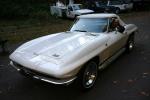
I got the alignment this morning and took the car out for a drive. The caster was set at 4.25 degrees positive. The steering resistance is up and the car tracks better at high speed. The steering is very crisp in the turns. This car just keeps getting better and better.
Melting Slicks
Joined: Apr 2002
Posts: 3,105
Likes: 2,367
From: Allison Park, PA
Tom