When you click on links to various merchants on this site and make a purchase, this can result in this site earning a commission. Affiliate programs and affiliations include, but are not limited to, the eBay Partner Network.
Today I finally began experimenting with springs on the L-79. Prior to this, using a dial back light with VAC plugged and both OE springs, I confirmed that total centrifugal advance was coming in somewhere north of 4,000 rpm. I tried many combinations of springs (Mr. Gasket 926G). With one black (lightest) and one OE I had 36* all in at 3,600 rpm. All further combinations came in under 2,800, the closest being Two Gold springs (kits heaviest) with 36* all in at 2,650 rpm.
I usually run ethanol free premium 90-91 octane. Before I take her out and lug her around listening for knock I figure the conservative route is the OE and Black spring for 3,600.
try one silver spring and one black spring.
Your 3600 rpm figure is too high should be closer to 2,500 to 2,800.
Have you read the paper by Lars Grimsrud on recurvng the distributor.
You can obtain a current copy of it by emailing him at v8fastcars@msn.com
below is a link to an older copy. https://www.digitalcorvettes.com/for...ad.php?t=75830
I have read all the articles a couple of weeks back. Starting down this road I discovered a failing balancer I had to swap, plug wires that were sloppy, built a new set, cap and rotor worn and replaced. Also installed a B-26 VAC. Finally got back to it today. So if 2,500-2,800 is ok then the two gold springs fully advanced at 2,650 is fine, I can button her up, go for a ride. I'll report back. Thanks
I have read all the articles a couple of weeks back. Starting down this road I discovered a failing balancer I had to swap, plug wires that were sloppy, built a new set, cap and rotor worn and replaced. Also installed a B-26 VAC. Finally got back to it today. So if 2,500-2,800 is ok then the two gold springs fully advanced at 2,650 is fine, I can button her up, go for a ride. I'll report back. Thanks
If you get no detonation or "trailer hitching" I'd leave it at that. That's a nice aggressive advance curve if it works.
Family beckons so this is what I have and where I left it:
Two Gold springs bring 36* advance all in at 2,650 rpm
Reconnected the VAC and lugged her around in 4th at 20MPH (3.55 rear) and stomped on her. She is a vert with the top and windows up, rear exhaust. I did not hear any pinging or banging. I assume I would hear it if it were there even over the wind noise so it checks that box. Also no surging at steady cruise indicating no excessive vacuum advance, also good.
Back in the garage I reconnected the vacuum gauge, VAC plugged, timing light on and all (4) idle mixture screws seated then backed out (1) turn. Have not tuned the mixture for max vacuum yet.
Fired her up and adjusted the idle to 14" manifold vacuum. This results in a 970 rpm idle, 14" Hg and 24* advance on the light. Now I can adjust the idle down to 750 rpm which shows 9* BTDC (the initial timing listed for the L-79) but then the manifold vacuum drops down around 10"Hg.
With the VAC reconnected and the idle adjusted to 14" Hg (970 rpm), the timing shows 40* which works. The B-26 generates 8* at the distributor/16* at the crank. 40*-24* = 16* so the B-26 is doing it's job.
So I think the curve is where it needs to be. My question is where to set the idle. 750 rpm, 9*BTDC and 10"Hg or
970 rpm, 24* and 14" Hg (satisfies the 2" rule of the B-26 VAC)
Family beckons so this is what I have and where I left it:
Two Gold springs bring 36* advance all in at 2,650 rpm
Reconnected the VAC and lugged her around in 4th at 20MPH (3.55 rear) and stomped on her. She is a vert with the top and windows up, rear exhaust. I did not hear any pinging or banging. I assume I would hear it if it were there even over the wind noise so it checks that box. Also no surging at steady cruise indicating no excessive vacuum advance, also good.
Back in the garage I reconnected the vacuum gauge, VAC plugged, timing light on and all (4) idle mixture screws seated then backed out (1) turn. Have not tuned the mixture for max vacuum yet.
Fired her up and adjusted the idle to 14" manifold vacuum. This results in a 970 rpm idle, 14" Hg and 24* advance on the light. Now I can adjust the idle down to 750 rpm which shows 9* BTDC (the initial timing listed for the L-79) but then the manifold vacuum drops down around 10"Hg.
With the VAC reconnected and the idle adjusted to 14" Hg (970 rpm), the timing shows 40* which works. The B-26 generates 8* at the distributor/16* at the crank. 40*-24* = 16* so the B-26 is doing it's job.
So I think the curve is where it needs to be. My question is where to set the idle. 750 rpm, 9*BTDC and 10"Hg or
970 rpm, 24* and 14" Hg (satisfies the 2" rule of the B-26 VAC)
What say you?
Thanks for all the help,
Paul
Your mechanical advance travel range is 9-36 degrees or 27 degrees (36 @ ~2650 minus the ~9 @ 750). 27 degrees for the advance travel range is a little long. The factory L79 specification is 24 degrees. This extra long advance travel with the proper 36 degrees of total WOT advance is forcing you to lower the idle advance to 9 degrees (or less), and the 9 degrees initial timing is not enough initial advance to maintain good vacuum at idle. The advance travel range needs to be shortened so you can safely raise the idle advance timing and not exceed the preferred 36 WOT advance.
In the Mr Gasket kit there is a small round bushing. It replaces the "stop bushing" in the distributor drawing below (a bushing that is likely to be worn). The new bushing should reduce the centrifugal advance travel from 27 degrees, to around 22-24 degrees (depending on how hard the bushing is squeezed with pliers to mold it to the distributor pin). This change lets you set the idle advance at 12-14 degrees for good vacuum, and still limit the WOT advance to 36 degrees (12 initial + 24 in advance travel = 36 degrees total).
GM installed at least four different diameter stop bushings to use the same basic distributor in various engine applications, to match the advance range with the cam and compression of each engine configuration. The smaller bushings offer more travel range (36 degrees on low performance engines), and fatter bushings offer less travel (24 degrees on the Special High Performance engines) to allow for a more aggressive (higher) idle speed timing advance that helps to increase idle vacuum. With a high overlap cam, an even more aggressive short advance travel range may be needed to raise the idle timing advance even higher, so some extra fat aftermarket bushings can limit the advance travel down to ~20 degrees. The best bushing and advance travel for your engine may not be with the fattest bushing, so some repeat trial and error testing may be needed (similar to the spring testing exercise). I added a photo of a Summit Racing distributor tuning kit that shows four stop bushings for optimal fine tuning of both idle advance and WOT advance timing (a source, if you don't have a bushing).
Ed, first thank you for taking the time to explain that. The Mr. Gasket kit did have a single bushing included but with no instructions, I did not know what it was for. So if I understand the issue here, I can replace the stop bushing with various thickness bushings and I should see my total advance, all in, fall. I would then rotate the distributor until I am again at 36* max. By doing that I would be in effect be increasing my initial timing at idle which would begin moving me back to a vacuum and idle rpm closer to what I had before I started this process (14" @ 750 rpm). Does that sound correct?
I will try to locate and order the Summit tuning kit pictured in case the single Mr. Gasket bushing is inadequate. The distributor picture provided is good although I am not clear as to where/how the bushing is installed. i will open mine back up this morning and try to learn me some. Thanks again for the intell.
A follow up question as well. I found the Summit kit pictured (SUM-850120). Under their applications tab it shows it as being used for MSD and the Summit Pro Billet distributor. Mine is a OE modified with a SE ignition. Still cool to order and use that kit?
Ed, first thank you for taking the time to explain that. The Mr. Gasket kit did have a single bushing included but with no instructions, I did not know what it was for. So if I understand the issue here, I can replace the stop bushing with various thickness bushings and I should see my total advance, all in, fall. I would then rotate the distributor until I am again at 36* max. By doing that I would be in effect be increasing my initial timing at idle which would begin moving me back to a vacuum and idle rpm closer to what I had before I started this process (14" @ 750 rpm). Does that sound correct?
I will try to locate and order the Summit tuning kit pictured in case the single Mr. Gasket bushing is inadequate. The distributor picture provided is good although I am not clear as to where/how the bushing is installed. i will open mine back up this morning and try to learn me some. Thanks again for the intell.
Originally Posted by C2Dude
A follow up question as well. I found the Summit kit pictured (SUM-850120). Under their applications tab it shows it as being used for MSD and the Summit Pro Billet distributor. Mine is a OE modified with a SE ignition. Still cool to order and use that kit?
You have the mechanics and math correct.
The bushing is a press fit on a steel pin that is part of the upper plate, and the pin sticks down through a slot in the lower plate where the two advance springs are located. The pin travel in the ends of the slot set the end limits of the advance travel. The bushings are soft material, brass or plastic, so they can be squeezed to make a pinch fit to the steel pin. The soft material will wear, and it's common for a bushing to split and fall off in an old distributor.
It's difficult to see the pin with the distributor installed, but you can feel it with a finger under the advance plates. Sometimes you can feel the bushing, or half bushing if it's split and part of it is still stuck to the pin. The old bushing can be removed with the blade of a small pocketknife or flat edge wedged between the pin and the upper plate, a blade fished up into the slot and twisted. The new bushing is pressed on the pin and then squeezed to deform and make an interference fit that will not slip off the pin. This process can be frustrating with the distributor installed and is much easier to do with the distributor removed and on a workbench (bite the bullet and R&R the distributor, and adjust the shaft end play with shims while it's out).
With the distributor in a bench vise you can eyeball the advance travel slip between the two advance plates with an angle finder or protractor (the primitive tools and procedure employed if you don't have a distributor machine). You have to remember the distributor turns at half the crank speed and the distributor advance plate travel is half the crank degrees of advance. Twelve degrees slip between the advance plates of the distributor results in 24 crankshaft degrees of centrifugal advance. You don't have to do this check, but it's good to know how if you are swapping bushings to get a specific advance travel.
If you just install the bushing in the Mr Gasket kit, the result is usually close enough to 12 distributor / 24 crankshaft degrees. Don't get hung up on getting the exactly 12/24 degrees of travel and advance, because you can run 12 to 16 degrees of idle advance to achieve the vacuum needed, and with a WOT advance of 36-38 it is good enough. The Delco distributor is a precision mechanical computer, but they were manufactured by the millions, and with tolerance slip from tooling wear and usage wear it's common the see some variation in advance travel between distributors with identical parts.
The MSD is near identical to the GM/Delco distributor, and the bushings and springs fit.
I have to think your right about pulling the distributor to do this. Using an inspection mirror "I think" I see the post that has the bushing. There appears to be only one, under the pin that anchors one of the weight springs, under the cam. At the very least I would have to remove the SE vain that's obscuring my view. Each weight has a "tail". If I move the weights outward it looks like what limits them is the tails contacting the central cam. Weight tail contacting cam. Both do this so if a bushing is supposed to limit it sooner, its gone or broken as has been said.
I am meeting family with her in a week so pulling the distributor would need to wait until I return. I am tempted to toss the OE springs back in for now so that I can get back to a 750 rpm idle with the 14": Hg manifold vacuum I had before starting this.
the gold springs are the stiffest.
have you tried one black and one silver spring?
the original factory bushing was nylon and unless someone replaced it in the past, it is probably gone or only pieces remain.
have you tried idle speed settings of 800 or 900 rpm?
I just put the B26 vacuum can and the gold springs in my 67 L79. I then used Lars method to get 36 degrees all in max distributor advance and the car runs great. Dont over think it...i know I did as I figured out what to do.
Is there a consensous on the Distributor weights, should they be lubed or left dry and if lubed what type lube should be used? I ask because we can see lube on the distributor weights in the pictures above.
It sounds like you are nearly dialed in. Personally I like full mechanical all in by 3,000. Can't really say if bringing it in at 2,500 would hurt but my thinking has always been at 2,500 many engines are in cruise mode and would ping if you floor it in 4th gear at 2,500 with full advance.
In Drag Racing it would not matter but for a road car I am more conservative. As you know an opinion will not even buy a cup of coffee!
I'm not trying to over think it, more wary that I dun't know what I dun't know. Yesterday I looked at her again and noticed that I was still advancing a bit beyond where the balancer TDC line aligned with the pointer. As per Lars and John Bronx NY, I adjusted the distributor to nail 36* down at the moment the two align, no further advance. This is with the B-26 and two gold springs installed. Now the revised rpm where 36* is all in is 3,000 rpm.
At issue is that before I began all of this I could achieve 14" Hg manifold vacuum at 750 rpm. 14" Hg is 2" Hg higher than the vacuum required to max out the B-26, the 2" rule. Now that I have re-curved the mechanical advance I have to raise the idle rpm to about 900 to get 14". I don't know if this is bad. I have taken her out and tried accelerating from 20 mph in 4th (3.55 rear) and I "don't think" I am hearing knock/ping although I am not entirely sure what pinging and knocking sounds like. I would say that low speed operations like driving up my driveway in first is not as smooth, she tends to trailer hitch a bit at a 900 rpm idle requiring partial application of clutch but that's about it.
So in summery I don't know how critical it is to have a 14" idle. If I adjust the idle back down around 750 I'm probably looking at 10"-11" which screws up the 2" rule. This is where member 63 340 HP presented a rational for working with the stop bushings to limit centrifugal advance and to then allow for more initial advance/ more vacuum. That process may require pulling the distributor due to it's location and the SE vain obscuring the field.
No kind of "lubricant" should be used on the centrifugal advance mechanism, grease or oil will attract dirt and gum up the works. The only thing I recommend is wiping down the weights/springs with WD-40, which will provide corrosion protection. The loads on these hardened parts are very low, and the factory did not use anything on them.
Total WOT should be in the range of 36-40 according to the Chevrolet Power Manual, so 36 is on the low side. Run it as high in the 36-40 range as the engine will tolerate without detonation. I always shoot for 38-39.
The fact that the subject engine does not pull 14-15" at 750 indicates a cam with more overlap than the OE L-79 calm, so either install a 8" B28 VAC if you want it to idle at 750 or idle it at 900 with the B26. In any event, the higher idle speed will likely mean better idle quality and stability.
OK Duke, I will bump it up to 38*@3,000 and drive it. Your saying that there is no reason I can not leave the idle at 900rpm/14" so I try it for awhile. If I do not like it I have the option to swap out VAC.
Thanks to all.
OK Duke, I will bump it up to 38*@3,000 and drive it. Your saying that there is no reason I can not leave the idle at 900rpm/14" so I try it for awhile. If I do not like it I have the option to swap out VAC.
Thanks to all.
You can bump it up to 40 degrees, and if it does not ping it will work, but the beneficial higher vacuum idle effect is from raising the idle advance that extra 4 degrees (and only if the prior idle advance was already at the low rpm end of the advance slot at the prior 36 degree setting).
We read that high overlap cams need more idle advance, but little about why more advance at idle is needed. Cam exhaust and intake valve overlap takes advantage of the intake port pressure "supercharging" effect from the momentum of moving intake airflow being greater than the combustion chamber pressure when the intake valve opens. This intake pressure sweet spot is directly related to airflow velocity and engine rpm.
Engines in cars designed for low rpm cruising have low valve overlap and the inlet valve opening close to top dead center (TDC) on the exhaust stroke, when there is little remaining combustion chamber pressure. Low chamber pressure with a near TDC intake valve opening is easy to overcome with low velocity airflow in the intake manifold, resulting in minimal burnt chamber gas being pushed back up into the intake manifold. When the engine has minimal burnt gas in the intake it receives a more robust air/fuel charge into the combustion chamber, and a high quality intake charge gas that is easy to ignite with a fast flame front after ignition. This high quality intake charge with an easy ignition and fast flame front does not need much ignition timing advance or spark lead before TDC to burn and idle smoothly. This is why low rpm engines have recommended idle advance timing close to TDC.
The point that the intake valves pops open can be moved well before TDC if the maximum torque operating range of the engine is designed for higher rpm. The higher rpm creates greater intake port pressure that can overcome the chamber pressure when the intake valve is opened well before TDC. This is one factor that all high performance (actually high rpm) cams take advantage of to make more power at higher rpm, opening the intake valve earlier before TDC to gain a benefit from the intake airflow momentum supercharging effect and exploit it when there is higher pressure remaining in the combustion chamber. This earlier intake valve opening event for high rpm power gain does has a compromise, and that is the higher combustion pressure when the intake valve is opened at low intake airflow velocity, like at an idle. With the early intake valve opening and low intake airflow velocity and momentum we get more burnt chamber gas being pushed back up the intake ports and manifold. When the direction of airflow in the intake port flows back into the chamber it is now a mix of high quality gas and burnt gas from the last combustion cycle. The new idle rpm intake charge is diluted and is harder to ignite, and also has a slower flame front velocity after ignition that provides a delayed pressure on the piston, with the maximum cylinder pressure after the maximum torque point at 90 after TDC, and the result makes for a rough idle. The solution to improve or advance the maximum chamber pressure timing on the piston at idle rpm is to advance the ignition timing. Start the spark earlier at idle rpm, before TDC, and the flame front has more time to burn through the dilute idle gas mixture to time the maximum cylinder pressure when it can better exploit the mechanical leverage of the crankshaft throw position. This is why a high performance cam with higher overlap needs more advance timing at idle, to achieve the best combustion and chamber pressure timing for the smoothest idle and highest idle vacuum.
If we agree that most vintage iron head SBC engines make the best upper rpm WOT torque with 36-38 degree of advance, we must recognize that for the best idle performance we only have a idle advance setting range from 0-38 degrees to work with. An idle advance setting near TDC works great with a low overlap cam, and GM recognized this with 250hp/327 engine at idle timing between 0 and 4 degrees advance. GM also recognized the need for more idle advance timing with the higher overlap SHP cams, with the 12 degree idle advance spec for L76 and L79 cams. What we, as realists, need to recognize is that these recommended idle advance settings are recommendations, and are not optimum for any configuration that changes from the factory GM engine assembly.
Every change we make from the GM assembly will have an impact on the optimum idle advance setting.
Add headers and the resulting lower combustion chamber pressure when the intake valve opens allows for a later or delayed ignition timing point at idle.
Add an intake manifold with larger diameter runners and greater volume, and we need an earlier or advanced intake timing to overcome the greater mass of prior combusted gas sucked into the chamber on the next cycle.
Add carbon deposits in the chamber and the resulting higher compression raises the chamber pressure when the inlet valve opens (needing more advance) and also takes up chamber volume (needing less advance).
Add a higher overlap cam and we need more idle advance, but incorporate headers and an open exhaust and we can tolerate less idle advance (an get back closer to the factory L79 recommendation).
The point to take to heart is that book recommendations get you close to what works, but tuning for the optimum WOT and idle advance settings for your engine's combination of parts and wear will provide both a better idle and better WOT power (and it's not too hard to change the distributor settings to optimize the entire ignition curve, from the best idle to WOT peak power).
C2, I may be miss reading your post #15, but it seems to say you are achieving the 36* advance wurh the B26 can attached. I thought this measure should be with the can disconnected.
Kingwoodvette, yes, the VAC was disconnected and plugged during all phases of adjustment.
63 340HP, wow that is quite the tutorial on combustion engineering, thank you. Not ashamed to say I needed to read that more than once but I am understanding the lessons. Going to regroup and head back out to the garage Friday and try to apply all this. Thank you for taking the time, I am sure many out there learned some things.
Designer Imagines A Corvette That Looks More Like a Corvette Than the Corvette
Slideshow: A Jaguar designer's personal project imagines what a modern front-engined Corvette might look like if Chevrolet revisited the golden age of the Stingray.



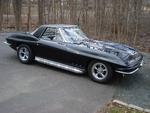


 Distributor Curve