When you click on links to various merchants on this site and make a purchase, this can result in this site earning a commission. Affiliate programs and affiliations include, but are not limited to, the eBay Partner Network.
I am planning to update my ‘66 convertible to do some auto-crossing and track days. I am planning to do some upgrades to the motor such as L46 cam (advanced 4 degrees), pocket porting, road race oil pan ect ect. I have a wide ratio box with 3:70 gears and some brake and suspension upgrades. Also plan wide 17inch wheels to fit under stock fenders without lips. Pretty stock stuff all in all.
The engine is out and I pulled the pan. Engine has .030 over forged flat tops. I am not sure of the rods however. Can someone help me identify them? Not sure if they are the decent 327 rods or the weak ones? ?
Engine was rebuilt and I was told it was balanced before I bought it years ago. See pictures. Thanks for any help or suggestions.
From: Middle TN by way of KY, OH, VA, IL, CA, FL, NY, SC, HI
Those look to me to be later-design '66 strengthened rods. More expert guys will likely come around to validate or disagree.
However, this can be an emotional topic for some, with many saying that for rods subject to fatigue failure you're buying cheap insurance to swap them out for a set of Eagle SIR5700 rods at around $250/set. Others will swear, with heated emotions, that the '66 rods were fine and never break. Your choice. (the arguments you'll get online here are mostly about who's the biggest expert {read: know it all}).
It is was me, and I was going to street pamper it, I'd likely lean towards the stock rods, but if I going to engage in spirited driving, like any competition, I would certainly upgrade the rods.
I couldn't get the photos to download, but '66 should have the second design rods, and that little hump of additional material adjacent to the bolt seats goes a long way in improving durability compared to the first design 327 rods that were definitely weak at that point and subject to fatigue failure. Somewhere in the archives there is a photo of first and second design 327 rods along with a 350 rod, and you can clearly see the geometry differences.
Back in the day if you were going to seriously race a small block, SOP was to have the rods Magnaflux inspected, and if okay lighten them by grinding down the forging flash and balance pads, weight balancing, and finally have them shotpeened, then resized with new aftermarket high strength bolts. Nowadays, you can buy better rods for not much more than the cost, maybe even less, of all the above, so If you are going to tear down the engine it makes sense to replace rods.
Notwithstanding the weakness of the first design 327 rods, the most common cause of rod failure (all engine makes) is a consequence of bearing seizure due to oil starvation. As the bearing seizes a HUGE bending load is placed on the rod, so much that it actually breaks, usually about one-third of the way up from the big end, so a good oiling system is absolutely critical to a car that is going to see high and rapidly changing dynamic loading.
You can start by installing the big pan and windage tray from the mechanical lifter engines, and run it a quart overfull, which is what SCCA racers did back in the day before dry sump systems were allowed.
...got the photos to download and in the third on the list I can see that little hump of additional material on the side of the rod adjacent to the bolt seat, so they are the second design.
From: Las Vegas - Just stop perpetuating myths please.
I can see the rod numbers stamped on them. That tells me the engine has been rebuilt once already. I think your suspicions are getting the best of you. What makes you think it needs a rebuild? Did you do compression and leakdown tests? Leakdown tells you how well your rings still seal. A compression test would have told you where to go with camchoice and cylinder head chamber.
What I'm saying is your suspicious of weak rods doesn't mean they will fail. I've see only one rod that knocked in street motor in my lifetime and it was the bearing that failed, not the rod. Since you have never circuit raced before I suggest you shouldn't spend for parts your not sure you need. Of course it's up to you but you will soon find yourself taxed with just getting the right parts you need let alone all the machine work that goes with rebuilding the engine.
Now with the engine out you can pull the heads and measure the volume using liquid above the piston while at TDC. That and the head chamber volume measured with liquid will give you as accurate compression calculation as any professional race team. With that information you choose a good cam and decide if you need more or less head chamber volume to run the cam you want. Heads can be milled to reduce chamber volume or the chambers can be reworked to open them up.
With good compression ratio information you can build your track motor with only head work, cam and oil pan up grades. Stock oil pump is fine but a good oil pan with functional dams and knockouts is a must for circuit track racing - uncover the oil pickup screen and you'll lose all your bearings. Of course replace all crank seals while motor is out.
I just don't see the need to make more work for a block that may not need it. You could pull the the bearing caps one at a time and measure with plastigauge but unless you find something actually bad save you effort and resources for a more experienced effort when you have raced enough to know what you need.
A little history. This engine was rebuilt in 1990 but only has 2000 miles since. The car sat for a long time before I bought it. I am going to run this engine hard in auto x and track days but also street drive it, so I think I will take the advice to move to the eagle rods. I plan to run the L46 hyd cam advanced 4 degrees, with a road race oil pan and pickup. My 146 heads look great stainless valves and some port matching done. The heads however have roll pins installed to locate the rocker arm studs....I think I would rather have threaded studs? The bores have no ridge and the pistons are .030 over TRW forged flat tops.
I would appreciate any other suggestions you may have on lifters, rocker arms, pushrods ect.
You must be reading my mind. I am going to have some head work done including springs, rockers and maybe some limited flow pushrods. With the exception of the eagle rods, rings and a road race pan I don't think any machine work will be necessary. I will maximize the compression ratio with a thin head gasket. This engine was not hardly used after it was rebuilt and balanced.
From: Las Vegas - Just stop perpetuating myths please.
Originally Posted by vmaxpwc
You must be reading my mind. I am going to have some head work done including springs, rockers and maybe some limited flow pushrods. With the exception of the eagle rods, rings and a road race pan I don't think any machine work will be necessary. I will maximize the compression ratio with a thin head gasket. This engine was not hardly used after it was rebuilt and balanced.
Well if you change those rods the rotating assembly will need to be rebalanced. Do you plan to just ball hone the cylinders when you put the pistons/rods back in? If you want to machine hone then you will need to clean the block again. But either way new rings will need some amount of honing.
Yea that can be done. Just my suggestion is leave the short block as is and rebuild the heads to match a new cam. To me that seems a whole lot easier. But only you know how much it will be raced and how hard. But my imagination tells me a 327 is more likely to spin a bearing than break a rod. And you can still spin a bearing on a super strong rod too.
Most important is you have fun with it. Good luck with it.
You are correct it is a bit of a slippery slope if I change the rods. It leads you to think about new pistons ect ect. What do you think about those pinned rocker studs? Maybe I just check the bearing clearances on the block and call it good. I am guessing those rods have been maged already.
From: Las Vegas - Just stop perpetuating myths please.
Originally Posted by vmaxpwc
You are correct it is a bit of a slippery slope if I change the rods. It leads you to think about new pistons ect ect. What do you think about those pinned rocker studs? Maybe I just check the bearing clearances on the block and call it good. I am guessing those rods have been maged already.
Well pinned rocker studs is the first step improvement and you won't pull one out now though I suspect the stud is not as strong with a pin pressed in and more likely to break than before pinned. But that L46 cam is fairly tame with only 0.460" lift. You want to use your cylinder head shop for cost of thread in studs as they are always better but no way do you need the thicker 7/16" studs. IMHO I couldn't even recommend a stud girdle for those heads and camshaft though they really make the whole assembly stronger and more stable for little money ($55). And I don't think you need roller rockers either though they are much stronger and accurate than stock stamped rockers. The economical trick for low lift cans are roller tipped rocker arms and they are sold as stamped steel or cast steel. Just ensure you use long slot rocker arms which ever you choose. Well this something you need to work out with your cylinder head shop though you will soon find out most machine shops are very partial on what they think/can do. My experience says have everything you expect/want done written down on the work order/invoice or you will be surprised at what gets done. I wanted my last set of heads to have the chambers polished and reworked but failed to get it written down and 3 months later the chambers were not touched. The shop did great work inside the throats behind the valves and nice larger SS valves but the chambers feel like 60 grit sandpaper.




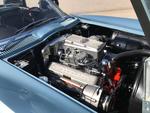


 ‘66 L79 refresh





 }).
}).