When you click on links to various merchants on this site and make a purchase, this can result in this site earning a commission. Affiliate programs and affiliations include, but are not limited to, the eBay Partner Network.
My painter is taping off the hood and was not sure whether the body paint wraps around the hood and shows at all on the underside, or is the underside completely flat black and the edge of the hood (downward edge) is the end of the body color? So I guess what I am asking is this hood painted correctly assuming its a C2 hood (not sure it is) but you get the jist. The arrow is not pointing to the shadow, I am pointing to the flat area next to the black frame, is that supposed to be body color on a 63?
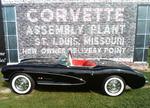
I could look at pictures of my hood before he stripped it, but my hood has been painted 3 times so I have no idea if the last guy got carried away. In the first case the hood is black and the area around is blue (body color) second picture is a Red car, with a black hood, no overlap in body color. which is correct for a 63?
2025 c3 ('68-'73) of the Year Finalist - Unmodified
2025 Corvette of the Year Finalist - Modified
2024 C1 of the Year Winner - Modified
2023 C1 of the Year Finalist - Modified
2023 C3 of the Year Finalist - Unmodified
2022 C1 of the Year Finalist - Modified
2020 C1 of the Year Finalist - Modified
2019 C1 of Year Finalist (performance mods)
2018 C1 of Year Finalist
When it was painted at the factory, the hood was mounted on the car, so the bottom lip toward the nose would not be blacked out, other than overspray. They used a template to cover the body color, so there would not be a sharp tape line. The paint line would have a soft edge to it.
The area your arrow points to should be body color.
Originally Posted by Geralds57
When it was painted at the factory, the hood was mounted on the car, so the bottom lip toward the nose would not be blacked out, other than overspray. They used a template to cover the body color, so there would not be a sharp tape line. The paint line would have a soft edge to it.
Hmmm are these two different answers? Geralds57 are you agreeing or disagreeing with Jim?
the top picture is close to being correct but its not. where the hood curves in at the front the black out DOES not follow the contour, it just fans out
the top picture is close to being correct but its not. where the hood curves in at the front the black out DOES not follow the contour, it just fans out
Correct. I can take a pic of my 63 hood tomorrow if needed.
Noland Adams Restoration and Technical Guide Vol.2 describes it with pictures and text.
I must be blind as a bat, the only thing I found was on Page 98 which has to do with the shims/wedges for hood shake. Can you tell what page you saw this info on?
Thanks
I must be blind as a bat, the only thing I found was on Page 98 which has to do with the shims/wedges for hood shake. Can you tell what page you saw this info on?
Thanks
Didn't get back to the forum till late. I will look in my books tomorrow. I have seen it someplace. May have been in the NCRS restorer ?
The hood edges were "soft masked" to apply the body color along the underside lip at the front bottom edges, so there isn't a sharp line where the colors transition:
It looks odd to many so they paint the lip body color all the way down....but the factory didn't get overly-concerned with things that weren't looked at too closely. On early cars I'm told the rear hood rubber weatherstripping went 1/3 of the way down on each side (which I think looks odd as hell), later cars (like my May 63) it was only along the rear edge (which is how I did mine)...
Last edited by Frankie the Fink; Apr 4, 2020 at 09:19 AM.
Wow, GM obviously figured a nice car can hide anything including shoddy painting....they were right
One of the signs of an original lacquer paint job is orange peel along the bottom, like below the exhaust tips where buffing was light or didn't occur at all. These cars weren't built by robots controlled paint sprayers in cleanrooms...
One of the signs of an original lacquer paint job is orange peel along the bottom, like below the exhaust tips where buffing was light or didn't occur at all. These cars weren't built by robots controlled paint sprayers in cleanrooms...
seeing how the factory had a guy one each side you will see differences of coverage's on the bottom of the car, manly the bottoms of the door and the exhaust panels. that is the fun thing to look at on original paint cars






 Hood
Hood