When you click on links to various merchants on this site and make a purchase, this can result in this site earning a commission. Affiliate programs and affiliations include, but are not limited to, the eBay Partner Network.
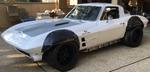
We have just put our 67 coupe 427 on a dyna tune today to try to iron out a few bugs. The car has msd ignition and a rebuilt Holley Carb. Although very strong in the torque I thought the HP at the rear wheel was very low. Understanding the engine is the original standard 390 hp.
Atached is the run sheet, does any one have any comparisons to compare? Cheers
It's "dyno" for dynamometer. What kind of dyno was it, make and model? Assuming this was done in the USA how about having the shop plot the data using pound-feet for torque instead of Newton-meters, horsepower for power instead of kilowatts, and actual engine revs, not speed in KPH. At least the data is "SAE corrected".
Off the top of my head I know that 0.746 kW is one HP, so peak HP is about 155/.746 = 208 SAE corrected RWHP, which is less than a decent L-79 that should make about 220. We know absolutely NOTHING about the engine configuration other than you state it's a 390 HP. Maybe it left the factory that way, but what is it now?
Look up the conversion factor and convert the 702 Nm peak torque to pound-feet.
The engine is a standard 390- 427, pretty much as factory apart from the msd ignition. Dyna was performed in Australia. Looking at about 210 rwhp and 520 ft pd or torque
I have a friend who bought a 68 390 car several years ago. He had it dynoed about a year ago and it was in in the 230 range for rwhp. I did some research and found a comment by Capevettes that put his 390 in the 290-300 range. You may want to post on the C3 forum and check YouTube.
The rwhp is very low, in fact the HP/TQ curve is very truck like.
That said, we cannot help or provide valid comparisons without the engine rpm and even better the timing curve and a true assessment of engine components. For example, if every component is original you may have worn cam lobes, mid-adjusted valves, a poor timing curve, etc. the other options are a lower performing cam, lower compression pistons, etc. that were replaced sometime in the past and don’t meet original specifications.
The engine is a standard 390- 427, pretty much as factory apart from the msd ignition. Dyna was performed in Australia. Looking at about 210 rwhp and 520 ft pd or torque
There's something seriously amiss with that chart. Maybe Oz transitioned to a parallel universe since the last poster from there. Although 702 N-m peak torque converts to about 517 lb-ft there's no way it could be that high. The factory SAE gross rating is 460 lb-ft, which is probably at least five percent optimistic, but take it at face value and that would be about 409 SAE net at the flywheel, which would be ballpark close to 350hosehorse SAE corrected at the rear wheels for a test run in fourth gear, but in my experience that's what a decent, stock L-72 will do, which was rated at 425 GHP.
We have no idea how the torque was computed. Assuming an inertia dyno that computes power directly from drum angular acceleration, equivalent flywheel torque at any engine speed is computed by the formula T = 5252 x horsepower/engine RPM, but clearly this is not the case here, and I have no idea how they came up with the torque curve, but I don't think they know how to set up and use their dyno.
Bottom line is that the chart does not specify full context, so the data is garbage. A competent shop should do better than what you got. Assuming they still have the raw data files, they should be able to reformat the data into something intelligible in traditional English units of pound-feet, horsepower, and RPM. However, unless they had a magnetic pickup attached to a spark plug wire to record RPM, they need to rerun the test and record RPM data. I've never run across a dyno shop and couldn't record RPM. In the case of a big block that has OE type shielded plug wires, you may have to remove the top shield from the distributor and attach the pickup to an unshielded portion of a plug wire to get a signal.
You should also determine the spark advance map of the aftermarket ignition system It may not be even close to optimized. Compare to OE in the CSM or AMA specs, which is lazy, and should be improved with lighter springs. I offer initial starting points in my tuning seminar - thread started by me, easy search.
centrifugal start @ 700-900, 30 max at 3000-3500, 6-10 initial, VAC start @ 6" 16 @12" This is for a 427/390 that actually is stock including an OE equivalent camshaft, using the highest octane available pump gas.
Then do some road testing using your SOTP to find the most aggressive detonation free spark advance map that will maximize output across the rev range. If it has an OE equivalent cam and VAC it should idle around 15" @ 600 in neutral with mid twenties total idle advance. If not close it's not an OE equivalent camshaft.
Also, START THE PULLS AT 1000 and go to the 5500 redline even if power is falling. We actually spend most of the time at less than 3500 revs, so the typical 3500-5000 pull is nearly worthless. You want the full performance characteristics of the engine across the entire rev range, which is basically off idle to the redline
The chart notes the run was in 3rd gear. If the car has a 4-speed, the 3rd gear torque readings should be divided by 1.28 (for a CR M20/M21), placing the peak torque at a more reasonable 404 lb.ft.
If the car has a 3.55 rear gear and near stock tires with a 28.5" rolling diameter, the peak engine speed at about 172 kph (137 mph) is about 5750 rpm in 3rd gear. The torque peak at 105 kph would be at about 3500 rpm, and the horsepower peak centered at about 158 kph would be at about 5250 rpm.
Knowing the transmission, tire height, and rear gearing options will help to make a valid unit conversion and comparison to the typical Tq/Hp per RPM chart.
We don't know the type of dyno, but if it's an inertia type like Dynojets that are common in the USA, the torque reading has nothing to do with the gear used during the pulls, trans or axle ratios, or tire revs per mile. Power delivered to the drum by the tires is computed directly from drum angular acceleration. Then equivalent flywheel torque is computed by the software from engine RPM that is recorded from an inductive pickup attached to an ignition wire according to the formula I previously posted.
Running in a gear other than direct drive will yield slightly lower torque/power data because power is running through the countershaft, which increases drive train/tire loss about 2-3 percent. In direct drive our old manual transmissions are about 98-99 percent efficient, but 96-97 percent in other than top gear, so drivetrain efficiency would be 82-83 percent rather than 85 percent in fourth gear.
Runs should preferably be done in fourth gear, but consideration should be given to tire speed rating. A SHP engine that is tested to 6500 with a 3.08:1 axle will be spinning the tires at close to 170 MPH with OE revs/mile tires. So unless the tires are at least V-rated, using a lower gear is advisable. In situations like this with low speed rated tires I've done a couple of pulls in fourth to an engine speed corresponding to the tire speed rating and then a couple of pulls in third. Then compute the percent difference, which should be pretty constant at all speeds and use the difference to get a decent estimate of power in the upper rev range in top gear.
The OP needs to state the dyno manufacturer, model, and technology. Inertia? Water brake? Eddy current?...









 Dyna Tune comparisons