When you click on links to various merchants on this site and make a purchase, this can result in this site earning a commission. Affiliate programs and affiliations include, but are not limited to, the eBay Partner Network.
If you're not going to drain the block why bother? Any job worth doing is worth doing right, not half-assed. The block plugs aren't that big a deal. You will have to remove a couple of bolts for the spark plug wire shields to move the shields out of the way to access the plugs. How hard is that?
Use a half inch breaker bar with plenty of extensions to bring it out from under the car and a SIX-POINT SOCKET. Have a helper put some torque on the bar then lay a piece of 2x4 on the end of the bar and wack it with a BFH. This should break loose the plugs if the are frozen, which is not uncommon because if they ever were actually removed they were installed too tight with no dope.
I would suggest you buy couple of brass 1/4 pipe plugs with a 9/16" hex and just replace them. Use pipe dope and just put them in snug enough for no leaks... no more than 10 lb-ft.
Use Zerex G-05, NOT obsolete "green". Two gallons (NAPA has it) and two gallons of distilled water. Using all the antifreeze first fill the system slowly, and when it won't take any more bounce the car up and down wiith the front bumper. Repeat until the expoansion tank is no more than 3/4 full. Leave the cap off, start the engilne, and watch the level in the tank. When the thermostat opens the level will drop add until the level stabilizes at about half full and the engine is up to 180 or slightly more.
Install cap and take if for a short drive around the neighborhood. Keep revs to about no more than 2000. Go home and park the car. Wait a half hour or so then carefully remove the cap. Add as necessary and repeat the short drive to warm it up. Repeat until the tank level stabilizes at half full.
You don't need to remove the thermostat, drill holes in it, remove the temp sender or radiator hose or any other nonsense. The system will self bleed, but you need to be patient.
Check level over the next few heat cycles and add as necessary. The system Is "full" when the tank is half full, engine "COLD:" Do not overfill.
Don't be surprised is nothing flows out when you remove the block plugs. That's because they are blocked with sediment and debris. Use a small tool to dig them out, and you should consider doing a water flush or two. Do it right and the next time you do it in five years it will be a piece of cake.
Duke
When I bought my 327/300 powerglide in 2010, the former owner had the coolant system drained and refilled including pulling the engine block plugs. The rub was it wasn't as recent as I was led to believe--when I did it myself a few years after buying the car, my gosh the amount of rust that came out of the engine block was unreal. It left rust stains in my driveway that took over a year to wear out from rain, water, etc...if you do get them out, when reinstalling use some pipe thread sealant (aka pipe dope) and they should come out easily from then on. I flush mine about ever 4 years--I do it overkill--drain it out and refill with distilled water; run it up to temperature, and do that twice more; then fill with GO5 and rest with distilled water as Duke said. Don't underestimate the rust that's left behind in the engine block if you don't or cannot pull the block plugs
What is the potential problem of mixing Prestone green AF with Zerex G-05? There might be some existing Prestone w/distilled water still in system after flushing and then being mixing when re-filled with new G05 + distilled water.
What is the potential problem of mixing Prestone green AF with Zerex G-05? There might be some existing Prestone w/distilled water still in system after flushing and then being mixing when re-filled with new G05 + distilled water.
The Prestone "green" that you refer to is not the older "green" inorganic formula that many of us remember. Prestone changed their formulation years ago, but just kept the same "yellow-green" color. The Prestone "yellow-green" sold today is a HOAT formula just like Zerwex G-05. So there should be little issue if some remains in the system.
Of course I prefer to remove all I can when I change brands, so I flush the system with about 4-5 "refill-run-drain" steps using only distilled water for each refill. By the fifth refill and drain, the amount of old stuff remaining is less than 5%..........the rest being distilled water.
Take off the radiator cap and stick a hose in. Open the radiator petcock. Turn on the hose and start and run the car letting it drain on the driveway and run down the gutter.
When nice and clear, turn off the hose and let the engine continue to run for a couple minutes with the petcock still open to pump the water out of the block.
When cool enough, close the petcock, add the proper amount of coolant and top off with the hose.
And you could actually afford the coolant to do it! Those were the days.
I like the apparent simplicity of this rad flush procedure. But...is it safe or even allowed to let antifreeze "...run down the gutter"? I thought this stuff was hazardous to animals and by extension to fish. The gutter in most places connects to the storm (untreated) sewer system, so the flow eventually winds up in a creek or ocean somewhere?
When I bought my 327/300 powerglide in 2010, the former owner had the coolant system drained and refilled including pulling the engine block plugs. The rub was it wasn't as recent as I was led to believe--when I did it myself a few years after buying the car, my gosh the amount of rust that came out of the engine block was unreal. It left rust stains in my driveway that took over a year to wear out from rain, water, etc...if you do get them out, when reinstalling use some pipe thread sealant (aka pipe dope) and they should come out easily from then on. I flush mine about ever 4 years--I do it overkill--drain it out and refill with distilled water; run it up to temperature, and do that twice more; then fill with GO5 and rest with distilled water as Duke said. Don't underestimate the rust that's left behind in the engine block if you don't or cannot pull the block plugs
Well, I have great respect for SWCDuke and surely his recommendation to remove the engine block plugs is a good one.
However, I don't have the tools or the disposition to take out the engine plugs - I know my limitations. If something went wrong then I'm looking at flat decking the car to a repair shop. Sigh.
So, better than doing nothing, I'm disposed to try to flush the system as others have suggested.
I don't know what sort of antifreeze is in the car now - it's a green color. At my local auto supply I see Prestone, Delco regular, DexCool, and house branded (cheaper) antifreeze. I didn't see Xerex on the shelf. Might have to look elsewhere to find it. I'm in Canada, so that's a factor for me.
Prestone "yellow-green" is also fine...........but Zerex G-05 is probably the best for our older cars.
Larry
PS: Although ethylene glycol and diethylene glycol (glycols for our anti-freeze coolants) are indeed hazardous to health, they can be readily degraded and converted to harmless components by bacteria in the water treatment plants. Trust me. I have made ethylene glycol and the other heavier glycols for over 40 years........and yes our chemical plant waste treatment system will convert to basically inert components thru biological action. However, this requires a certain acclimation period for the "bugs" to get use to the taste.......so to speak. My old company made the Prestone Brand for decades.....and I use to have access to the corrosion database for the products for car cooling systems. But no longer.
Letting animals ingest ethylene glycol will likely kill them thru renal/kidney failure. So it is best to capture the old coolant and reclaim if possible.
Well, I have great respect for SWCDuke and surely his recommendation to remove the engine block plugs is a good one.
However, I don't have the tools or the disposition to take out the engine plugs - I know my limitations. If something went wrong then I'm looking at flat decking the car to a repair shop. Sigh.
So, better than doing nothing, I'm disposed to try to flush the system as others have suggested.
I don't know what sort of antifreeze is in the car now - it's a green color. At my local auto supply I see Prestone, Delco regular, DexCool, and house branded (cheaper) antifreeze. I didn't see Xerex on the shelf. Might have to look elsewhere to find it. I'm in Canada, so that's a factor for me.
I see that Prestone has a Compatible Formula for Green or Orange.....I have green in my 67. After draining/lowering the level of antifreeze in my 67 to put a shut off gate valve to my heater core, I topped off with the compatible formula Prestone. DO NOT MIX THE DEXCOOL with the Green Antifreeze you have currently.
I see that Prestone has a Compatible Formula for Green or Orange.....I have green in my 67. After draining/lowering the level of antifreeze in my 67 to put a shut off gate valve to my heater core, I topped off with the compatible formula Prestone. DO NOT MIX THE DEXCOOL with the Green Antifreeze you have currently.
I'm not having luck finding the Zerex antifreeze locally (I'm in Canada). Would this AC Delco antifreeze be okay? It's not DexCool, and does say it's 'Aluminum compatible'. Let me know if this stuff is okay to use on my '67. Thanks.
I Then run the engine with the hot water valve on the 5/8 inch heater hose OPEN to allow circulation thru the heater core.
Larry
Hi Larry,
How would I keep the hot water valve open? I have a factory A/C car. Would it be good enough to just turn the heater on full-blast while I flush the old coolant out of the system?
How would I keep the hot water valve open? I have a factory A/C car. Would it be good enough to just turn the heater on full-blast while I flush the old coolant out of the system?
The valve will be closed with no vacuum, and will open when vacuum is applied. You want the valve open to move coolant thru the heater core.
So simply set the upper right AC **** for HOT ( **** pulled out) which should put vacuum to the valve and keep it open. If any doubt, you can disconnect the tubing to the valve and check for vacuum, or hookup a Mighty-Vac (or similar) to a temporary piece of tubing running directly to the valve.......and then pull about 15 inches HG of vacuum.
If your AC system and parts are all performing as they should, just pull out the HOT/COOL upper right hand AC ****. That will do it.
I'm not having luck finding the Zerex antifreeze locally (I'm in Canada). Would this AC Delco antifreeze be okay? It's not DexCool, and does say it's 'Aluminum compatible'. Let me know if this stuff is okay to use on my '67. Thanks.
A quick check of the part number indicates that this ACDELCO coolant is made by Prestone. But no specific info to really evaluate specifics......and if IAF or HOAT or OAT. You want the HOAT.
If you cannot locate Zerex G-05 by name, then an alternative is to buy MOPAR #68048953AB.........which is the same stuff, but with a pink color. But same as Zerex G-05. They both meet MS 9769 specification.....same for both the Zerex and the MOPAR Part Number I just referenced.
G-05 was also Ford factory fill beginning sometime in the first decade of the 21st century, but I'm not sure if they still use it.
Duke
I BELIEVE that the Ford Part Number is #VC-7-B and conforms to their specification WSS-M97B51-A1. The Ford HOAT coolant is yellow in color.........just like G-05. It was introduced for their heavy-duty trucks (and some cars) back around 2002.
I was just speaking to my friend who is a recently retired automotive mechanic about my difficulties removing a block plug. He informed me that an option that he used was to locate the most easily accessible soft/freeze plug and remove it. Afterwards,the new soft plug would install more simply.If the block ever needed to be pulled the un-cooperative plug would be dealt with then.
Last edited by lib; May 1, 2021 at 10:18 PM.
Reason: add'l text
In your case, I would drain the radiator as you already indicated. I would then refill only with distilled water. Then run the engine with the hot water valve on the 5/8 inch heater hose OPEN to allow circulation thru the heater core. When you start the car, the coolant level will likely drop some. Just refill to 1/2 of the expansion tank with distilled water, and then install the radiator cap. Run until the top radiator hose gets warm, indicating the thermostat has opened.
Allow the engine to cool for about 1 hour, and then drain the radiator again, just like before. Again refill with distilled water, and run the car as outlined above.
I would do 3 refills with only distilled water. By this time about 95% of the old coolant will have been removed, leaving essentially fresh distilled water in the block.
Then refill the last time with concentrated coolant. Car should take about 10-11 quarts. Your total system capacity is around 20 quarts.
Run the car as before to circulate and mix the fresh coolant with the fresh distilled water. Shut off the engine and let it sit about 1 hour. Remove the radiator cap and check the final level. Refill with either concentrated coolant or a 50/50 mix of coolant and distilled water.
Finally after a few weeks, test the exact coolant concentration in the system, and adjust to 50/50 or 55/45 (coolant/water).
Here's a link to a "how to" video of a similar tool/product: https://www.ecstuning.com/b-schwaben...l/003466sch01/
Click on the ECS Videos link once you get to the website. Then click on the small video window to start it.
I have had a Blue Point vacuum filler for over 20 years and use it any time I have to drain and refill a cooling system, simple to use pull a vacuum on the system and suck your coolant into the system, it fills the system to the proper level.
On my daily driver vehicles I always trade in for new, before ever changing the radiator coolant. So, with my C2 Corvette I will eventually need to replace the coolant. When do you replace the coolant? By number of years or mileage?



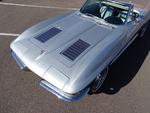



 When I bought my 327/300 powerglide in 2010, the former owner had the coolant system drained and refilled including pulling the engine block plugs. The rub was it wasn't as recent as I was led to believe--when I did it myself a few years after buying the car, my gosh the amount of rust that came out of the engine block was unreal. It left rust stains in my driveway that took over a year to wear out from rain, water, etc...if you do get them out, when reinstalling use some pipe thread sealant (aka pipe dope) and they should come out easily from then on. I flush mine about ever 4 years--I do it overkill--drain it out and refill with distilled water; run it up to temperature, and do that twice more; then fill with GO5 and rest with distilled water as Duke said. Don't underestimate the rust that's left behind in the engine block if you don't or cannot pull the block plugs