



1959 Ignition Switch Problem

Thread Starter
Cruising

Joined: Oct 2018
Posts: 13
Likes: 0
 1959 Ignition Switch Problem
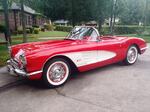
Have 1959 Corvette, slightly modified with front discs, Edelbrock Electronic Fuel Injection, and alternator. Consequently due to the Edelbrock electronic ignition system, the tach has been replaced. The problem is with the ignition switch, When turning the switch to the off position, the starter tries to engage. Turning it very slowly eliminates the issue but is NOT how it's done normally. Ordered and installed 3 different replacement switches from different sources, all had the same result. Has anyone had this problem and resolved it.

Team Owner


Joined: Aug 2008
Posts: 32,990
Likes: 6,523
From: Rochester NY
St. Jude Donor '09 thru '26
I'll state the obvious - the problem apparently is not in the switch(s). Something is either wired wrong, or maybe touching something else where it shouldn't be. Realizing the wiring has been modified to some extent, but do you have wiring diagrams for how it originally was? That's going to be a help at some point.

Melting Slicks


Joined: Jul 2004
Posts: 2,451
Likes: 315
From: Scottsdale AZ
Pull the switch from the dash. Hook it up dangling. Does it display the same behavour? Drive around some. It is shorting on the guage console. Or not. Then install correctly.
Last edited by John S 1961; Oct 21, 2021 at 12:09 AM.
Thread Starter
Cruising
Joined: Oct 2018
Posts: 13
Likes: 0
I'll state the obvious - the problem apparently is not in the switch(s). Something is either wired wrong, or maybe touching something else where it shouldn't be. Realizing the wiring has been modified to some extent, but do you have wiring diagrams for how it originally was? That's going to be a help at some point.
Team Owner
Joined: Jul 2006
Posts: 22,164
Likes: 4,172
From: Kannapolis NC
I believe that something is being missed in the description of the issue. What else happens? Do the gauges shut off when you move to off? Does the starter engage properly when turned fully to start and disengage properly when the key is released? Physically and electrically, turning the key off quickly should make no difference in turning it off slowly. Are you sure you're using the correct switch and not one with an accessory position that is wired to the solenoid? The 59 switch has no acc position, and should go from "on" to "off" in one click. There should be no continuity to solenoid anywhere between "on" and "off". Is it possible that the timing or some other issue is causing the car to continue to try to run when ignition is off instead of the starter trying to engage as you describe.
The whole scenario doesn't make electrical sense with the correct ignition switch.
The whole scenario doesn't make electrical sense with the correct ignition switch.
Thread Starter
Cruising
Joined: Oct 2018
Posts: 13
Likes: 0
I ordered two 1959 Corvette switches from two different supply houses along with the one already in the car and they all respond the same with no accessory position. The car run well to 4,000 rpm It starts easily with no problem and no throttle and the starter disengages properly. There seems to be no timing issue. When turning to the off position normally, the engine doesn't continue to run but shuts down and the starter tries to engage. The gauges shut off in the off position. The switch has the positions lock, off, on, and start. The mechanic believes an original switch manufactured by GM would solve the problem instead of the manufactured replicas of today. Since I'm no mechanic, I can't argue the point and that's why I looking for some insight and I appreciate yours.
Corvette Stories
The Best of Corvette for Corvette Enthusiasts

Top 10 Most Explosive Corvettes Ever Made: Power-to-Weight Ratio Ranked!
Joe Kucinski
150 hp to 1,250 hp: Every Corvette Generation Compared by the Specs That Matter
Joe Kucinski
8 Coolest Corvette Pace Cars (and Replicas) of All Time
Verdad Gallardo
Top 10 Corvette Engines RANKED by Peak Torque (70+ Years of Muscle!)
Joe Kucinski
Corvette ZR1X Will Be Pacing the Indy 500, And Could Probably Race, Too!
Verdad Gallardo
Top 10 Corvettes Coming to Mecum Indy 2026!
Brett Foote
Top 10 C9 Corvette MUST-HAVES to Fix These C8 Generation Flaws!
Michael S. Palmer
10 Revolutionary 'Corvette Firsts' Most People Don't Know
Joe Kucinski
5 Reasons to Upgrade to an LS6-Powered Corvette; 5 Reasons to Stay LT2
Michael S. Palmer
Thread Starter
Cruising
Joined: Oct 2018
Posts: 13
Likes: 0
No...I just to my brother who had a friend with the same problem. He solved it by acquiring a used GM switch. So, right now I'm going to try to buy a GM manufactured unit. If you know where I could get one, please let me know. Thanks...

Race Director


Joined: Feb 2007
Posts: 15,421
Likes: 8,872
From: northern california
C2 of Year Finalist (track prepared) 2019
Wait.... what? So going from ON to OFF engages the starter but going from LOCK to OFF does not????? Is that what you are observing?????
Thread Starter
Cruising
Joined: Oct 2018
Posts: 13
Likes: 0
Correct... Going from LOCK to OFF does NOT cause the starter to engage but going from ON to OFF when the engine is running does engages the starter.
Team Owner
Joined: Jul 2006
Posts: 22,164
Likes: 4,172
From: Kannapolis NC
Pull one end of the coil wire out, turn the key to start and briefly engage starter and then release to run. Now turn key off, does starter engage? If so, something is wonky with your ignition switch. If not, the switch is not the problem and you have an issue with the starter or solenoid.
Race Director
Joined: Feb 2007
Posts: 15,421
Likes: 8,872
From: northern california
C2 of Year Finalist (track prepared) 2019
Thread Starter
Cruising
Joined: Oct 2018
Posts: 13
Likes: 0
Pull one end of the coil wire out, turn the key to start and briefly engage starter and then release to run. Now turn key off, does starter engage? If so, something is wonky with your ignition switch. If not, the switch is not the problem and you have an issue with the starter or solenoid.
Race Director
Joined: Feb 2007
Posts: 15,421
Likes: 8,872
From: northern california
C2 of Year Finalist (track prepared) 2019
That is very useful information.
My hunch is that your starter is getting momentary energy from the generator as the engine is spinning down.
Take a look at the connections attached to the "B" terminal of the generator (or the related terminal on the Voltage regulator). Are there extra wires? If so, to what do they connect? With the engine off, is there any continuity between the generator "B" terminal and the starter "S" terminal? There should not be, but is there?
My hunch is that your starter is getting momentary energy from the generator as the engine is spinning down.
Take a look at the connections attached to the "B" terminal of the generator (or the related terminal on the Voltage regulator). Are there extra wires? If so, to what do they connect? With the engine off, is there any continuity between the generator "B" terminal and the starter "S" terminal? There should not be, but is there?
Thread Starter
Cruising
Joined: Oct 2018
Posts: 13
Likes: 0
That is very useful information.
My hunch is that your starter is getting momentary energy from the generator as the engine is spinning down.
Take a look at the connections attached to the "B" terminal of the generator (or the related terminal on the Voltage regulator). Are there extra wires? If so, to what do they connect? With the engine off, is there any continuity between the generator "B" terminal and the starter "S" terminal? There should not be, but is there?
My hunch is that your starter is getting momentary energy from the generator as the engine is spinning down.
Take a look at the connections attached to the "B" terminal of the generator (or the related terminal on the Voltage regulator). Are there extra wires? If so, to what do they connect? With the engine off, is there any continuity between the generator "B" terminal and the starter "S" terminal? There should not be, but is there?