


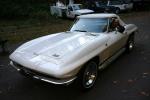

 I agree while dad runs 91 in his we have a friend that runs his on 89 as well
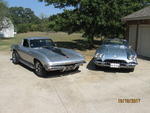


reading spark plug

Team Owner


Joined: Feb 2003
Posts: 54,059
Likes: 9,393
From: Sitting in his Nowhere land Hanover Pa
2024 C2 of the Year Finalist - Unmodified
2015 C2 of Year Finalist

Melting Slicks


Joined: May 2001
Posts: 2,749
Likes: 776
From: Dadeville AL

Regarding the plug - I've read that reading a plug for rich/lean performance needs to be done at the end of a wide open throttle run (e.g., drag strip) with the engine shut down immediately. Otherwise you're reading other running conditions (i.e., idle to low RPM). So my question for the OP is, what condition are you wanting to evaluate by reading the plugs?

Race Director


Joined: Jul 2018
Posts: 10,547
Likes: 8,324
From: San Antonio, TX/Mahopac, NY
2024 Corvette of the Year Finalist - Modified
2024 Corvette of the Year Finalist - Unmodified
2023 C7 of the Year Winner - Modified
It’s much harder to read plugs today with the lack of lead, cleaner fuels, and detergent additives than back in the good old days when you could practically see the dinosaur tooth marks on the plugs.
That said, your plug looks good, perhaps a bit lean. And that said, too much octane not only wastes money it can delay flame propagation eroding power. Also, this strange obsession to avoid any ethanol is puzzling. Fuels with 10% ethanol have been proven safe and non-corrosive in older engines in every test performed. More than 10% however, can cause problems with older seals and materials. I run 93 octane with 10% ethanol in my L72 with no issues as I have in every high performance engine I have owned over the decades since it has become a standard additive with zero issues. And finally, 11:1 compression in an oem engine is questionable at best with 93 octane today measured equivalent to 98 octane back in the day means you have no issues even at 91 octane.
That said, your plug looks good, perhaps a bit lean. And that said, too much octane not only wastes money it can delay flame propagation eroding power. Also, this strange obsession to avoid any ethanol is puzzling. Fuels with 10% ethanol have been proven safe and non-corrosive in older engines in every test performed. More than 10% however, can cause problems with older seals and materials. I run 93 octane with 10% ethanol in my L72 with no issues as I have in every high performance engine I have owned over the decades since it has become a standard additive with zero issues. And finally, 11:1 compression in an oem engine is questionable at best with 93 octane today measured equivalent to 98 octane back in the day means you have no issues even at 91 octane.
Corvette Stories
The Best of Corvette for Corvette Enthusiasts

Top 10 Most Explosive Corvettes Ever Made: Power-to-Weight Ratio Ranked!
Joe Kucinski
150 hp to 1,250 hp: Every Corvette Generation Compared by the Specs That Matter
Joe Kucinski
8 Coolest Corvette Pace Cars (and Replicas) of All Time
Verdad Gallardo
Top 10 Corvette Engines RANKED by Peak Torque (70+ Years of Muscle!)
Joe Kucinski
Corvette ZR1X Will Be Pacing the Indy 500, And Could Probably Race, Too!
Verdad Gallardo
Top 10 Corvettes Coming to Mecum Indy 2026!
Brett Foote
Top 10 C9 Corvette MUST-HAVES to Fix These C8 Generation Flaws!
Michael S. Palmer
10 Revolutionary 'Corvette Firsts' Most People Don't Know
Joe Kucinski
5 Reasons to Upgrade to an LS6-Powered Corvette; 5 Reasons to Stay LT2
Michael S. Palmer
Melting Slicks
Joined: May 2001
Posts: 2,749
Likes: 776
From: Dadeville AL

Team Owner
Joined: Feb 2003
Posts: 54,059
Likes: 9,393
From: Sitting in his Nowhere land Hanover Pa
2024 C2 of the Year Finalist - Unmodified
2015 C2 of Year Finalist

Team Owner
Joined: Feb 2003
Posts: 54,059
Likes: 9,393
From: Sitting in his Nowhere land Hanover Pa
2024 C2 of the Year Finalist - Unmodified
2015 C2 of Year Finalist
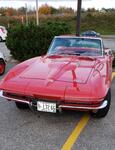
I’ll be honest I have one of them too 5 mins away that offer 110 and 99 low lead gas. And I only used it once in 12 years I have been driving my car.
Safety Car


Joined: Mar 2009
Posts: 4,191
Likes: 951
From: Corpus Christi, TX
Your plug looks perfect. If you don't have any surging or "trailer hitching" at light part throttle cruising, like a steady 60 to 70 on the highway, you're not running too lean.
That and unless the gas has lead, the octane won't change the plug appearance at alll.
That and unless the gas has lead, the octane won't change the plug appearance at alll.
Last edited by Avispa; Apr 24, 2022 at 01:30 PM.
Le Mans Master


Joined: Feb 2008
Posts: 6,460
Likes: 1,885
From: Folsom CA
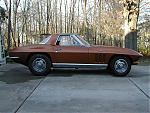
Keep in mind that the Chevrolet L79 was advertised at 11:1 compression but in fact most measure in the 10.3 to 10.5:1 ratio. With a proper tune yours should work well on premium gasoline and save you some money.
11:1 sounded good but was optimistic and overstated by GM. Maybe on your rebuild they shaved your heads and you have higher than normal compression but probably not.
Mark
11:1 sounded good but was optimistic and overstated by GM. Maybe on your rebuild they shaved your heads and you have higher than normal compression but probably not.
Mark