When you click on links to various merchants on this site and make a purchase, this can result in this site earning a commission. Affiliate programs and affiliations include, but are not limited to, the eBay Partner Network.
I will soon begin what is expected to be a long, labor-intensive effort to remove the undercoating from the bottom of my ’66 body. I have reviewed all the CF posts I can find, and Googled it, and here are my notes:
The general methods:
1. First use a heat gun and a PLASTIC putty knife to scrape it off, being patient and careful not to gouge the fiberglass. Then, clean whatever residual undercoating remains with a chemical solvent or stripper.
2. Media-blasting if you have that resource available.
3. I saw some comments about resorting to a wire wheel. I think that’s risky.
Chemical solvents or strippers that have been suggested or used by others:
Kerosene, Lacquer Thinner, Paint Stripper, Acetone, Mineral Spirits, isopropyl alcohol, brake cleaner
From what little I know, Lacquer Thinner, Paint Stripper, Acetone are all kind of similar and would best be used to remove “paint”.
Kerosene seems (based on my survey of the internets) to be by far the favorite chemical for cleaning tar or petroleum-based (undercoating) off of surfaces including fiberglass. I found no evidence or opinions warning about a significant risk to the fiberglass from the kerosene.
My questions:
1. Any strong arguments against using Kerosene on bare fiberglass?
2. Is my hot air gun I use to shrink wrap splices enough? Or, do I need a propane torch?
3. Has anybody used media blasting on the bottom of a Corvette body to remove undercoating? Is it worth the trouble to find that resource?
I have done this too many times. As you said, it is no fun.
First of all, what do you want the end result to look like?
Do you want bare fiberglass?
Are you going to paint it?
Are you going to put new undercoating on it?
What areas are we talking about?
The factory applied undercoat under the wheel wells?
I have a 63 and that was the only place that had undercoating on mine
Or is a 66 different?
Or did someone do something aftermarket?
I am talking about the bottom of the "cabin" area, not the wheel wells. Somebody sprayed undercoating on the bottom. I don't know who or when. It was there and appeared to have been there for a long time when I bought it. I would guess the dealer sold the idea to the original owner way back in the day.
My intention is to clean all the undercoating off where it should not be there and leave the bare fiberglass. I don't plan to paint it.
For now, I'm doing this without lifting the body - as "practice". Sometime in the next few years, I'll lift the body and finish the job and detail the frame, etc.
Handoverfists comment got me thinking
Dry ice blasting is all the rage these days
I googled removing undercoat with dry ice blasting
maybe worth a look
Thanks guys for the feedback.
I don't want to confuse the issue/question. But, my cross to bare is that I now live in Portugal. Finding a media or dry ice blasting resource is very unlikely here.
Sounds like I'm using heat, plastic scrapers, and kerosene.
I will ask around. If I can find a place that does media blasting, I will go talk to them.
A Harbor Freight heat gun and stiff plastic scraper worked well for some spot undercoating removal I did on a car recently. Follow up with a wipe down with lacquer thinner.
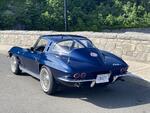
I have a 66 coupe that I have been doing this work on for a few weeks now along with rebuilding pretty much all rear suspension components. My car had undercoating sprayed on EVERYTHING. I tried pretty much everything you listed. On the steel components (frame, cross members, trailing arms, etc) I was able to remove the bulk of the material using a pneumatic needle gun. On the fiberglass I primarily used a heat gun (your heat gun that you use for shrink tubing should work just fine) and a putty knife. I ground the corners of the putty knife round to keep from gouging the fiberglass. After the bulk of the undercoating was removed it left a tar-like film which I would first remove with paint stripper and then remove the remaining residue with lacquer thinner. It's hard for me to imagine the dry ice working well on the undercoating that was on my car because most of it was what I would describe as a very firm tar-like material. On all of the steel components that I could remove from the car I would media blast them in my blast cabinet with aluminum oxide media. The blasting media had a very difficult time removing any little spot of undercoating that I missed via the scraping and strippers. The only part I didn't remove the undercoating from was the wheel wells. As a matter of fact I re-sprayed the wheel wells with bed liner just to give them a clean fresh look. Here are a couple of photos of the finished product:
Good luck
Ted
I think that if I were to do that job I would spray on Kerosene lightly, using a low-pressure spray gun that was adjusted down to a no fan spray. After many spray downs over several days, I think it would scrape off fairly easily in a paste-like form.
Continue the clean-up with more sprays and a Turkish towel that can be washed out in a pail of kerosene.
Using lacquer thinner is very dangerous as static electricity could start a fire.
Ps, using a propane torch can cause the undercoat to drip off and get on your arm. The natural thing to do then is to wipe it off with your hand, then wipe it off your hand with the other hand, ending up with three burn marks.
( Don't bother to ask me how I know that!)
Those that have never used dry ice would be amazed how well it works. Coatings are frozen to the point they simply lift off in sheets leaving no residue. My experience using dry ice was to remove sound deadening material from floor pans...no doubt it would work on anything on the underside as well. Might be hard to implement in some areas, but it would be a great effort/time saver overall.
Great thread, very helpful. I’m planning to strip the undercoat from my tire tub lid and this will be very helpful. No, I have no idea why the tire tub lid is undercoated.
My floor pans are too, but I’m not going there. I do not have a lift and I just don’t see myself doing them without that.
So dry ice. How do you do that? Just hold a hunk of dry ice on the fiberglass for a time and then peal off the coating? Can you give us a little more guidance on this? I was going to have the underneath dry ice blasted but this is very expensive. I mean astronomical. I would rather do it myself. Ted yours came out great. How are your axle and drive shaft treated?
So dry ice. How do you do that? Just hold a hunk of dry ice on the fiberglass for a time and then peal off the coating? Can you give us a little more guidance on this? I was going to have the underneath dry ice blasted but this is very expensive. I mean astronomical. I would rather do it myself. Ted yours came out great. How are your axle and drive shaft treated?
My experience was using dry ice in floorpans to remove sound deadening material...likely tougher than undercoating. If you chopped up dry ice and let it sit in the pans it would freeze anything...top or bottom. Vertical surfaces would require some creative thinking.
Dave, when I stripped undercoating from under fiberglass fenders I would use a heat gun directly on the undercoating and put my hand on the opposite side outside fiberglass. That way I could be sure to NOT get too much heat to do damage. when it was too hot for my hand I stopped the heat. I used a plastic scraper to get the bulk of undercoating off then sprayed WD 40 on the undercoating, used scotchbrite pads, and paper towels to wipe it clean.
Gary
So dry ice. How do you do that? Just hold a hunk of dry ice on the fiberglass for a time and then peal off the coating? Can you give us a little more guidance on this? I was going to have the underneath dry ice blasted but this is very expensive. I mean astronomical. I would rather do it myself. Ted yours came out great. How are your axle and drive shaft treated?
Thanks for the compliment.
For the axles and drive shaft I media blasted them then sanded the shafts with 240 grit emery cloth, then painted them with Rustoleum satin clear.








 Removing undercoating