When you click on links to various merchants on this site and make a purchase, this can result in this site earning a commission. Affiliate programs and affiliations include, but are not limited to, the eBay Partner Network.
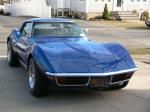
After taking far too long dealing with brake calipers, I’m nearing the point where I think I can put tires/wheels under my car (1967 Corvette) again. I’m going to have all these tires separated from the wheels and new rubber put onto the wheels. What do I tell the shop to do when balancing the tires/wheels? Road force? Static balancing? Dynamic balancing? Please share your tips and experiences. Thanks in advance.
Road force is considered the best but not a lot of shops have the proper equipment for this. Most will have a machine that does Dynamic balancing. The wider the wheel the greater the difference between Dynamic and static. Static just tells you how much weight to put because one side of the wheel is heavier. It does not tell you if you need it on the inside or outside. For example, take a late C8 with rear tires over a foot wide. If the outside of the tire needs weight and the static balance just says put this much weight on but does not tell you where, you will have a shake that will show up mostly around 50-60 MPH and will go away above that. Also, when doing balancing, make sure the wheel is re-spun until it shows needing 0 weight inside and outside. Some shops just put the weight on and assume it is correct. That is rare even with the best equipment.
you want to go to someone that has a road force balancer , it balances the tire under a load (a pressure wheel applied to tread area while spinning ) just like when you car is driving down the road . Not cheap but worth it
regards Bob
While Road Force balancing is the best, I feel fine with plain old dynamic balancing. If you read the brochures and dealer info kits for these cars, you'll see that GM used static balancing at the factory.
While Road Force balancing is the best, I feel fine with plain old dynamic balancing. If you read the brochures and dealer info kits for these cars, you'll see that GM used static balancing at the factory.
I wondered what type of balancing was used back in the day. Thanks for sharing that.
Does anyone know if a weight can be applied to the outside (if road force balancing indicates the necessity) of a standard rally wheel under the trim ring?
On most of my cars lately haven't had them balanced at all and no problems. Although I'm taking car tires not truck. Back in the day we used to bubble balance it worked well. But to answer your question road force
I wondered what type of balancing was used back in the day. Thanks for sharing that.
Does anyone know if a weight can be applied to the outside (if road force balancing indicates the necessity) of a standard rally wheel under the trim ring?
They fit fine under the trim rings on the 15x8 rally wheels on my '69, which are original. They also fit under the trim rings on the 15x6 rally wheels mounted on my '64, but those are, obviously, not original.
They fit fine under the trim rings on the 15x8 rally wheels on my '69, which are original. They also fit under the trim rings on the 15x6 rally wheels mounted on my '64, but those are, obviously, not original.
I guess I've been lucky because on both the rally wheels and repro bolt on wheels for my 67, I've never had to have wheel weights on the outside of the rim when balancing tires. Then again, the same can be said for all my cars that have/had rims as opposed to steel wheels with hubcaps.
I couldn't even begin to guess the number of steel wheels that I bubble-balanced "back in the day," with equal weights applied to the inner and outer sides of the wheels' rims. Four weights applied, two inside and two outside, spaced and radially located the same. The weights always fit under the OEM wheel covers or trim rings. I never encountered a dynamic balance issue afterward if the wheel was true. Which isn't to say that it can't occur, especially if there's runout in the wheel, but that's just the way it was commonly done in the '70s and early '80s when I was wrenching for my daily bread. I still have one of those old oil-bath bubble balancers.
Then there is balancing on a special Hoffman machine which lines up the heaviest part of the tire with the lightest part of the wheel which requires the least amount of weight. It also requires breaking down the wheel and tire a second tire to orient the two. I have been doing this for several years with my motorhome tires. Nothing new.
Then there is balancing on a special Hoffman machine which lines up the heaviest part of the tire with the lightest part of the wheel which requires the least amount of weight. It also requires breaking down the wheel and tire a second tire to orient the two. I have been doing this for several years with my motorhome tires. Nothing new.
Nice idea - indexing the the heaviest part of the tire with the lightest part of the wheel to reduce the amount of weight needed.








 Dennis




 Road force? Static balancing? Dynamic balancing?