When you click on links to various merchants on this site and make a purchase, this can result in this site earning a commission. Affiliate programs and affiliations include, but are not limited to, the eBay Partner Network.
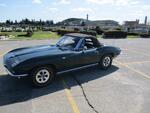
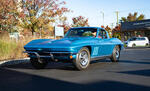
Time to flush the rad in this baby -- it has a replacement DeWitts aluminum radiator that was installed in 2017. The car is driven about 500 miles a year. I have a couple of questions:
1. What is the best type of coolant to use?
2. What is the right water/coolant mixture? The car is stored in an insulated garage in the winter where the temperature never gets below about 40F.
3. As it has been many years since I flushed a rad myself, is there anything I should keep in mind or be careful with?
Thanks!
Last edited by LuckyGuy; Feb 11, 2023 at 09:39 AM.
Reason: add story
distilled water is less than a buck a gallon at the store. the key is to keep minerals and other contaminants out of the system. plus, it makes it easy to measure for 50/50 mix.
Zerex G-05
50/50 Zerex / Water (Some insist that you must use distilled water, some say filtered tap water is OK, others say just tap water). I don't have a strong preference - I change my coolant every 3 years so I don't think it makes a big difference.
The Zerex and the chemicals in it server several purposes. First, a 50/50 solution will freeze well below 32 degrees - and it will not boil at 212 either - I think it boils somewhere around 250 degrees - when you put it under pressure, the boiling point is even higher. Then, perhaps the most important property as far as old classic cars are concerned, it inhibits corrosion. Keep in mind, coolants in our old cars come in contact with cast iron, forged steel, aluminum alloys and possibly brass. Liquids love to interact with hard metals and do all sorts of things - when you have a salad bar of metals you can get all kinds of interesting interactions and harmful corrosion. The chemical agents in G-05 prevent or mitigate the occurrence of corrosion better than any other liquid coolant.
distilled water is less than a buck a gallon at the store. the key is to keep minerals and other contaminants out of the system. plus, it makes it easy to measure for 50/50 mix.
Go the the grocery store and get some distilled water just like post #3 mentions, this is mineral free potable water and mix 50/50 with Zerox G-05.
Take the time to remove the engine block plugs so you get most of the old stuff out and don't over tighten the block plugs when you re-install them.
FWIW, don't use tap water....Minerals in tap water equal rust in the cooling system...
the tap water in my area is loaded with calcium and lime and even with an inline water filter in my house I STILL have to clean the aerators out in the faucets regularly. I don’t want that crap in my radiator.
Time to flush the rad in this baby -- it has a replacement DeWitts aluminum radiator that was installed in 2017. The car is driven about 500 miles a year. I have a couple of questions:
1. What is the best type of coolant to use?
2. What is the right water/coolant mixture? The car is stored in an insulated garage in the winter where the temperature never gets below about 40F.
3. As it has been many years since I flushed a rad myself, is there anything I should keep in mind or be careful with?
Thanks!
"Best" is a function of the car's environment.
Cars which see sub-freezing temperatures need the protection provided by antifreeze solutions. This is "best" for them.
If your car will never, ever see see sub-freezing temperatures, it doesn't need antifreeze. It can do well with water + soluble oil + corrosion inhibitors. In fact, such a mixture will provide better summer time heat rejection than will a 50/50 antifreeze mix. This could be "best" for your car.
removing the block plugs like tbarb mentioned is a good practice. It will get all the fluid from the bottom of the block that is trapped, and there is a good bit in there.
they could be a square drive, or an allen key or a regular bolt. Just be careful they are usually tight and can strip easily if you don't have a good fitment on the head.
There's a vice grip made especially for removing hex and square heads. It works better than anything else I've tried. V4LW I believe. Stagnant engines are known for rotting out steel soft plugs and lots of scale in these areas. I'm guilty of neglecting my cooling systems and letting my stuff sit...and have paid the price.
Concur on Zerex G05-buy the concentrated (e.g., not the already diluted because with that you have to buy 4 gallons of it, instead of 2). Because of the expense and difficulty replacing a radiator (I have a DeWitts in mine, installed by the former owner) with the hood on (I cannot remove the hood solo and don't have help), I'm very conservative with flushing the radiator every 3 years so that the radiator will last as long as possible. Here's how I do mine:
Mine's a 327 and it takes roughly 4 gallons of mixed antifreeze and water--so I buy 2 gallons of G05 and 10 gallons of distilled water (read on for where all that water is used).
Bring the car up to temperature with heater running full tilt, front end raised with the car sitting level as you can--I put my Rhino ramps in the driveway in front of my open garage, and drive the car up so the rear wheels are still in the garage which with the slope of the driveway gives me a fairly level car. Shut down. Open the radiator petcock and remove the engine block plugs on each side. You may have to use a coat hanger/wire/long screw driver to get the fluid to run from the engine drains. When drained, I put a garden hose in the expansion tank and let the water run for a while with the petcock open and drain plugs out. Then, close the petcock and put drain plugs back in and fill system with plain distilled water (as much as will fit right up to the neck of the expansion tank) run it back up to temperature again with the cap off the expansion tank and the heater on full tilt, when the thermostat opens and the water level drops, top up with more water and put the cap on and let the car run until it's somewhat hot (not blazing hot but enough to circulate through the engine, radiator and heater core) shut car off; drain radiator and engine again, fill with distilled water again and repeat the process of the pure distilled water run; you now have 2 gallons of unused distilled water and about a half gallon extra from the prior to runs out of the 10 gallons purchased.
Now last go around is the final fill. Put a thin layer of pipe dope on the engine drain plugs (which makes them easier to remove next time) and reinstall but don't go crazy tightening as that's not necessary-screw in by hand and just give it about a quarter turn with a wrench; pour in 2 gallons of undiluted G05, then follow with distilled water right up to the top of the expansion tank, with the cap still off and heater on, start and run up to temperature and when the thermostat opens and the water level drops, add more distilled water up to the full cold fill line of the expansion tank, put cap on and let it run until hot, and check for leaks.
This process gets the old antifreeze out of the radiator, engine block and heater core, so when you're adding the fresh G05 at worst you have clean distilled water remaining in the engine/heater core that mixes with the fresh G05 antifreeze and topped off distilled water, the goal being to achieve 50/50 mixture or close enough for my purposes since I'm not driving it in really cold weather (I will drive top and windows down with temps in the 30's with the heater running full tilt). It's pretty hard to get every ounce of fluid out which is why I don't dilute the G05 before pouring it in.
Also depending on the age of your hoses, replace the upper and lower radiator hoses and the hose from the expansion tank, and the heater hoses. Be very careful with the heater hoses because the inlets are prone to cracking/breaking if you're too rough pulling the hoses off. I'd very carefully slit the hoses and pry them gently off the heater core nipples/inlets.
I vividly remember the first time I did mine--prior owner didn't use G05 (looked like Prestone green stuff), and evidently hadn't pulled the engine drain plugs in awhile--I was able to get the drain plugs out without difficulty but the fluid and first distilled water flush had rusty fluid from the engine block (I let the pure distilled water flushes run down my driveway, catching the antifreeze initial drain in pans that I then emptied into the empty distilled water gallon jugs to take to a disposal center) was really rusty and left a streak of rust down my driveway that literally took years of weather to wear off.
With my 3 year regimen, no rust and the radiator fluid still looks clean, which is my goal.
Lucky -
If your car has radio + complete set of shielding components, you'll soon discover access to the L & R block drain pipe plugs is blocked by the shielding "boomerangs" pieces. Removal & subsequent installation of those beauties is not a pleasant task. On occasion, you may find the forward mounting eye-hole(s) have been slotted by a PO -- that could save complete removal of the aft motor mount bolt(s). The RH boomerang aft attachment point is blocked by the starter motor & debris shield. The LH aft is pretty accessible, but both sides carry spark plug heat shields piggy-back so it's awkward juggling operation to re-install.
Not rocket science & few tips/workarounds to offer. Budget lots of time & strongly consider R&R of spark plug wiring set as a "... while you're in there ..." task; you will never want to fuss with those boomerangs again.
Last edited by vark_wso; Feb 12, 2023 at 04:00 PM.
Ok, I have the left side boomerang off and easy access to the drain plug.plug. the left side is a different story, how to loosen the bolt behind the starter?
Ok, I have the left side boomerang off and easy access to the drain plug.plug. the left side is a different story, how to loosen the bolt behind the starter?
It is the same 1/4-20 hex screw that captures the RH aft spark plug boot heat shield. Have to remove the starter solenoid debris shield to get in there.
Last edited by vark_wso; May 22, 2023 at 03:08 PM.
Reason: clarity
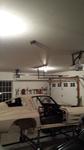
This is not a NCRS car.....I drive mine and do all the service on it. I like to drain the block and flush three times when changing antifreeze. With good measurements I marked the hole locations and removed the covers, drilled the holes 5/8" and changed the block plugs to hex type, used plumbers dop on the threads. Now it's fast and easy to drain my block. Once and done! Big-K













 Rad Flush - '66





 the tap water in my area is loaded with calcium and lime and even with an inline water filter in my house I STILL have to clean the aerators out in the faucets regularly. I don’t want that crap in my radiator.