



Oil Analysis

Thread Starter
Drifting


Joined: Jan 2018
Posts: 1,256
Likes: 316
From: Western NY
 Oil Analysis
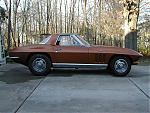
1st Blackstone Labs oil analysis on my 66 L79 that I have done since owning her. Mileage shows 39K but that is unconfirmed and unlikely accurate. Their review up top pretty much explains the results but I wanted the engine guy's opinions. Oil pressure shows good on the gauge. Early on when I bought her I did a compression test and the results were a bit low at the time. That said she burns no oil, exhaust once off the choke is clear and she runs fine. I did remap the distributor when I rebuilt it and max advance comes in around 3K, no audible pinging that I have noticed although my hearing is not what it once was.
What do you think? I plan to repeat the study in the Fall.
What do you think? I plan to repeat the study in the Fall.
1967 Pedal Car Champion

Joined: Mar 2020
Posts: 9,140
Likes: 4,249
From: US-PNW
I think it looks to be in decent shape. Just trace fuel in the oil, no coolant, and no water. That is good as far as rings and passages sealing well. Do you use additives or leaded gas? From a single test you really don't know what's going on with the lead and tin. Your thought to put a few thousand miles on it and retest is a good one.
Team Owner


Joined: Aug 2008
Posts: 33,058
Likes: 6,582
From: Rochester NY
St. Jude Donor '09 thru '26
Paul, we used to send locomotive oil for analysis (a whole lot cheaper to only change it when there is a problem when you're talking 200 gallons capacity). You already know the following but if it helps anyone: The first test does 2 things - it tells you if something is wrong right now, and it establishes a base line for comparison on future tests. On the subsequent tests you can track the percentages of various elements and anticipate a problem way before it would otherwise be apparent. If something starts going up, it will point you in the direction of the issue.
Thread Starter
Drifting
Joined: Jan 2018
Posts: 1,256
Likes: 316
From: Western NY
Yes guy's were on the same page. On my aircraft it was best practices to run oil analysis annually so as to hopefully see a disturbing trend long before the big fan up front stopped spinning during an inconvenient moment.
I generally do a filter/oil change before and after the driving season, so I'll revise this thread in the Fall.
I generally do a filter/oil change before and after the driving season, so I'll revise this thread in the Fall.
Team Owner
Joined: Aug 2008
Posts: 33,058
Likes: 6,582
From: Rochester NY
St. Jude Donor '09 thru '26
Thread Starter
Drifting
Joined: Jan 2018
Posts: 1,256
Likes: 316
From: Western NY
yeh, I generally aim for a 3K driving season so that works out about right. I recognize that there is no mileage on it in the Spring but I change it a few drives before she is tucked away for the Winter, so the oil is fresh and again after the first drive of Spring due to likely condensation that accumulated over the Winter. I could skip the Spring filter, but K&N is cheap enough that I swap it out as well.
1967 Pedal Car Champion
Joined: Mar 2020
Posts: 9,140
Likes: 4,249
From: US-PNW
yeh, I generally aim for a 3K driving season so that works out about right. I recognize that there is no mileage on it in the Spring but I change it a few drives before she is tucked away for the Winter, so the oil is fresh and again after the first drive of Spring due to likely condensation that accumulated over the Winter. I could skip the Spring filter, but K&N is cheap enough that I swap it out as well.
Thread Starter
Drifting
Joined: Jan 2018
Posts: 1,256
Likes: 316
From: Western NY
OK Owen, probably could eliminate that change, save up for bearings. Assuming the metals are from bearings, do these things fail gradually or is that something that suddenly leaves you on the side of the road. We have two 7-10 day road trips planned this year and when the day does come to pull the motor I would prefer to do it as Winter approaches so I have months to do the work and get it back in bed.
Corvette Stories
The Best of Corvette for Corvette Enthusiasts

Every 2027 Corvette Engine Explained
Joe Kucinski
Designer Imagines A Corvette That Looks More Like a Corvette Than the Corvette
Verdad Gallardo
10 Ugly Corvettes That We Still Kinda Love
Joe Kucinski
Top 10 Most Expensive Corvettes Ever Sold on Bring A Trailer
Brett Foote
10 Things Every Corvette Owner Needs (2026 Edition)
Michael S. Palmer
8 Most "Only Corvette Owners Understand" Quirks and Problems
Pouria Savadkouei
10 Reasons the C6 Z06 is Still A Performance Benchmark After 20 Years
Joe Kucinski
How Much Horsepower Every Corvette Engine "LOST" in 1972
Joe Kucinski
Top 10 DOs and DON'Ts for Protecting Your Convertible Top!
Michael S. Palmer
Race Director


Joined: Apr 2005
Posts: 10,179
Likes: 2,306
From: Wesley Chapel, FL Las Vegas, NV
OK Owen, probably could eliminate that change, save up for bearings. Assuming the metals are from bearings, do these things fail gradually or is that something that suddenly leaves you on the side of the road. We have two 7-10 day road trips planned this year and when the day does come to pull the motor I would prefer to do it as Winter approaches so I have months to do the work and get it back in bed.
1967 Pedal Car Champion
Joined: Mar 2020
Posts: 9,140
Likes: 4,249
From: US-PNW
OK Owen, probably could eliminate that change, save up for bearings. Assuming the metals are from bearings, do these things fail gradually or is that something that suddenly leaves you on the side of the road. We have two 7-10 day road trips planned this year and when the day does come to pull the motor I would prefer to do it as Winter approaches so I have months to do the work and get it back in bed.

Pro


Joined: Feb 1999
Posts: 690
Likes: 118
From: Strongsville, Ohio
