When you click on links to various merchants on this site and make a purchase, this can result in this site earning a commission. Affiliate programs and affiliations include, but are not limited to, the eBay Partner Network.
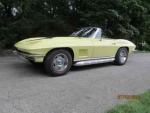
I have 67 convertible that I drive a lot. I don’t own a numbers matching car, just an amazingly fun driver! I installed a T-5 Five speed about 9 years ago. While the engine was out, I freshened up the bottom end and added a Performer intake and a Demon carb. It is a blast to drive. I always thought fuel injection would be a fun option, as much as I drive it.
I studied the web, for days and days, trying to glean all the information I could about the subject. I have used TBI fuel injection in the past on a project, but it was 15 years ago. It was a Chevy truck TBI on a 1964, 230 straight Six. Everything had to be custom made for my installation. It took days of programing to get this truck running correctly. I was definitely not looking for that experience again.
I wanted a simple install, and I didn’t want to change the overall look of the engine compartment and it had to be self Learning. All of this is going on a 350 HP 327. The biggest problem I was running into was the return line, or changing the fuel tank. Of course I wanted to be budget mined, but I wanted it to be correct!
I found a YouTube video of a guy with a C-2, that used an in-tank fuel pump by Holley, with a built in regulator, that returns inside the tank. This solved that problem for me.
Next was choosing a system/vendor. After watching all those videos and reading reviews, I chose the Aces Killshot. My reasoning was, ECU is external, I liked the wiring harness and its capability to control timing. (if I choose to go that route) I have been running a Pertronix Igniter for 8 years now.
Both the Killshot and the Sniper, had their fair share of problems and bad reviews. I also watched quite a few success stories. Everything about the Aces system, from opening the box to speaking with Tech support, was outstanding. They assured me this fuel pump would work with the Killshot.
The Install.
I read the Killshot manual many times, and of course, referred to it often during the install process.
To start with, I pulled the carburetor, fuel pump, drained the gas tank and pulled the sending unit out of the gas tank. I had to put that new TBI unit on the intake and have a look!!
I then had to determine where to locate the ECU. I didn’t want to drill a 2 inch hole in the firewall, so inside the car was out of the question. I laid the harness out a couple of different ways. They recommend to keep the ECU away from plug wires, coil and distributor. I am running the original stainless cover for the distributor and coil. So I didn’t think interference would be an issue. It was either behind the coolant tank, on the inner fender, or across from the windshield washer tank on the firewall. I chose the latter. The wiring seemed to lay out nicely that direction.
Besides the sensor connections these were my 5 hardwired connections. I Soldered and used Heat shrink on every connection.
1-Ignition on/Hot while cranking source.
Someone before me had installed a choke relay, with full battery power to the choke, that was triggered by the required source. I actually added this wire directly to the relay socket. Easy.
2-Distributor input signal from Coil Negative. I chose no timing control for the initial installation(their recommendation). This wire is in their “Additional Wiring” harness. It is the only wire in this part of the harness that I used.
3-Main Power +
Straight to battery Positive
4-Main Power -
Straight to Battery Negative
5-Fuel Pump Power On
They recommend using this to trigger a relay if your pump pulls over 15 amps. The Holley in Tank pump instructions say to fuse it at 15 amps, so I installed a 15 amp fuse between this wire and the fuel pump harness 12 volt +. I ran this wire, along with a 12 volt -, from the battery Negative, through the firewall Grommet right behind the distributor. I followed the factory “Rear Harness” routing path, all the way to the tank. I covered these wire in a nylon sheathing that you have to pull the wires through. This will help protect this run and it also looks nice.
Because of the amount of obstacles on the drivers side. I chose the passenger side, side pipe for the O2 sensor.
The kit came with a weld in O2 bung.
The other harness connections were 2 to the ECU, Coolant Temp sensor. I had a spare port in the Performer intake I am using. Fuel pressure sensor. This was a bonus with my kit. With an adapter, the 1/8 NPT sensor, screwed right into the fuel rail on the TBI. The last connector plugs directly into the TBI.
For the fuel, I ordered a 6AN fuel line kit from Amazon. It had all the high pressure fuel line and proper connections I needed. I simply ran a high pressure line from the Fuel Pump/Sending unit to the original, through the frame, hard line that was stock on the car. Then, connected that same hard line in the engine bay to a fuel filter and then, the TBI using the 6AN fittings from the Amazon kit.
The last thing to get connected was the Hand Held controller. I ran that cable behind the center console, to the same firewall grommet I used for the Fuel Pump Power. It connects close to the ECU. The controller comes with a windshield Mount. After initial tuning and programming are completed, this can get stowed away if you choose.
Next step was turning on the system and programming my engine parameters not the ECU, so it had a starting point. All of the ECU computations are based on a 45lb psi (3 Bar) fuel pressure at the injector. So I had to up the fuel pressure at the injector number to 58lb (4 Bar), which is where the Holley Fuel Pump is supposed to run.
So the first startup was nothing short of amazing to me. I would normally have to crank it for around 25 seconds, pumping the accelerator all the while. The engine spun over 2 or 3 times and fired right up and immediately started adjusting itself. I let it idle until it came up to temperature and went into closed loop mode. I took it out for a drive! The throttle response was amazing! Very crisp and quick. Way snappier! While driving through the gears, I noticed when I approached 3200 rpm or so it would load up and start lunging violently. It did this in every gear. I limped it back to my shop. It never got better. You can customize the display to show your chosen sensors. I noticed the fuel pressure was not there. When I finally got it on the display, (you can choose in the system what you want displayed) it was incredibly high. 80 to 90 pounds jumping up to 100 occasionally. Definitely not 58, where it should be
I talked to Holley about this, they said the regulator was definitely bad. I could return this to them and put it in the service queue, he had no idea how long it would take to repair it! He suggested I return it to where I bought it. Luckily I purchased it through Amazon. So I just returned it as defective, and they shipped a new one the next day! I have 30 days to return the defective pump.
Now with the new pump installed, it’s definitely running better, but, not up to what I expected. I continued to notice the voltage reading on the Handheld, showed lower than 12 volts while I was driving. I figured out that the stock original 37 amp alternator, was not quite enough juice to keep up with the Aces. I ordered a Powerhouse, 70 amp unit and a solid state voltage regulator.
Bam! 13.9 volts! And a better running car. Still working the kinks out, and driving it as much as I can so the ECU can learn. Overall a huge success. Throttle response is crazy fast. It’s still a blast to drive. I hope this helps anyone who is thinking about FI.
Cheers Display at “Key on”. Driver side installed view. Passenger side installed view.
T TBI and Fuel lines installed Mounted position. I fabbed up a panel that is shock mounted to the firewall for the ECU and Relays. New Fuel Pump/Sending unit installed. View from inside the tank. O2 bung installed. Dropped the side pipe to weld in the O2bung.
Great writeup, I haven't been keeping up with EFI retrofits lately so I had not heard of KILLSHOT.
As you probably know, the Sniper had/has a sensitive throttle and there's some fix for it, maybe there's a similar fix for yours.
I'm glad I stumbled on this. I've been considering the killshot for my 74 c3 as I'm about to swap I'm a 406. This system doesn't have a whole lot of feedback. I'm aware it will take some tweaking of adjustments and these aren't just a bolt on and go self tuning system but it's always good to see someone reporting good results.
Designer Imagines A Corvette That Looks More Like a Corvette Than the Corvette
Slideshow: A Jaguar designer's personal project imagines what a modern front-engined Corvette might look like if Chevrolet revisited the golden age of the Stingray.





 Aces Killshot Fuel Injection