When you click on links to various merchants on this site and make a purchase, this can result in this site earning a commission. Affiliate programs and affiliations include, but are not limited to, the eBay Partner Network.
I am quietly weeping today for those who gave all on this date 80 years ago. There is no possible way to repay the debt we owe them.
The best I know how to do is to pay my respects for what those members of The Greatest Generation endured and achieved.
To that end, my bride and I signed up for a ride on the Collings Foundation B17 Flying Fortress, "909" back in 2015 as our way of showing our respect. For us, it wasn't a joy ride. It was our simple, humble way of understanding what WWII airmen endured.
It was every bit the emotional experience we thought it might be. The plane was noisy, it vibrated constantly, there were no creature comforts. It was impossible to imagine what went through the minds of the members of The Greatest Generation who boarded these planes knowing that the odds of them returning alive were not good.
"909" no longer exists. It crashed and burned about 18 months after my bride and I experienced it. There are still a precious few B17s flying. If ever you get a chance to experience one, in the strongest terms possible, I urge you to do so.
Jim I am feeling your depth of emotion today. I too have
taken flights on various warbirds. B17, B24 and a P51.
Worth every penney as far as money is concerned. Something much deeper than a “ride” is purchased.
[QUOTE=Railroadman;1607874915]My Dad was in the Army, Signal Corps, and was in London. He said one shift of planes would be taking off and forming up to head out, at one altitude, and the returning group (what lucky ones returned) were circling waiting to land, at another level. He said the waves of sound coming down was something that just cannot be put into words. I have been to air shows where one or two of those old bombers flies by and it raises the hairs on your arms. I just can't imagine hundreds, or thousands, all at once in one place.
My uncle, who was attached to Patton's Army, was the first platoon to enter Dachau in April, '45. My uncle had seen considerable action in Africa and Italy before D-Day (four separate bullet wounds and ten pieces of shrapnel). I would not have known of his liberation of the Camp; however, in 1961 Adolph Eichmann, the architect behind the Final Solution, was captured in South America and spirited to Israel to stand trial. That brought worldwide attention to the Holocaust and one Sunday in early '62, while visiting him, he went to his closet and brought out artifacts/photos from the Camp, including a German luger that he had shot out of the Commandant's hand (probably taking out a couple of fingers in the process as the bullet from his M1 pierced the metal strap on the gun's handle).
The stories were horrific and, in many cases, surreal. The boxcar photos were very disturbing and I am a little surprised to this day that my parents allowed me to look at them. It was a Sunday that I never forgot and can remember the interaction with my uncle like it was yesterday. Experiences like that become indelibly etched in your mind forever.
The one comment he made that sounds like his generation was that he felt the most sorry (besides the inmates) for the Red Cross. I asked him why and he said, "well...we only had to be there a couple of days, the Red Cross had to be there for there for a lot longer than that". God bless Uncle Ralph.
Last edited by Dan Hampton; Jun 7, 2024 at 08:46 AM.
I had 5 Uncles that served in WW II, one at Pearl when it was attacked, one wounded crossing a river in Luxenbourg, but all came home. What a lucky family. I have the two star flag that my GrandParents hung in their window. They had a huge map on the wall of the living room and referenced it as they listened to the news each evening. The family reunions in my GrandParents small country home (where I was born) after the war were filled with such joy and love it is impossible to explain. I was in awe of all my heroes and was fortunate to be able to work with each one over the years as they helped each other throughout their lives.
They were the most stable and capable people that I've ever seen. Each one of them was completely self sufficent. They dug their own septic systems, tore down old houses to use lumber to build their own structures ( I pulled nails and straightened them to be used again), they could rebuild any part of their cars, did their own plumbing and electrical work, even put new heels on shoes and cut the kids hair. Amazing men supported by their amazing wives (My Mother washed and ironed for the owners of the local appliance store to pay off our washing machine.). I have been truly blessed to have known them so well.
My unmarried Uncle that was at Pearl lived next to us and ate dinner with us almost every night. When Dad and I were putting on a roof and rushing to finish it because we could see a storm coming, my Uncle climbed up and stood at the peak as we crouched down to nail the final row of shingles. As we were eating supper my Mother asked him why he was standing up on the roof. His reply was, "I saw the storm and lightning in the distance coming our way and I thought it would be better if lightning struck me than Gary or Elbert (my Dad).
Like Jim, I had the opportunity to fly in one of the vintage aircraft that was at the local airport. I asked if I could crawl up in the nose gunner position. Their answer was sure, just don't fall on the spring loaded nose gear doors. As I crawled past the nose gear was still spinning. Sitting in the nose gunners position was something to imagine how our heroes must have felt in the very front seat of everything going around them, ack ack fire, bombs bursting on the ground, watching other bombers falling out of the sky, close enough to see your fellow airmen facing sure death. Just impossible to imagine the emotions and still have the strength and resolve to go up again, time after time. What an honor to be an American, and to have known heroes growing up. God bless America.
Gary
PS the Uncle that was at Pear, also served during Korea and Viet Nam war. During WW II, 3 ships that he served on were sunk not long after he had been transferred.
Gravesite of my late father's brother Hector at Normandy War Memorial. This was the culmination of a week long trip several years ago with my dad and his best friend and WWII vet, to visit various WWII memorials across Germany, France and Belgium. My dad was an army ranger from the first class at Fort Benning back in 1950. This trip was particularly important as my dad passed shortly after returning. It's hard to describe the feeling of overwhelming loss of life at these memorials...very powerful and somber. I encourage everyone to visit at least once and pay their respects.
I recently watched a series called Masters of the Air on Apple TV. It’s about the B-17 pilots and their remarkable courage. Unbelievable what these young men endured. Truly “the Greatest Generation”. Sadly, we won’t see that courage again. God bless America and its many heroes.
🇺🇸🇺🇸🇺🇸🇺🇸🇺🇸🇺🇸🇺🇸🇺🇸🇺🇸
Mom and dad grew up in rural farming country. Mom never knew her dad as he became sick and died while working in a coal mine before she was born. During war effort she became a certified welder, but so the story goes, my grandmother would not allow her to go work at the ship building yards so she worked in a textile factory.
Dad was at Anzio and after recovering from a wound was in southern France and was wounded his last time within 3 miles of the German boarder.
They had met and dated before the war. I am in awe of the things they did and accomplished. Living through the Great Depression, Fighting and supporting a total war effort. Returning home after the war and getting married. Deciding their direction in a country growing and prospering setting up the opportunity for a better life for their family.
This story or similar was repeated across our great nation! Yes, I am proud of them and so many others for what they did .
May God bless America!
My friend's uncle was in a landing craft on D-Day very near the front. He said bullets were hitting the ramp about to be lowered. He remembers stepping out into the water and waking up in an English hospital. What happened is a shell landed near him and knocked him out, another soldier threw him back in the LST to keep him from drowning.
I'm named for my uncle William, aircraft commander, B24, killed, June 1944, aircraft went down in the Adriatic Sea.
I'm not an emotional kind of guy, but the Cemetery at Normandy really gets to me, I found it very moving.
My uncle, who was attached to Patton's Army, was the first platoon to enter Dachau in April, '45. My uncle had seen considerable action in Africa and Italy before D-Day (four separate bullet wounds and ten pieces of shrapnel). I would not have known of his liberation of the Camp; however, in 1961 Adolph Eichmann, the architect behind the Final Solution, was captured in South America and spirited to Israel to stand trial. That brought worldwide attention to the Holocaust and one Sunday in early '62, while visiting him, he went to his closet and brought out artifacts/photos from the Camp, including a German luger that he had shot out of the Commandant's hand (probably taking out a couple of fingers in the process as the bullet from his M1 pierced the metal strap on the gun's handle).
The stories were horrific and, in many cases, surreal. The boxcar photos were very disturbing and I am a little surprised to this day that my parents allowed me to look at them. It was a Sunday that I never forgot and can remember the interaction with my uncle like it was yesterday. Experiences like that become indelibly etched in your mind forever.
The one comment he made that sounds like his generation was that he felt the most sorry (besides the inmates) for the Red Cross. I asked him why and he said, "well...we only had to be there a couple of days, the Red Cross had to be there for there for a lot longer than that". God bless Uncle Ralph.
As I mentioned above, my father was with the Third Army at the Orhdruf concentration camp, which was the first concentration camp liberated. Orhdruf was a satellite camp to Buchenwald, and was a labor camp formed in late 44 to dig a series of rail tunnels through the mountains in the area. As a labor camp I don't think it had the gas chambers or ovens that Buchenwald and other concentration camps had, but it did have gallows. As the allies closed in on the area those that could walk where marched to Buchenwald and those that couldn't were shot and burned. The residents of the nearby town of Orhdruf were made to come to the camp and bury the remains of the dead, a practice that was adopted through out Germany, as more camps were discovered.
My father kept a diary with him throughout the war and his mother kept all his letters home. He described the camp and what he saw there in his diary and letters. The thing that struck me most from reading them was the extreme anger and hatred toward the German people he expressed in the letters and diary, that seeing the camp brought out in him. It was at a lever of anger I never saw in him, or never would have imagined coming from him.
Besides the diary, my father also carried a small 8mm movie camera with him throughout Europe. About 40 years ago a friend who worked with all kinds of video equipment helped me put my father's films on a VHS tape. Then a few years later I made a number of (fuzzy) 4x5 prints for him from single frames from the 8mm film. I don't remember there being anything from Orhdruf in the films. I never asked him about it, but it must have been just too horrible to film (it's been said that even Patton threw up when first seeing that camp).
My Dad had two brothers already in the military when the day he turned 17 his parents took him to the local recruiting office and they waved his age and he quit high school to enlist. He went in the Navy and ended up in the Marshal islands in the South Pacific. My Mom was a waitress at the beginning of the war. She and her sisters went to work in the ship yards in Portland, Oregon building small cargo ships( Liberty Ships). She was small so she welded down near the bottom of the ship on the inside. She said she welded her way out and no-one inspected her welds. On weekends she and her sister would go to dances in Salem Oregon. There would be men there but she and her sister would not dance with them because they were 4-Fers (could not pass the military physical.) So they would not dance with them because they're not good enough (her words) so she would dance with other women. I can remember growing up on the farm and Dad would need some welding done and he would take it to town. Mom would not touch a welder. She said that was men's work. I am proud to have that heritage in me.
2025 C2 of the Year ('64-'66) Finalist - Unmodified
2025 C5 of the Year Finalist - Unmodified
2023 C2 of the Year Finalist - Unmodified
2023 C5 of the Year Finalist - Unmodified
2022 C2 of the Year Finalist - Unmodified
2021 C5 of the Year Finalist - Unmodified
St. Jude Donor '25
Touching posts everyone. Thanks for sharing those experiences. The Greatest Generation is properly named. Our sincere thanks to them for their heroics and sacrifices.
We were also on Collings B17 several years ago when they brought three of their warbirds to the Bremerton, WA airport. I picked up this wall tin of it that still hangs in the pool table/wet bar area of our daylight basement.
Three of my uncles served during the war. Uncle Sam was in the USA, uncle Phil joined the Navy, and uncle Jim served in the US Coast Guard.
Uncle Phil joined the Navy in September, 1941. He was stationed at the Alameda Naval air station about 45 miles away from the family home in Santa Clara.
On weekends when he was free, he would hitchhike back home to Santa Clara. A service man seen hitchhiking in uniform was always given a ride to where they needed to go.
On the morning of December 7, Phil was home that weekend and said he was asleep in bed. His father came into the room to tell him the news of Pearl Harbor. Soon after an announcement was made over the radio for all active duty service men to report immediately their duty station. The Army sent out trucks to various mobilization points to get the men to where they needed to go.
In the beginning there was a lot of fear and hysteria of a Japanese attack on the West Coast. I remember my aunt Bernice said she put her twin daughters to sleep underneath their bed.
A short time later, Phil was transferred from Alameda to a scouting squadron based at Dutch Harbor, Alaska. The scouting squadron was equipped with the OS2U Kingfisher.
Phil told story of when coming back to base on patrol, the engine started running rough. The plane needed to clear a mountain ridge but was underpowered. To lighten the plane the pilot said, ‘jump, they’ll pick you up’. Phil said, ’you jump I’ll take her back in’ . Phil said it was all ice and snow on the ground below, they would never would have found him.
Some pilots taught the back seater, an enlisted man, how to fly the plane. There was a control stick on the side panel the back seater could plug in to a floor socket that operated the fight controls. In case of an emergency, the back seat pilot could bring the plane back to base.
There was a back-and-forth argument. The engine eventually smoothed out. The pilot, being an officer, said he would turn Phil in when they got back to base. Phil was called in by the CO to give his version of what happened. ‘That guy’s a hot head’, the CO said. That was the end of it.
Another time Phil said they were getting the Kingfisher ready to go out on a scouting mission. Phil said he stood on the center float to turn the engine prop over by hand to clear out any oil that might have settled in the lower cylinders. Before pulling the prop through Phil and the pilot would communicate back-and-forth that switches, etc., were in the off position. Phil said when he pulled the prop through the engine started.
With left hand on the prop hub he said it took all his strength to keep from being sucked in to the propeller. The pilot quickly shut down in the engine. The palm of his his left hand had a severe burn. Phil said he cussed out the pilot something fierce. The pilot was an officer but took it. He knew he was wrong.
In mid 1943, Phil was transferred to the aircraft carrier, CV-6, the USS Enterprise. Phil was assigned as a plane captain. He told a story of one day while waiting for his plane to return from a mission the Enterprise was under attack. A man had just been killed manning a 20 mm gun mount. The gunnery Sergeant looked over and saw Phil. He ordered him to take over the 20 mm gun. You can’t say no. Never having been trained on the 20 mm and not knowing any better, Phil said proceeded to burn the barrels down.
Another time, while under attack, a kamikaze pilot had been shot down and was floating in the water. A destroyer picked up the pilot out of the water. The destroyer not having a brig, the pilot was transferred to the Enterprise, which did have a brig.
While being escorted to the brig by two armed guard sentries, as they approached a group of guy’s standing nearby, the Japanese pilot started cussing them out, in English.
On of the guys in the group said, ‘where did you learn how to speak English’….the Japanese pilot shot back and blurted out, ‘I went to Glendale High’ (southern Cal).
One dark moonless night Phil said he was on deck watch. He saw a man walk right off the front of the Enterprise into the sea. The fall was 65 feet. Phil said he threw down a flare to mark the man’s position. You don’t do that in wartime. A destroyer plucked the man out of the water.
Phil went around and spoke to the guys that had seen what happened. They would come around wanting to know who threw the flare. The guys kept kept quiet.
Phil was best friends with another man onboard the Enterprise. They were from the same local area and had trained together before being shipped off to different duty stations. By chance they met again when both were transferred to the Enterprise. His name was Wilber Mitts. Wilber was a sailor who was assigned to fly as a back seat gunner on an Avenger.
Phil was transferred from the Enterprise back to the mainland in late November, 1944. His new assignment was overseeing a group of F-4U Corsair fighter planes. Phil told of an Ensign who had it out for. No matter what the Ensign complained of the fighter group not being kept up. Phil said he had the group running in tip top shape. He finally had enough. He asked the Ensign for permission to speak freely….’If you weren’t wearing those bars I’d kick the sh*t outta you’…’Yea, well they’re off’.
Phil had been a fighter before the war. The Ensign went down. Rather than man up the Ensign turned Phil in.
A court martial was surely coming his way. Higher ranking officers who knew and liked Phil transferred him to different base locations to keep one step ahead of the court martial. Phil mustered out of the Navy in late 1945. But for the court martial on his record Phil said he loved it and would have stayed in the Navy
Ten months ago I was shocked to hear the news. An announcement on the radio said the remains of Wilbur Mitts’ had been repatriated to the US mainland.
The following is a text conversation I had with my cousin Michele:
———————————————————————
Today coming back home from a car show there was a report on the radio of a World War II sailor from Monterey whose remains had been found and identified. His name was Wilbur Mitts.
I was shocked hearing the name. One day Uncle Phil and I were talking about his wartime experiences. Uncle Phil knew Wilbur Mitts. They had become good friends while stationed on the aircraft carrier Enterprise.
Uncle Phil was the lead airplane handler of the plane Wilbur was assigned to. He said too that he knew the aircraft pilot, Jay Manown, well also. Uncle Phil said, ‘Mr. Manown was a nice man’.
Uncle Phil said a couple of weeks before going on the mission that took his life Wilbur Mitts confided in
him that he was getting nervous and wanted to quit flying. He asked Uncle Phil if he would be willing to take his place.
Without knowing the interaction of what was said or how a transfer might take place Uncle Phil said he would agree to take Wilbur’s place.
On the mission the aircraft was shot down on the crew was listed as MIA, missing in action. Wilbur’s mother was notified of his MIA status. With the personal connection he Uncle Phil had, Uncle Phil kept in touch with Wilbur’s mother by letter. Uncle Phil said she held out hope that Wilbur might have survived and was alive.
After the war ended Uncle Phil was mustered out of the service. He said he went to Monterey to visit personally with Wilbur’s mother. He said he told her other planes in the group had seen Wilbur’s plane shot down and crash.
Perhaps hearing this from Uncle Phil provided closure.
During the war there were a
number of servicemen who were listed as MIA and actually did survive to come home. It was rare. Families held out hope.
———————————————————————
Cousin Michele:
Johnnie, the reburial ceremony is tomorrow morning at the new Veterans cemetery in Seaside. It seems Wilbur Mitts’ extended family will be there … along with a lot of dignitaries. There was an article in the Carmel Pine Cone newspaper last weekend all about it.
If I did not have six medical appointments tomorrow and Tuesday, I would have planned to attend to pay our respects. Honestly, I have been really pondering this all week, as I suspect we five are the only living ones who can fill in the details of the days before Jay Manown’s plane went down. He and Wilbur landed their TBD on the Enterprise later than other pilots in the new squadron (Torpedo Squadron 20 came aboard in late August. By happenstance Uncle was the plane captain assigned to that specific plane.)
Remember, Uncle and Wilbur had been on Lt Manown’s plane crew on the Osprey in Scouting Squadron 56 in Alaska in 1942 before Uncle was sent to the Big E. Lt Manown taught Uncle to fly (the seaplanes had two seats and dual controls) so that if the pilot was hit, Phil could still bring the plane back … and survive himself. Not every pilot did that for their crew.
They were all close friends regardless of rank and so relieved to find one another alive and safe in September 1944. Wilbur and Uncle were only 8 weeks apart in age; both from Northern California; both from families that had a hard time during the Great Depression. Jay Manown was an only child from a small town in Virginia. It was he who had planned to recommend Uncle for flight training (the Navy had Enlisted Officer pilots on aircraft carriers … unlike the other services). But Uncle was reassigned from Alaska to the Big E before the transfer paperwork went through. And so he never got his wings.
Uncle Phil told me the story several times as well. I had the sense that these two men were the ones he truly bonded with during the War … that being reunited with them nearly two years later in the war … coming onto the aircraft carrier from different places in the Pacific.. and Uncle on the flight deck pulling back the glass cockpit canopy to find Lt Manown was HIS new pilot. He said it was as if all the stars lined up to make it happen. Relief. Elation.
Uncle told me that when he checked out Lt Manown in the cockpit on the flight deck on the morning of September 10, the Lt told him they would fix all the paperwork later that day when he and Wilbur returned from the raid. Then Wilbur and Uncle would trade places. Uncle said he always told his pilots the same thing just before he closed the glass cockpit when they flew off on a mission: he looked them right in the eye, said “I’ll see you later today when you land, sir, and Godspeed “. He said he wanted to help them believe they would survive another mission. A thoughtful gesture.
Uncle said he waited on the flight deck for hours the day the plane went down. Often, planes would straggle back in twos or threes, with those shot up limping in slowly. He said he was the last Plane Captain on the flight deck and the sun was going down; he did not want to give up because he did not want to believe they were gone. He said it was the worst moment of the War for him.
When I began to read the news article, I thought as you did: we know about this man. He was real. And our Uncle was his trusted friend. He listened to Wilbur, reassured him, encouraged him, just as he did for all of us in our lives I wish Uncle were still alive to share those moments tomorrow with Wilbur’s family.
If you go to the CV6.org website, look under Ship’s Company, then Air Groups, then VT 20 (the torpedo bomb squadron), you will find Jay Manown and Wilbur Mitts listed on the same page in the same column. And if you look alphabetically under the letter G in Ship’s Company, you will find Felix Gomez. Many years ago I spent an afternoon on my laptop in my dining room helping Uncle explore the website in detail. He was so engaged; in many ways those experiences were the defining moments of his adulthood.
Thank you for sharing Johnnie. Perhaps I could contact the Carmel Pine Cone and ask them to share an address or email for Wilbur’s family. It would be kind to let them know that his memory lived on through our Uncle 🕊
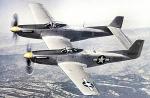
After training for the better part of 18 months my best bud’s Dad, Frank, was a USAAF pilot assigned to the 46th fighter group flying P-51 fighter planes based on Iwo Jima.
Their mission was to escort B 29 bombers that had taken off from their bases on Tinian and Saipan. The P51’s would link up with the bombers as they approached Iwo Jima. The fighters would escort the bombers all the way to conduct bombing raids on mainland Japan.
It was late 1945 by the time Frank’s fighter group arrived on Iwo Jima. Frank shot down two Japanese fighter planes during his time on Iwo Jima.
After a bombing was completed the fighter planes broke off from the bomber formation and went down to attack and shoot up targets of opportunity. Frank said he remembers flying past a haystack with a Japanese fighter plane inside.
Frank said he got chewed out by the CO after bringing back a full load of ammo coming back from a mission. The idea was to expend the ammo to lessen the weight of the plane to help ensure the plane making it back to base.
Frank said the hardest part of flying escort missions in the P-51 was sitting in that cramped cockpit. Missions could last 6-8 hours. He said you could always tell when a pilot flying in formation had to take a leak. The other pilots in the squadron chuckled as the plane would wallow around while the pilot worked to plug into the elimination tube.
When the war in the Pacific ended pilots who trained on the US mainland arrived at Iwo Jima only to find the war was over and wouldn’t be seeing any action. Frank said, ‘boy, those guys were mad’.
After leaving Iwo Jima Frank’s group was transferred to Saipan. The group remained stationed on Saipan into 1946.
Frank was transferred to Hamilton field, just north of San Francisco. While the transition to jets was taking place a handful of pilots assigned to fly in the P-51 were given flights to maintain currency.
Frank told of one flight of breaking off from flying a pre determined route so he could fly his P-51 over Yosemite valley. He said he had to pour the coals on to get back to waypoints along the original flight plan and get back to base in reasonable time. Frank retired from the Air Force in 1969.
Boy’s being boys William Conrad became a television star relatively late in his career. The former Army Air Corps World War II fighter pilot began his screen career playing heavies.
Though strictly prohibited, while stationed at Hamilton field during the war Conrad flew his P-39 under the Golden Gate bridge more than a few times.
My Dad landed at Normandy. He said that it was horrific. Lost a lot of buddies and would really not talk about it. He was wounded and sent back out, got caught up on the Battle of the Bulge his wound was not healed and got infected. When he came home he wound up going back in the hospital in 1958 and had part of his intestines removed. This banner was posted on the power pole in our home town. Each pole had a banner of a veteran who lived in or was from the area. Many pictured never returned home.
My Dad landed at Normandy. He said that it was horrific. Lost a lot of buddies and would really not talk about it.
That describes a lot of those veterans. My dad did not often give many details of his time overseas. In his later years he did disclose more, I am not sure if I heard it, or if he did write some things out - this thread will prompt me to look. Even though he was not directly in combat, it was bad. I mentioned he was in London during the German bombing. I do remember him telling of how he and a few others were walking down a street one night, and encountered a small group of soldiers walking the opposite direction. They chatted briefly, then went on their respective ways. A minute or two later there was a huge explosion behind them, a rocket (buzz bomb maybe? I'm not sure) landed right on the group they had just left.
That describes a lot of those veterans. My dad did not often give many details of his time overseas. In his later years he did disclose more, I am not sure if I heard it, or if he did write some things out - this thread will prompt me to look. Even though he was not directly in combat, it was bad. I mentioned he was in London during the German bombing. I do remember him telling of how he and a few others were walking down a street one night, and encountered a small group of soldiers walking the opposite direction. They chatted briefly, then went on their respective ways. A minute or two later there was a huge explosion behind them, a rocket (buzz bomb maybe? I'm not sure) landed right on the group they had just left.
So typical of WWII vets of The Greatest Generation, RRMan. So typical. They just did not talk about what they had witnessed or experienced.
My Dad (RIP) served in New Guinea, The Philippines, and in Tokyo. What little I know of his time in the service, I had to tease out of him over many many decades.
My Dad is gone now and I believe there is so much more he could have told me if only I had asked the right questions when I had the chance.
My father was in the Navy in the Pacific, but never really talked about what he did or saw during that time. I finally asked him to write about his time in the Pacific. He started and got several pages written, but it was never finished. So much is missing.
I know that he was at Iwo Jima and Okinawa, and he saw both flags go up on Mount Suribachi.
A number of years ago my wife and I visited Normandy and it is heart-stopping to see all of the graves there. There is still one German bunker there. I walked down the hill and stood at the water line and looked up at the bunker and tried to imagine what it was like to try to climb the hill with machine guns firing down at you. It was so calm and peaceful that it was difficult to imagine the death and destruction that happened there all those years ago. I had a small bottle and filled it with sand from the shore and brought it home to go into a small military display we have at home. It all makes my time in the Army seem insignificant.
My first programming job was at Continental Illinois National Bank in Chicago. This was when the very first credit cards were being rolled out and there were many problems. My boss Bob Weber was a WW II veteran and during some of all-nighters told a couple of stories about his time in the war. He was on a bomber crew and was hit over Germany and the plane caught fire. The pilot told the crew to parachute out while he kept the plane level before he jumped. Bob saw the pilot on fire as he exited the plane and then saw him later in captivity all bandaged up. As soon as my boss landed and started to run the Germans were upon them. He was taken to the same Stalag where over 50 men had escaped only to be captured and shot as they returned to camp. Apparently he and others were allowed to make a memorial for those killed.
I once complained about the bank's cafeteria food to my Bob. His response was how he thought it pretty good and related this story about being in captivity. Most of the time the men's main subject was about the food they enjoyed at home before the war. They would hoard food and save it up for a holiday like Thanksgiving or Christmas where they would all share in the "feast". The subject to talk about after enjoying their dinner with full bellys???? WOMEN!!!!!
More words of wisdom from him was during our all-nighters. I wanted to keep working to get done as quickly as possible. He always had a calm steadiness about him and said. "Wellll, Gary, you can do without sleep and manage, or you can do without food and manage, but you can't do without both and be effective'. Then we would go out in the early morning to a greasy spoon under the wabash L tracks to eat before going back and finishing our project.
Gary
PS this bank was the 8th largest bank in the world and get this. Their computers at the time were an 8k IBM 1401 and a 12k IBM 1410.
Designer Imagines A Corvette That Looks More Like a Corvette Than the Corvette
Slideshow: A Jaguar designer's personal project imagines what a modern front-engined Corvette might look like if Chevrolet revisited the golden age of the Stingray.




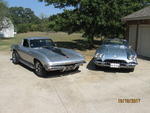


 the Ride!


 [/QUOTE















 I wish Uncle were still alive to share those moments tomorrow with Wilbur’s family.