When you click on links to various merchants on this site and make a purchase, this can result in this site earning a commission. Affiliate programs and affiliations include, but are not limited to, the eBay Partner Network.
Hi Everyone, I just finished a complete restoration on a 1958 with a 283, 270Hp rebuilt engine. I've done some short trips around the country roads around my home, and the car has for the most part run very well. As long as I was running at highway speeds, the temperature was running right at 180 deg., but when I stopped at a stop sign or signal, the temp would rise quickly to 200-210. I felt comfortable enough to enroll in our local 4th of July car parade, where I quickly overheated to the point where the bottom radiator hose separated from the water pump. I fixed that issue, re-charged the coolant system, and I'm still having the same issue. I assumed the issue was not enough air crossing the radiator, but I went ahead and put in a 160 deg. (instead of the original 180 deg.) thermostat and drilled a little bypass hole to ensure some water was flowing. This dropped my highway speed temp to a little less that 180, but it still overheats when stopped or at low speeds.
During the restoration, I purchased a new replica correct radiator (aluminum) and fan, rebuilt correct water pump, and new hoses. From what I've been reading, it seems like this is a common problem with cars of this vintage, but I've yet to see a solution that works. My intent during the restoration was to bring the car back to its original glory, so I tried to obtain correct parts for the 1958 model year, and I'd prefer to keep it that way. With that said, this was not meant to be just a show car, but something my wife and I can enjoy on weekend drives and enroll in occasional shows as desired, so it needs to run well when not being shown.
I'll sincerely appreciate any help and advice anyone can provide. Thanks!
I had the same issue with my '60. I noticed the clearance between the fan tips and the radiator shroud to be over an inch IIRC. It has been a while but I went from a 5 blade to a 6 blade fan and from 15 inches to 18. The 18 was too large but I milled down the tips to give a fan shroud clearance of about 1/4 inch. Had no more issues after that.
Welcome to the Forum. You have a spectacular looking '58.
Check to be sure your fan clutch is functioning, as well as the radiator/surge tank cap is holding pressure. BTW, 210* is not even close to overheating. Are you running a 50/50 mixture of coolant (Zerex G05) and distilled water?
Oh, and put the 180* thermostat back in there...the 160* is not doing you any favors.
Very nice 58 and congrats on getting the restoration done. There is hope, my 58 ran just fine with the original configuration, never overheated nor got very hot in traffic. Not bragging, just pointing out the factory style system does work )or maybe I just got lucky.....)
Leif made some good suggestions - especially checking the function of the fan clutch (if present). Running hot at slower speeds points to a possible fan clutch issue. I will reiterate Leif's point, the 160 thermostat doesn't make it run cooler it just the temp where it will open. The engine will reach its own operating temp no matter what thermostat is installed.
The 58 also has some seals around the radiator that need to be in place.
I used a Dewitts radiator in my car, actually in all of my cars. What radiator did you use?
Timing / advance curve can also play into running warm. You might want to revisit that. If you did a stock restoration you'll have a mechanical advance, dual point distributor. It will be worth the time to check the advance curve.
It could be a head gasket. I would see about getting a sniffer and checking for exhaust fumes in the radiator fluid. Now. you could start it and verify that the water is circulating and no bubbles or milkshake in the radiator. It might not be fully blown just leaking enough when it is hot and cools down. You could pressurize it too and see if there is an internal leak.
Also, would check to see if the clutch fan is working too. The last thing is to see if its timing. That could cause it to get warm but you probably would have noticed that while driving.
210 in this type of heat probably not too much of a concern. Is it puking fluid out? If not, then drive it unless you want to narrow down some things. The things I have suggested are not too expensive and well worth having in the garage.
Last edited by jimh_1962; Jul 23, 2024 at 08:20 PM.
Always use an infrared temperature gun to verify temperatures at top and bottom radiator and at temp sending unit.
200-210 temps are normal on warm to hot days in stop and go traffic. It should drop quickly at decent sustained car speeds.
1) thermostats do 2 things: maintain a minimal temperature and slows down coolant flow so the fluid can absorb and release heat. It does not control upper bound temperatures. The overall system efficiency controls the upper bound (timing, ignition quality, fuel mixture, coolant condition, cleanliness of coolant passages, condition of radiator, air movement through radiator, proper working radiator cap, etc). A thermostat that sticks fully or partially close can cause heating issues.
2) check properly installed and sealed shroud. Check fan positioning within shroud (should be found partially inside of shroud). '58s use 4 blade with bent tips..no fan clutch was used.
3) check belt tension; tight enough to prevent slippage
4) check bottom hose for collapsing at higher rpm; can indicate a bad radiator cap
5) check radiator cap that it's sealing and holding pressure
6) check timing and fuel mixture
7) was engine fully rebuilt...removal of all scale from water jackets etc
fyi over filled radiators will puke coolant until proper level is reached.
Last edited by Jake Morgan; Aug 2, 2024 at 04:55 AM.
Thanks Lief, I appreciate your kind words about the restoration. The 58 did not come with a fan clutch to my knowledge, and in either case I don't have one mounted. Likewise there is not a surge tank installed, and I'm running the coolant and mixture that you referenced. The radiator cap is only 8 PSI, I think, and was told that in 60 that was raised to 13? I agree that 210* isn't too hot, but I'm not sure how accurate the temp gage is in the dash. It was cleaned and calibrated, but I haven't checked accuracy yet. so I'll put that on my to-do list. I tried the 160 stat because with the 180 installed it ran up to 200 before cooling down to 180, so I guessed that a 160 might overshoot the temp similarly and max out at 180, which is what it did at highway speeds. I agree that the 180 is the better option since the low speed / idle temp did not improve. Thanks again!
Thanks Thoyer! I did use a Dewitts radiator and I'm happy that's a preferred choice! I don't recall installing any seals around the radiator, so I'll check into that. I haven't rechecked the timing and advance curve since it was first timed, I'll add that to my to-do list. Thanks for the feedback!!
Thanks Jimh! The head gaskets were tested by a local shop, and it came back normal, so hopefully that isn't the problem. The car runs very well when not overheating so I'm guessing the gaskets and timing are okay, but will definitely recheck. Thanks for your feedback!
Thanks Jake! I appreciate your detailed advice and will definitely go through your punch list. The engine was completely rebuilt by Hi Performance Restorations in Nebraska, and he came highly recommended by a few guys I know, and his ratings were excellent. Based on what we discussed, he did all of the things you would want in a quality re-build including scale removal in the water jackets. I wasn't there for the rebuild so I didn't see what he did, but based on the experience of the guys I know, I feel confident he did that part correctly. Thanks again!!
Dirk - you've received a lot of great recommendations from veteran C1 owners. Here's my contribution. I have lived your problem. I am a long time '59 C1 owner in TX with a numbers-matching stock 230 HP 283, 4BBL WCFB, stock intake, no AC, and Powerglide running in San Antonio which can get pretty dang hot 6 months a year. I have a refurbished copper radiator with brass tanks, OE water pump, still run a generator, fuel pump, Distributor, and points. After a motor refresh and tune in 2021, I had an overheating issue I chased for almost 8 months. There is no magic wand or recipe I can share because every C1 is different. But here is a series of hints that collectively can provide a path to lower engine temps without adding power hungry fans and expensive accessories that may not work. I will reiterate several tips I was given and already mentioned to you and some that weren't.
Fan Shroud - make sure you have the correct shroud for your '58 and seal up around the sides of the shroud and radiator and underneath the front end, so you maximize air flow into and through the radiator. Buy a good IR temp sensor and check idle temp at the thermostat housing - the dashboard temp gauge and temp sending unit are not very accurate. Yours may be reading high or low as mine was. Record the difference. Thermostats - test yours in a pan of hot water using the IR sensor. I tested brand new 180 thermostats that didn't open until 190 deg and ones listed at 160 that didn't open until 175 deg. I installed a verified 160 deg thermostat. Coolant - flush the coolant and use quality brand green antifreeze and distilled water 50/50. For added security, I added 2 bottles of water wetter. Fan - I switched to a 5-blade steel 17" Derale fan which increased air flow and put my 4-blade on the shelf. Heater core - flush yours - a good heater core can help reduce engine temp a little when out driving if needed. Water pump - the fan inside the old GM water pumps were stampings - I had my pump rebuilt and went with a CNC machined fan designed to increase water flow. Radiator cap - I replaced my 7-lb unit with a 13lb Gates cap - which contributed to the lower temp objective. Will assume your fan belt, hoses, and pulleys match your 283 and are in good order.
Now for other things that lead to better running engines which can help lower engine temp - Timing - I increased my timing closer to 10 deg BTDC and tweaked my engine vacuum by adjusting the WCFB idle screws to reach maximum vacuum pressure. This effort may expose vacuum leaks you can address and help lower your rpm while keeping a smooth idle. Engine oil - add a zinc additive to your engine oil, zinc is no longer provided in today's oil but helps lubricate 283 engine parts which helps reduce wear. Exhaust and Muffler. Check to see your mufflers are not rusted inside and creating back pressure. I was amazed at how much better my engine ran at lower idle rpm with newer mufflers. Gasoline and Octane - Octane gas in the 80's causes the C1 SBs to run hotter because the engine combustion temp with it is not what these engines were designed to operate at - which causes the engine to run hotter. An old timer on CF suggested I use gas with an octane additive. I buy 90 octane nonethanol and add a booster to it to reach about 96 - that in my opinion was the finishing touch. It took a while, but persistence paid off. Now at idle, my engine temp reads around 175 deg on my IR gun when it's 99 deg outside. At driving speeds, my gauge show temp of 190-210 which I am happy with. Driving temps at 210 F aren't bad if it's 99F outside and your dashboard gauge and/or temp sensor aren't reading 10% too low resulting in an actual engine temp over 230+. Good Luck.
My ‘58 had very similar over heating problems as yours.
I could bore you with a the details, but in the end my problem was that the engine idle was set at 500 RPM (and it ran fine). Idle is supposed to be 800 RPM. That extra 300 RPM gave the extra airflow through the radiator to keep it cool.
All the ideas Dan proposed are fine, although I would ditch the zinc option, as it is not a contributing factor to your overheating. You can get in more trouble with zinc additives than they are worth. Search the Forum on this issue.
Thanks Dan for your very detailed list of items you went through to solve your overheating issue, and also for your encouragement. I've done most of what you suggested, and I now have the car running great and without overheating so long as the ambient is below 90*. Above that temp, I still have overheating at idle unfortunately. I've ordered a 5-blade fan from my local vintage vette supplier to see if that helps with the hotter days. I have a new replacement aluminum radiator, and I've been thinking about changing to copper / brass as those metals are better heat conductors than aluminum, although I've read conflicting accounts between the efficacy of aluminum versus copper/brass in an auto radiator application.
Dirk - Glad to hear you are making progress. In my humble opinion you have reached a point where your engine combustion temperature is a larger heat contributor at idle than your radiator efficiency. Given these issues occurred after your recent engine rebuild, it isn't uncommon for builders to use new SBC compatible parts that yield a higher performance curve than stock. Hence if your engine is set at stock timing and vac. advance settings, these along with low gas octane could contribute to making the engine sound OK but higher combustion temps than normal. Check your distributor advance with a timing light with a dialback at idle to see what that is reading (assuming you have a non HEI distributor). Forgot to mention earlier I had to change my vacuum advance 2x after my rebuild before I got it right. Went to a B26 before things settled in. Tweak the idle speed as others have suggested using a vacuum gauge and rpm gauge. Put a 13lb Gates radiator cap on that new AL radiator, advance the timing, boost the gas octane, and stick the biggest floor fan you have on HIGH in front of your grille. Shoot the thermostat housing with an IR temp gun during a 10-15 min idle and see what you get. A little radiator puking if too full is acceptable. If you arrive at a good temp at idle after all that, you are headed to 3rd base but not quite Home!




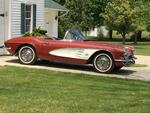





 1958 Overheating