







1966 Repaint

Thread Starter
Heel & Toe


Joined: Jan 2023
Posts: 23
Likes: 16
From: MN
 1966 Repaint
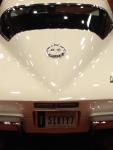
Having my 1966 C2 repainted with very minor bodywork. Is there certain things that I should be making sure that they use or do for a long lasting paint job? I do not want bubbles here and there again after 10 years.
Yes - they are a good shop that does many restorations but not always on C2 corvettes.
Yes - they are a good shop that does many restorations but not always on C2 corvettes.

Race Director


Joined: Jan 2003
Posts: 17,682
Likes: 3,678
From: Central Arkansas
Usually bubbles are typically from a contaminates in the fiberglass that is trying to surface. Sometimes it can be just poor surface preparation not allowing full adhesion to take place (primer sanded to smooth or not sanded at all). If you have some photos of the bubbles you can post you might get some experienced guesses as to the cause. In my minor experience with the subject I would venture that larger, random bubbles are due to poor adhesion. Smaller, multiple clusters of bubbles like pimples, in the vicinity of the brake MC, in the hood over the AC compressor, etc are probably from contamination in the fiberglass.
Thread Starter
Heel & Toe
Joined: Jan 2023
Posts: 23
Likes: 16
From: MN
It is large and small bubbles on some of the curved areas. It must be an adhesion problem from poor prep work I would assume. Is this a common issue?
I am having the whole thing stripped and redone but want to be certain it doesn't happen again in 10-15 years.
I am having the whole thing stripped and redone but want to be certain it doesn't happen again in 10-15 years.
Race Director
Joined: Jan 2003
Posts: 17,682
Likes: 3,678
From: Central Arkansas
If you pop one of the bubbles and examine what’s underneath you might get a clue. If you find slick looking primer then poor surface cleaning and prep are good bets. If you find bare fiberglass under the bubble then I would suspect fiberglass contamination although again it could have been poor preparation of the fiberglass surface prior to priming. Wiping the bare, paint stripped body down several times with lacquer thinner and parking it outside on a sunny, hot day can help with contamination. Some people use acetone but I personally avoid it on fiberglass as it can attack the resin. Often, if there is some sort of contamination the heat will wick it to the surface and it will be discolored compared to the uncontaminated areas. Some people have had to resort to grinding the fiberglass surface down and then build it back with fresh fiberglass and resin and the fill and block to re-establish the surface. A horrendous job. Others have simply (not really simple) replaced the fiberglass. Some have had success working the contamination out with heat and solvents and sealing the surface. If just a surface prep issue then on a repaint that’s much easier to deal with.
You can do a search in the paint and body forum section under General Subjects and find a lot of discussion on contamination and paint bubbling.
You can do a search in the paint and body forum section under General Subjects and find a lot of discussion on contamination and paint bubbling.
Race Director


Joined: Jul 2018
Posts: 10,588
Likes: 8,409
From: San Antonio, TX/Mahopac, NY
2026 Restomod of the Year Winner
2024 Corvette of the Year Finalist - Modified
2024 Corvette of the Year Finalist - Unmodified
2023 C7 of the Year Winner - Modified
Some factors to consider:
- The more layers of paint, the more opportunities for failure. Are you stripping the car to bare fiberglass?
- Common contamination areas include the hood and fender near the brake MC and area around the gas filler. Have these checked carefully for contamination.
- My ‘64 has three layers of paint/primer. It chipped and cracked around the windshield trim, around the hood opening recess, and in the front side vent areas. These are common locations for poor prep. Removing all trim, glass, doors, hood, etc help prevent these issues.
- Areas of body work require time to cure, outgas, and shrink. Allow proper time before top coating.
- The final wipe down and tack is one of the most critical for a smooth, blemish free finish. Does the shop have a dedicated down or side draft paint booth? Is it clean and well maintained?

Safety Car


Joined: Nov 2002
Posts: 4,459
Likes: 1,293
From: minneola fl
Forget about trying to analyze what the problem was. As a painter of many Corvettes over the past 40 years, I would recommend the following:
1. Get references, and LOOK at the painters past work
2. Have your painter use ONLY brand name paint, ie: Dupont, Sikkens, PPG, Sherwin Williams. Most paint mfrs have a "shop line" (cheaper) paint, and a premium paint. Use the latter. Don't cheap out on primer/sealers
3. LOOK at the painters shop. If the shop is dirty, disorganized, etc. RUN away (there will always be excuses "all paint shops look like this", etc.
4. Under NO circumstances give him "work on it when you have time" bit, or you'll never get your car back (commonly called paint prison.
5. Get a contract. It doesn't have to be anything fancy, but should include a start date, type and brand of materials being used, a cost estimate for material and labor (shop expenses), how "add ons" are going to be calculated (usually cost per hour), how you are going to be kept in the loop, and most important, a drop dead completion date barring some unfortunate discovery while stripping, bodywork, etc. I would also add a "overage deduct" against the painter, if it is not finished as promised.
Which one is Most important??? ALL OF THEM. I've painted hundreds of cars. Not all Corvettes. As a painter, my reputation rides on the job that I do. I'd like to think that any customer that I have painted for, would come back to my shop for work (I have had some do that). I usually allow my self 60-90 days for non body off strip/paint/buff of a Corvette. That includes removing bumpers, trim, w/s, then stripping the car, minor body work (owner is notified immediately if some unknown problem pops up, primer, sealer, color/clear, cut and buff, and reassemble trim etc. Removing glass, doors, hood, etc is outside the normal scope, and adds about 15 days to my "drop dead" finish date. With all that being said, most jobs take less than 30 days, and I've never had one go past my "drop dead" date. I've done many, many cars. Some are full builds, and some are touch ups. Your painter is probably not going to want to hear this story, but I've been around this block many times, and what I say is truth. You don't have to do anything that I say, but you asked for an opinion. Trying to get information from guys that are not painters is worthless information. I hope this helps. I quit two years ago, so don't ask if I'll paint your car
BTW, I always did my own work. I never had a single $15/hr "trainee" working on a customer car. Ever. Maybe another question, if you're using a bigger shop.
1. Get references, and LOOK at the painters past work
2. Have your painter use ONLY brand name paint, ie: Dupont, Sikkens, PPG, Sherwin Williams. Most paint mfrs have a "shop line" (cheaper) paint, and a premium paint. Use the latter. Don't cheap out on primer/sealers
3. LOOK at the painters shop. If the shop is dirty, disorganized, etc. RUN away (there will always be excuses "all paint shops look like this", etc.
4. Under NO circumstances give him "work on it when you have time" bit, or you'll never get your car back (commonly called paint prison.
5. Get a contract. It doesn't have to be anything fancy, but should include a start date, type and brand of materials being used, a cost estimate for material and labor (shop expenses), how "add ons" are going to be calculated (usually cost per hour), how you are going to be kept in the loop, and most important, a drop dead completion date barring some unfortunate discovery while stripping, bodywork, etc. I would also add a "overage deduct" against the painter, if it is not finished as promised.
Which one is Most important??? ALL OF THEM. I've painted hundreds of cars. Not all Corvettes. As a painter, my reputation rides on the job that I do. I'd like to think that any customer that I have painted for, would come back to my shop for work (I have had some do that). I usually allow my self 60-90 days for non body off strip/paint/buff of a Corvette. That includes removing bumpers, trim, w/s, then stripping the car, minor body work (owner is notified immediately if some unknown problem pops up, primer, sealer, color/clear, cut and buff, and reassemble trim etc. Removing glass, doors, hood, etc is outside the normal scope, and adds about 15 days to my "drop dead" finish date. With all that being said, most jobs take less than 30 days, and I've never had one go past my "drop dead" date. I've done many, many cars. Some are full builds, and some are touch ups. Your painter is probably not going to want to hear this story, but I've been around this block many times, and what I say is truth. You don't have to do anything that I say, but you asked for an opinion. Trying to get information from guys that are not painters is worthless information. I hope this helps. I quit two years ago, so don't ask if I'll paint your car
BTW, I always did my own work. I never had a single $15/hr "trainee" working on a customer car. Ever. Maybe another question, if you're using a bigger shop.
Corvette Stories
The Best of Corvette for Corvette Enthusiasts

Top 10 Most Expensive Corvettes Ever Sold on Bring A Trailer
Brett Foote
10 Things Every Corvette Owner Needs (2026 Edition)
Michael S. Palmer
8 Most "Only Corvette Owners Understand" Quirks and Problems
Pouria Savadkouei
10 Reasons the C6 Z06 is Still A Performance Benchmark After 20 Years
Joe Kucinski
How Much Horsepower Every Corvette Engine "LOST" in 1972
Joe Kucinski
Top 10 DOs and DON'Ts for Protecting Your Convertible Top!
Michael S. Palmer
Top 10 Most Explosive Corvettes Ever Made: Power-to-Weight Ratio Ranked!
Joe Kucinski
150 hp to 1,250 hp: Every Corvette Generation Compared by the Specs That Matter
Joe Kucinski

