When you click on links to various merchants on this site and make a purchase, this can result in this site earning a commission. Affiliate programs and affiliations include, but are not limited to, the eBay Partner Network.
Hello All. Just finished a front suspension refresh on my 1966. Was wondering what people think about my spindle. I did put it back in the car, but if the group recommends changing it I probably will next opportunity.
Thanks. Mark
Do you see that gradual radius where the diameter transitions? To prevent stress risers, the surface in that radius area needs to be very smooth. While I can't say for sure those surface irregularities significantly weaken the spindle, I am positive they have some effect on the spindle's strength.
Looking at your spindle the bearing race area looks like it has been sanded? If so, how does it measure compared to a stock spindle?
If I am seeing it correctly one bearing race and the seal area are shown for the inner bearing. The outer bearing race area is not shown?
If there was any blueing of the spindle before it was sanded it is not useable. Blueing is from heat and heat changes the strength of the spindle. (axles also)
If you do end up changing the spindle you might consider a C3 spindle, they used larger bearings. GM did an upgrade on these in 68.
Last edited by Westlotorn; Aug 22, 2025 at 10:41 PM.
I would be more concerned with that narrow line through it. Looks like it was sliced off and welded back on. I know, it sounds crazy, but people 60 years ago did some crazy things. There wasn't an abundance of spare parts in small towns AND pockets of extra money to buy them. A guy with a welder and a lathe or drill press might weld it up, and machine it back to fit, as it only cost him time. Otherwise, he had to go to the dealer, pay a lot, and maybe wait a few days or more for the part to come in.
Yes, it sounds nuts, but that is exactly how the right front spindle was on my '69 Charger. Only he didn't get it perfectly straight. It was off-center about an 1/8th of an inch.
All the little dents look like he might have tried peening it as he machined too far and the bearing race was slipping on the spindle.
I agree with the advice already given. The consequences of a spindle failure can be anywhere from inconvenient to horrific. It’s just not worth the risk. I replaced both knuckles on mine last year, and they looked a lot better than the one that’s pictured above.
I've disassembled dozens of HD trucks with spindles that looked much worse than this, that went many miles before and many miles after my work. I'd smooth things out and ship it.
Thank you everyone for the time to look at this thread and comment.
Keith-I can not catch it with a fingernail.
Mark- It may have been sanded in the past, but I did not. // I did not take any measurements on this spindle or the one on the other side or do I have any other one to compare it to. // I don't think the outer bearing surface is in the picture, but it appeared fine or without any markings.// I did not notice any bluing of the spindle, just the discoloration of the metal in the picture.
BAmacker- What do you think caused the spindle to look like that?
I will probably order a new spindle this week. As nutt said about piece of mind. I just hope I don't screw up the newly riveted ball joints getting the spindle off. Big lesson learned on my part.
Again, Thanks everyone. Can't say enough about how much I learn from you guys. Cheers. Mark
Use a screw-type ball joint separator, not a pickle fork. Removing the grease zerk first will allow grease to escape harmlessly rather than possibly rupturing the grease boot when you push the tool into position between the boot and the knuckle to separate the BJ stud from the knuckle.
I separated my lower ball joints this week and have always use a tool like this for them and a smaller one for tie rods. Tighten it up, smack the head of the screw with a hammer a couple times, tighten it again, smack it with the hammer and it usually pops loose pretty quickly. Leave the nut on loosely so nothing flies apart.
The old ball joint removing tools are all FORGED STEEL, the harbor freight type you see for sale today are cast steel. I had one, it would never pop the joints on trucks I was working on. Finally found an older one, Forged Steel design. It has never failed to work. Sad part is they have the same part number I think both were sold as OTC brand.
a simple smack on the side of spindle with a BFH always seemed to work well
It will pop them loose, but it will also deliver impacts to the ball and socket of the BJ. I did plenty of them that way long ago, but I can’t bring myself to hammer on a knuckle anymore.
It will pop them loose, but it will also deliver impacts to the ball and socket of the BJ. I did plenty of them that way long ago, but I can’t bring myself to hammer on a knuckle anymore.
Live well,
SJW
That’s kind of my feeling too. Resorting to hammers and pickle forks when a puller works so well without potentially damaging anything just sits better with me.





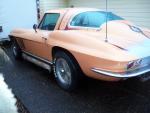









 1966 spindle.