When you click on links to various merchants on this site and make a purchase, this can result in this site earning a commission. Affiliate programs and affiliations include, but are not limited to, the eBay Partner Network.
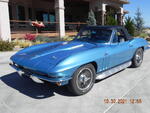
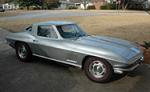
I'm really counting on you guys/gals to help me on this one! I have a 67 with a 350 CU IN motor, 11 to 1. pop up pistons, roller double timing chain. All of a sudden it started pinging like it had bad gas.I added more high test, no help. The last time this happened, two years ago it was a bent push rod and it didn't sound this bad. This time All the push rods are good.
The thing is, it's fine until it Warms up! Than it's crazy pinging! That's the only word I can think of, I know it's Not a knock, like a bearing. Just a serious pinging sound.
I am So hoping for someone to solve this mystery, Thank You!!!
In addition to what Leif already asked about, it would help if you could give us a bit more of the details like plug and plug wire condition, what VAC are you using and is it in good shape, any exhaust leaks, heat riser functioning as it should, carb settings like float level and mixture screws, etc. Any changes or additions lately?
Mike T - Prescott AZ
On my car the mechanical advance was binding and that was holding the timming advanced. I removed the distributor and took it apart and cleaned the old grease out and relubed.
Thanks Mike, plugs and wires are new, not sure what you mean with VAC, no exhaust leaks, heat riser good, carb floats good, mixture settings fine, no recent changes, just started pinging out of the blue!!!
You need more than initial advance. Provide advance at 500 RPM intervals from idle to 4000 RPM.........vacuum advance disconnected and plugged. Then provide what additional advance the VAC contributes when added at idle. Also what vacuum (in HG) the vacuum advance starts and at what point it is all in. This requires a vacuum gage and/or Mity-Vac.
Can you tell if it’s really a pre-ignition ping or a metallic ping like a torque converter bolt or too long clutch bolt hitting the sheet metal closure on the transmission bell housing or a rocker hitting the valve cover? Many engines run with 25+ degrees of initial and vacuum advance at idle without issue. I sort of doubt it’s pre-ignition but guessing over the internet always leaves a lot to be desired.
VAC is used as abbreviation for Vacuum Advance Can.
You probably know but just in case it advances timing as vacuum increases (full manifold vacuum) and if the diaphragm is leaking it won’t work and your timing is going to be off.
On my car the mechanical advance was binding and that was holding the timming advanced. I removed the distributor and took it apart and cleaned the old grease out and relubed.
Thanks for your input but I replaced mine a couple years ago with an electronic one and know it's okay. Thanks again!
Talon - There are some distributors that don't have the old style Vacuum Advance Cannister on them and maybe yours is one of them but check out the pic of the distributor from my 66 Roadster
showing that cannister in place. For those that have that VAC, they are connected to a port on the carb and some are connected to what is called Ported Vacuum, meaning the vacuum signal is almost zero
at idle and comes up as the butterflies open up or it can be sourced to Manifold Vacuum (usually at the baseplate of the carb) where you are getting a vacuum signal at idle which a lot of us use.
If you do have a VAC and also have a vacuum tester like a Mity-Vac, hook it up and with the cap off, look to see if its' functioning correctly. If your dist does not have one, then no worries.
Mike T - Prescott AZ
Vacuum advance goes to near zero with hard acceleration as the vacuum drops when the throttle blades open.
The mechanical advance comes in above idle and increases with rpm.
I guess one question would be does it ping at idle with no load or just under acceleration? Knowing what kind of electronics he has for the ignition system could point to the problem.
Making the noise at idle? Cruise? Under load? All the time?
It's fine when I start it but after it warms up it pings like it's coming apart. Decided to just replace the engine. I trust the guy looking at it and just don't see any other way. It has to be the rist (sp?) pins and it'd make no sense in rebuilding this engine. Thank You All for your Help really do Appreciate all of You!!!
Designer Imagines A Corvette That Looks More Like a Corvette Than the Corvette
Slideshow: A Jaguar designer's personal project imagines what a modern front-engined Corvette might look like if Chevrolet revisited the golden age of the Stingray.








 Pinging engine!!!