





Alignment spec recommendations

Thread Starter
Cruising

Joined: Dec 2002
Posts: 11
Likes: 0
From: Angier NC
 Alignment spec recommendations
I noticed several recommendations for alignment specs in different threads. Since I've just finished rebuilding the suspension for my wife's 65 and am ready for alignment, I thought it might be a good time to get a consensus opinion for alignment specs for the front and rear.
So far I've heard caster recommended at 1.5 (stock) 2.0 (for manual steering) and 2.5 (for power steering).
What other specs should we be using?
Jim
So far I've heard caster recommended at 1.5 (stock) 2.0 (for manual steering) and 2.5 (for power steering).
What other specs should we be using?
Jim
Thread Starter
Cruising
Joined: Dec 2002
Posts: 11
Likes: 0
From: Angier NC
Re: Alignment spec recommendations (SWCDuke)
Wife's car is a daily driver 65 roadster with Steeroids (power rack and pinion), 700R4, Energy Suspension Urethane bushings throughout, 1 1/4 front and 7/8 rear sway bars, stock springs, 215/70 radials on modern Torq-thrust Ds.
Touring recommendations for her. She sees a lot of time on I-40 at 75-80 mph and has complained of touchy handling and poor tracking (probably due to poor rear suspension geometry caused by extremely worn original bushings - now fixed).
Touring recommendations for her. She sees a lot of time on I-40 at 75-80 mph and has complained of touchy handling and poor tracking (probably due to poor rear suspension geometry caused by extremely worn original bushings - now fixed).
Race Director


Joined: Mar 2002
Posts: 13,638
Likes: 3,584
From: NorCal
Re: Alignment spec recommendations (jwooten)
215/70 radials on modern Torq-thrust Ds.
Thread Starter
Cruising
Joined: Dec 2002
Posts: 11
Likes: 0
From: Angier NC
Re: Alignment spec recommendations (ctjackster)
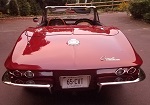
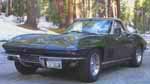
Here is the 65 with the modern Torq Thrust Ds (took these this afternoon):

It's only been on the ground for a day or so after being on jackstands since Christmas while I replaced all of the bushings with Energy Suspension urethanes, added the new sway bars, powdercoated the A-arms, etc. etc. etc. ad nauseum, ad infinitum.
The ride height is a little bit of a surprise, although it shouldn't be, I guess, since the original bushings were either squished or completely gone. I think the rear end is up a good 1 1/2-2 inches over what it used to be. I'm torn now about lowering it some since I know the wife would appreciate a smoother ride more than she would an aggressive stance.
I got the Torq Thrust Ds off of a poster here on the forum last year. He sent them with spacers and lug nuts. I don't remember the dimensions right off the top of my head (check the forum archive - it's in there) but the front gets a thicker one than the rear. The spacers were a perfect fit, giving less than 1/8 clearance to the caliper:

The spacers are a pain to keep in place as you mount the wheel. I drilled and countersunk fill-head screws into each spacer to secure it to the wheel.
Lug nuts were another item that didn't quite fit. I found that the distance from the washer to the end of the lug nut needed to be a maximum of 1.2 inches. Mine were too long so I cut them down with a hacksaw and dressed them to 1 inch on the grinder.
The wheels also come standard with a machine turned lip. Since I wanted mine polished, I rigged up a jig using a front spindle assembly (which was off the car anyway) and mounted it to a 2x4 post which was then secured to a sheet of plywood. Then I screwed my bench grinder to the plywood and fitted the multiple pulley assembly from the top of my drill press to the bench grinder shaft. Add a v-belt around the center of the wheel and voila! Instant wheel spinner/sanding/polishing station. I guess I was bored that day.....
[Modified by jwooten, 1:14 AM 4/1/2004]
[Modified by jwooten, 1:18 AM 4/1/2004]
[Modified by jwooten, 1:34 AM 4/1/2004]
It's only been on the ground for a day or so after being on jackstands since Christmas while I replaced all of the bushings with Energy Suspension urethanes, added the new sway bars, powdercoated the A-arms, etc. etc. etc. ad nauseum, ad infinitum.
The ride height is a little bit of a surprise, although it shouldn't be, I guess, since the original bushings were either squished or completely gone. I think the rear end is up a good 1 1/2-2 inches over what it used to be. I'm torn now about lowering it some since I know the wife would appreciate a smoother ride more than she would an aggressive stance.
I got the Torq Thrust Ds off of a poster here on the forum last year. He sent them with spacers and lug nuts. I don't remember the dimensions right off the top of my head (check the forum archive - it's in there) but the front gets a thicker one than the rear. The spacers were a perfect fit, giving less than 1/8 clearance to the caliper:
The spacers are a pain to keep in place as you mount the wheel. I drilled and countersunk fill-head screws into each spacer to secure it to the wheel.
Lug nuts were another item that didn't quite fit. I found that the distance from the washer to the end of the lug nut needed to be a maximum of 1.2 inches. Mine were too long so I cut them down with a hacksaw and dressed them to 1 inch on the grinder.
The wheels also come standard with a machine turned lip. Since I wanted mine polished, I rigged up a jig using a front spindle assembly (which was off the car anyway) and mounted it to a 2x4 post which was then secured to a sheet of plywood. Then I screwed my bench grinder to the plywood and fitted the multiple pulley assembly from the top of my drill press to the bench grinder shaft. Add a v-belt around the center of the wheel and voila! Instant wheel spinner/sanding/polishing station. I guess I was bored that day.....
[Modified by jwooten, 1:14 AM 4/1/2004]
[Modified by jwooten, 1:18 AM 4/1/2004]
[Modified by jwooten, 1:34 AM 4/1/2004]
Thread Starter
Cruising
Joined: Dec 2002
Posts: 11
Likes: 0
From: Angier NC
Re: Alignment spec recommendations (jimdvan)
I went in on a group purchase of Steeroids kits here on the forum last January and started the install in February. All of the components in the kit are of outstanding fit and finish and the install goes quickly up to a point.
You'll have to provide your own power steering pump, brackets, and pulleys as they don't come with the steeroids kit. I ran into some fun and games here out of ignorance. Check your crank pulley. If you have 2 grooves and one is empty and you think that's where the the power steering goes, think again. The power steering pump mounts to a third, dished pulley that goes at the very front of the crank. Also, you might find that someone over the years has replaced the original motor mounts with the kind that has a safety tab that interferes with the pump bracket which means you will have to pull the motor mount and do some creative hacksaw work.
If you have a LH mount alternator and headers (with no bracket mounts cast in), you may have an interference between the alternator bracket and the power steering pump. I played with different brackets until I got something that worked since I wasn't willing to move the alternator to the RH side (a/c may be there in the future). I'm still not quite happy with mine since what finally worked made me use a different (and not quite right) upper radiator hose.
Speaking of headers, check the Steeroids web site if you have them. Some may interfere with the rack and pinion unit. They have a list, compiled by trial and error, of the ones that will and won't work. Mine were a no name brand that came on the car but didn't interfere at all.
My major problem with the Steeroids however was and is the connection to the steering shaft. There is a LOT of fiddling and adjusting to get this to work without binding. The Steeroids web site has a faq (made since I installed mine) that gives a few tips.
The problem is the extreme angle that the linkage must go through to get to the rack:

I managed to get the angle better that shown above, but there is still some binding that I intend to revisit at some point.
I don't have a reference point to use for it's performance on the road since the previous manual steering was VERY sloppy and worn and we drove it less than 100 miles before starting the Steeroids install. Afterwards, with the exception of the notchy binding and worn suspension bushings, the steering was great and comparable to many modern cars although a bit overassisted by modern standards. I'm told that you can use the Steeroids unassisted and I may pull the belt and try that at some point after I get all of the binding out.
You'll have to provide your own power steering pump, brackets, and pulleys as they don't come with the steeroids kit. I ran into some fun and games here out of ignorance. Check your crank pulley. If you have 2 grooves and one is empty and you think that's where the the power steering goes, think again. The power steering pump mounts to a third, dished pulley that goes at the very front of the crank. Also, you might find that someone over the years has replaced the original motor mounts with the kind that has a safety tab that interferes with the pump bracket which means you will have to pull the motor mount and do some creative hacksaw work.
If you have a LH mount alternator and headers (with no bracket mounts cast in), you may have an interference between the alternator bracket and the power steering pump. I played with different brackets until I got something that worked since I wasn't willing to move the alternator to the RH side (a/c may be there in the future). I'm still not quite happy with mine since what finally worked made me use a different (and not quite right) upper radiator hose.
Speaking of headers, check the Steeroids web site if you have them. Some may interfere with the rack and pinion unit. They have a list, compiled by trial and error, of the ones that will and won't work. Mine were a no name brand that came on the car but didn't interfere at all.
My major problem with the Steeroids however was and is the connection to the steering shaft. There is a LOT of fiddling and adjusting to get this to work without binding. The Steeroids web site has a faq (made since I installed mine) that gives a few tips.
The problem is the extreme angle that the linkage must go through to get to the rack:
I managed to get the angle better that shown above, but there is still some binding that I intend to revisit at some point.
I don't have a reference point to use for it's performance on the road since the previous manual steering was VERY sloppy and worn and we drove it less than 100 miles before starting the Steeroids install. Afterwards, with the exception of the notchy binding and worn suspension bushings, the steering was great and comparable to many modern cars although a bit overassisted by modern standards. I'm told that you can use the Steeroids unassisted and I may pull the belt and try that at some point after I get all of the binding out.
Corvette Stories
The Best of Corvette for Corvette Enthusiasts

Top 10 Most Expensive Corvettes Ever Sold on Bring A Trailer
Brett Foote
10 Things Every Corvette Owner Needs (2026 Edition)
Michael S. Palmer
8 Most "Only Corvette Owners Understand" Quirks and Problems
Pouria Savadkouei
10 Reasons the C6 Z06 is Still A Performance Benchmark After 20 Years
Joe Kucinski
How Much Horsepower Every Corvette Engine "LOST" in 1972
Joe Kucinski
Top 10 DOs and DON'Ts for Protecting Your Convertible Top!
Michael S. Palmer
Top 10 Most Explosive Corvettes Ever Made: Power-to-Weight Ratio Ranked!
Joe Kucinski
150 hp to 1,250 hp: Every Corvette Generation Compared by the Specs That Matter
Joe Kucinski
8 Coolest Corvette Pace Cars (and Replicas) of All Time
Verdad Gallardo
Race Director

Joined: Nov 2000
Posts: 11,872
Likes: 12
From: Waterloo ontario Canada
Re: Alignment spec recommendations (jwooten)
I like as much postive caster as I can get and camber at negative .75. The most important thing is to keep both side exactly the same. Not just within specs but the same. Forget the crown in the road or high specs on one side and low on the other. YOU WANT EQUAL SETTING ON BOTH SIDES. I set toe at 1/16 toe in 1/8th maximum.
The original specs were for bias ties and positive camber.With modern radials toe is always 1/2 the original specs and since we have gone from positive camber to negative it give rise to the question if slight toe out wouldn't be better.
I have run as much as 1/8th toe out.
So set as much caster postive as possible , negative camber .5-.7 but equal and 1/16 toe in.
The original specs were for bias ties and positive camber.With modern radials toe is always 1/2 the original specs and since we have gone from positive camber to negative it give rise to the question if slight toe out wouldn't be better.
I have run as much as 1/8th toe out.
So set as much caster postive as possible , negative camber .5-.7 but equal and 1/16 toe in.
Racer
Joined: Apr 2003
Posts: 386
Likes: 3
From: Chapin SC
Re: Alignment spec recommendations (norvalwilhelm)
Hey Norval, I used to like in KW. I went to high school my junior year at WCI. Lived on Marlowe Drive. One of my good friends still lives in the area.
Jim
Jim

Race Director
Joined: Jul 2002
Posts: 11,593
Likes: 173
From: Clayton NC
Re: Alignment spec recommendations (jimdvan)
Jim you are a brave man.. I cringe at the thought of having my 66 out there on 40. It is getting to be like the autobahn out there in the morning well that is unless it's stop and go.... Could you let us know which shop you use to align the ole girl.. Thanks Dave..
